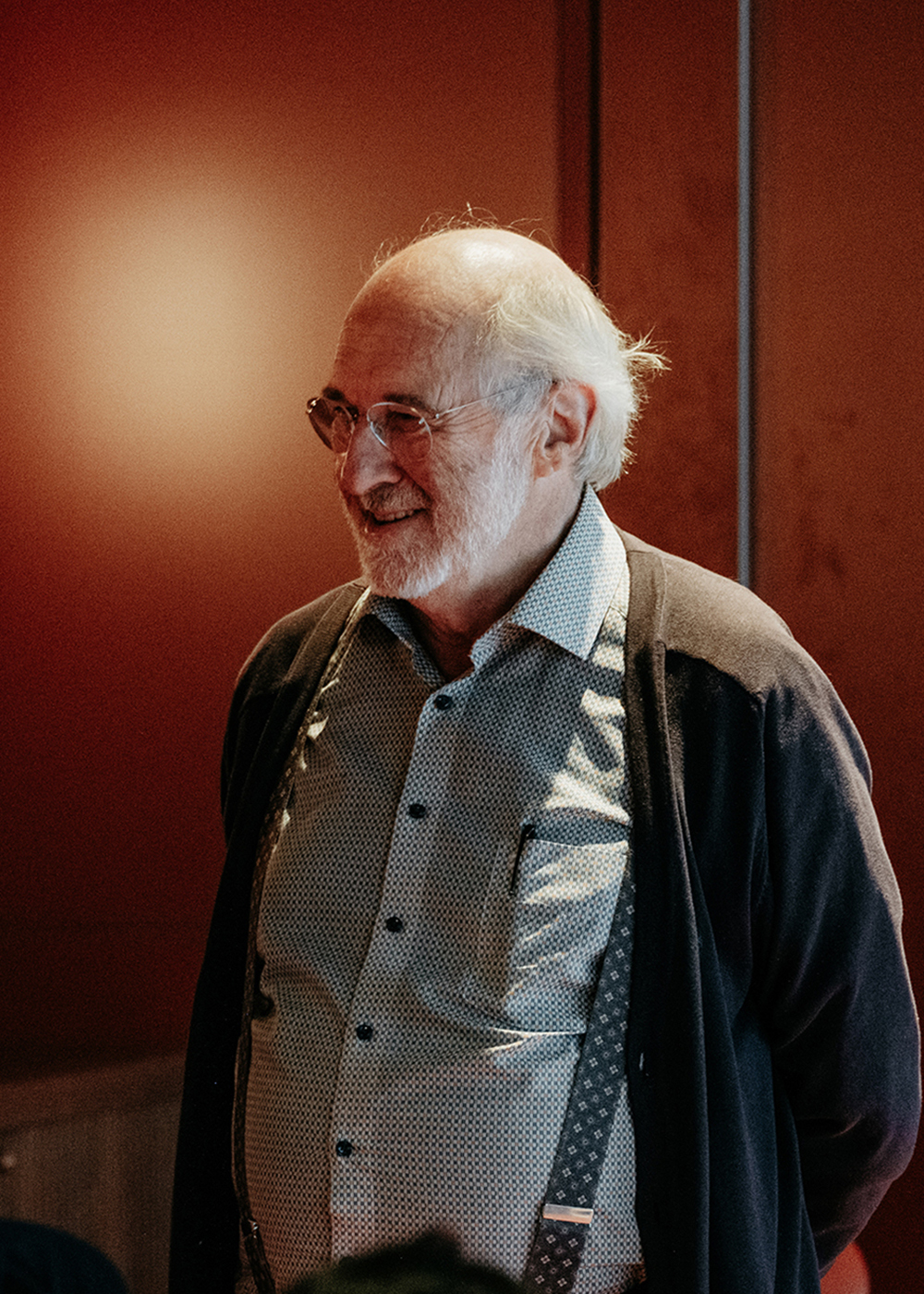
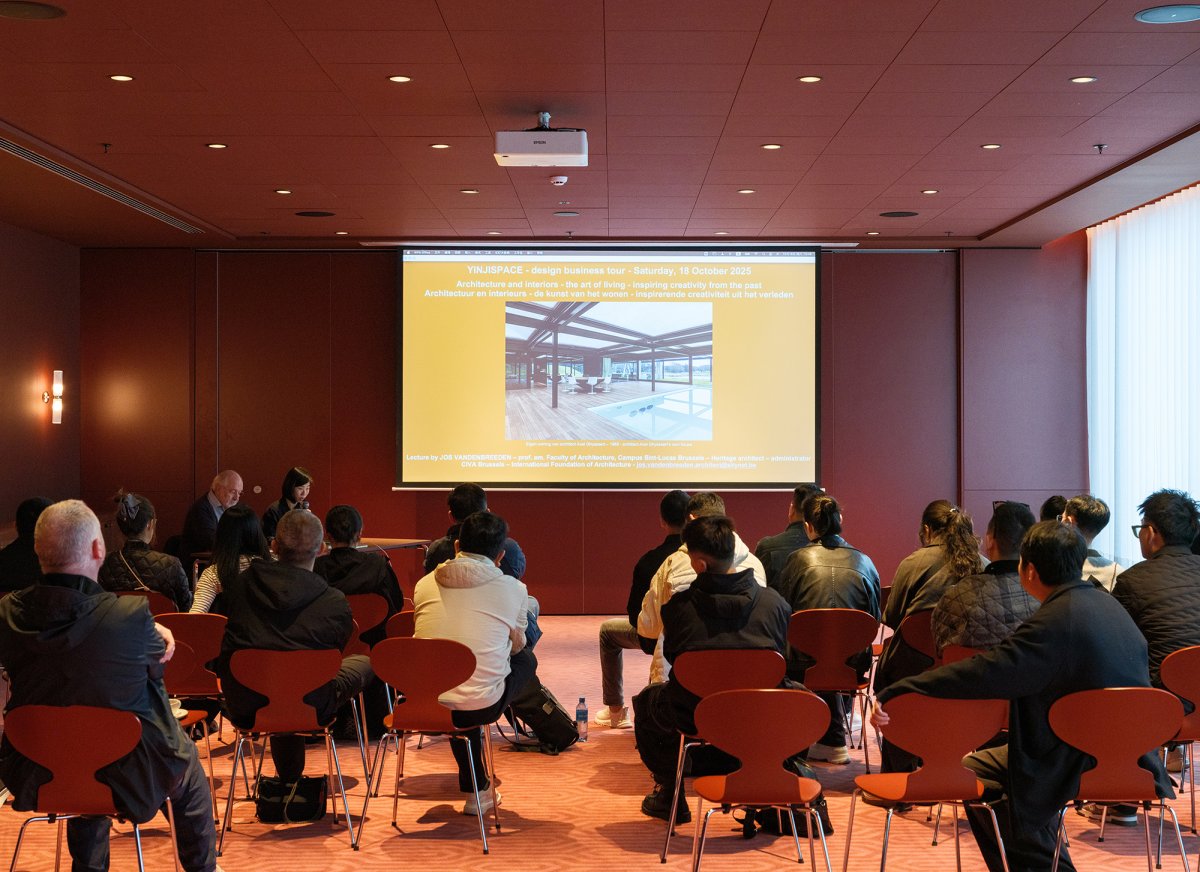
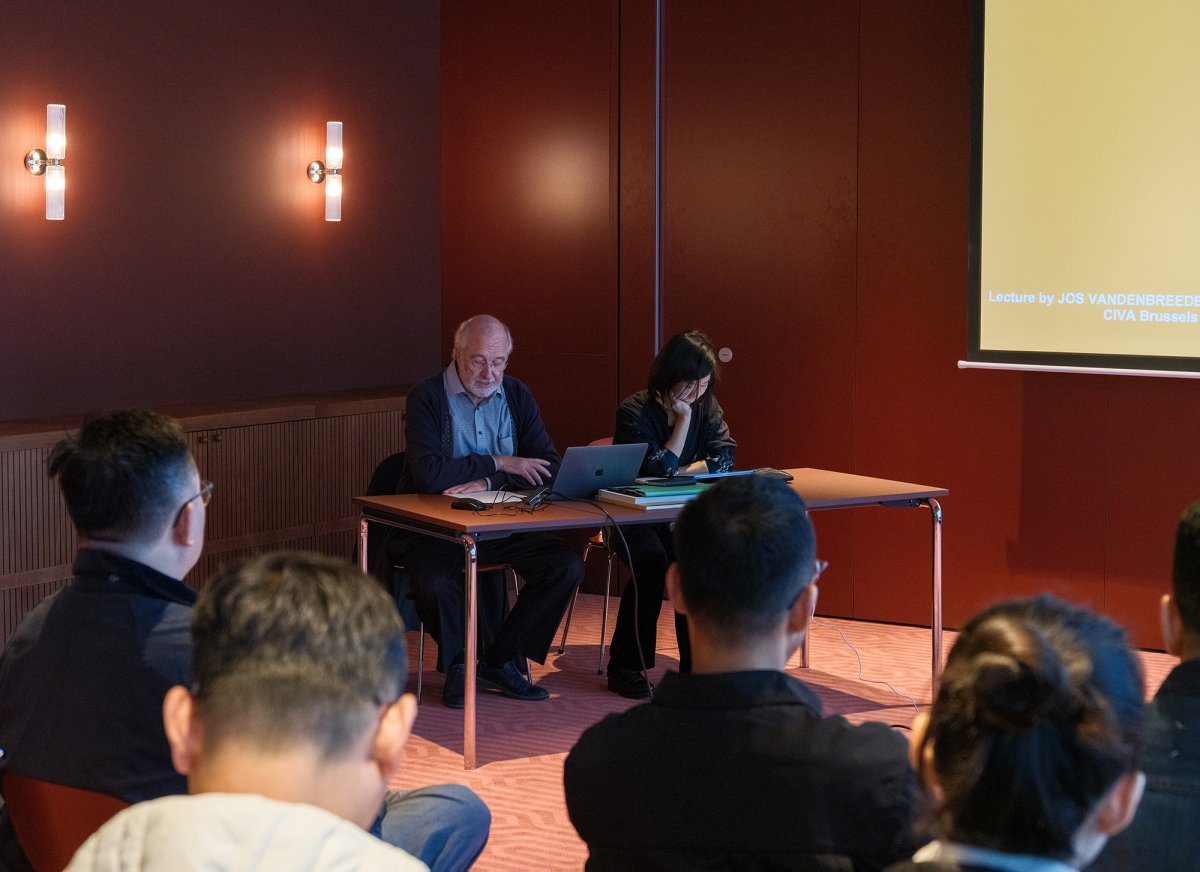
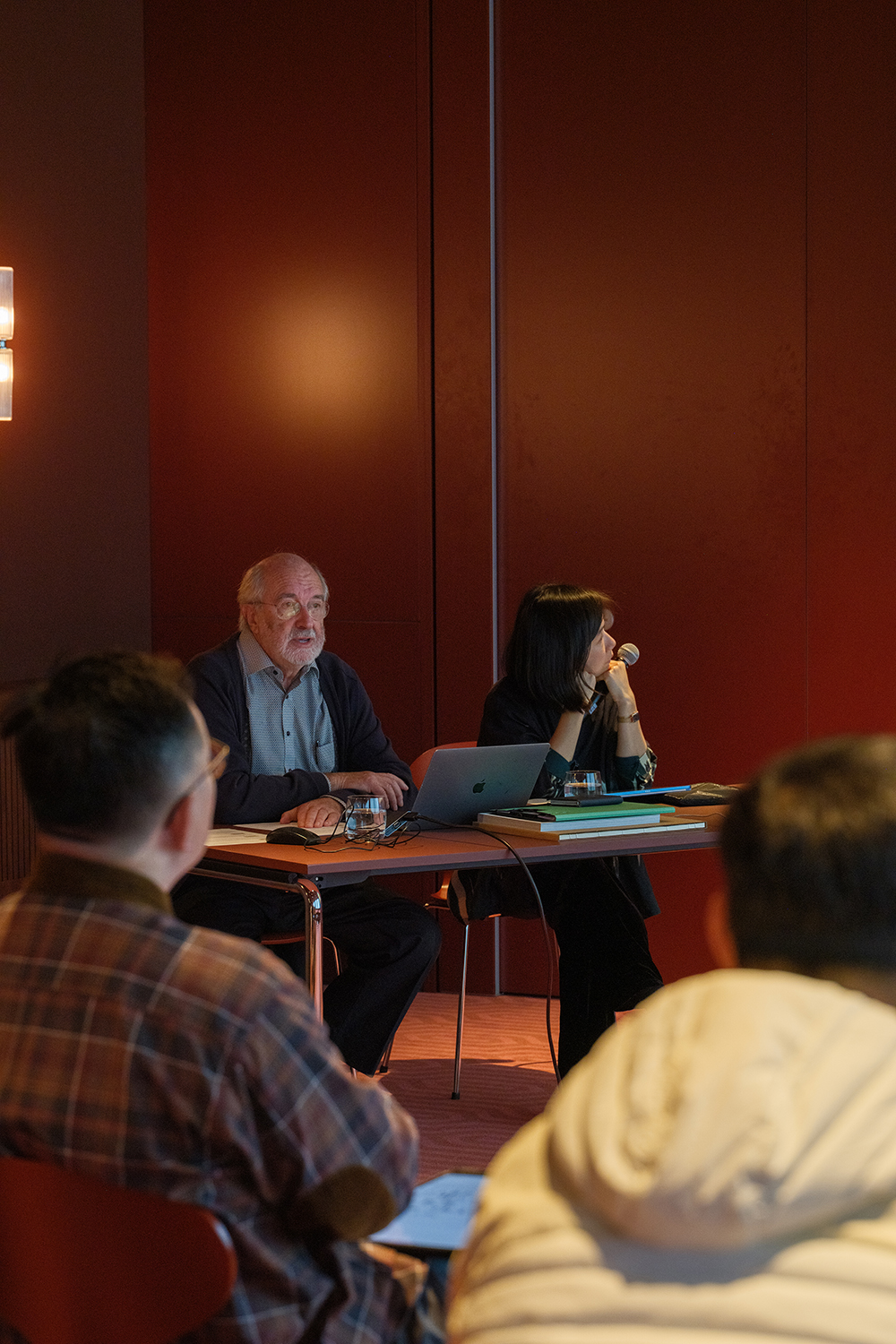
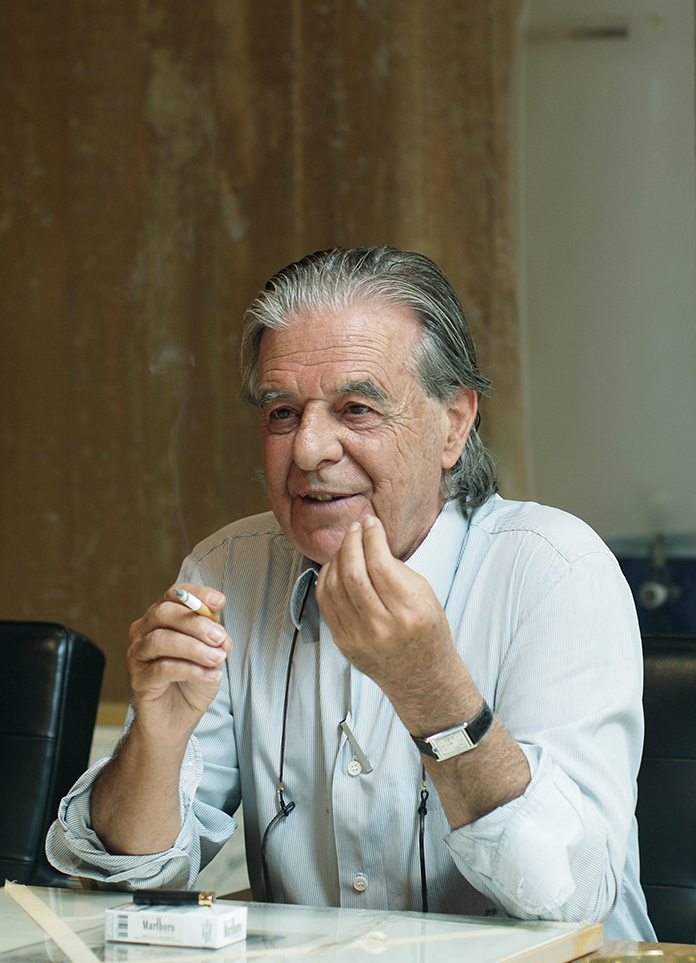
During the Yintour Belgium Study Tour masterclass, we were honored to welcome Jos Vandenbreeden, a leading scholar in Belgian architectural history and heritage studies, for a lecture titled Post-war Belgian Architecture & Artistic Lineages: Inspiring Creativity from the Past. Approaching the topic from the perspectives of social structure, urban development, and cultural consciousness, the course revisited how post-war Belgian architecture responded to public life and evolving modes of living within specific historical contexts. Through a series of key case studies, Jos Vandenbreeden guided us to understand architecture not merely as a formal outcome, but as a social practice in continuous dialogue with its time.
At the core of the lecture, Jos Vandenbreeden focused on the theme Architecture & Interiors – The Art of Living. Belgian architecture, he emphasized, has long upheld an integrated design approach, in which architecture, interiors, furniture, and art are conceived as a coherent whole, shaping spatial experience within everyday life. From the Art Nouveau movement to the development of post-war modernism, light, structure, materiality, and detail are orchestrated to form a living order—one that is perceived, inhabited, and continuously generated through daily use. In this sense, living space transcends its role as a functional container, becoming a vessel for emotion, culture, and ways of life.
The course ultimately returned to the contemporary context, reflecting on the true relevance of history to today’s design practice. Through discussions on post-war architecture, organic forms, material experimentation, and modern concepts of dwelling, Jos Vandenbreeden proposed that looking to the past is not about replicating established forms, but about understanding the underlying frameworks of thought and value systems behind them. For contemporary designers, the challenge lies not in searching for stylistic answers, but in cultivating a clear and enduring line of inquiry between architecture and life, reason and sensibility—this, he suggested, is the true meaning of drawing creative inspiration from the past.