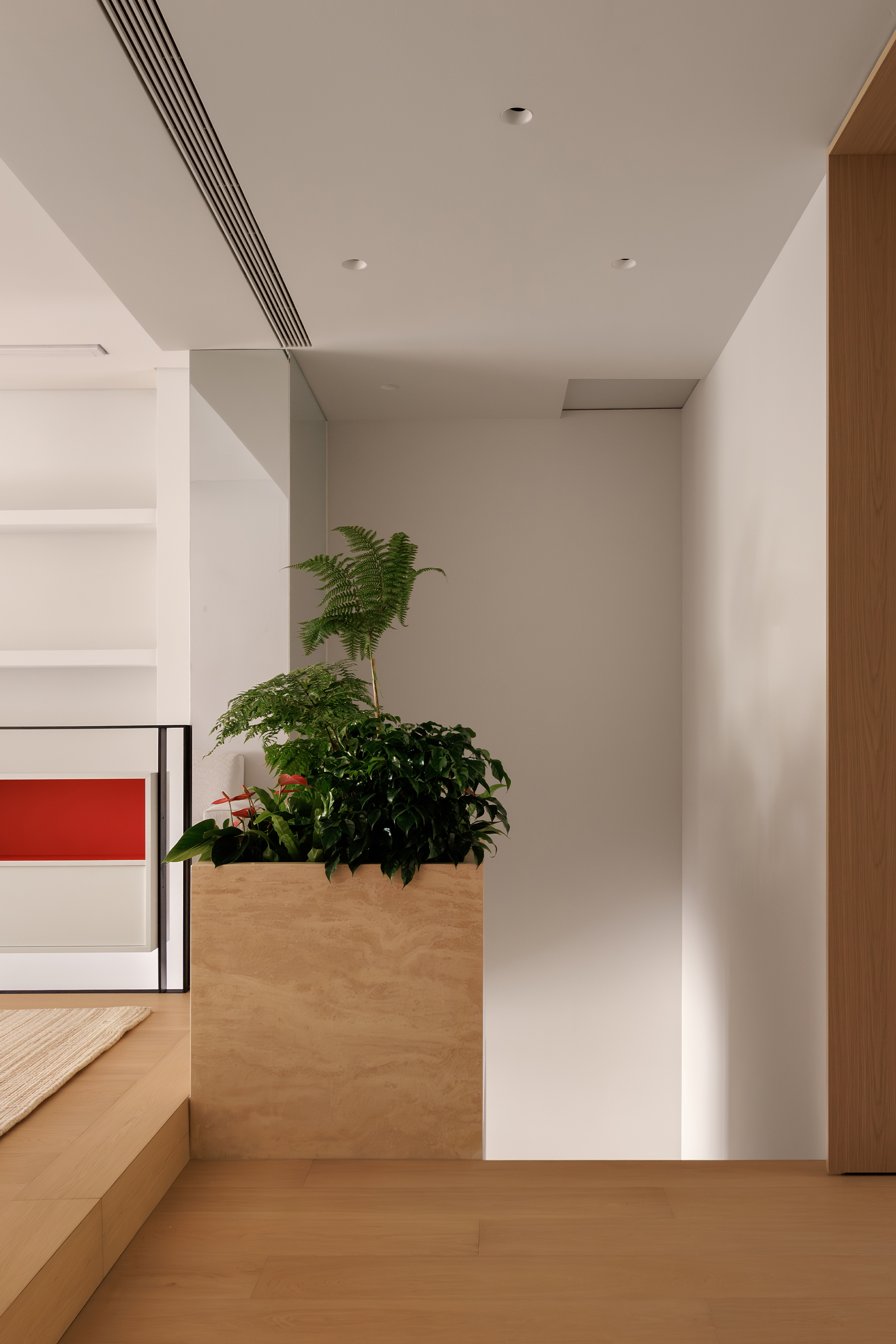
Using the concept of "flowing narrative" as a guiding principle, we re-examined the spatial relationships of a duplex apartment for a family of four. The owners, a couple, and their two daughters, wanted their home to be more than just a collection of physical spaces; they envisioned it as a vessel for the flow of emotions. Although they owned two floors, they desired a visual and experiential interaction between the two levels, rather than isolation. By removing partition walls, relocating the staircase, and integrating functions, we broke down the common barriers between floors in duplexes, allowing light, air, and the family's visual connection to freely move between the two levels.

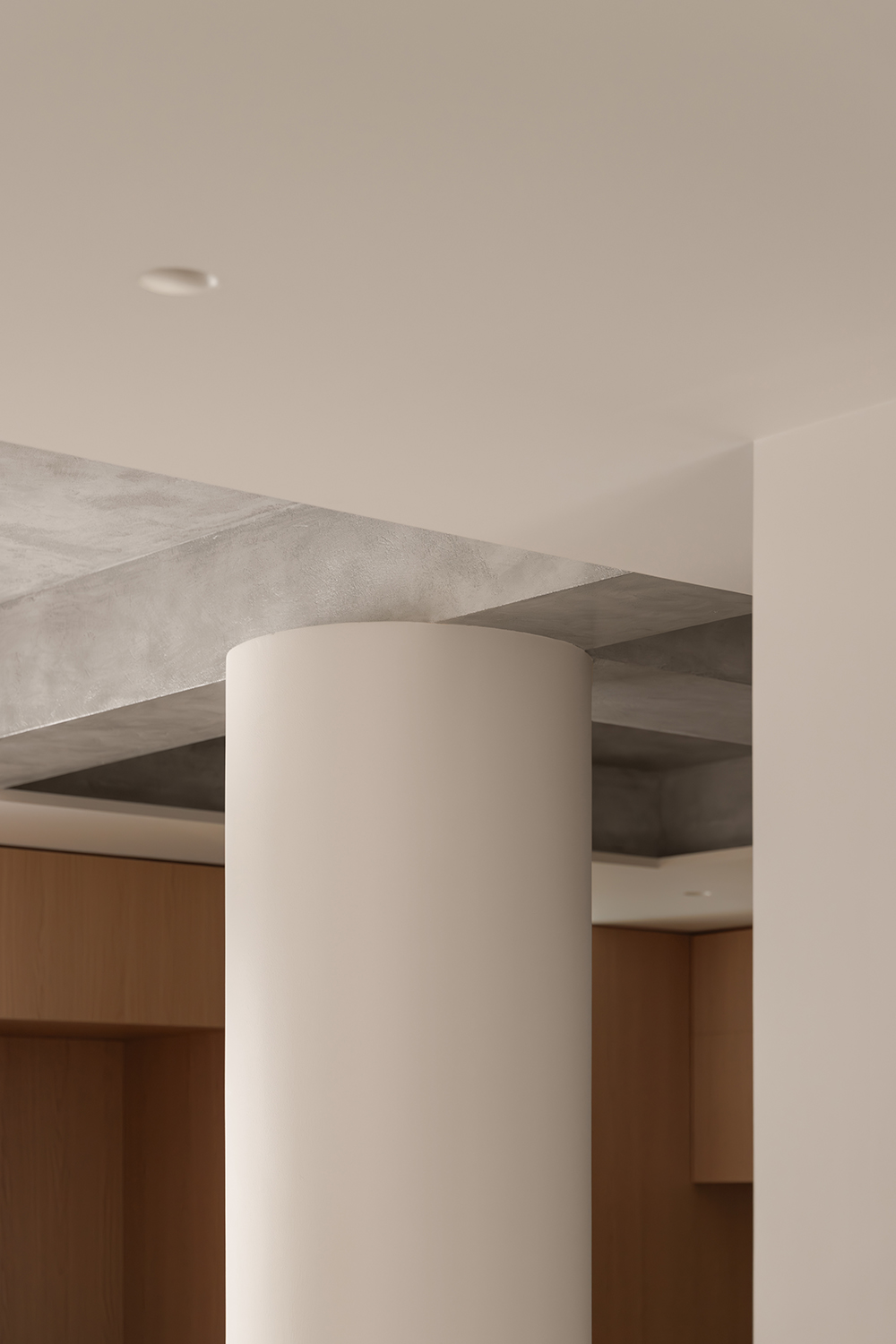
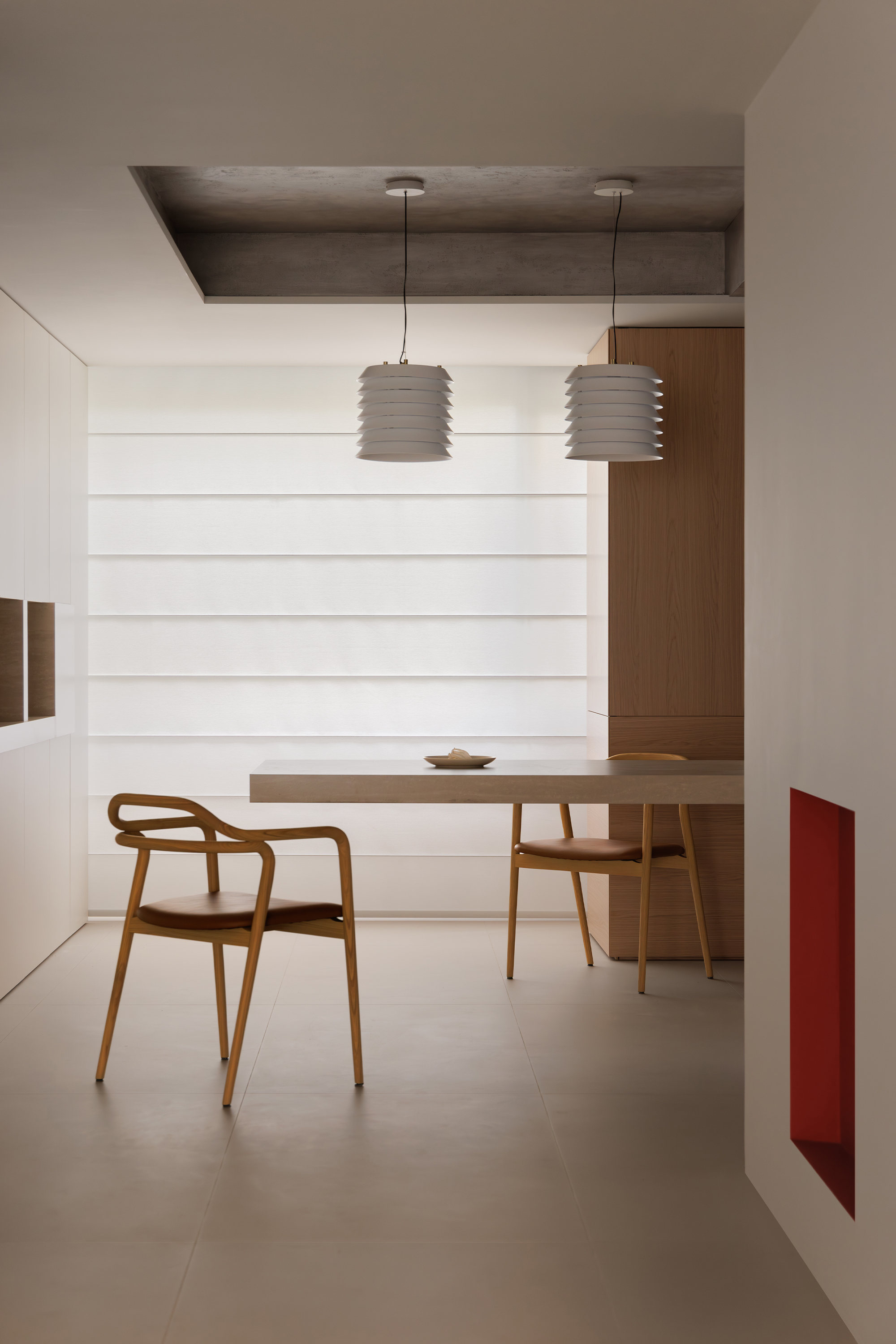
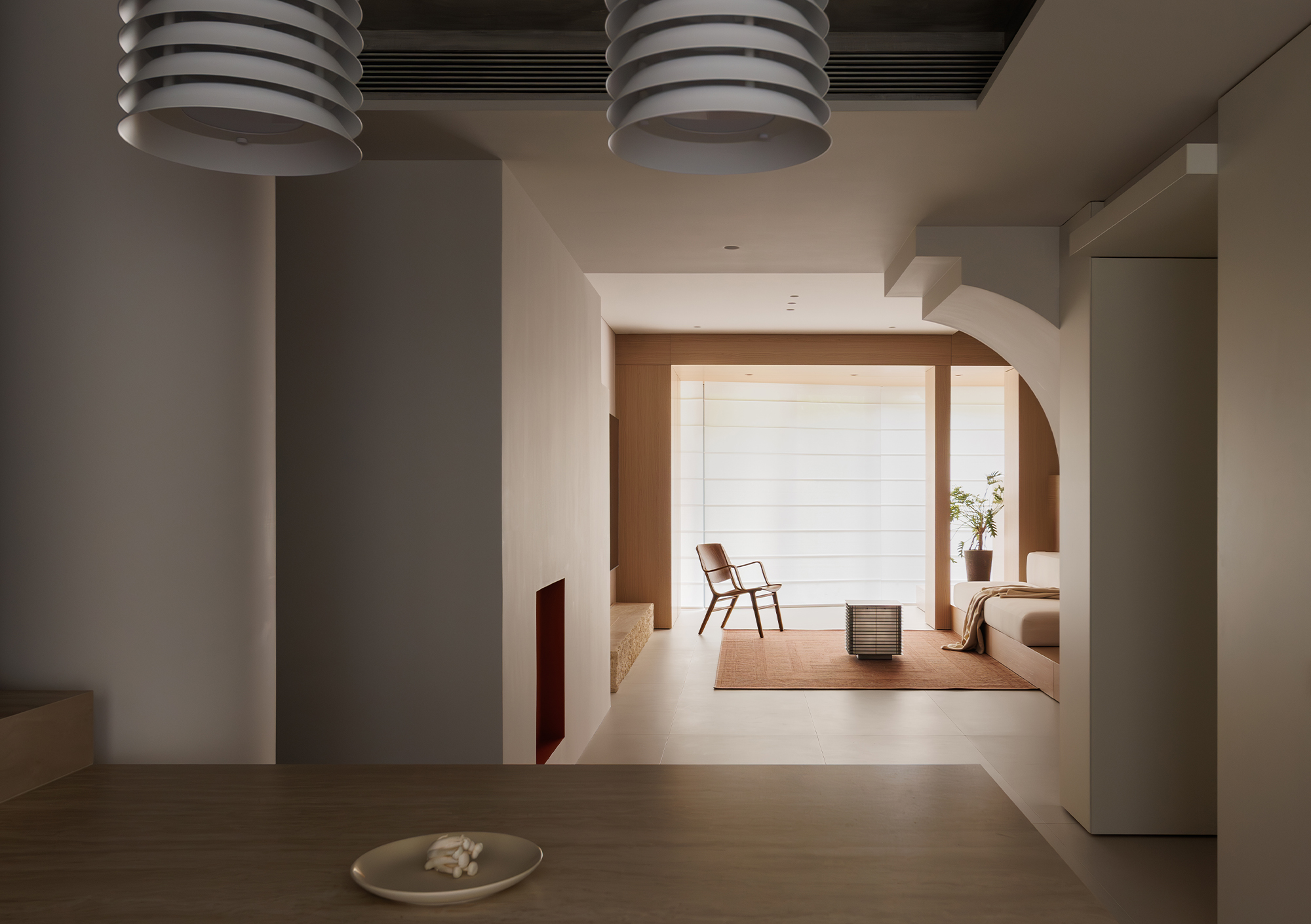
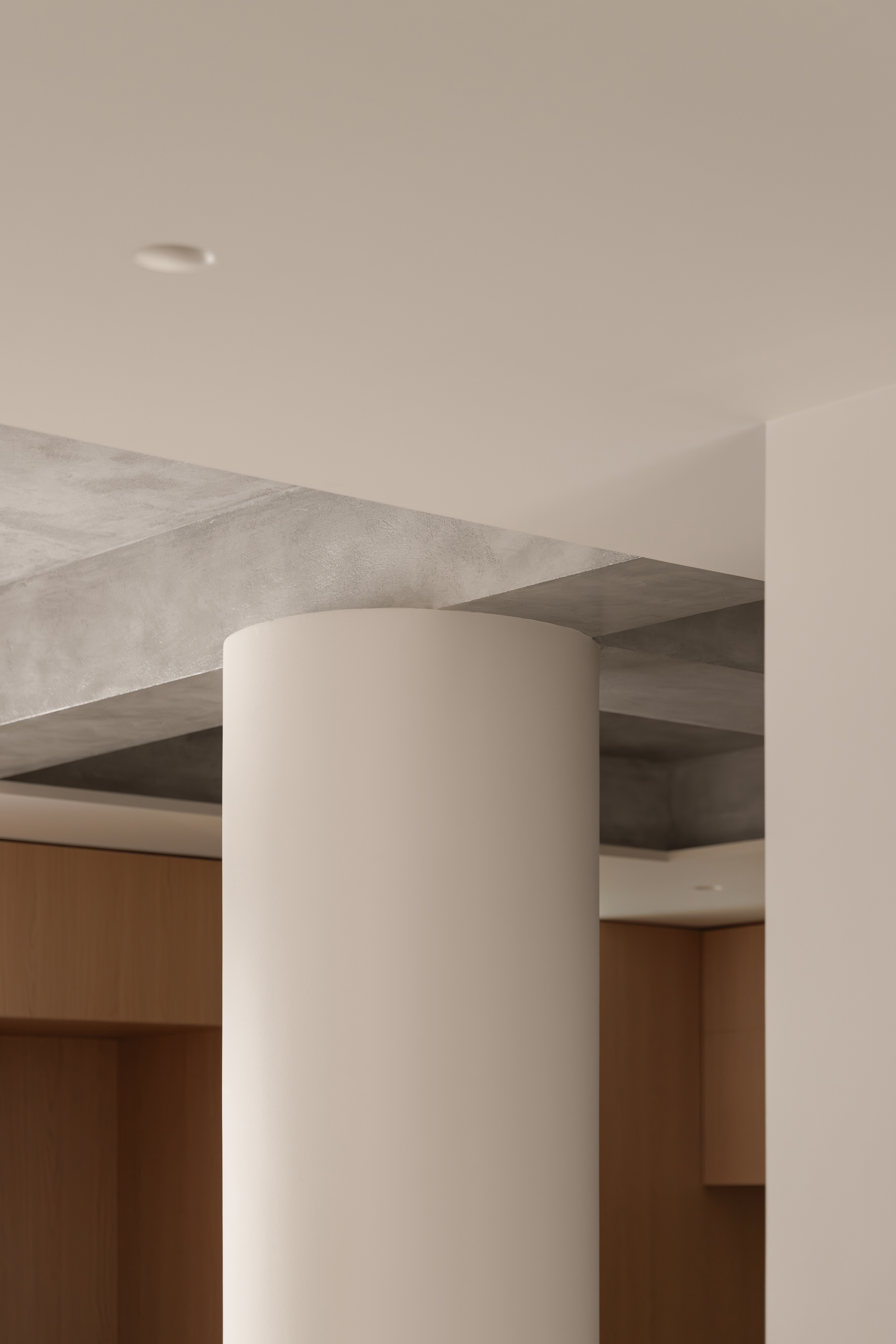
Stepping into the foyer, the eye is immediately drawn to the quietly standing cylindrical column. It's not an afterthought, but rather the result of removing the original partition wall, which transformed what might have appeared jarringly as a square structural column into an elegant cylinder. Looking upwards, the space presents another candid attitude: the ceiling is not concealed by a false ceiling, the raw concrete slab directly exposed. This "exposedness" is not rugged, but rather carefully styled and painted a uniform gray.

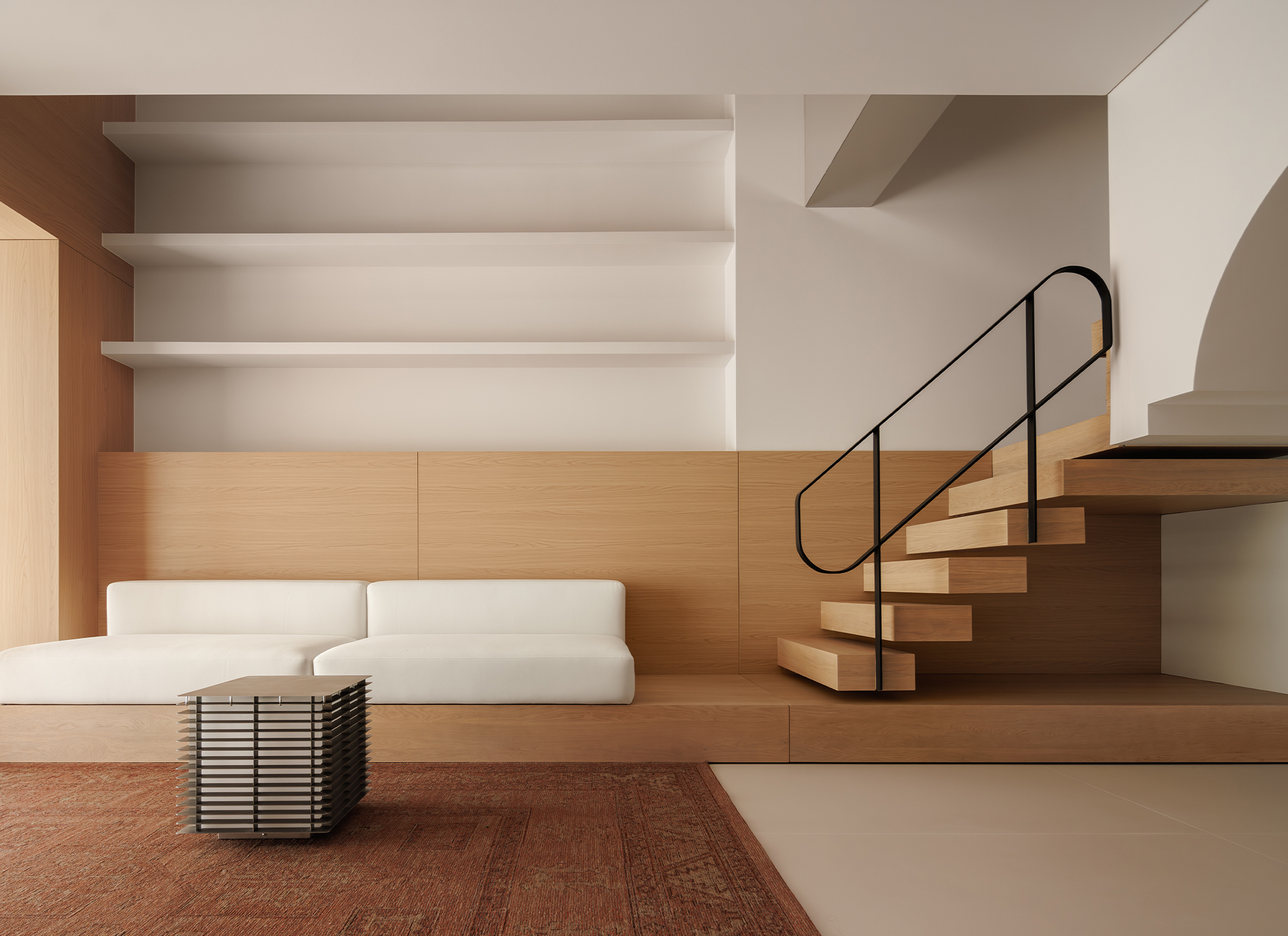
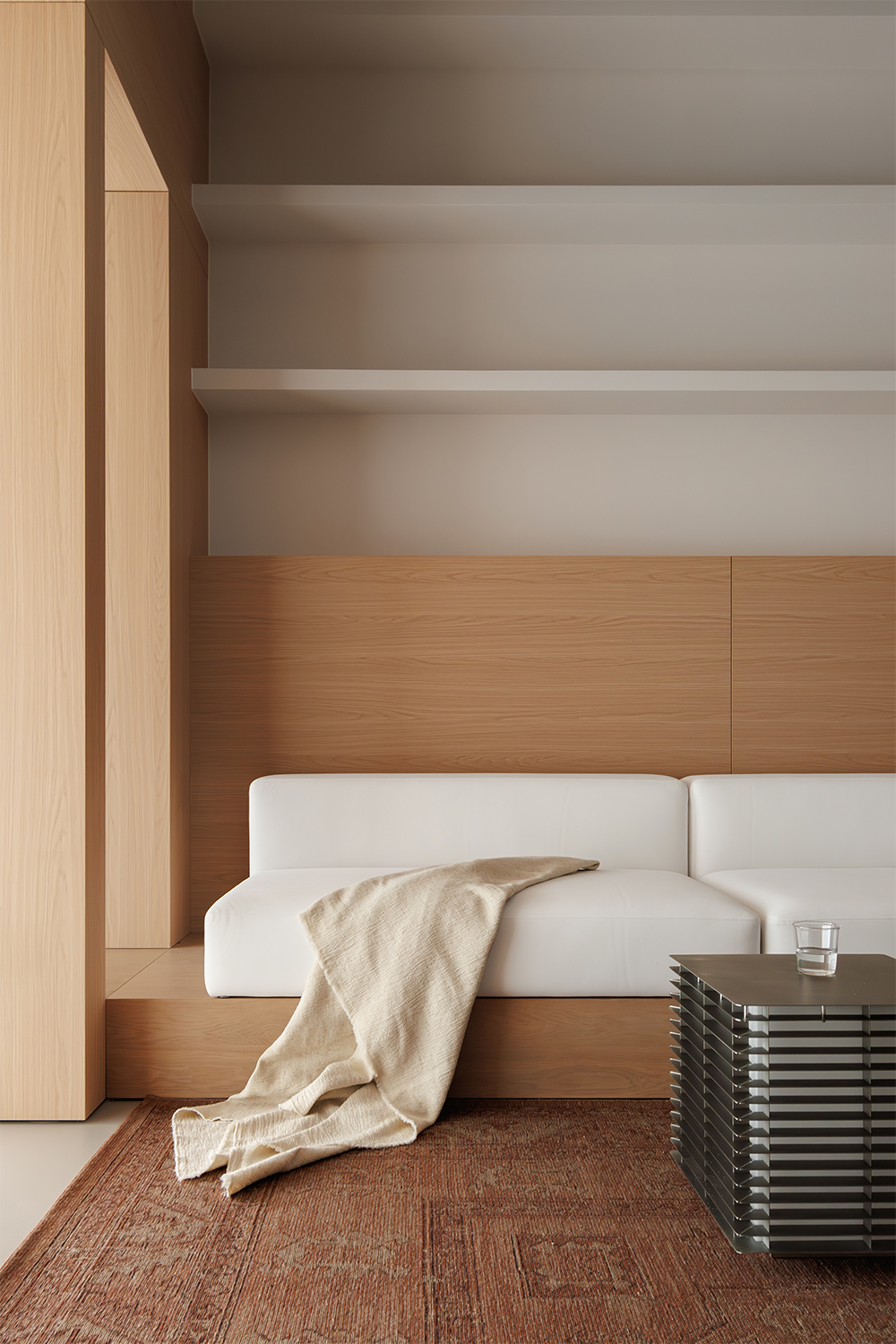
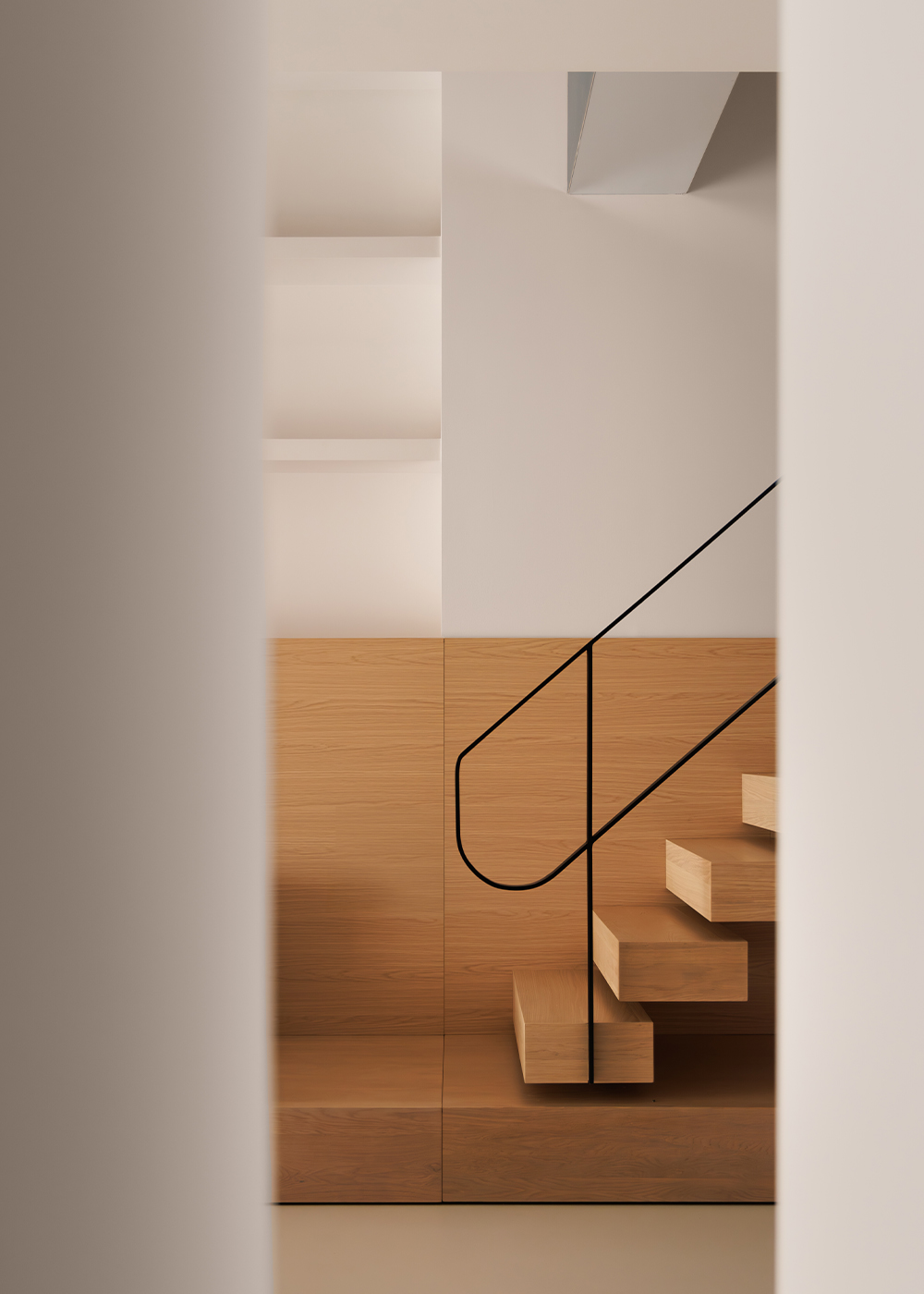
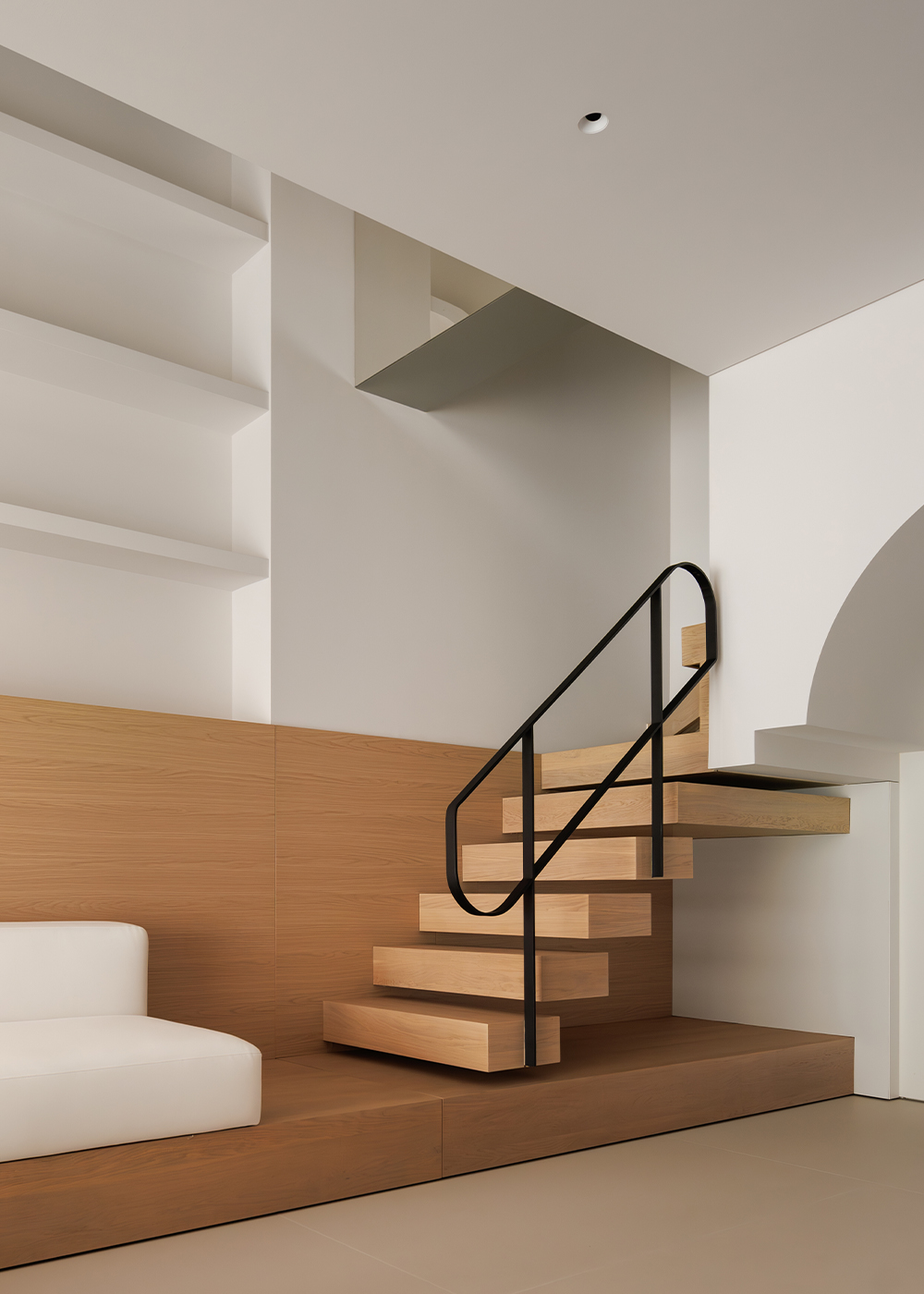
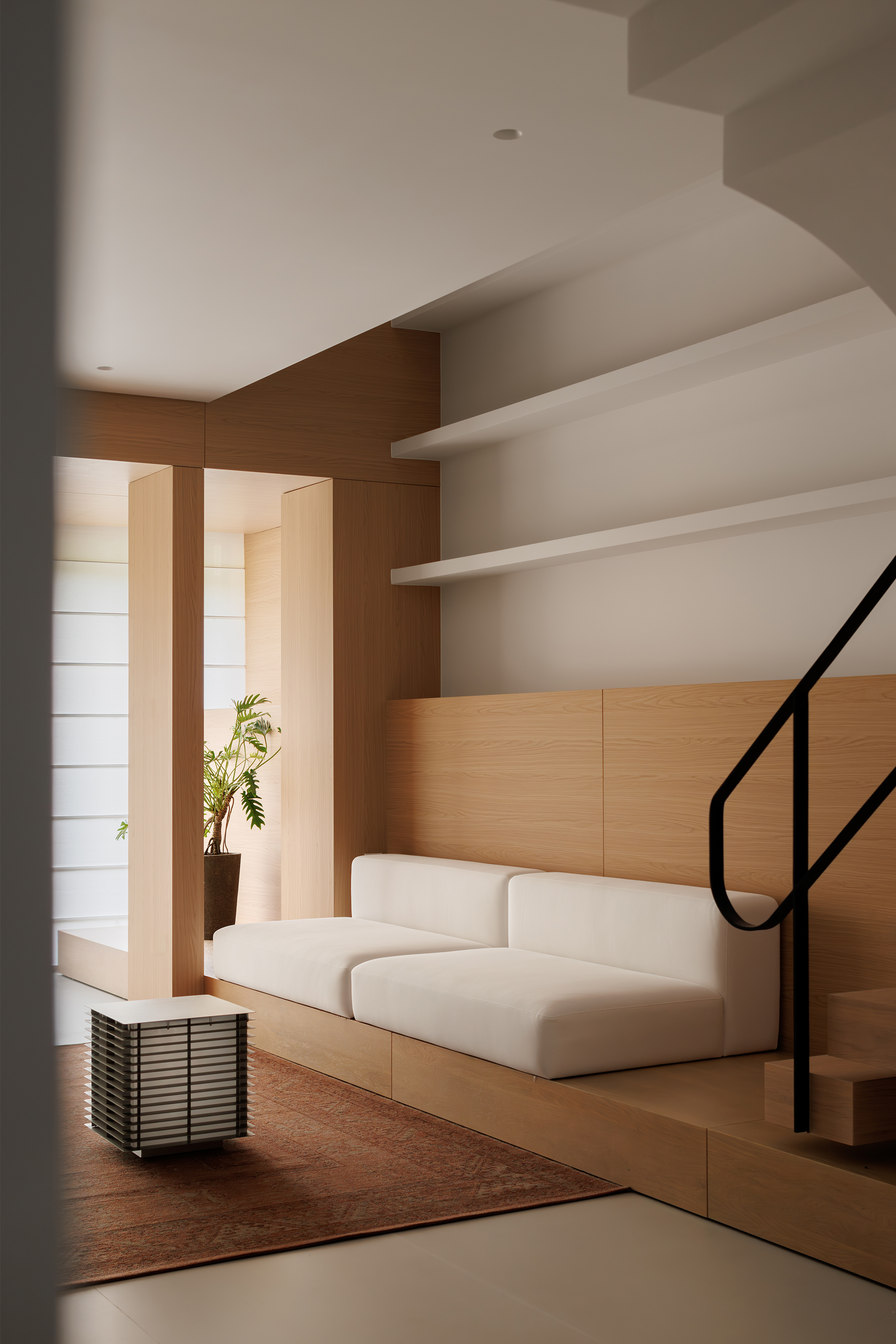
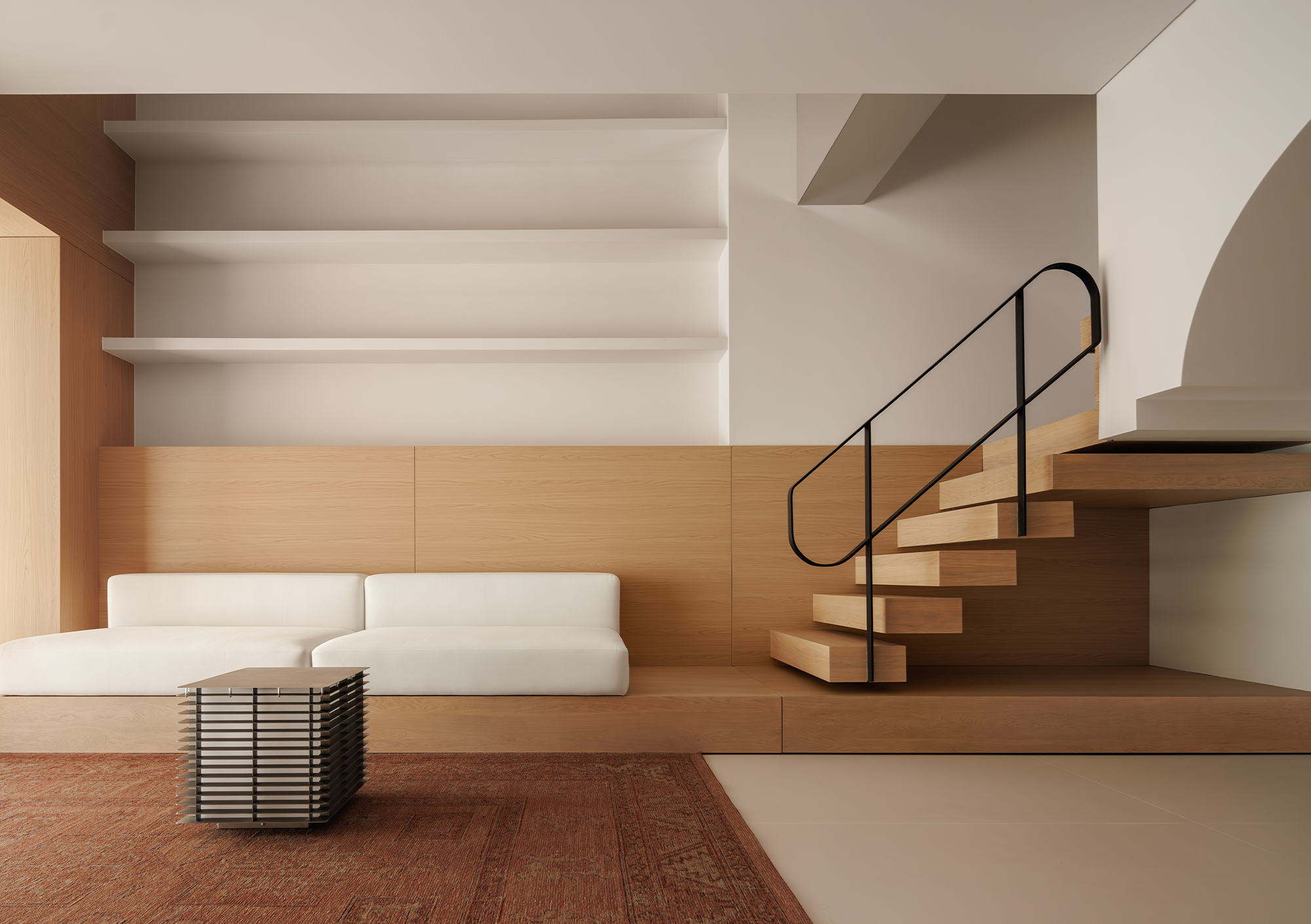
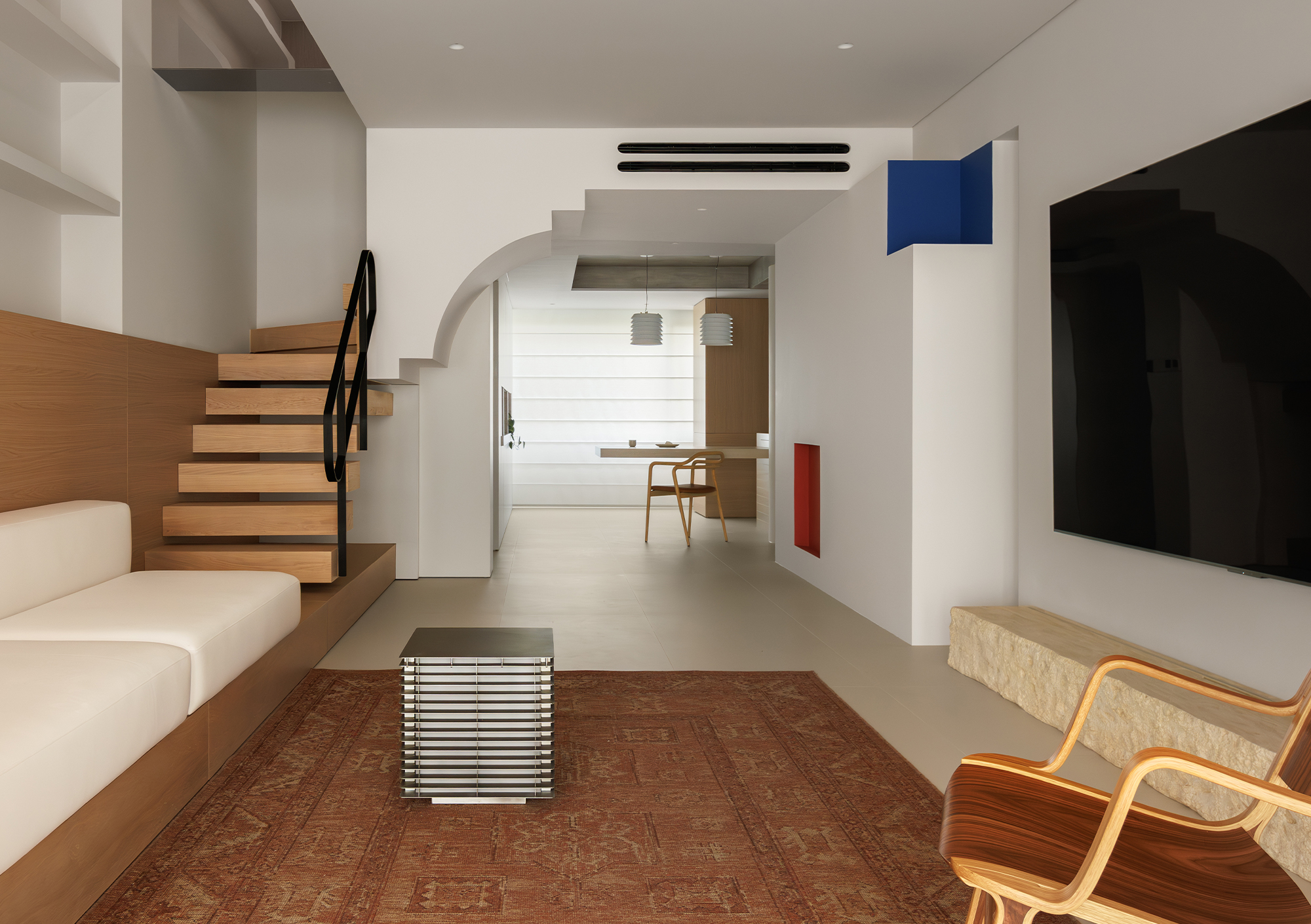
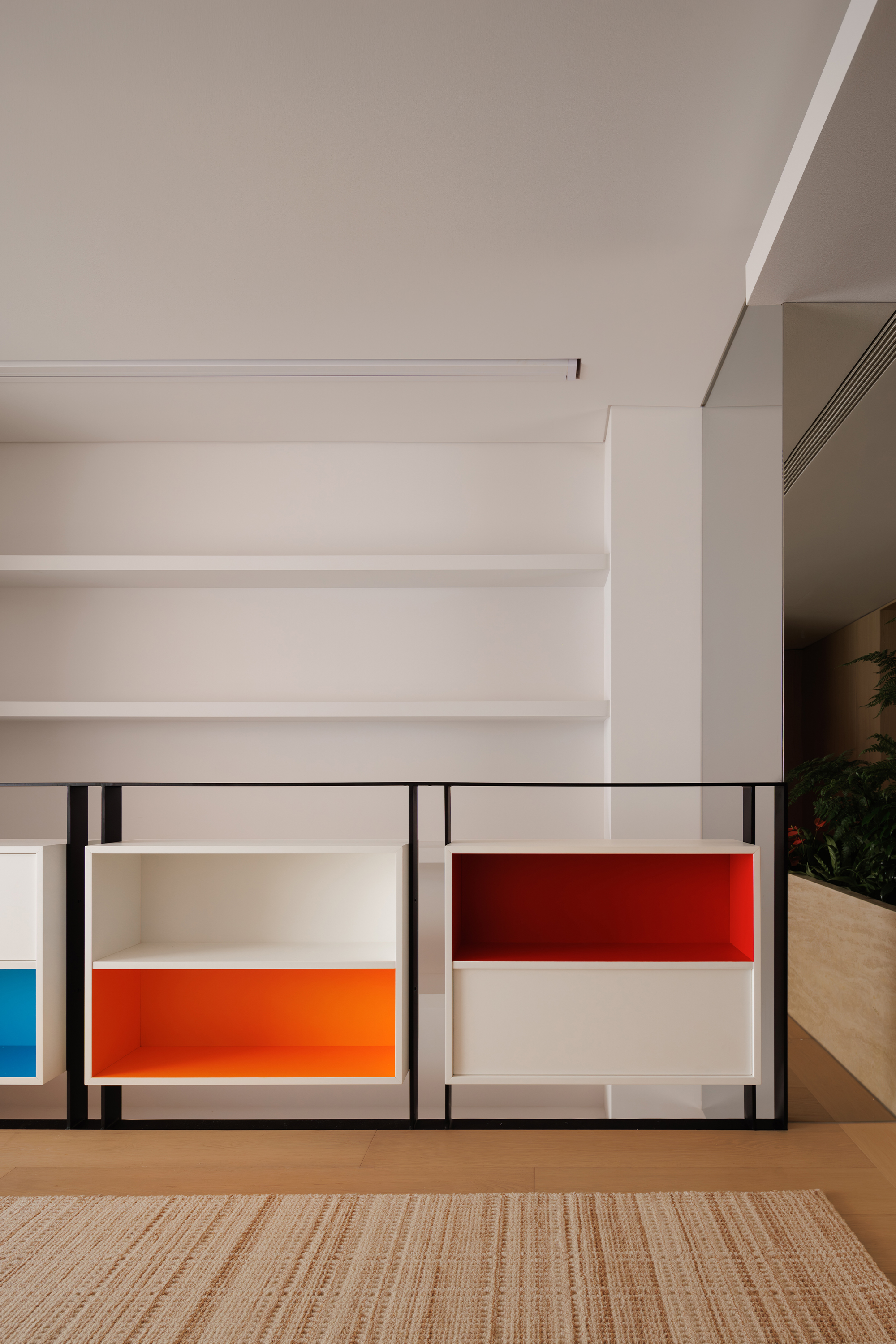
The public area is a duplex layout. We moved the staircase away from the corner where the original TV wall and balcony were located. This move brought a double liberation: First, it freed up the entire background wall of the living room, making it a "spiritual facade" that can support a whole bookcase or art display; second, it allowed the balcony, which was once separated by the staircase, to be integrated into the interior without any obstruction.
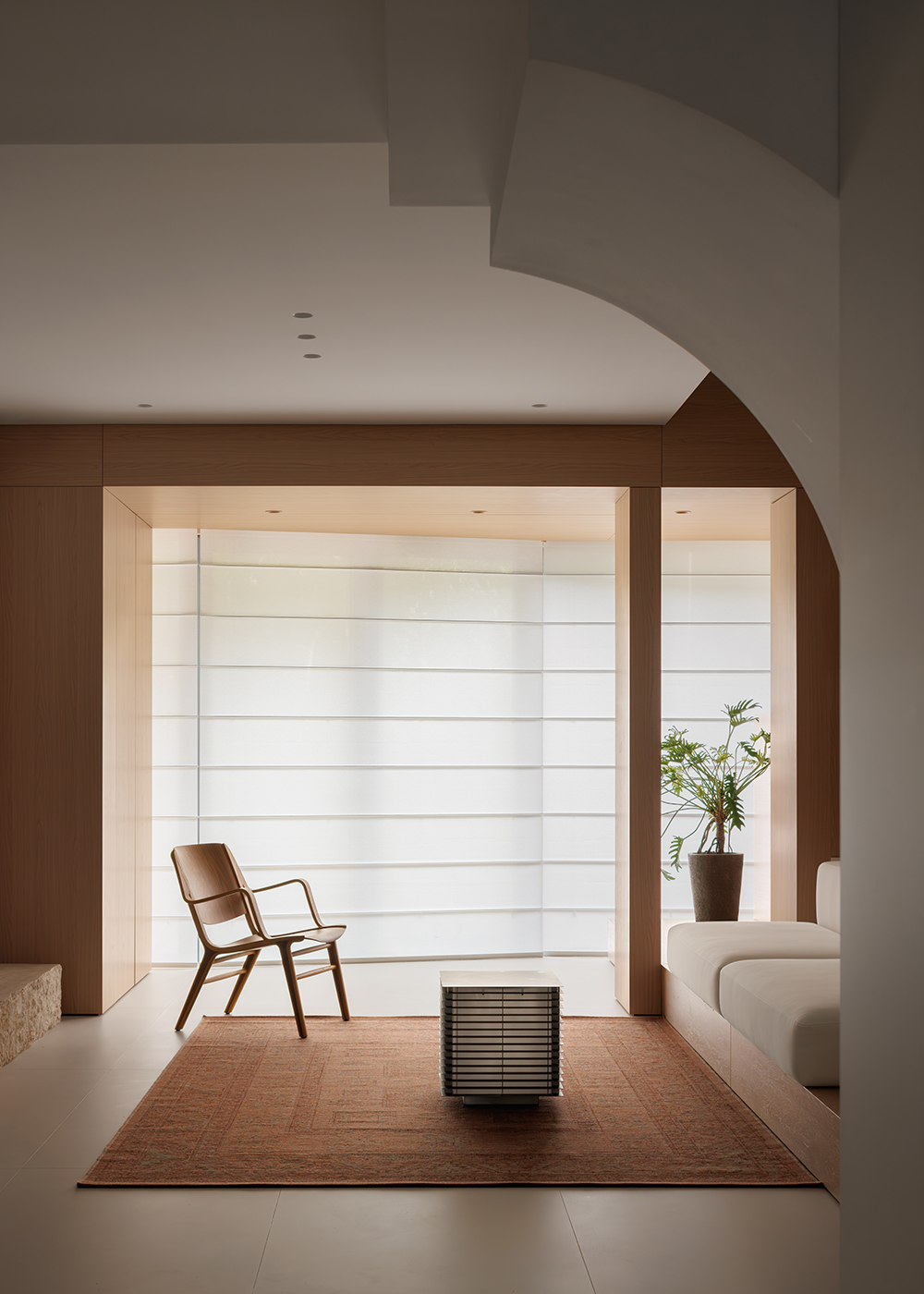
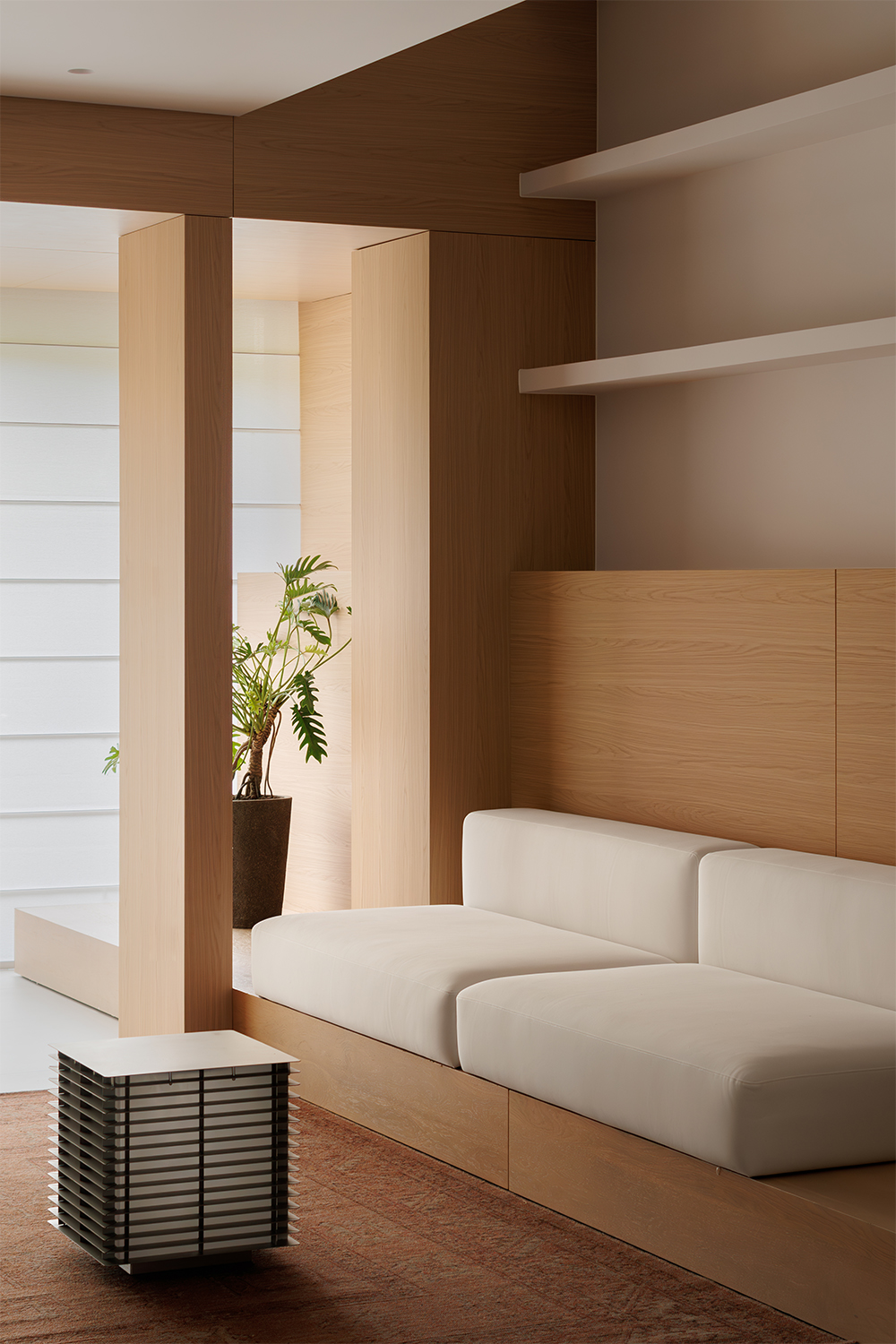
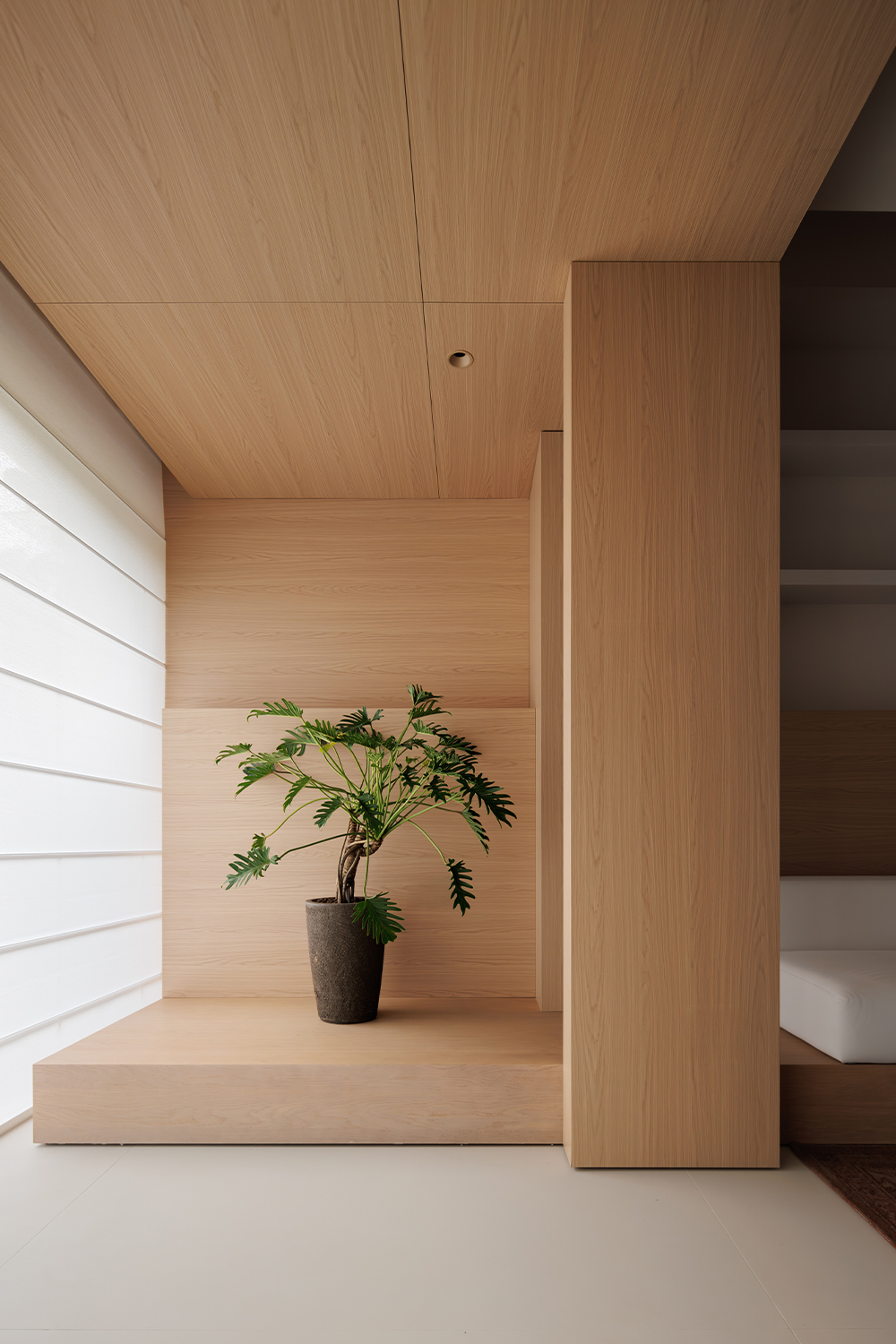
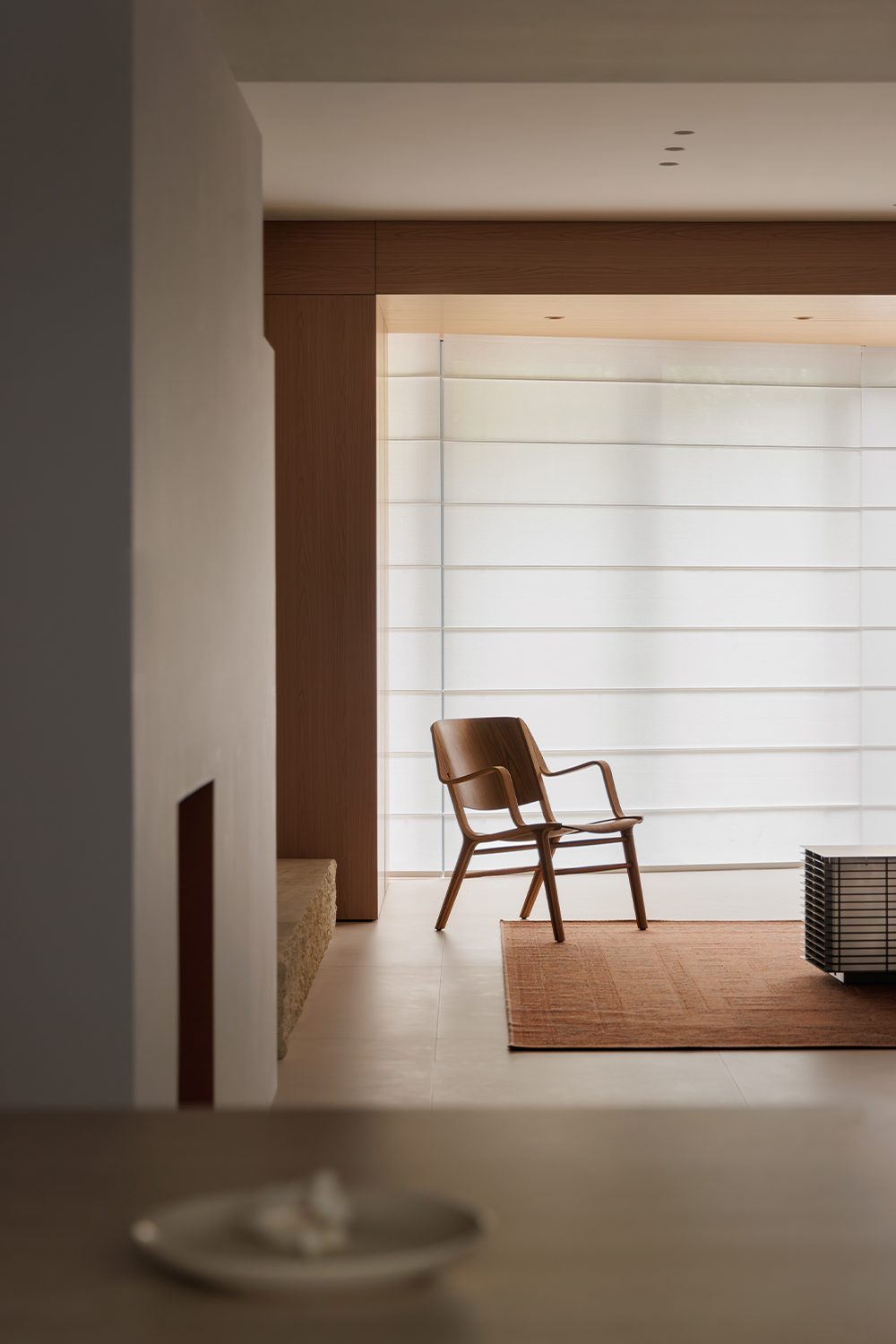
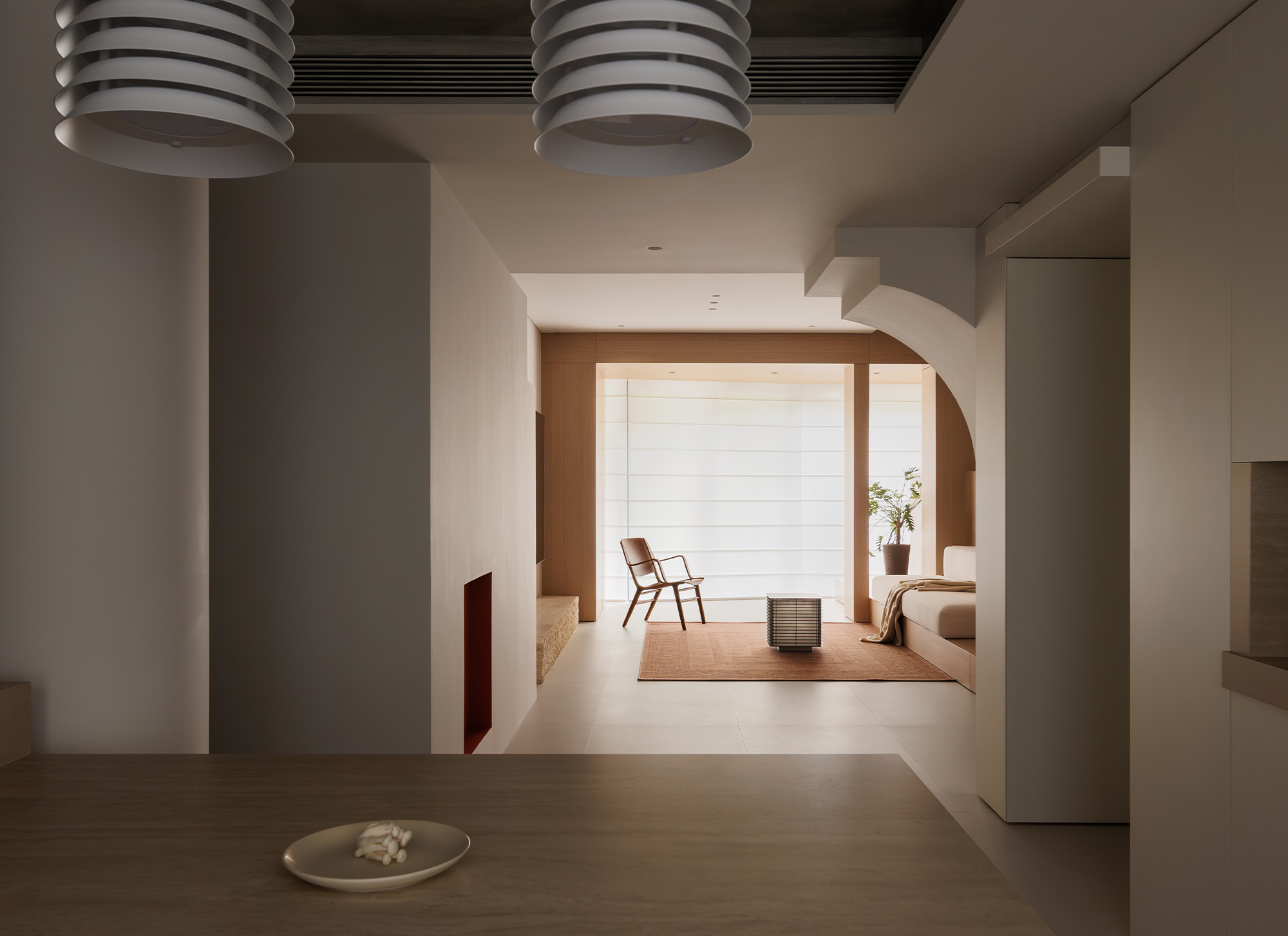
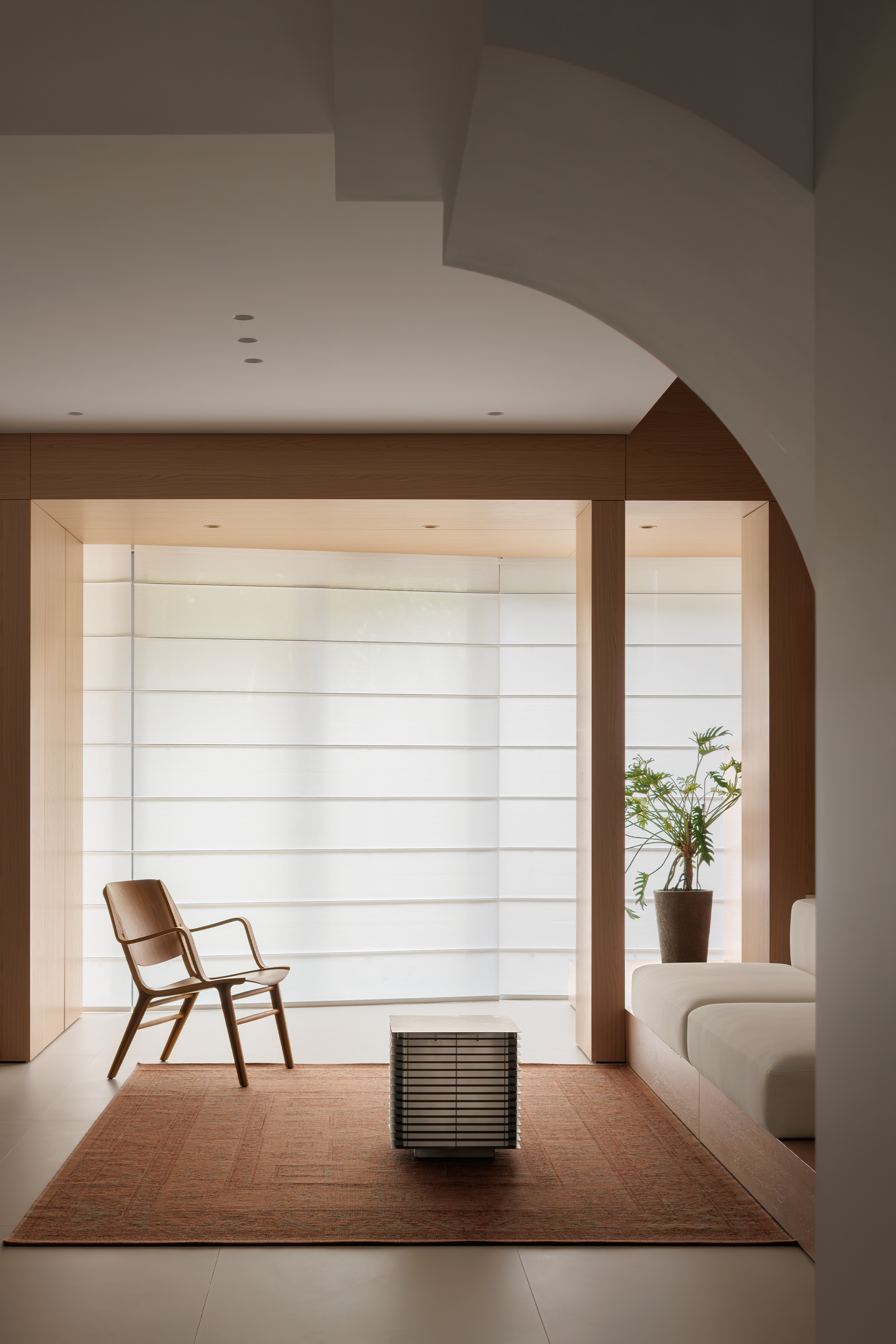
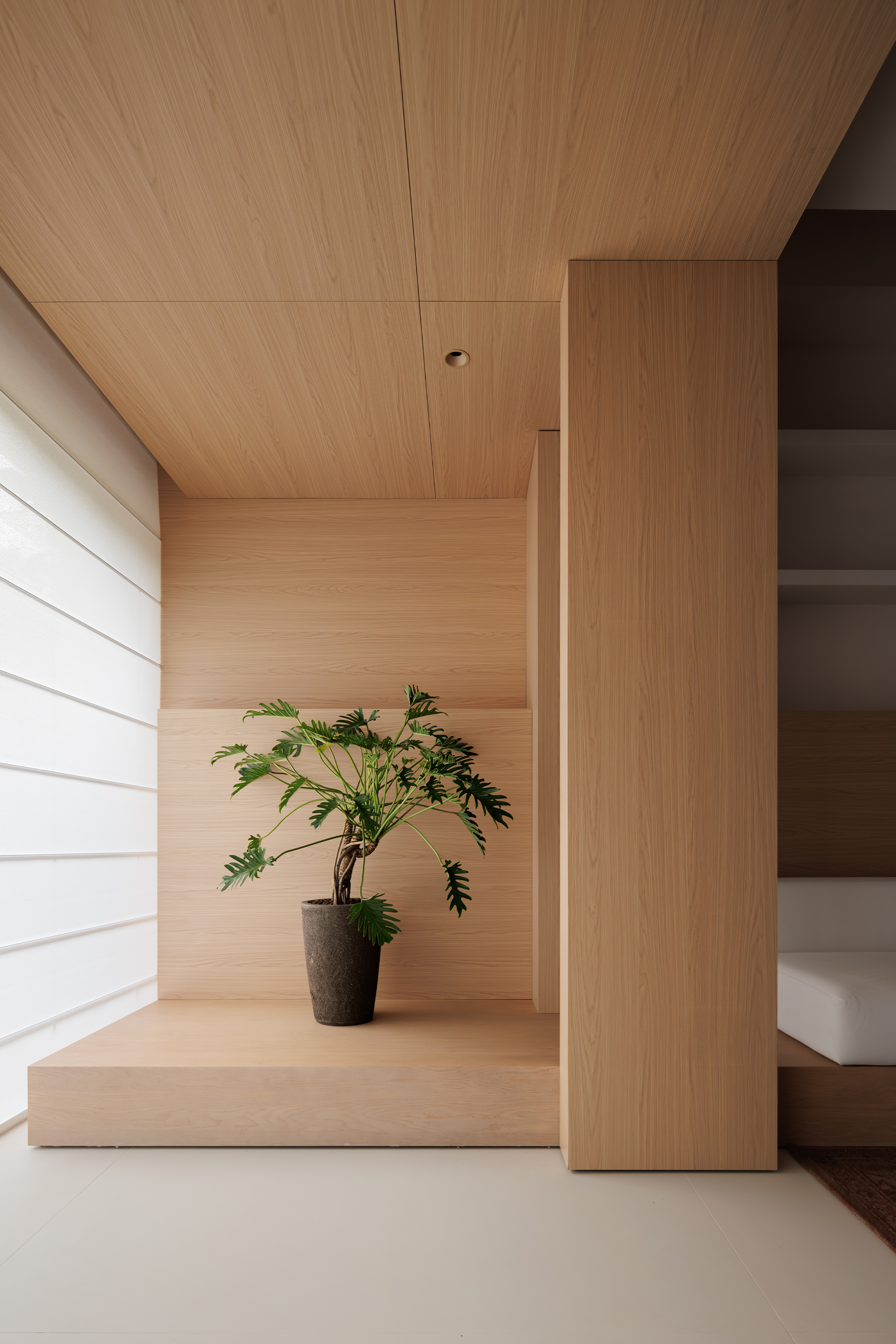
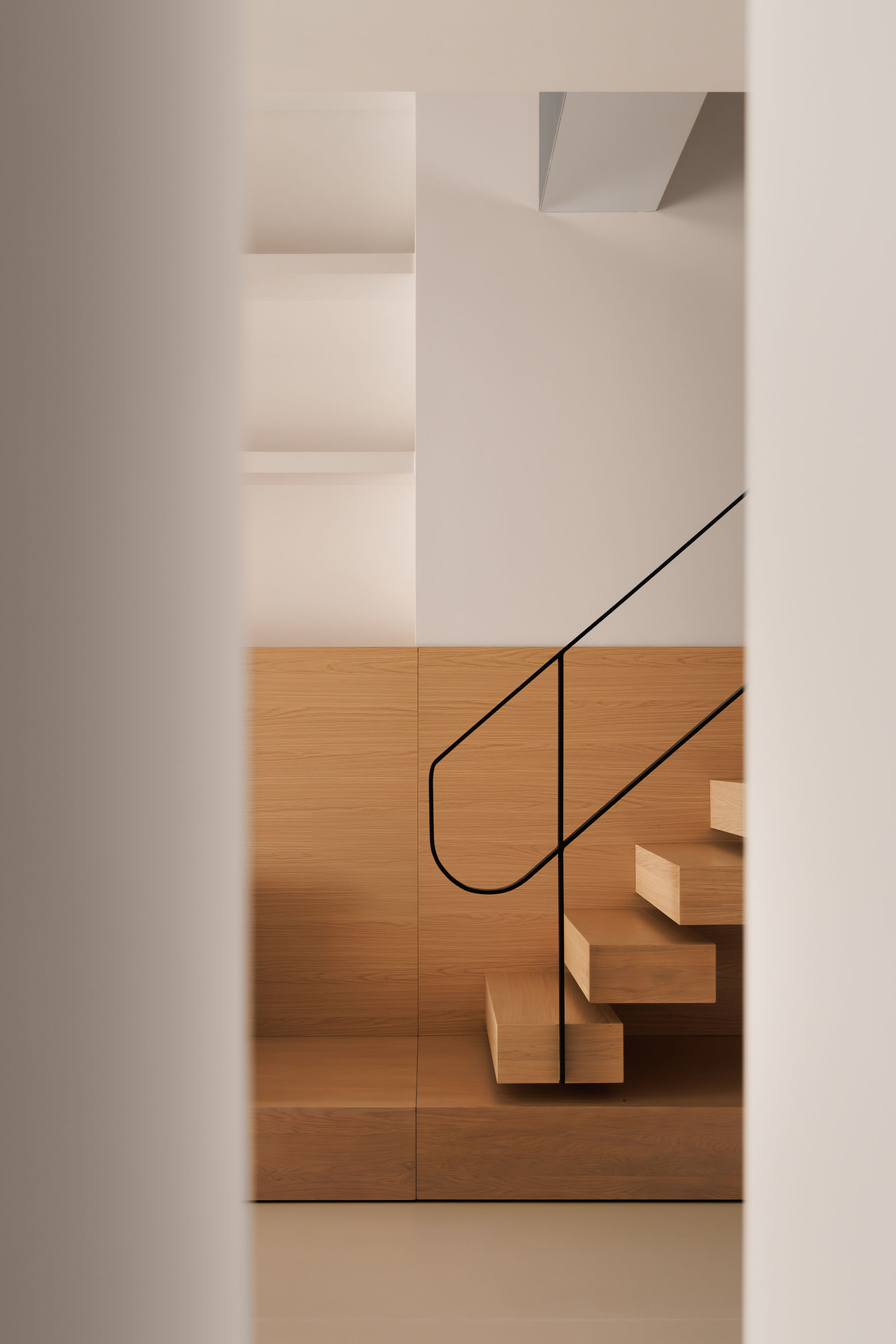
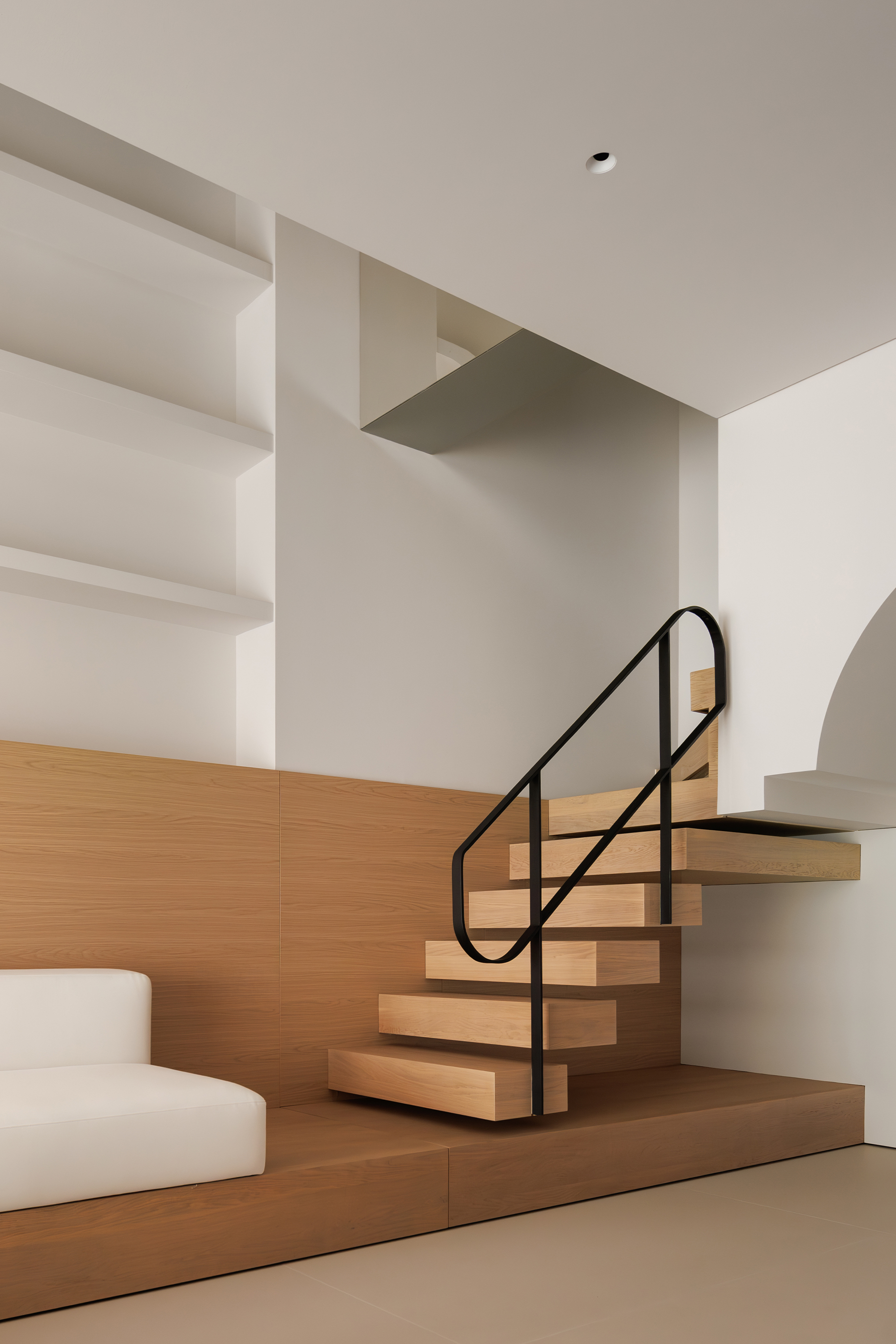
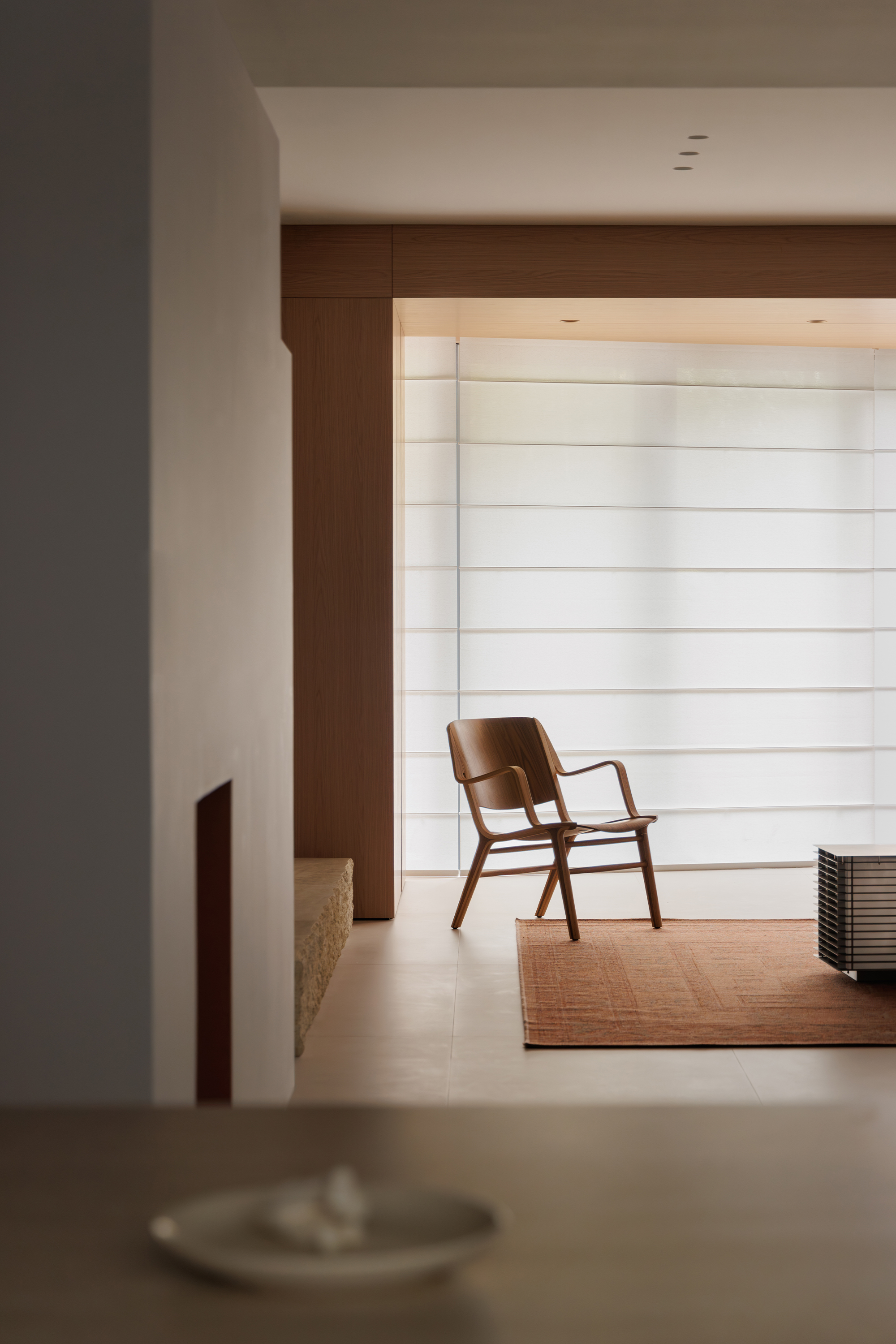
The boundary between the balcony and the living room should not be a rigid partition, but rather a carefully framed, flowing painting of life. We have redefined the relationship between inside and outside with a slender yet powerful "wooden frame." "The spatial layers are thus expanded, from the 'gathering' of the living room, to the 'transparency' of the framed view, and then to the 'openness' of the balcony, forming a rhythmic three-tiered progression." The repositioned staircase is the most sculptural and dynamic element in the space. It may appear to float lightly, connecting the upper and lower levels, with the steps using materials that echo the wood veneer blocks. It is not only a tool for vertical transportation, but also a visual focal point and a hub of the space.

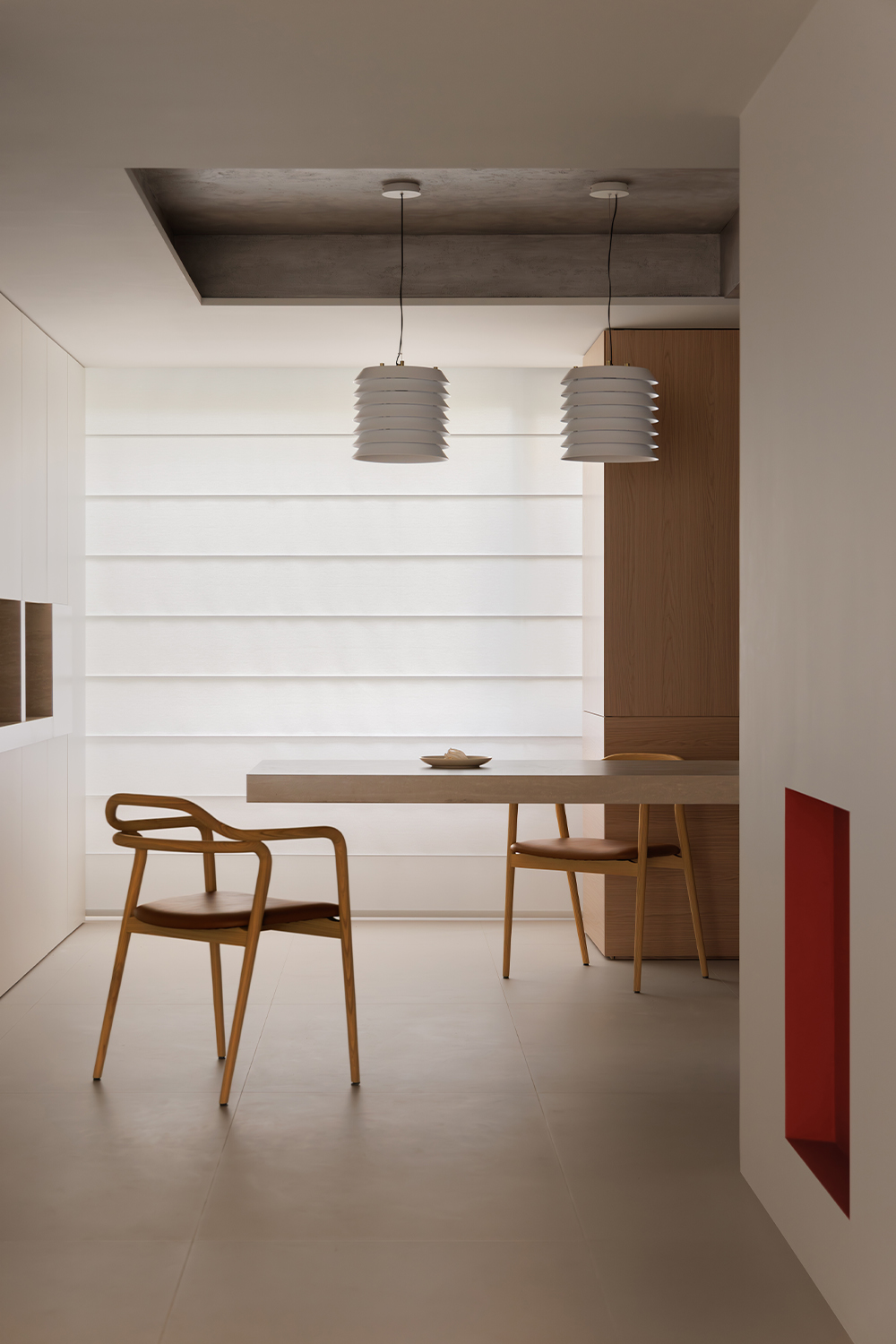
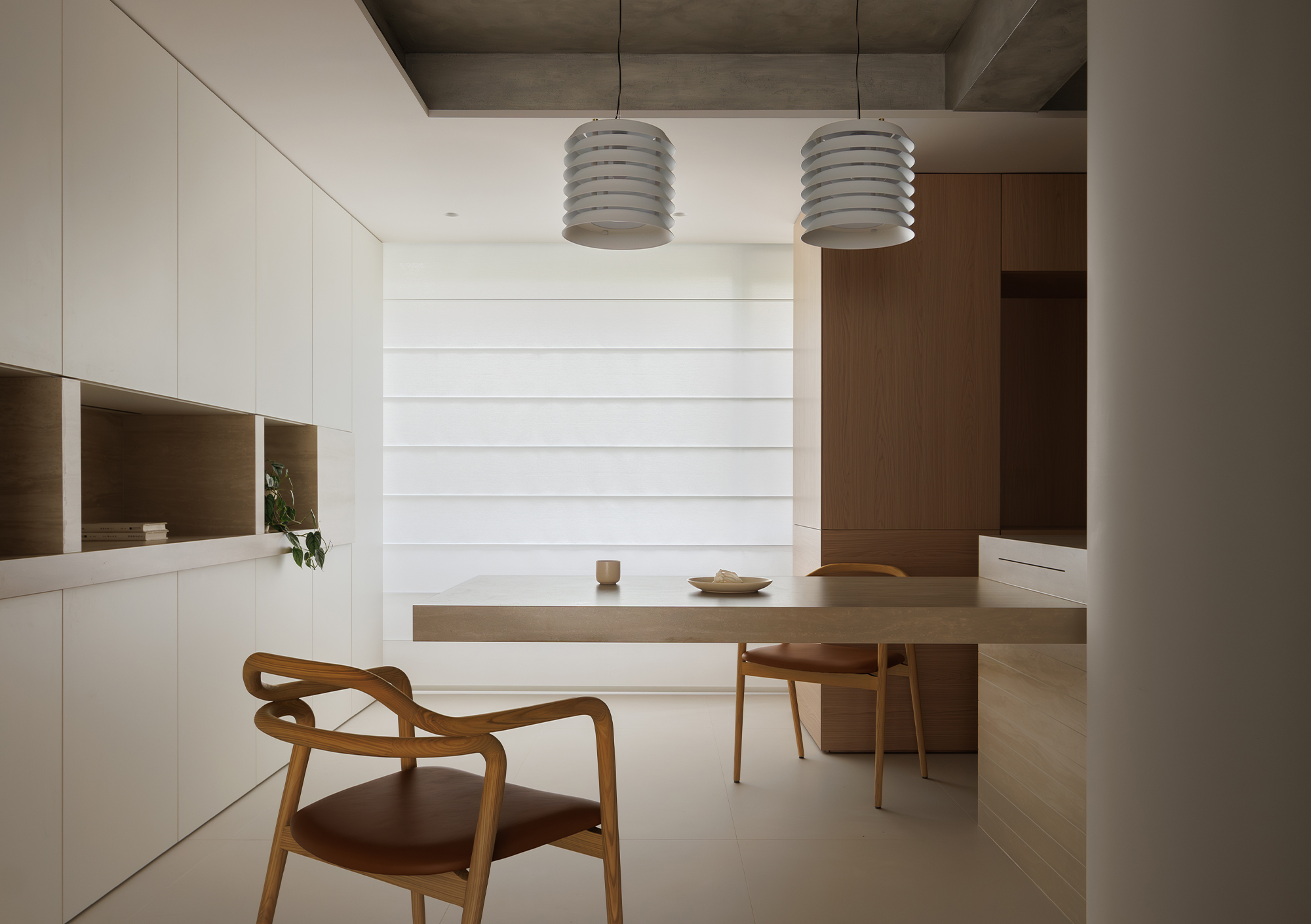
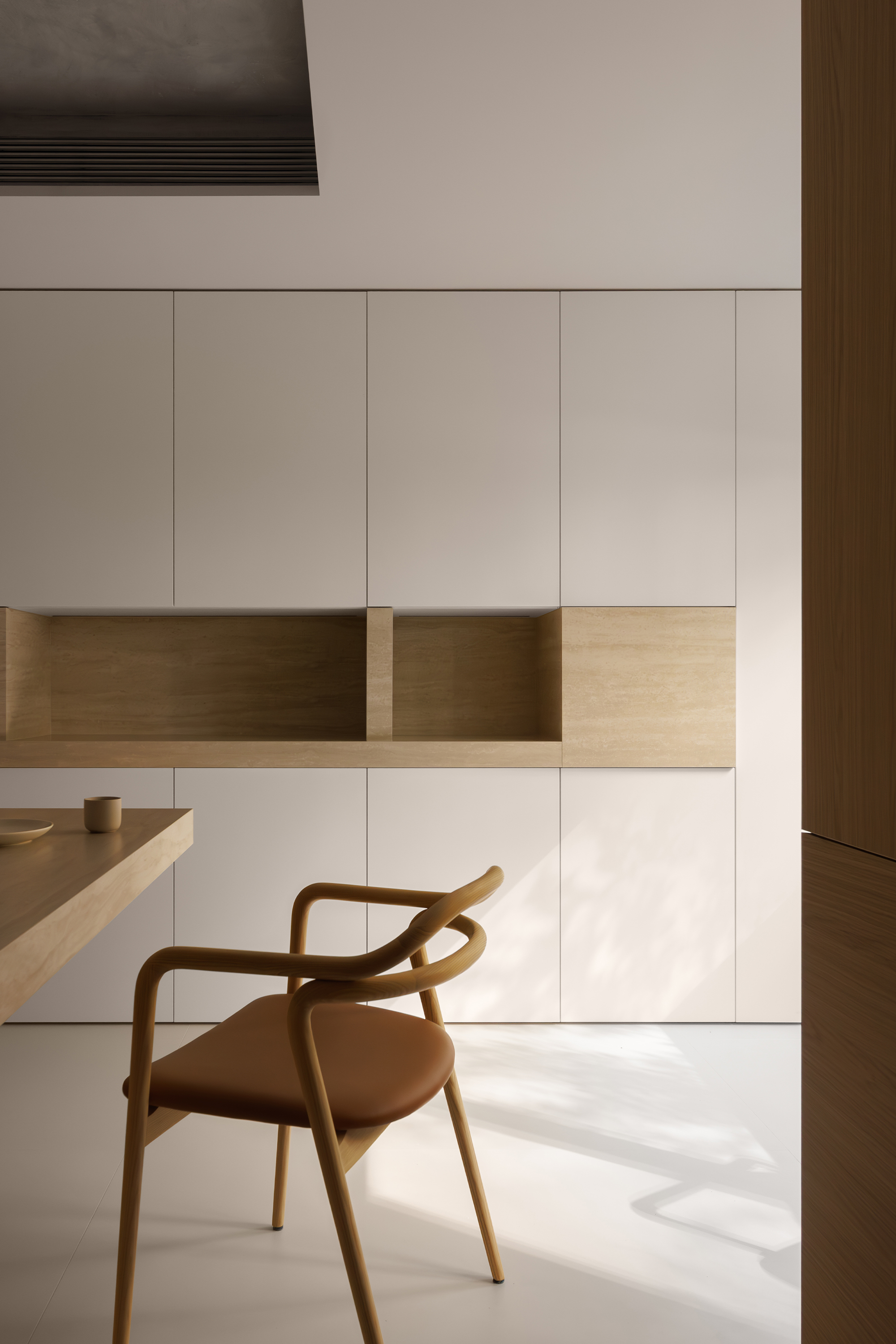
After the walls of the dining room were removed, the space was reorganized, forming a smooth interactive loop with the living room and kitchen. This allows family members' movements and gazes to intertwine freely, integrating the isolated act of dining into the ongoing family narrative. Travertine is used as the dominant material, applied to the custom dining table and the open grid system on the walls, creating visual continuity and a tactile warmth from the horizontal to the vertical planes. The same texture extends and echoes in different dimensions.
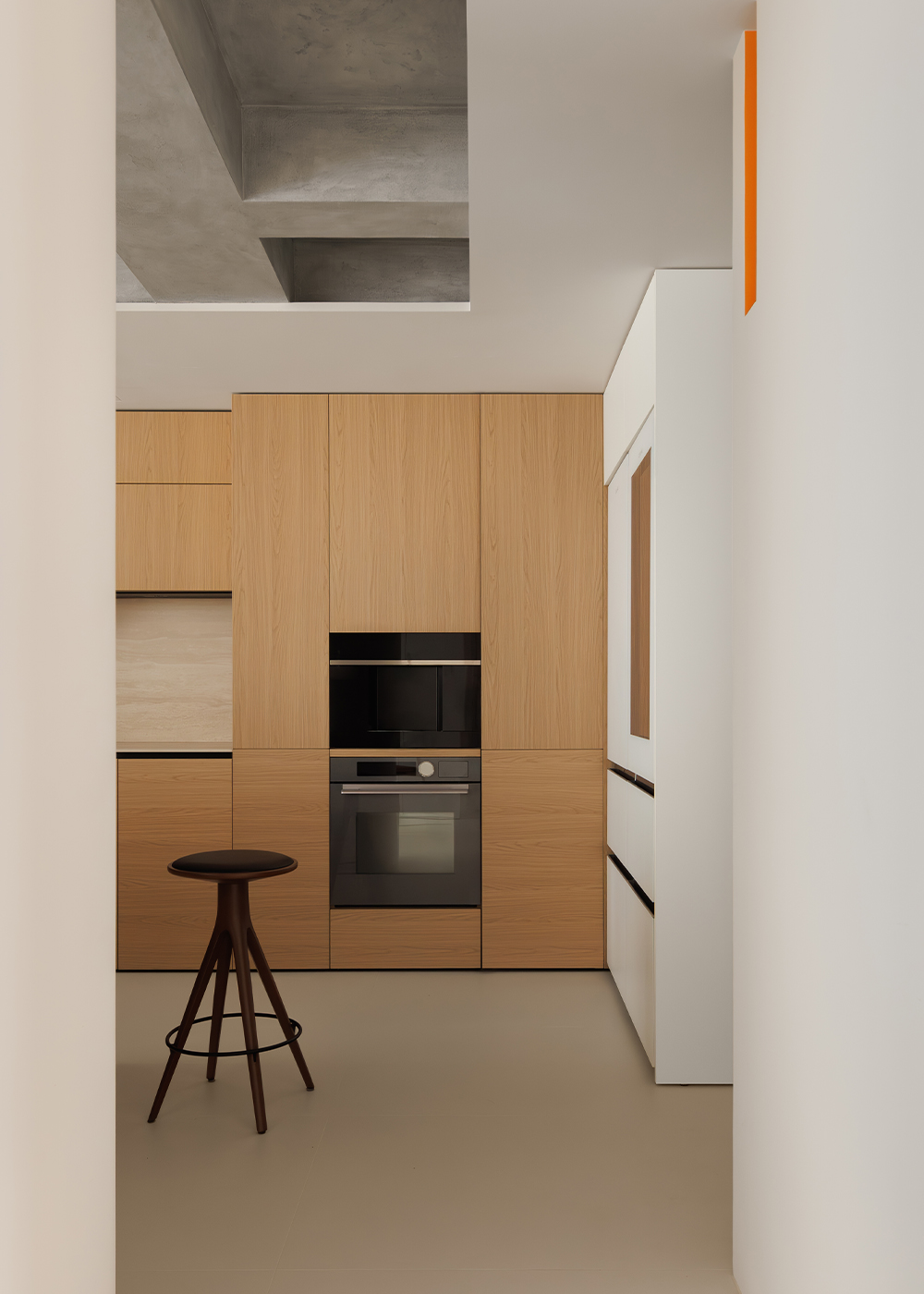
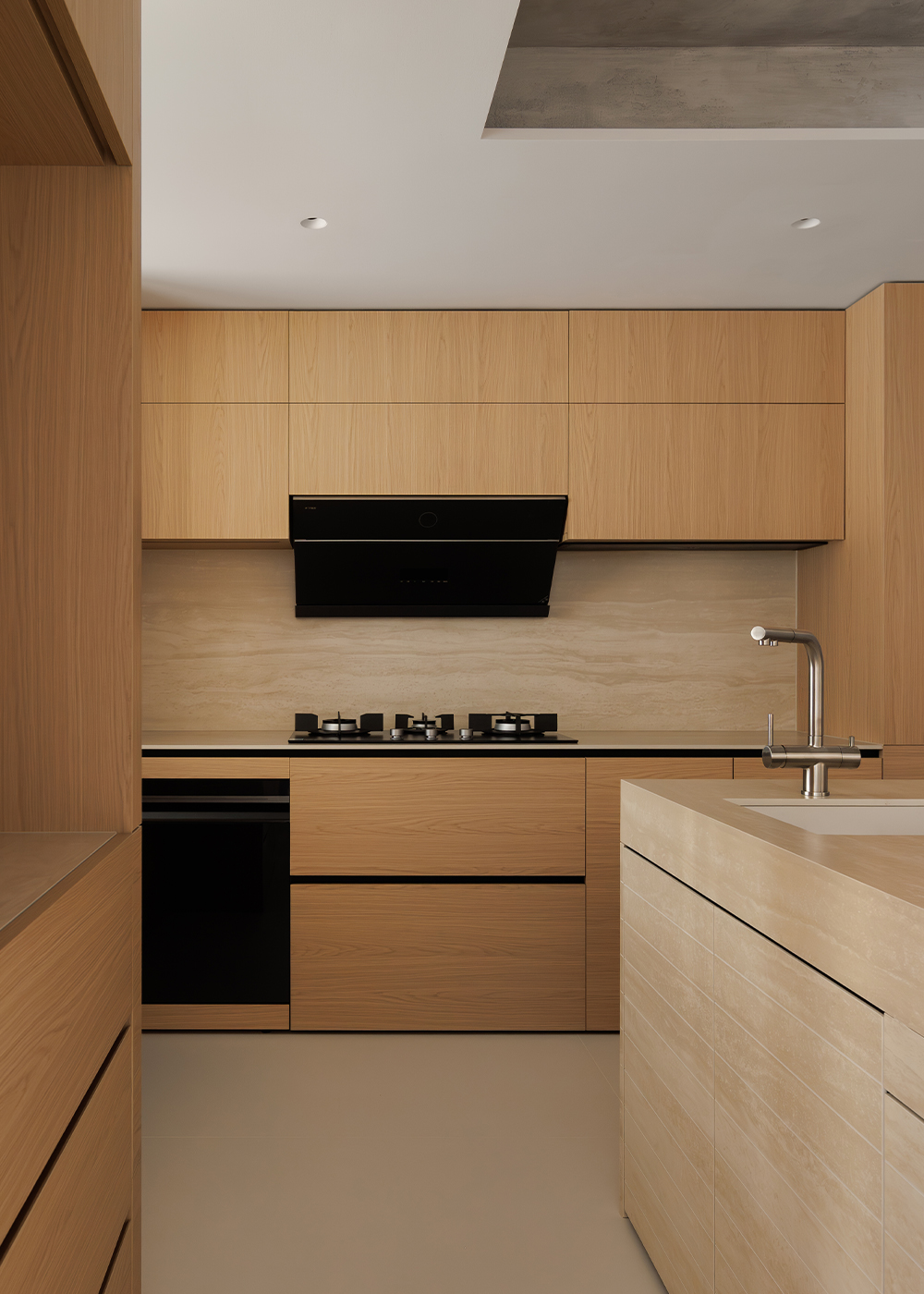
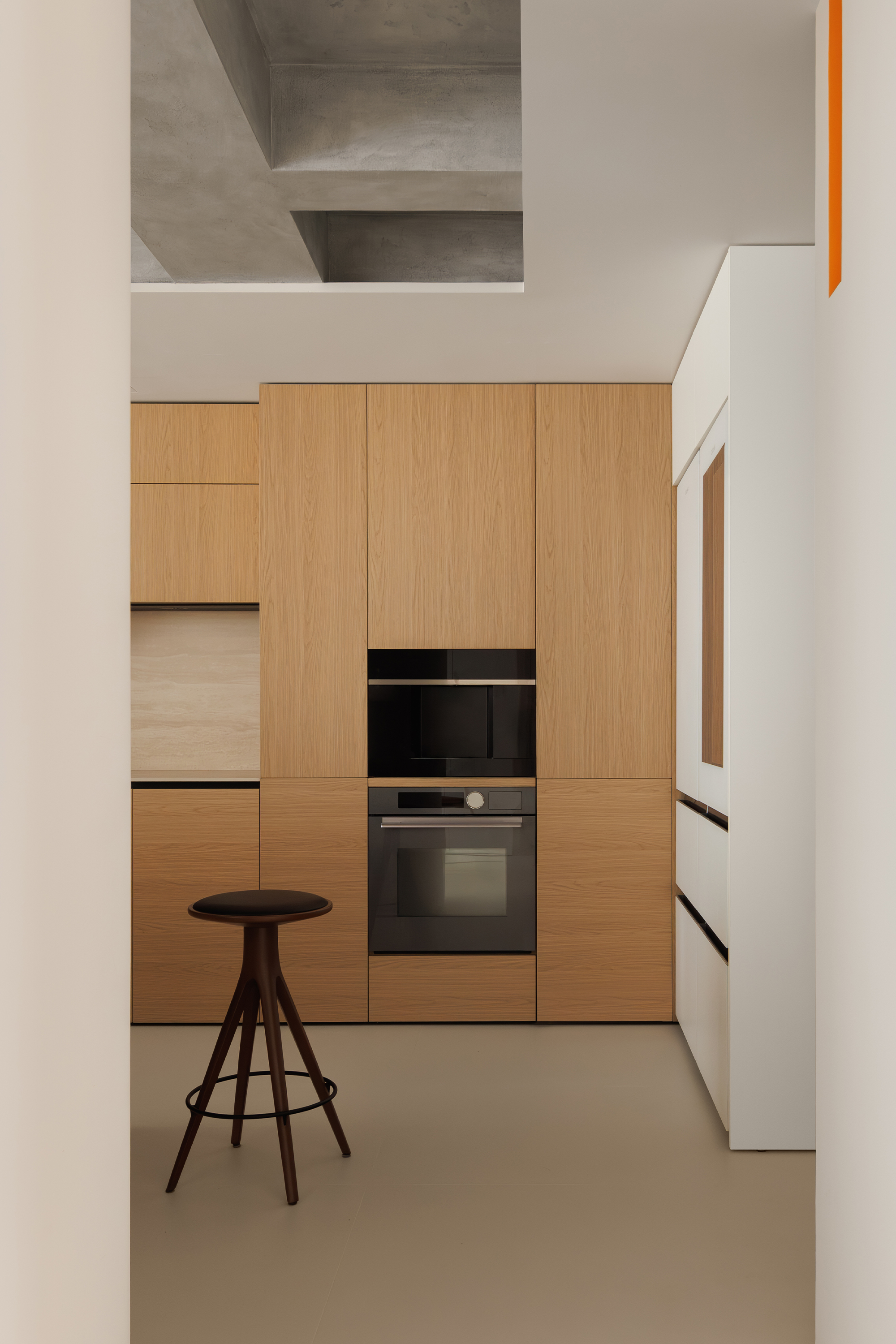
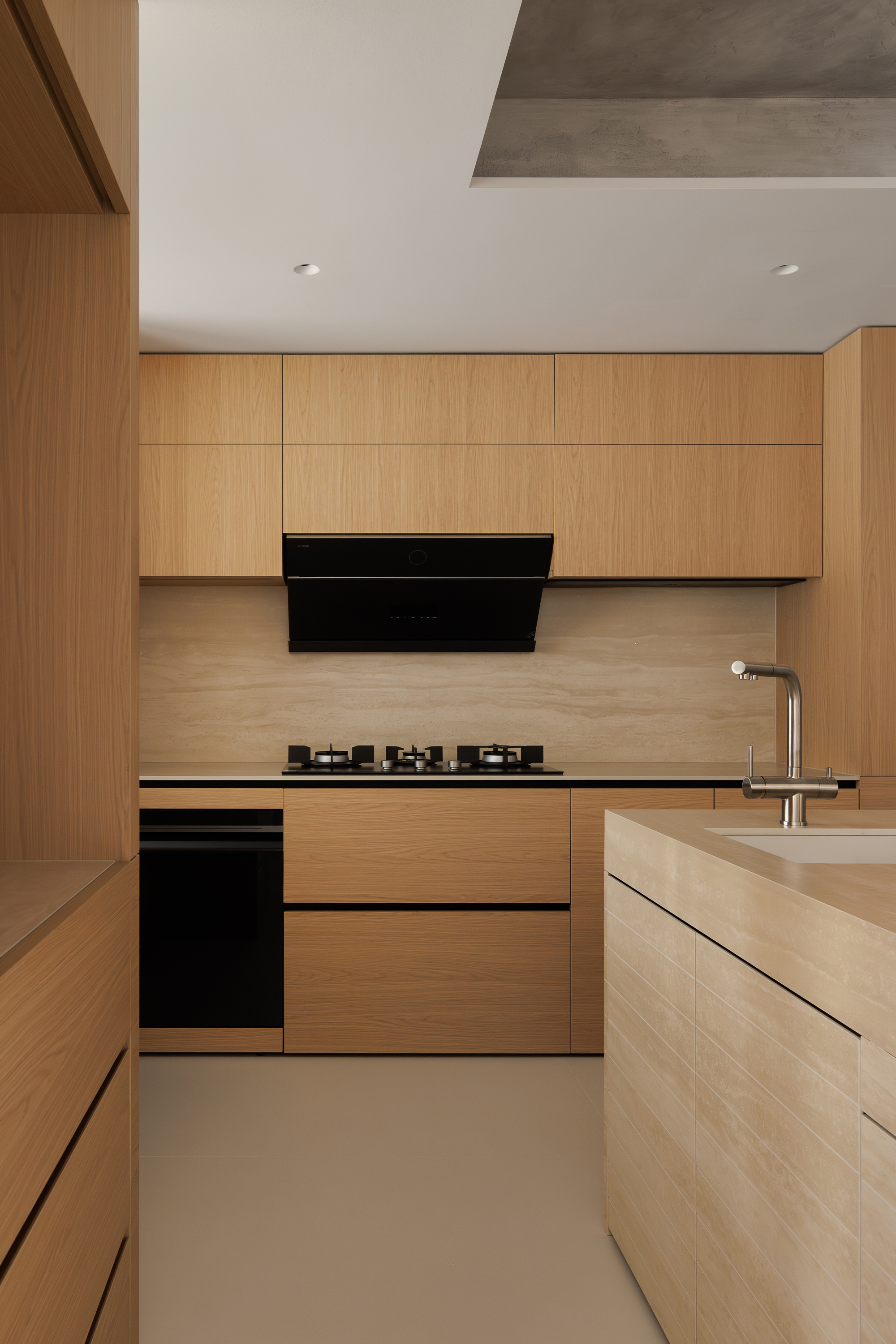
"The kitchen strives for ultimate visual unity. From tall cabinets to base cabinets, from the island to the back panel, all use the same color and texture. Lines are simplified to the extreme, allowing the texture and color of the materials themselves to become the sole protagonist, thus giving the space a calm yet powerful overall unity." The island, like a bridge, has its countertop and back panel materials strictly unified with the overall cabinet system, ensuring absolute visual continuity. Family members and guests can naturally engage in activities around it—preparing meals, enjoying drinks, conversing—the boundaries between cooking and socializing dissolve here.

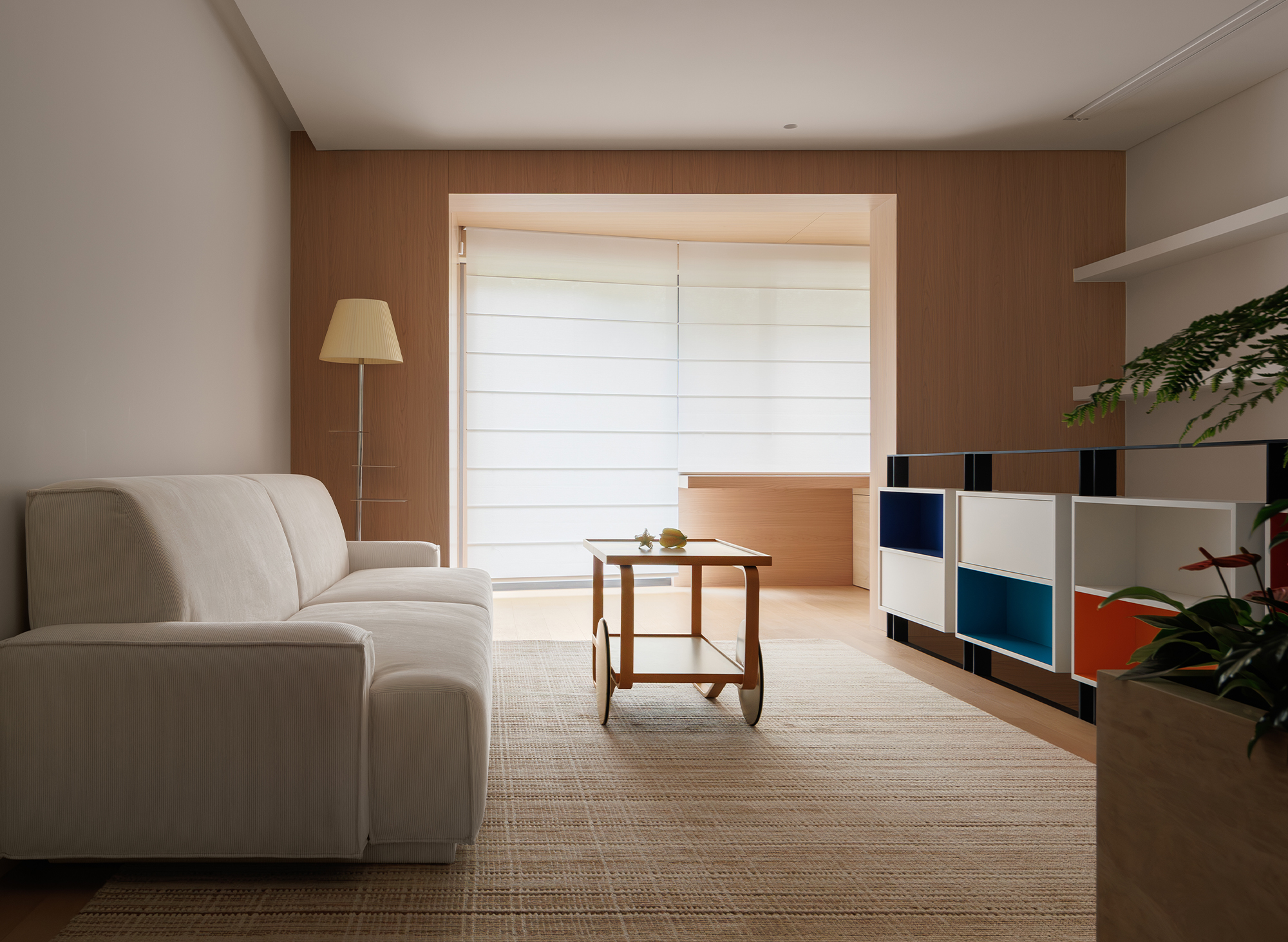
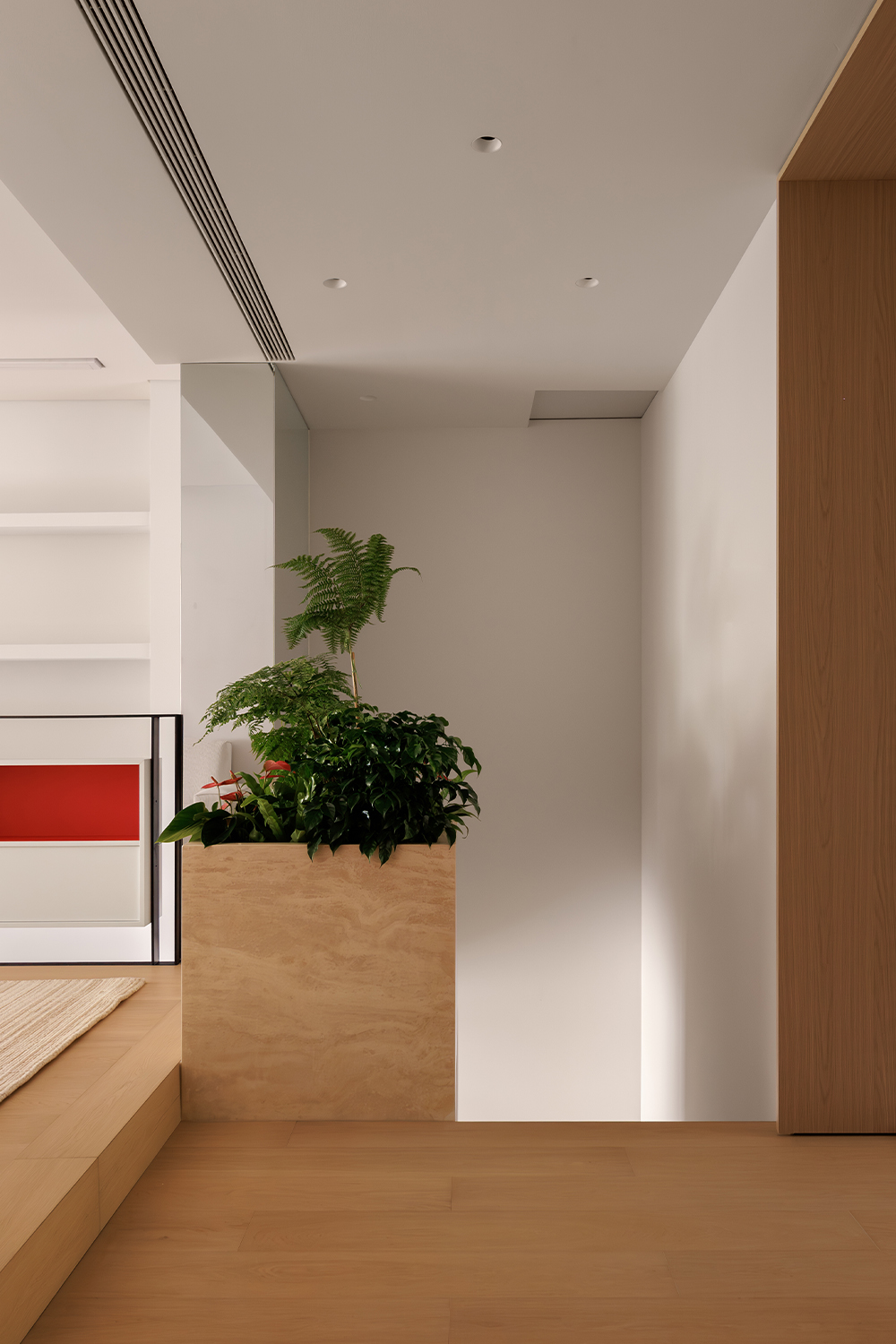
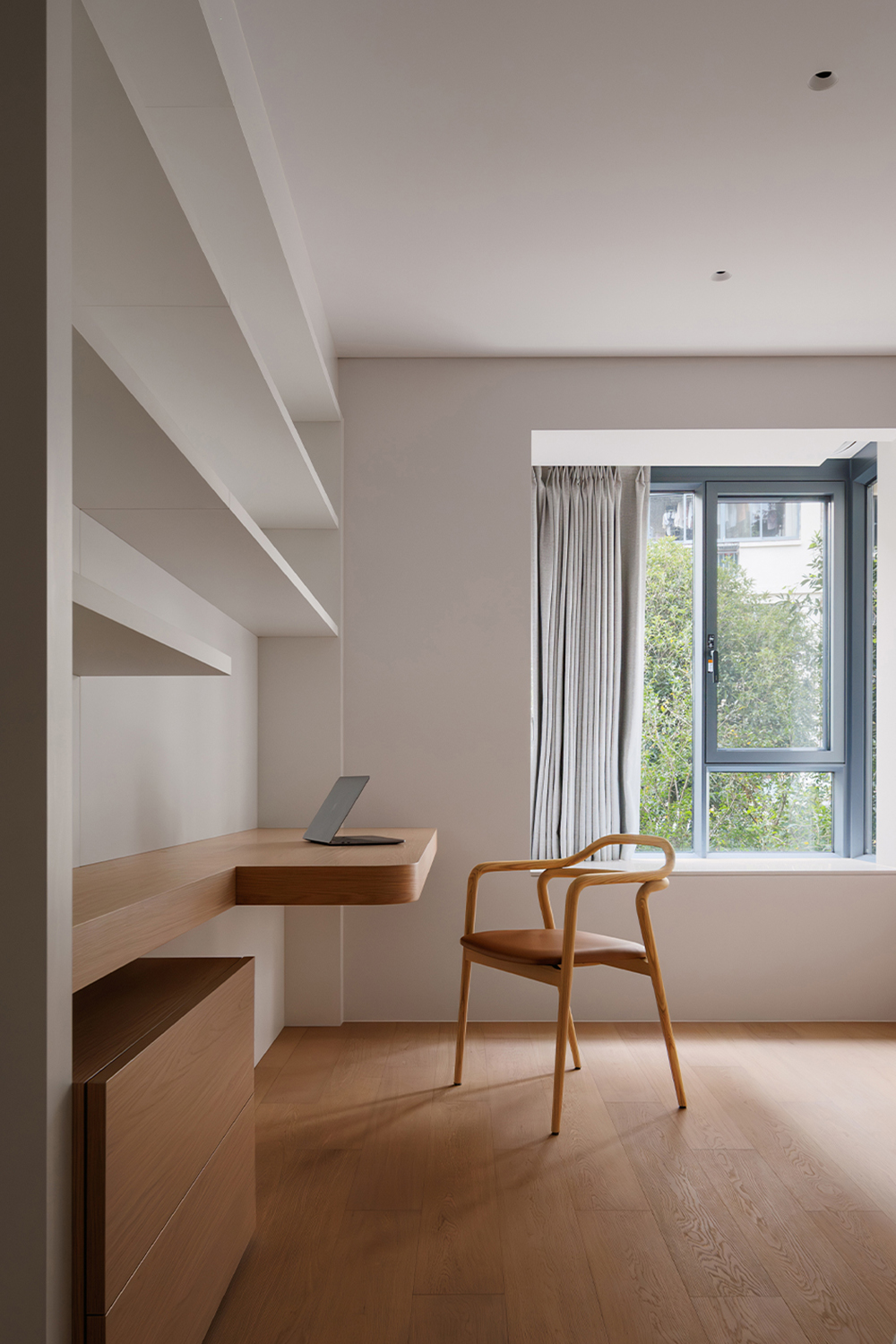
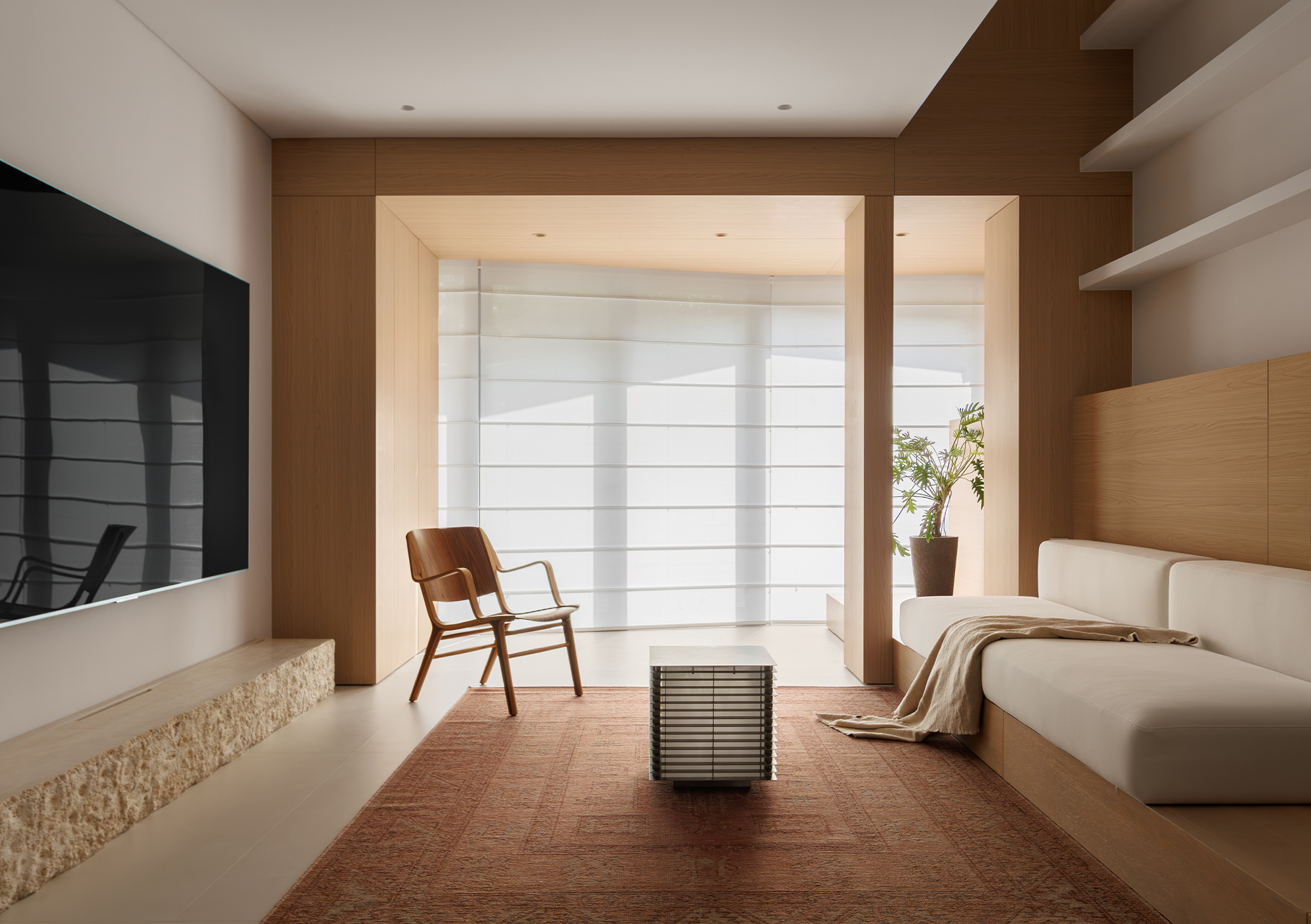
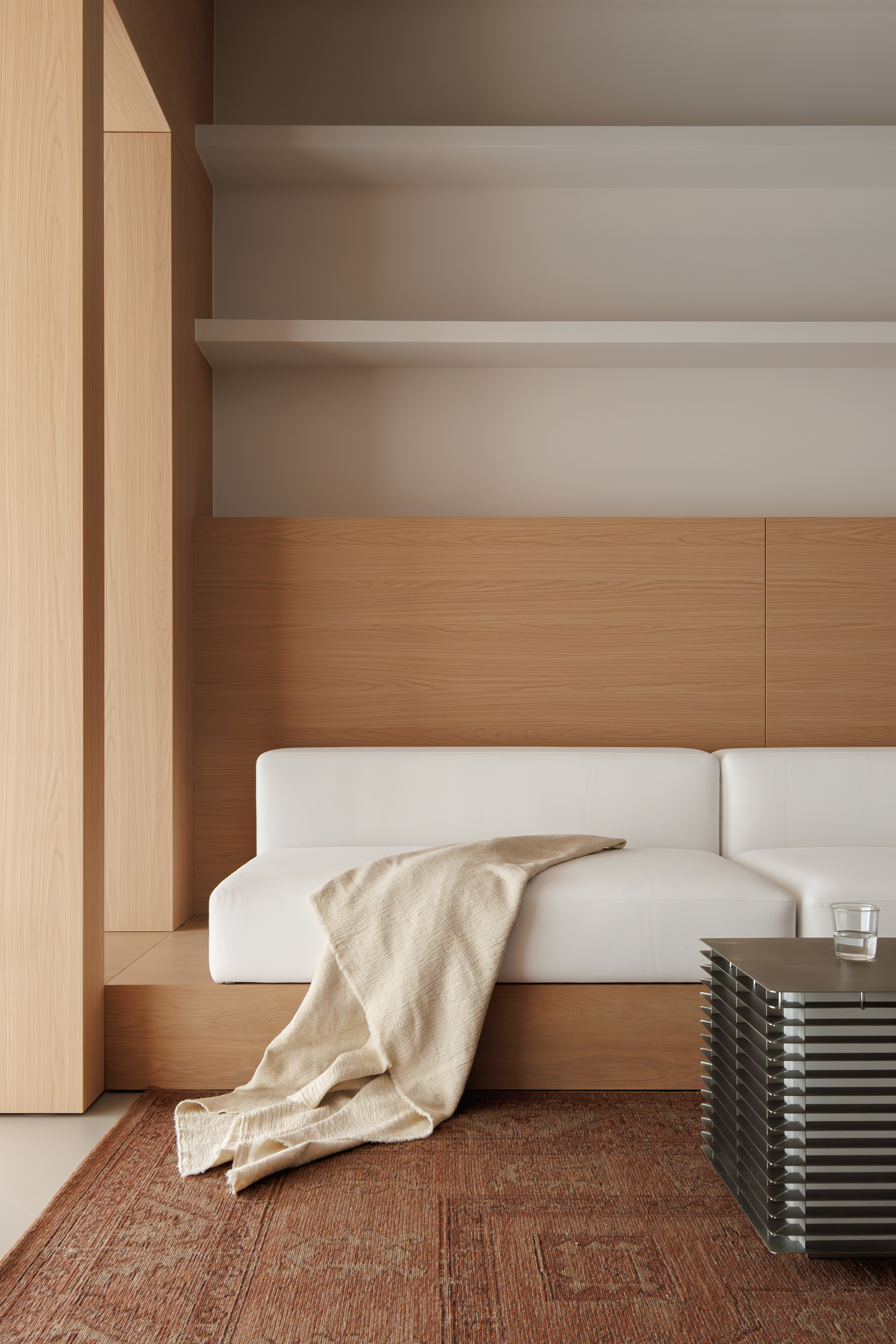
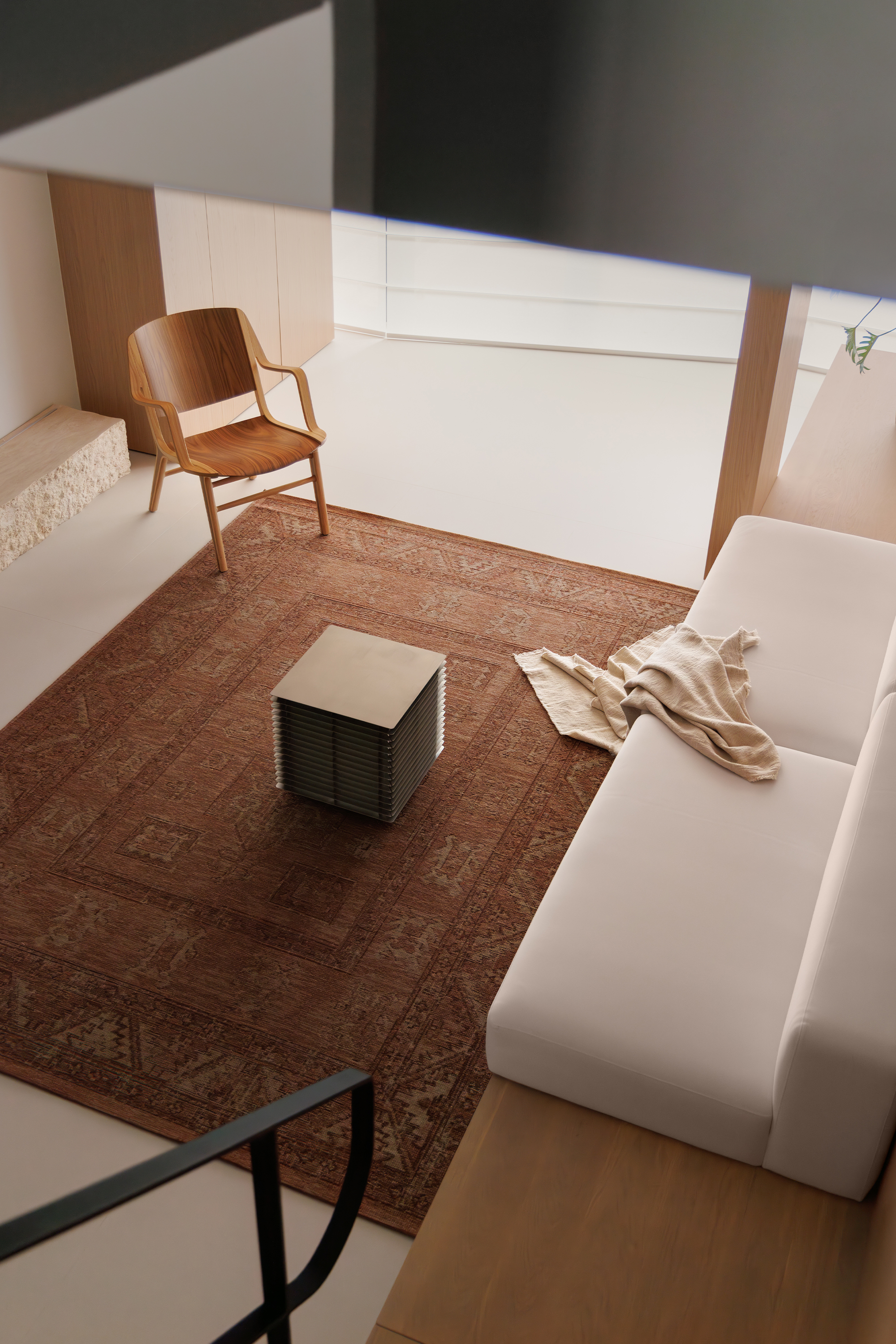
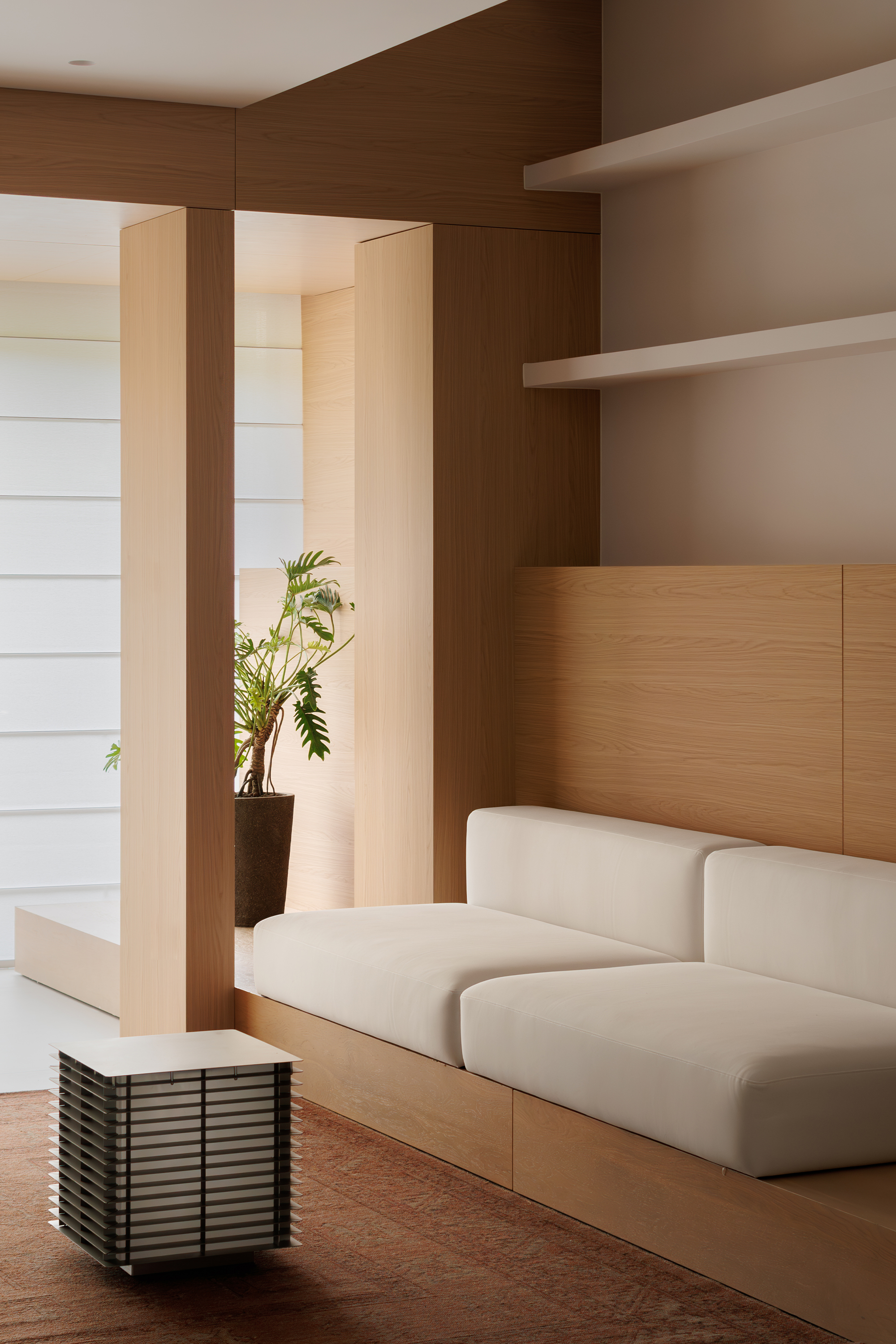
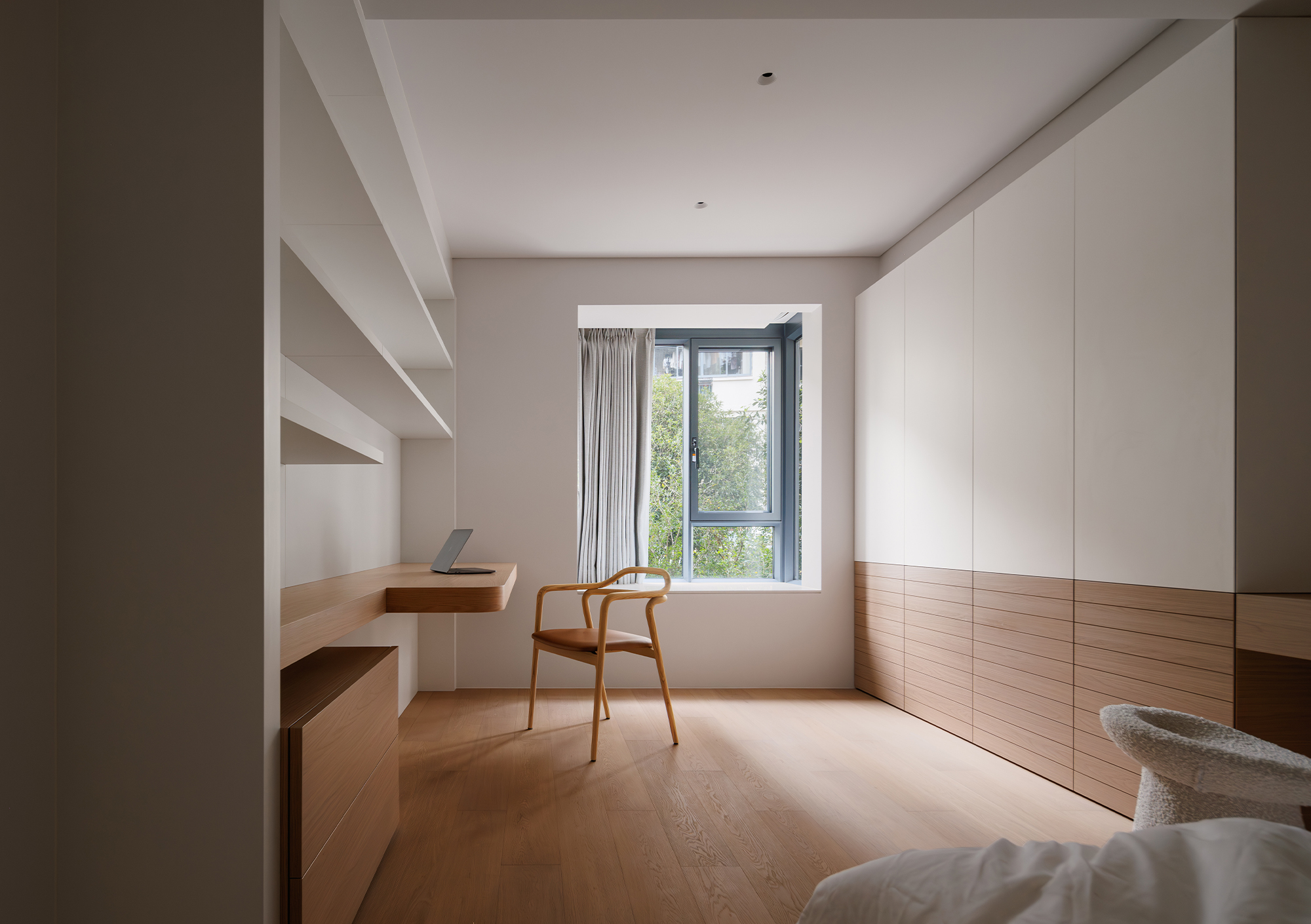
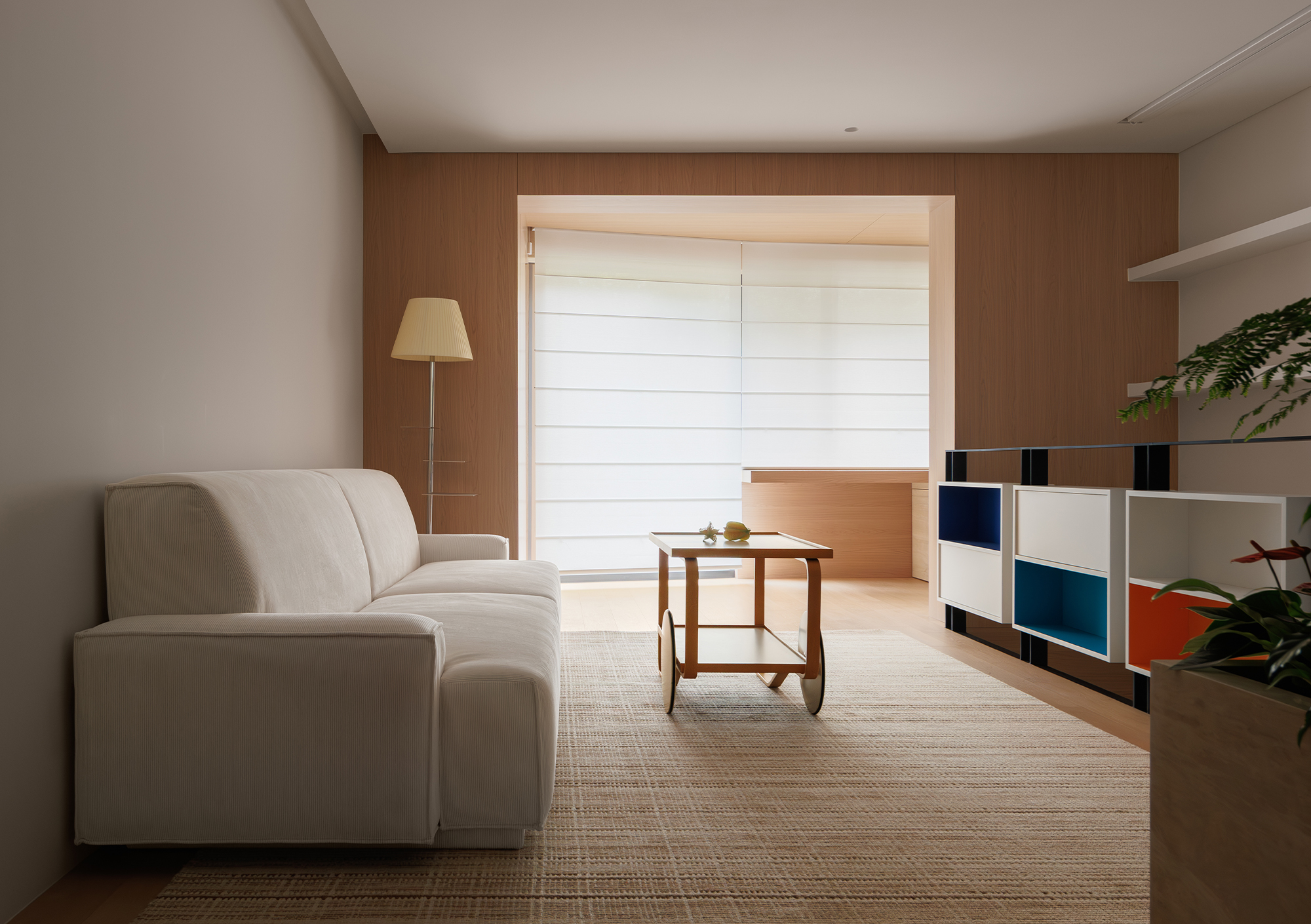
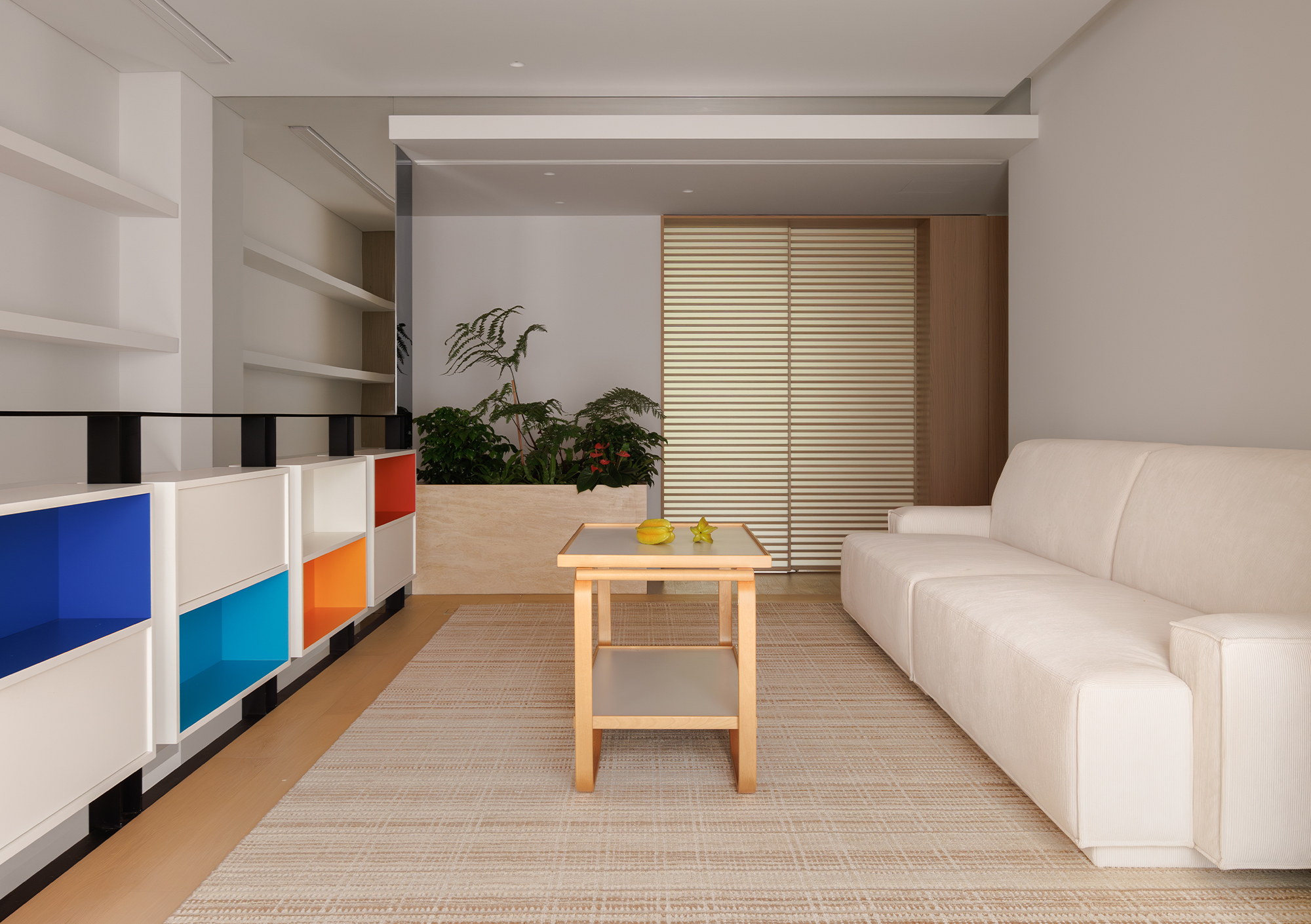
The second-floor living room is a tranquil extension of the family's communal life. We created a sense of enclosure by lowering the center of gravity of the space. Low-profile modular sofas, floor-length cushions, and a coffee table construct a sanctuary for deep reading, private conversations, or simply relaxing. "We integrated the reading area by the window with a continuous wooden frame. The desk grows out of the frame, 'framed' along with the view outside. This design blurs the boundaries between inside and outside, making the act of reading itself part of gazing at the scenery."

MORE PHOTOS