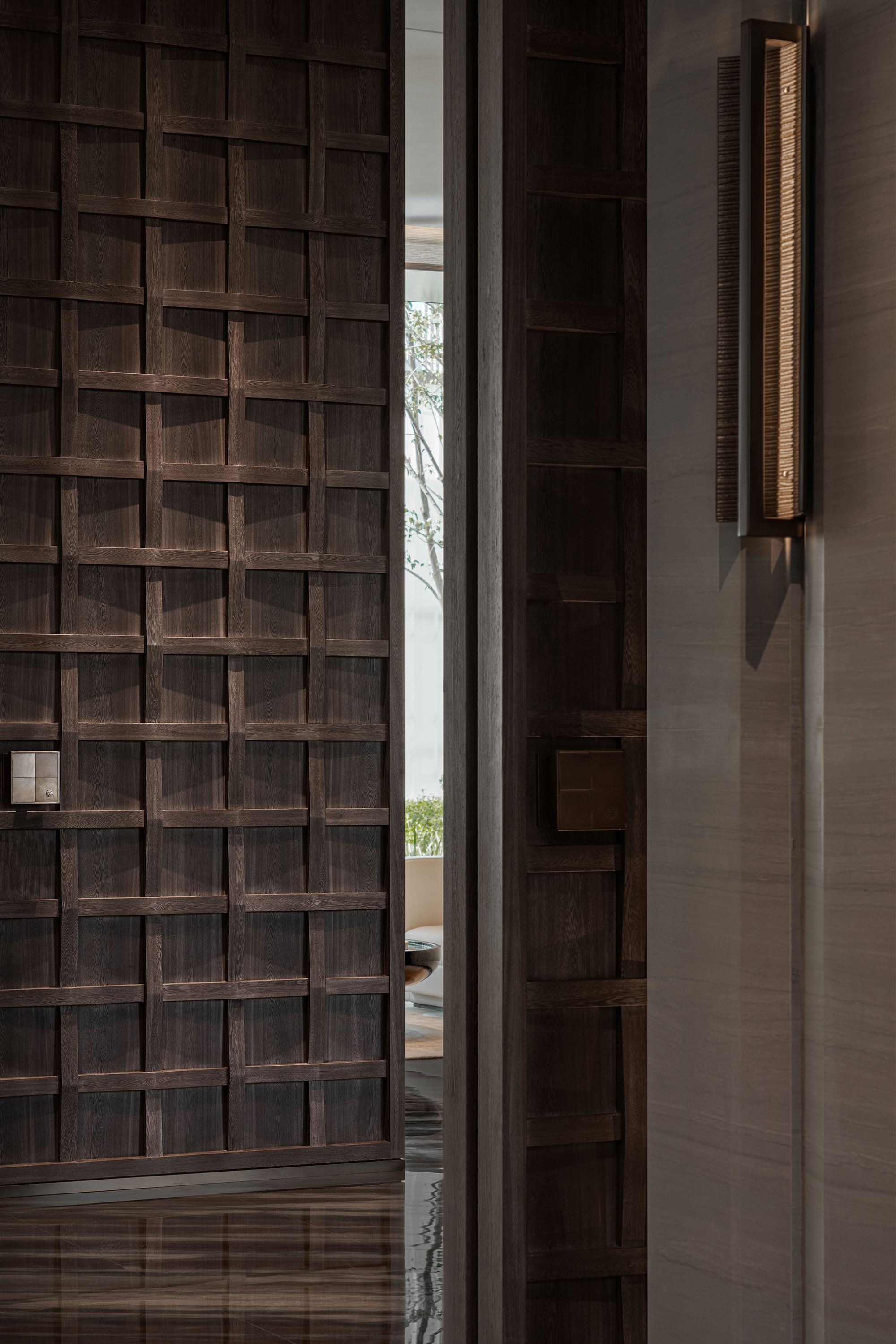
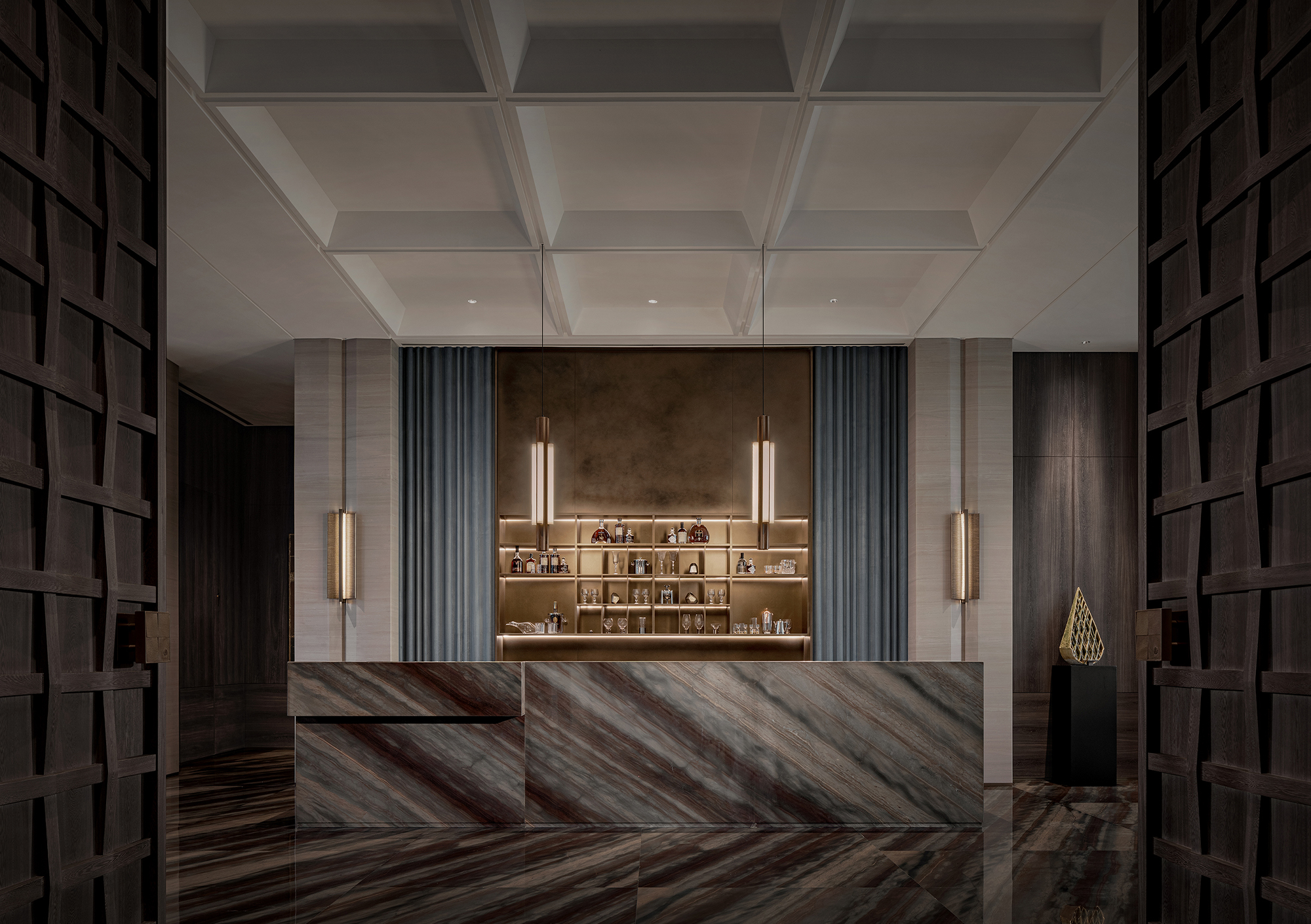
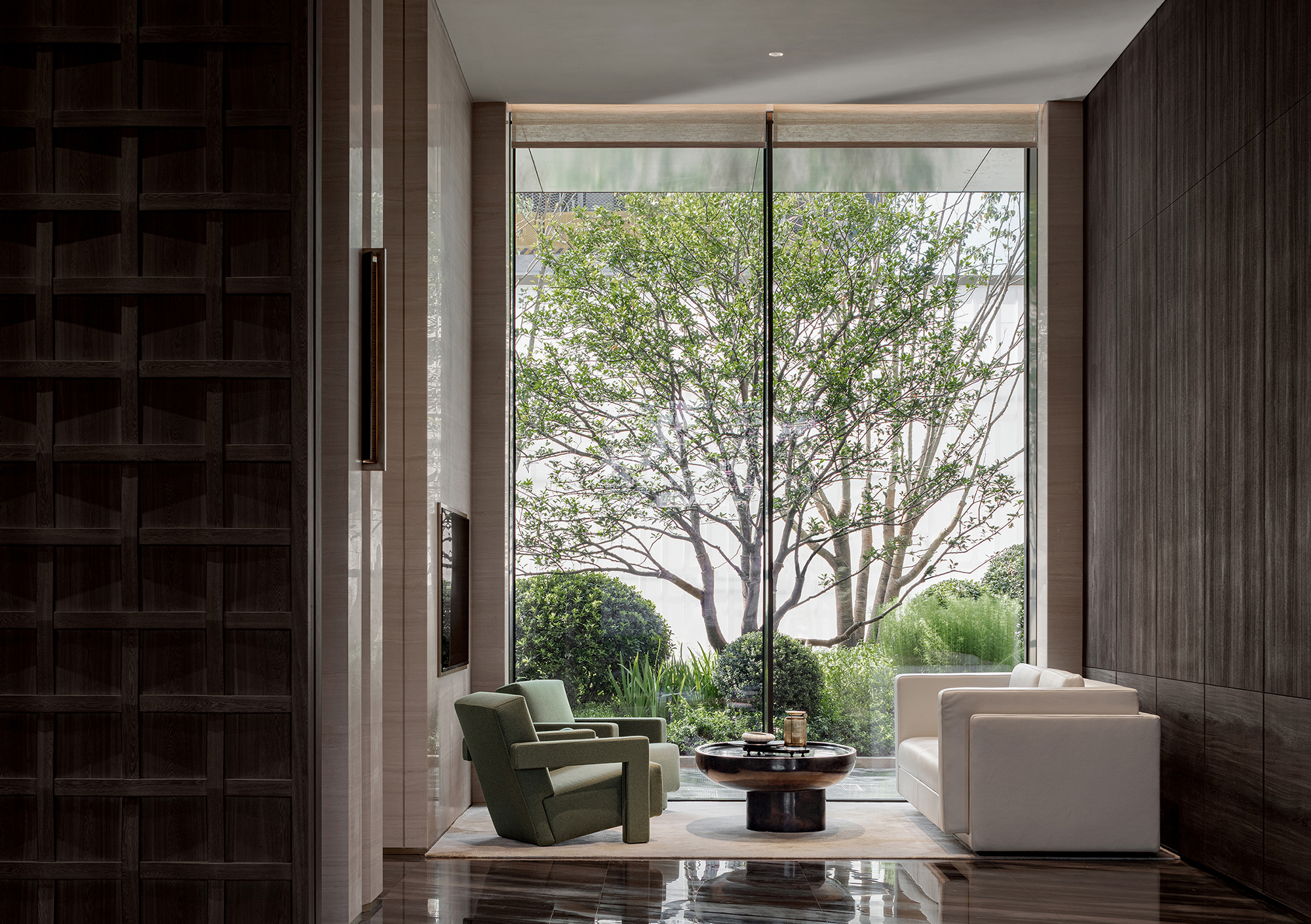
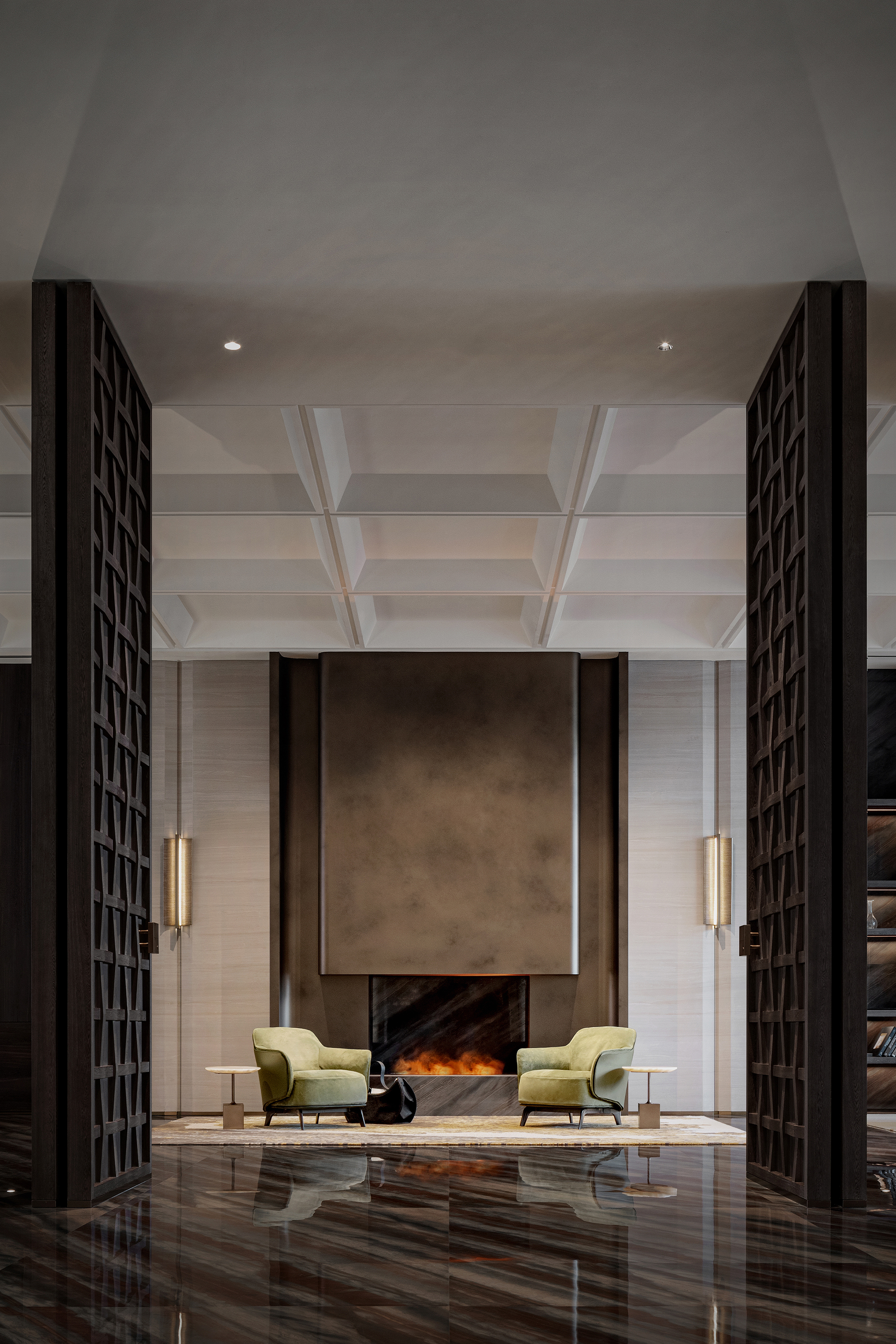
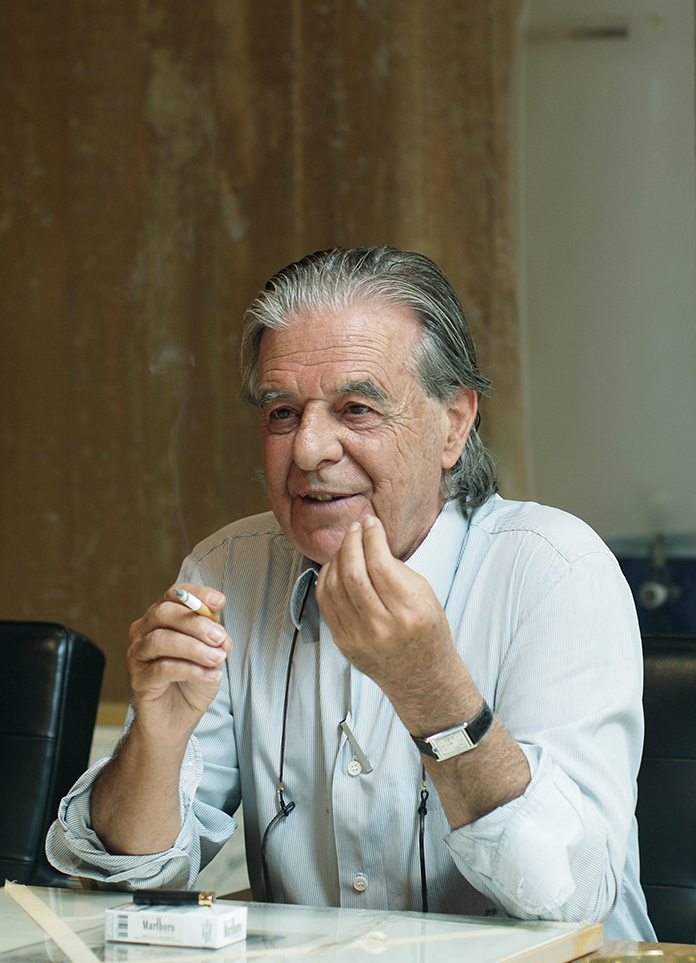
The expression "House of Gold and Jade" has long served as an elegant wish for abundance and achievement, almost becoming a synonym for value—manifest, lavish, and worthy of display. Yet, upon arriving at Hangzhou CR Land·Eternal Center, the meaning of the phrase is fundamentally recast in the contemporary context. "House of Gold and Jade" no longer speaks of riches alone; instead, it becomes a deeper inquiry—Does the value we pursue reside in outward display, or does it radiate from within?
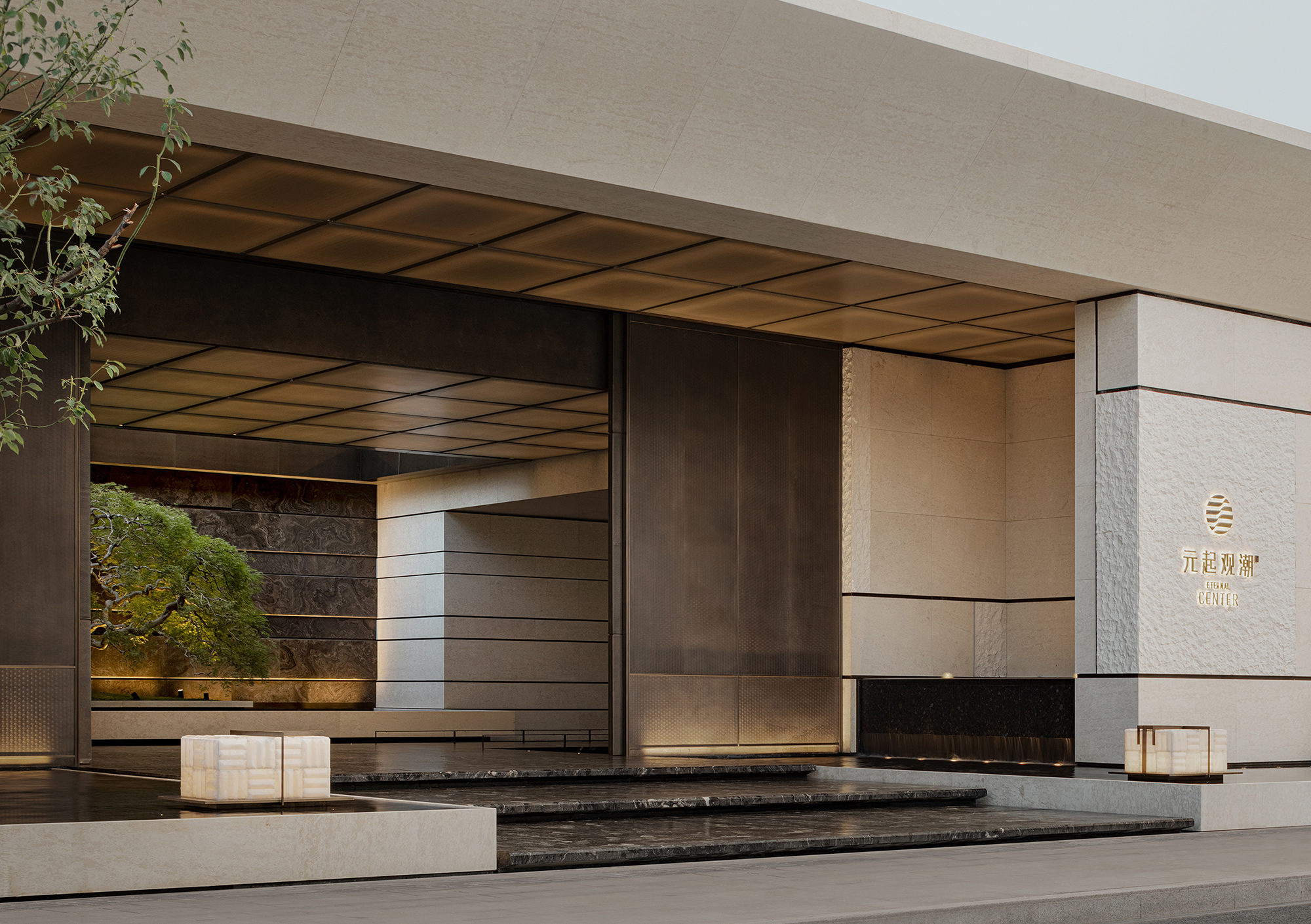
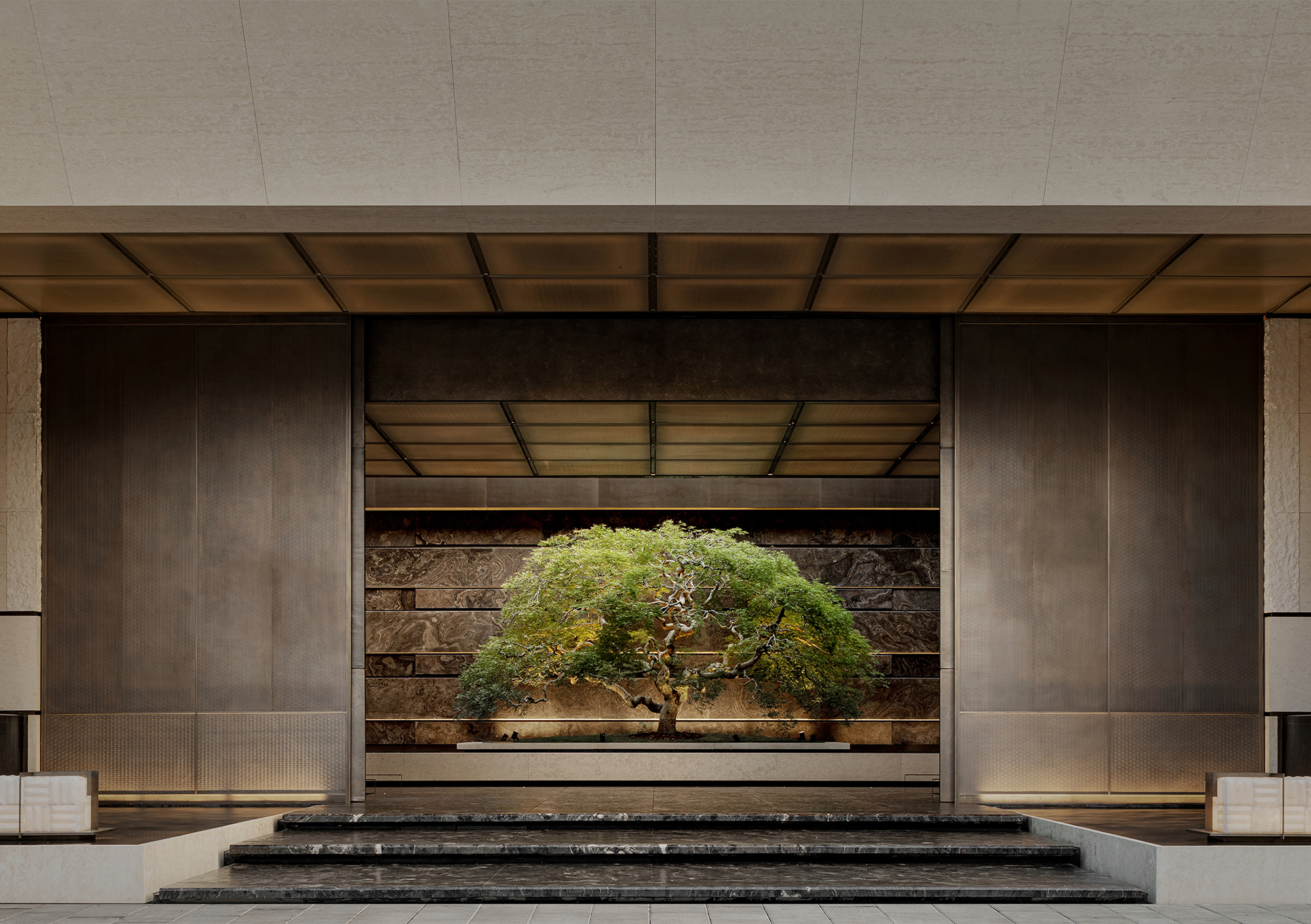
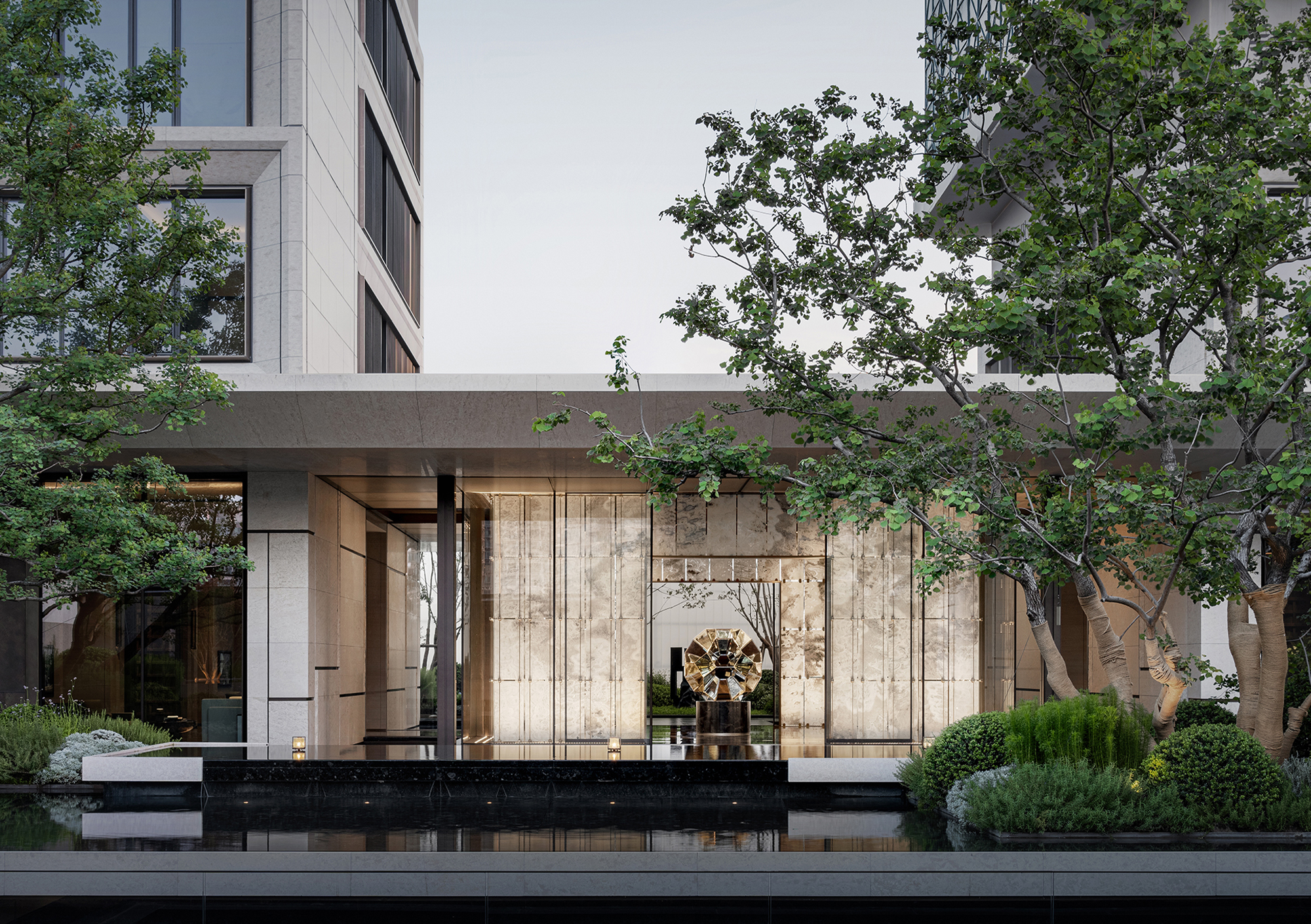
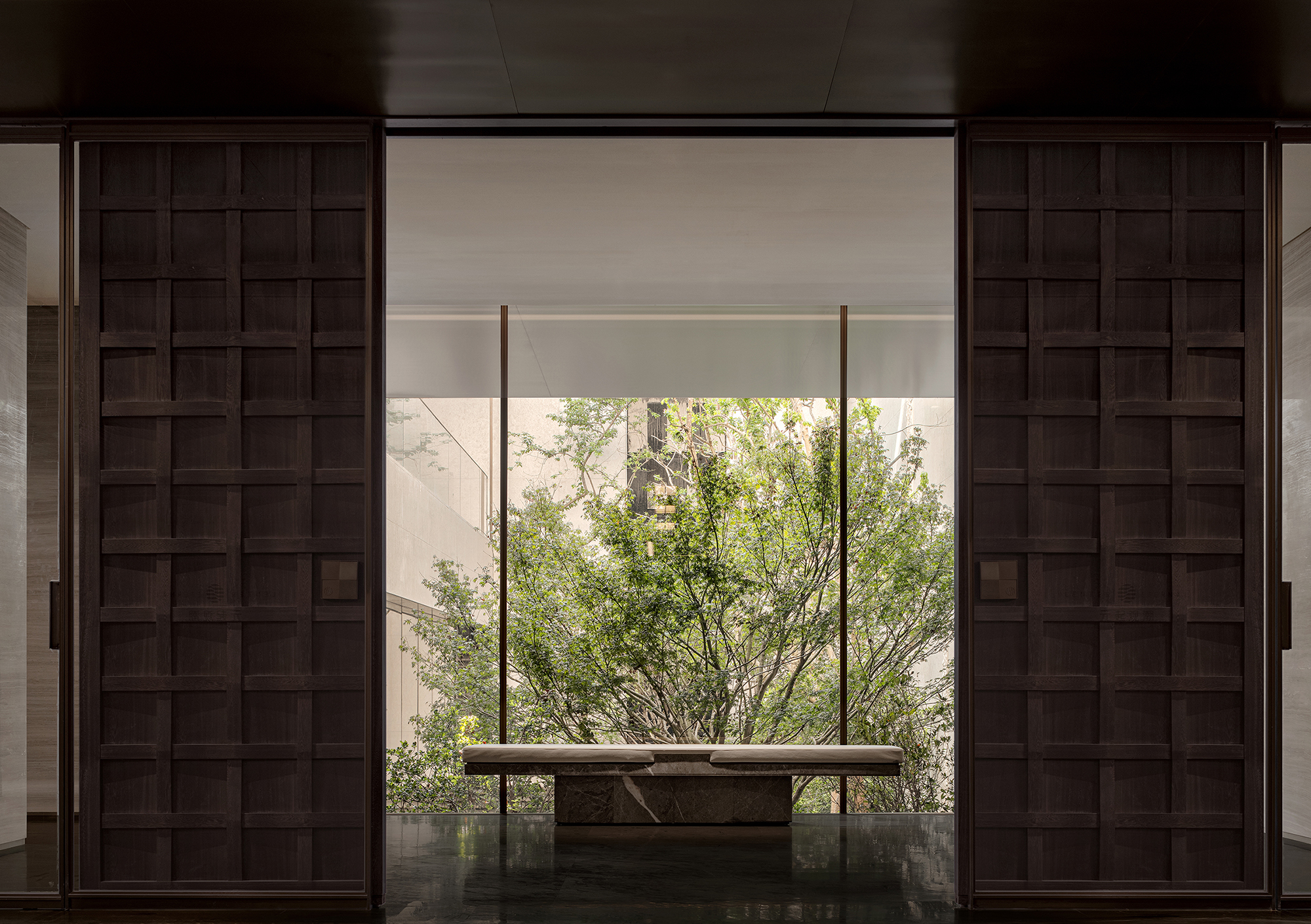
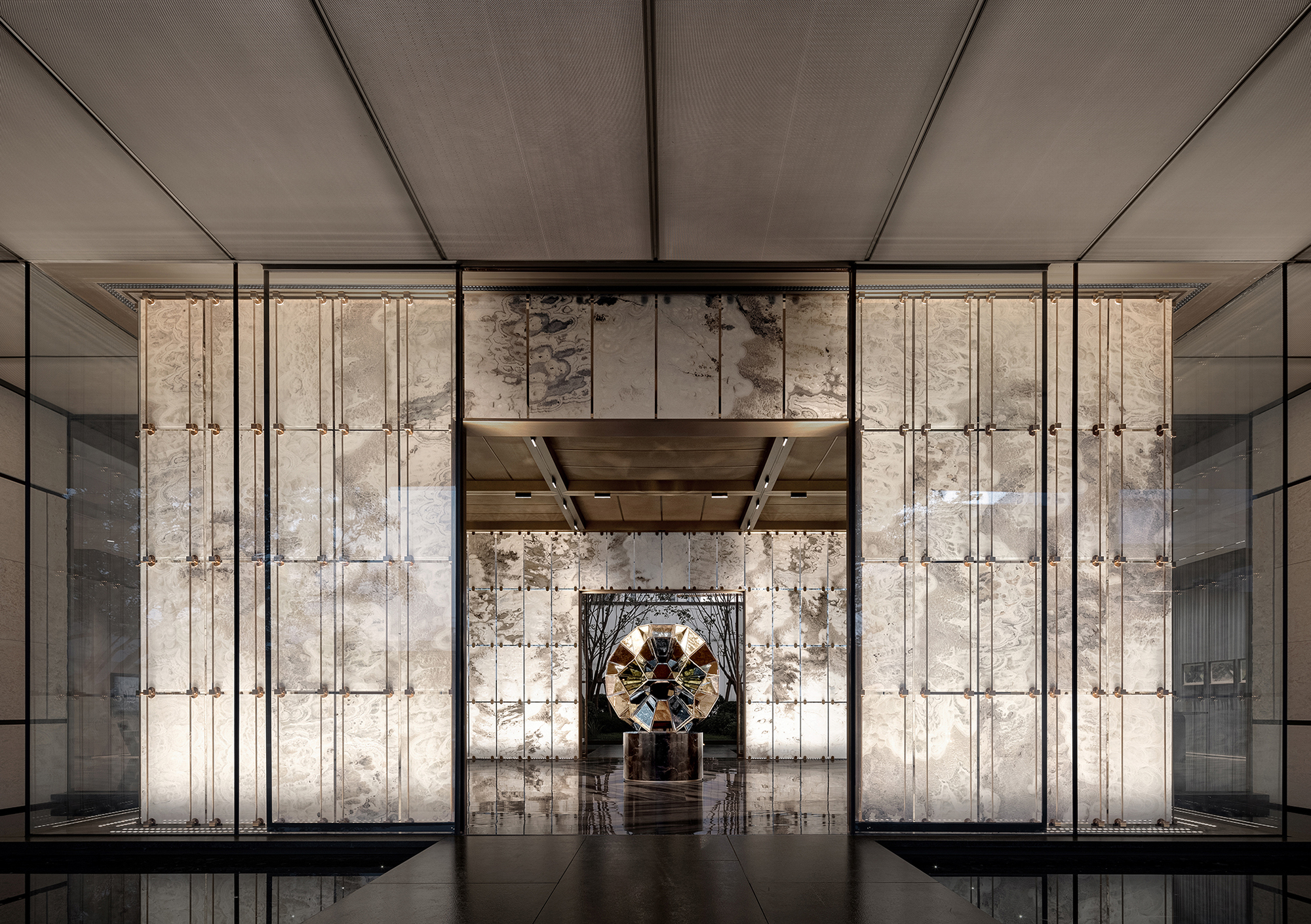
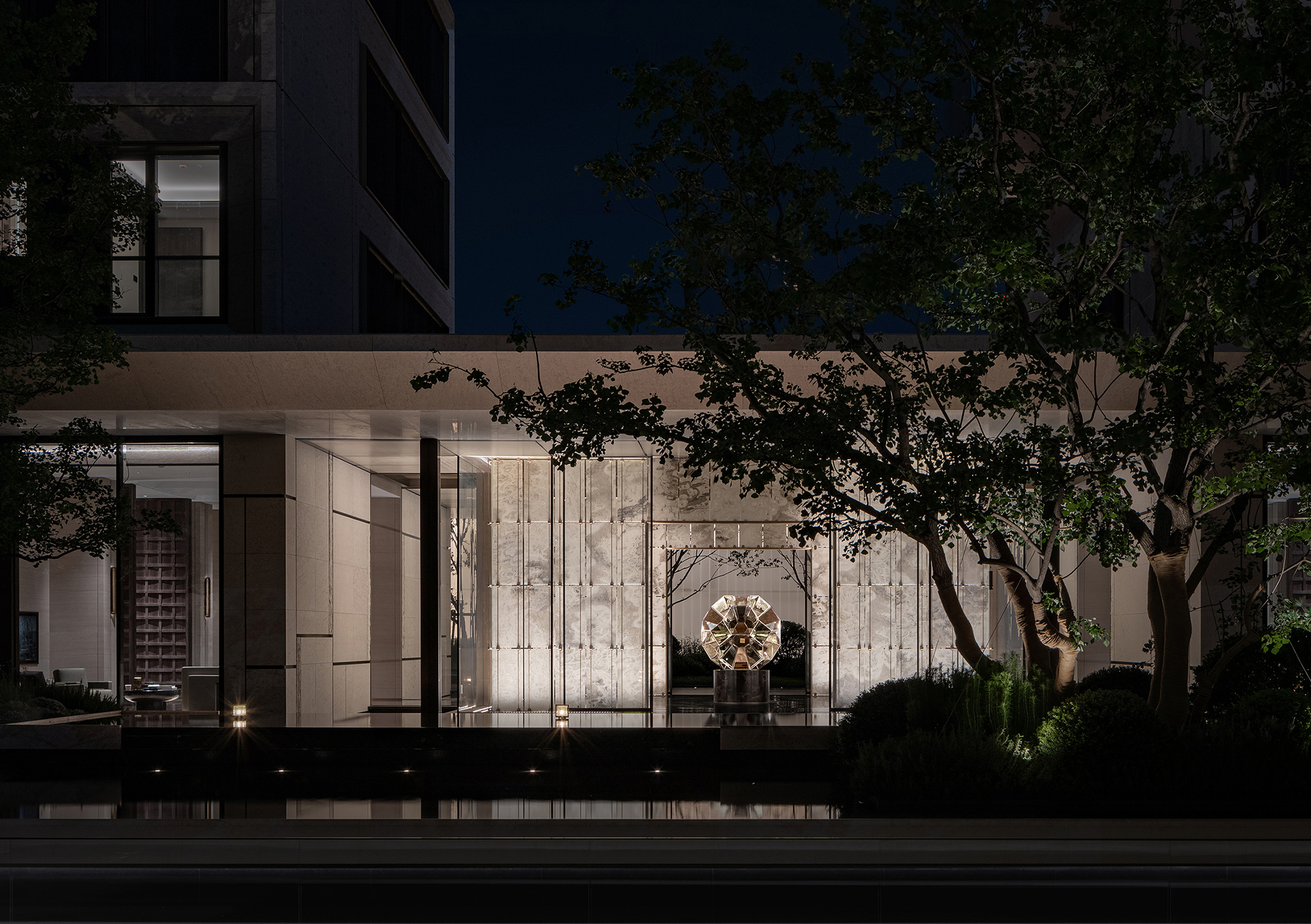
The prologue to the space is a scroll of quiet intent: a wide arrival court paved in pale stone, establishing a calm, enduring order. Framed at its center stands a luxuriant feather maple, its layered branches spreading like time unfurling through foliage. It serves not only as a visual anchor, but also as the spiritual pivot of space - amid modern structures and rigid materials, nature remains the softest yet most resilient presence.
No flamboyance, no pretension—only the long-burning force of growth itself. In the contemporary grid of values, we begin to sense: true nobility lies not in the heap of quantity but in the layering of time; not in surface glitter but in inner richness. At the threshold, this single tree gives form to a new visual language and a conceptual standard—value is not imposed, it is slowly grown into being.
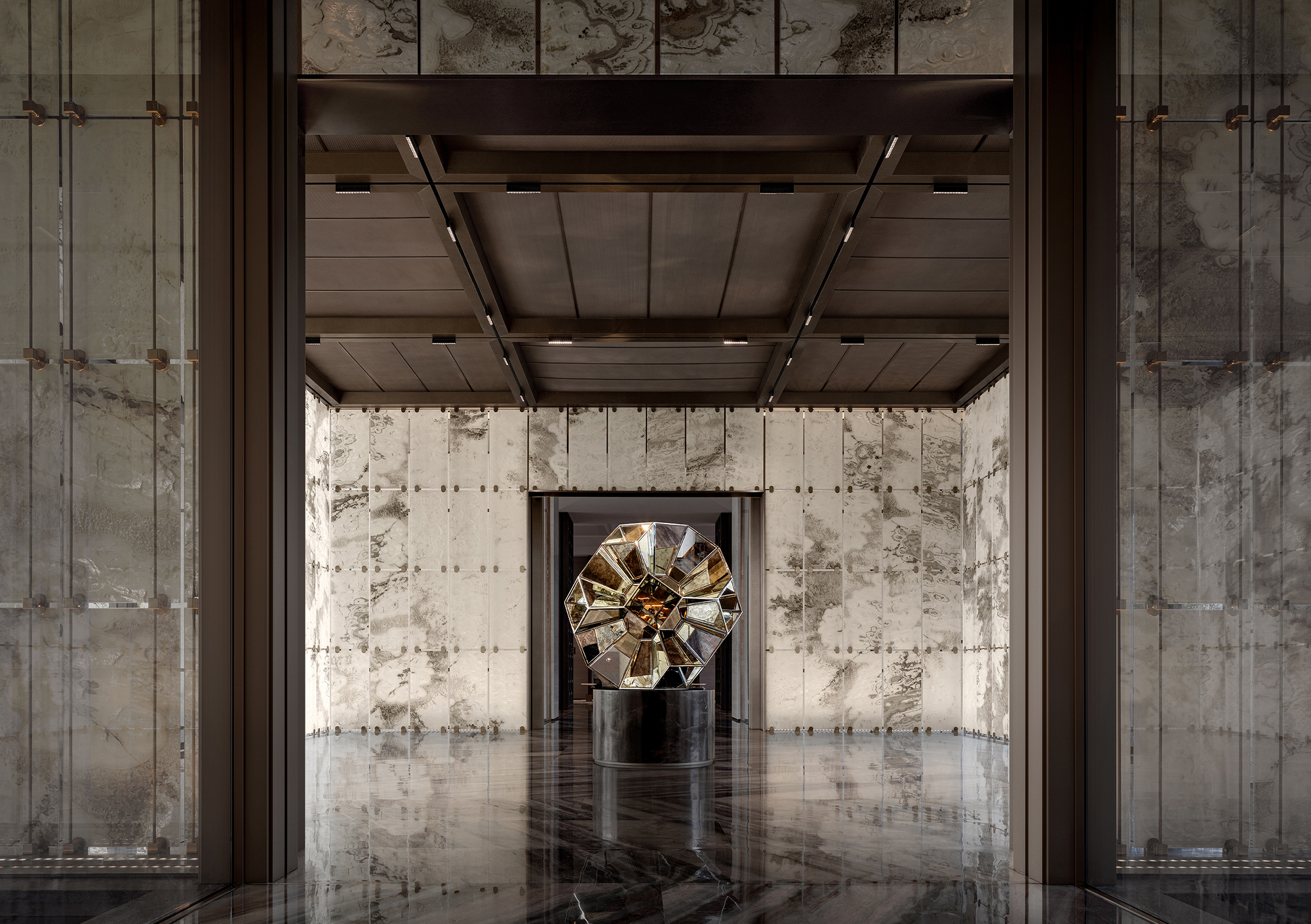
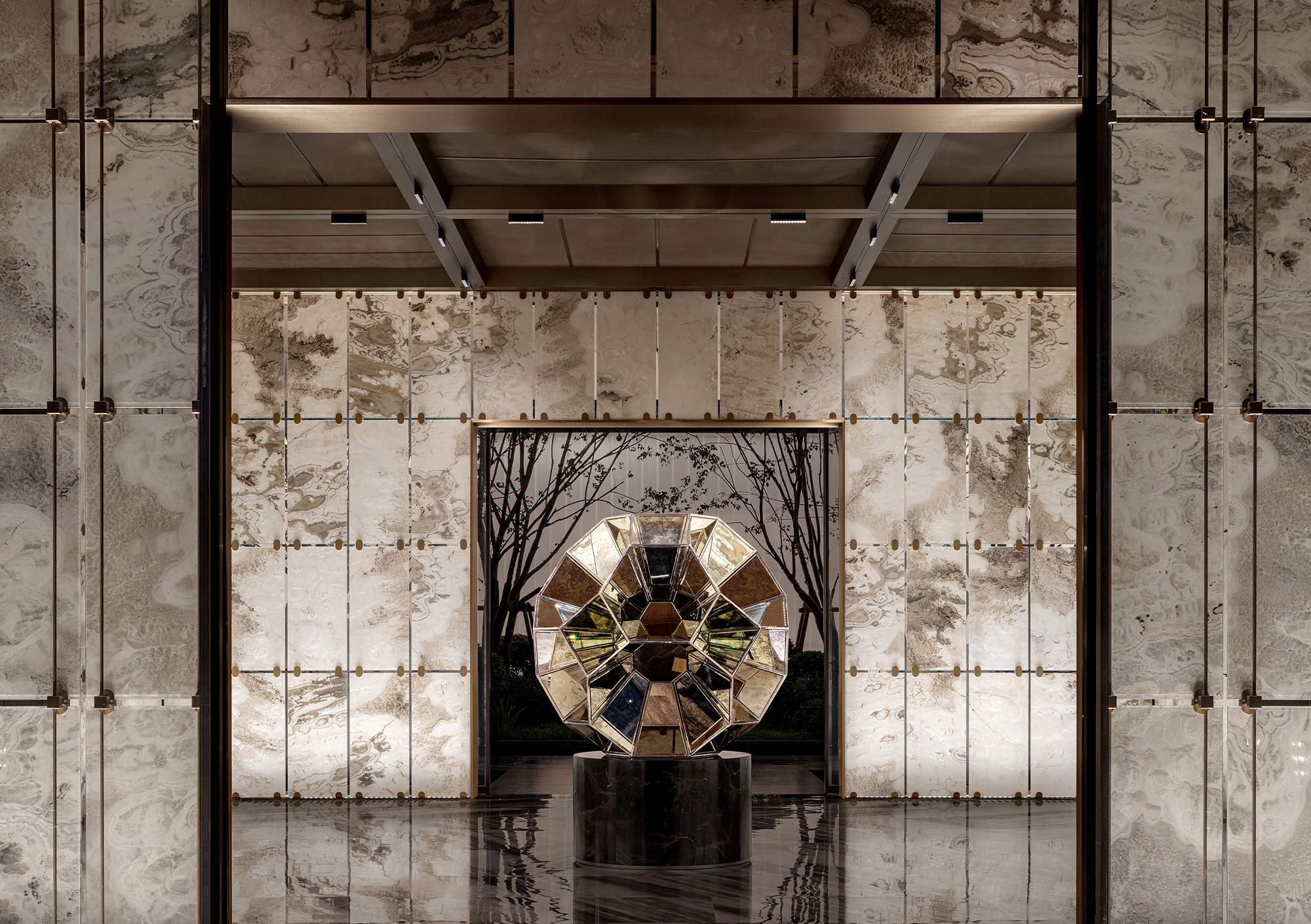
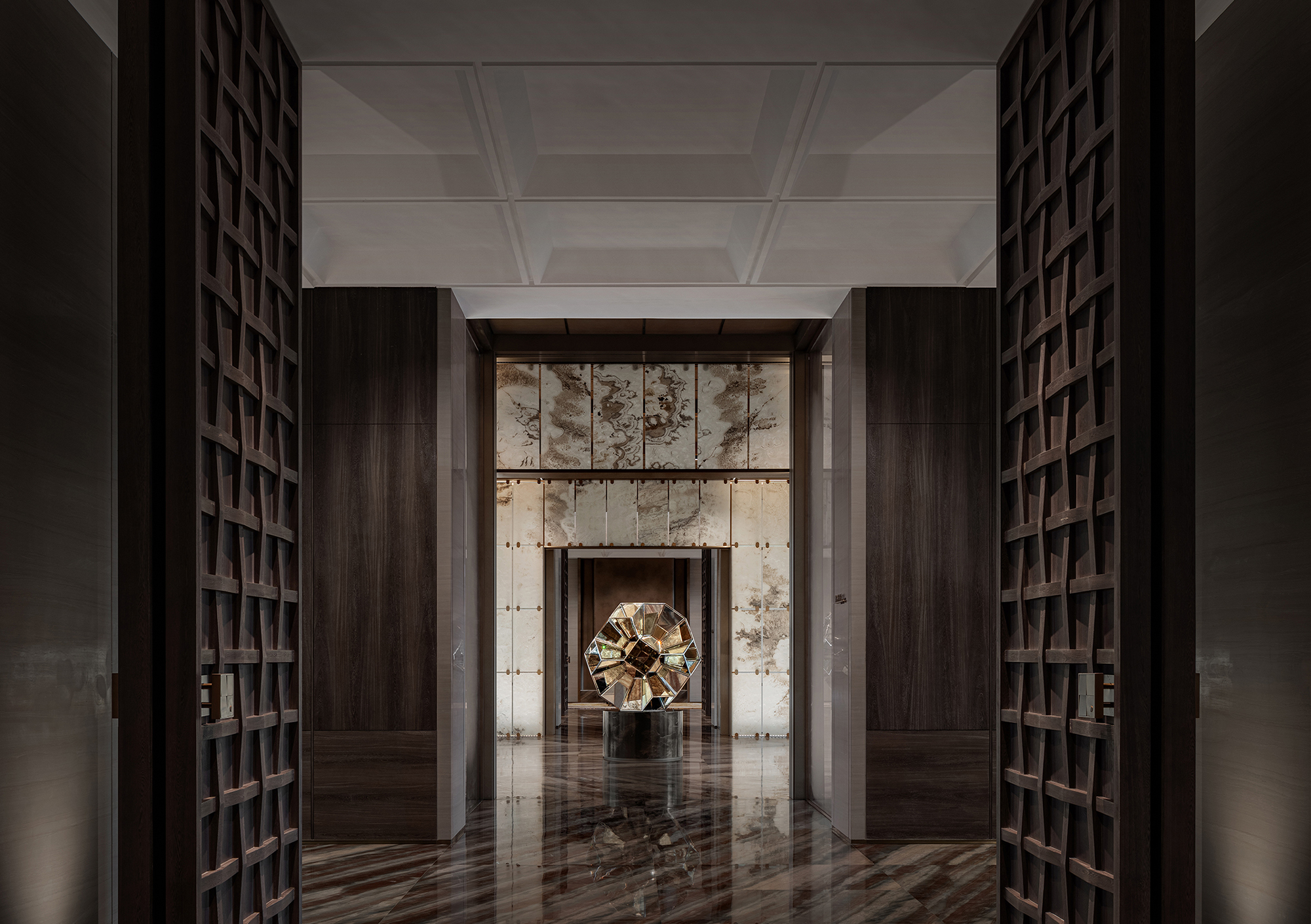
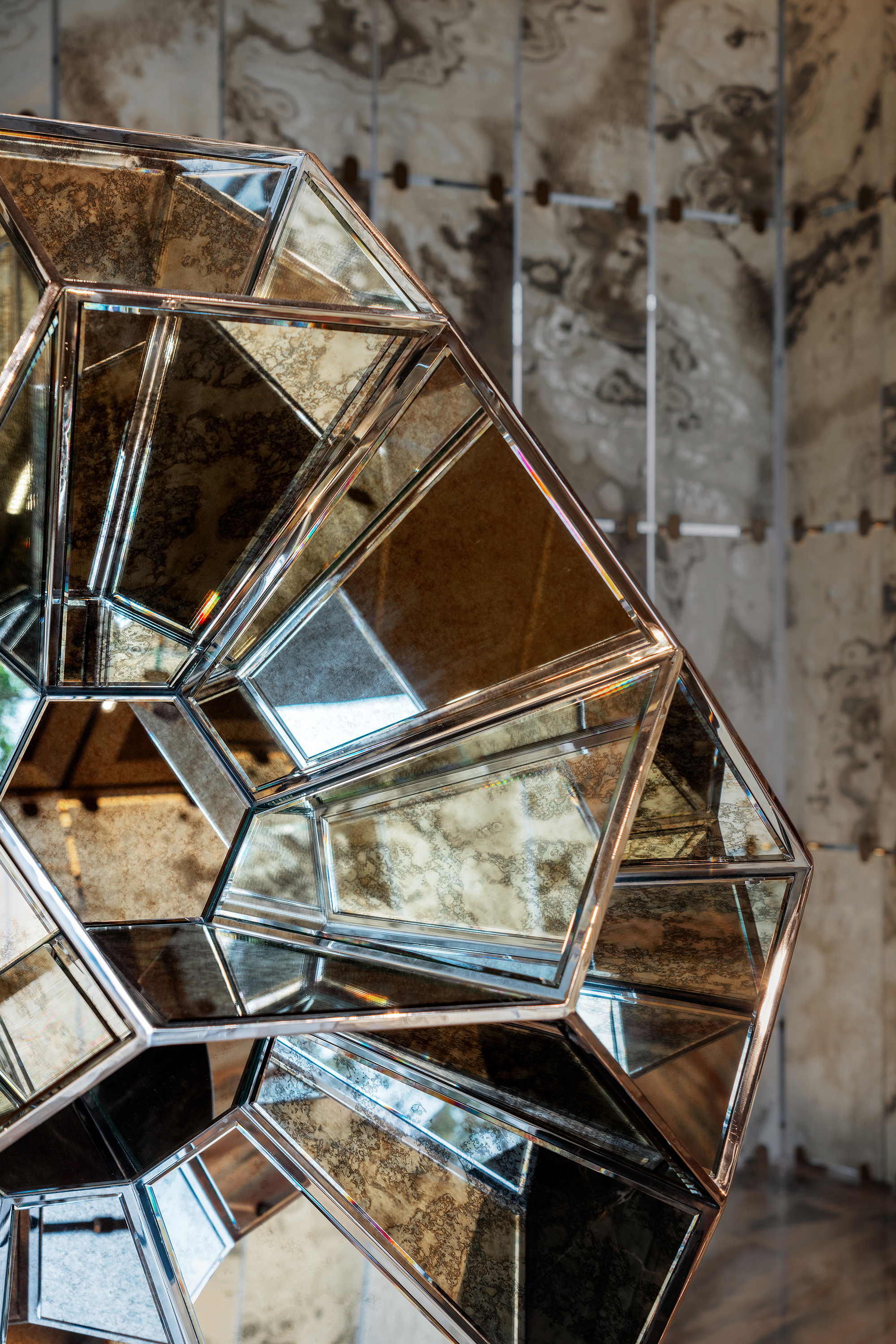
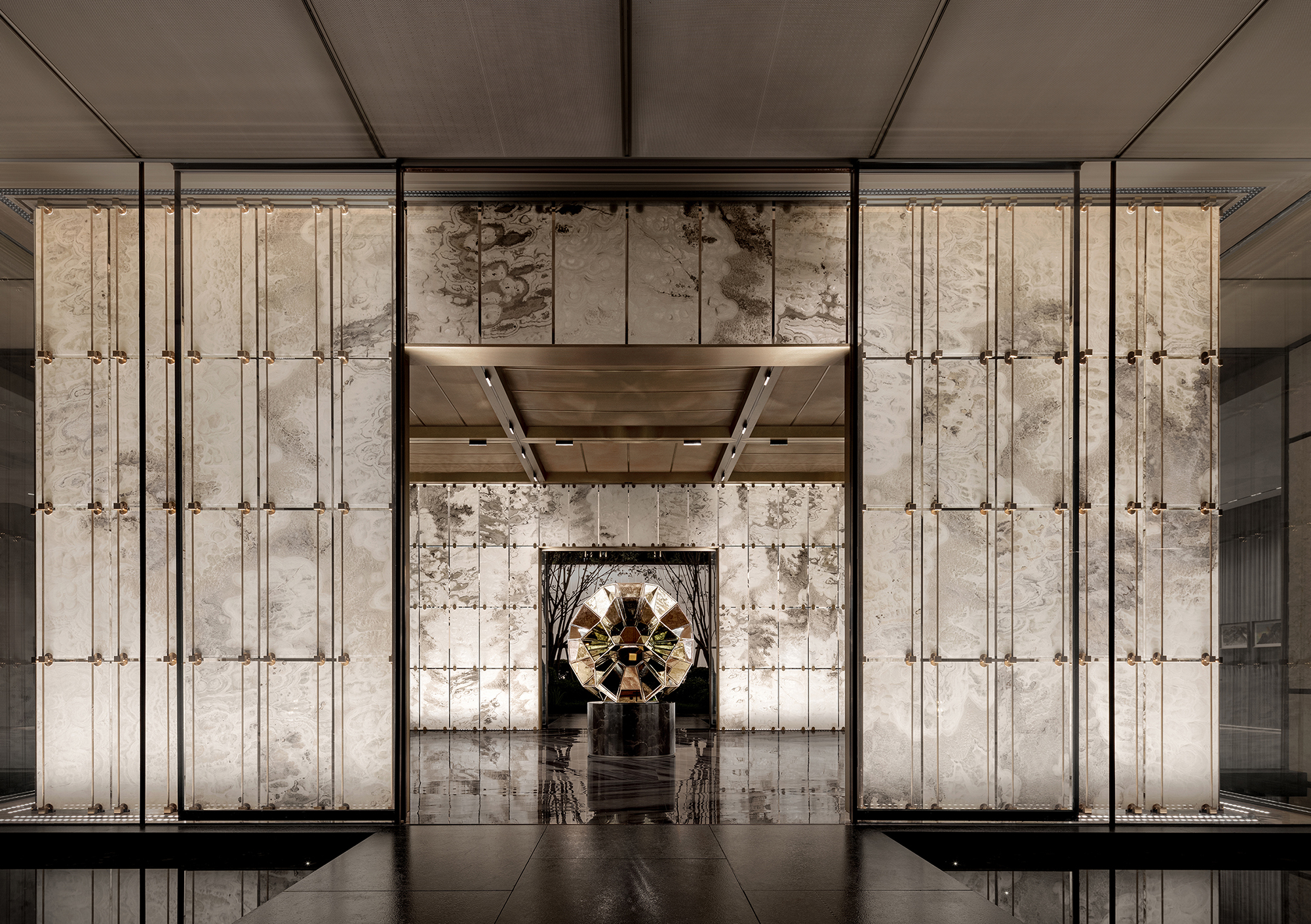
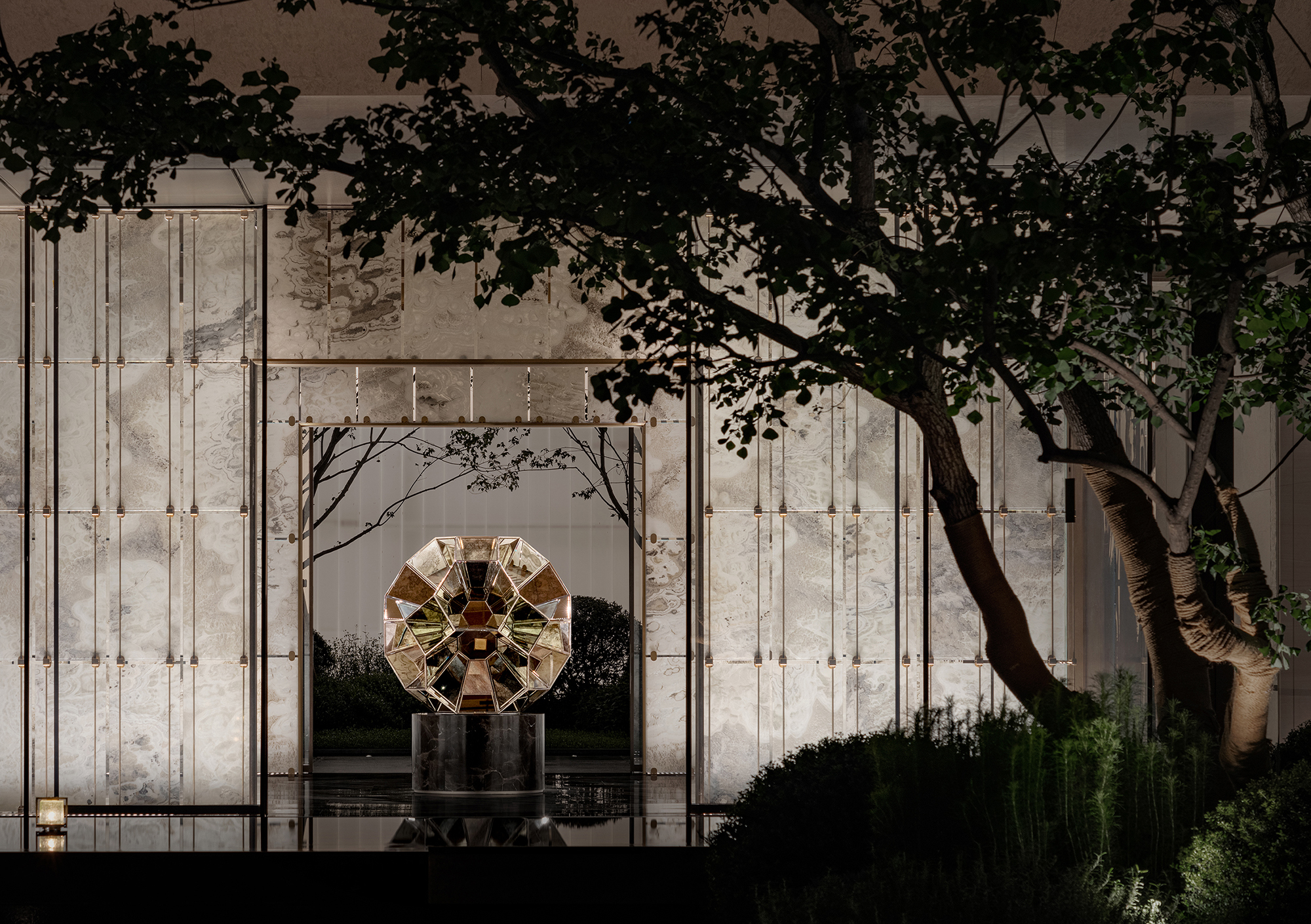
Step into the central gallery, at the crossing point a multi-faceted mirror installation stands in silence. Tree shadows from outside, light from within, the passing figure—all are reassembled on its surface, woven into one another. Gaze long enough and it seems to initiate a journey into order, tranquility, and time. It stands as a spiritual symbol, reminding us that value lies not in the object, but in the dynamic interplay between people and things, and between people and space. Thus, the contemporary ideal of "House of Gold and Jade" refers to the keenness of one’s perception—the ability, between mirrors, to see the layers of the world and the traces of one’s inner landscape.
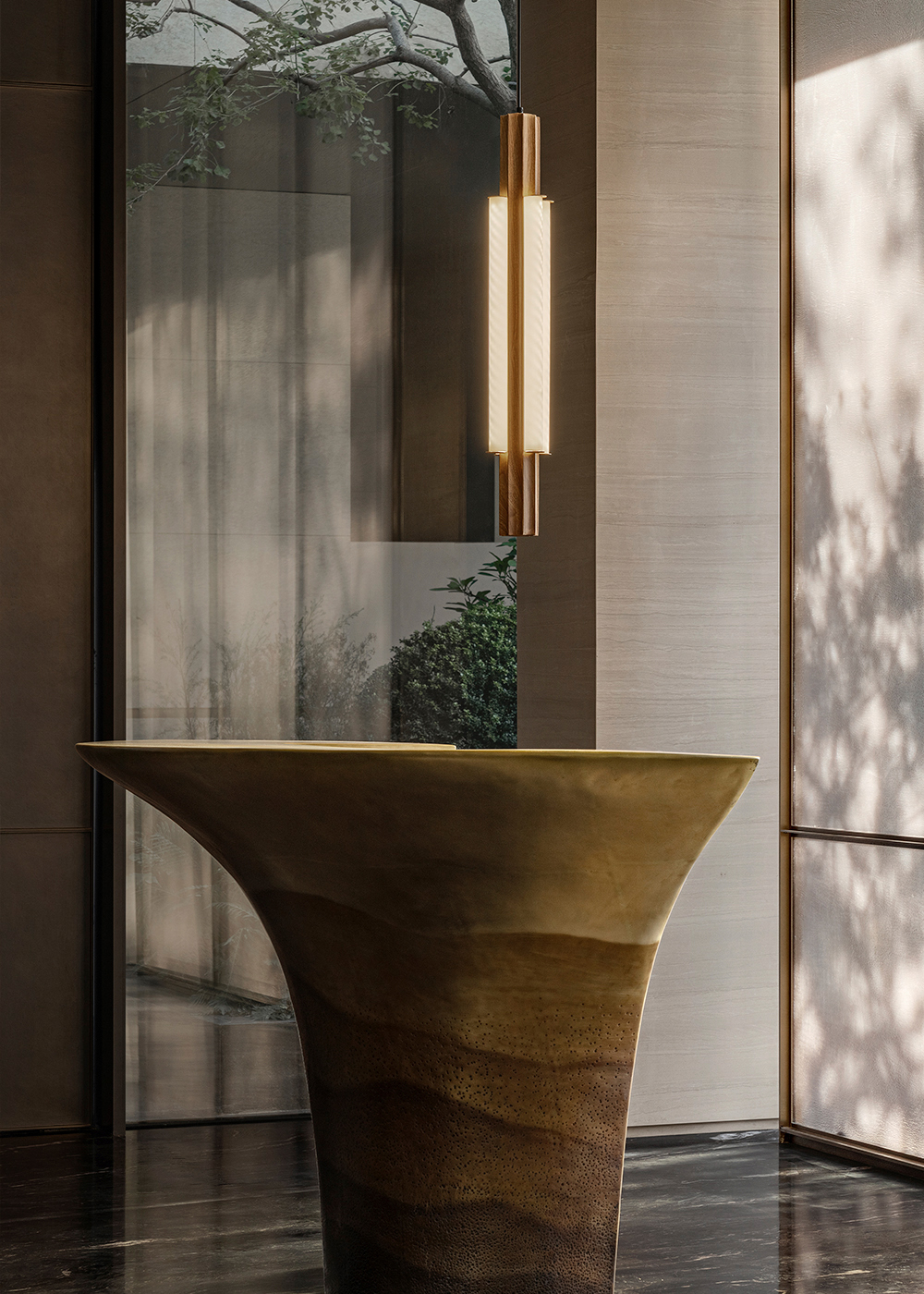
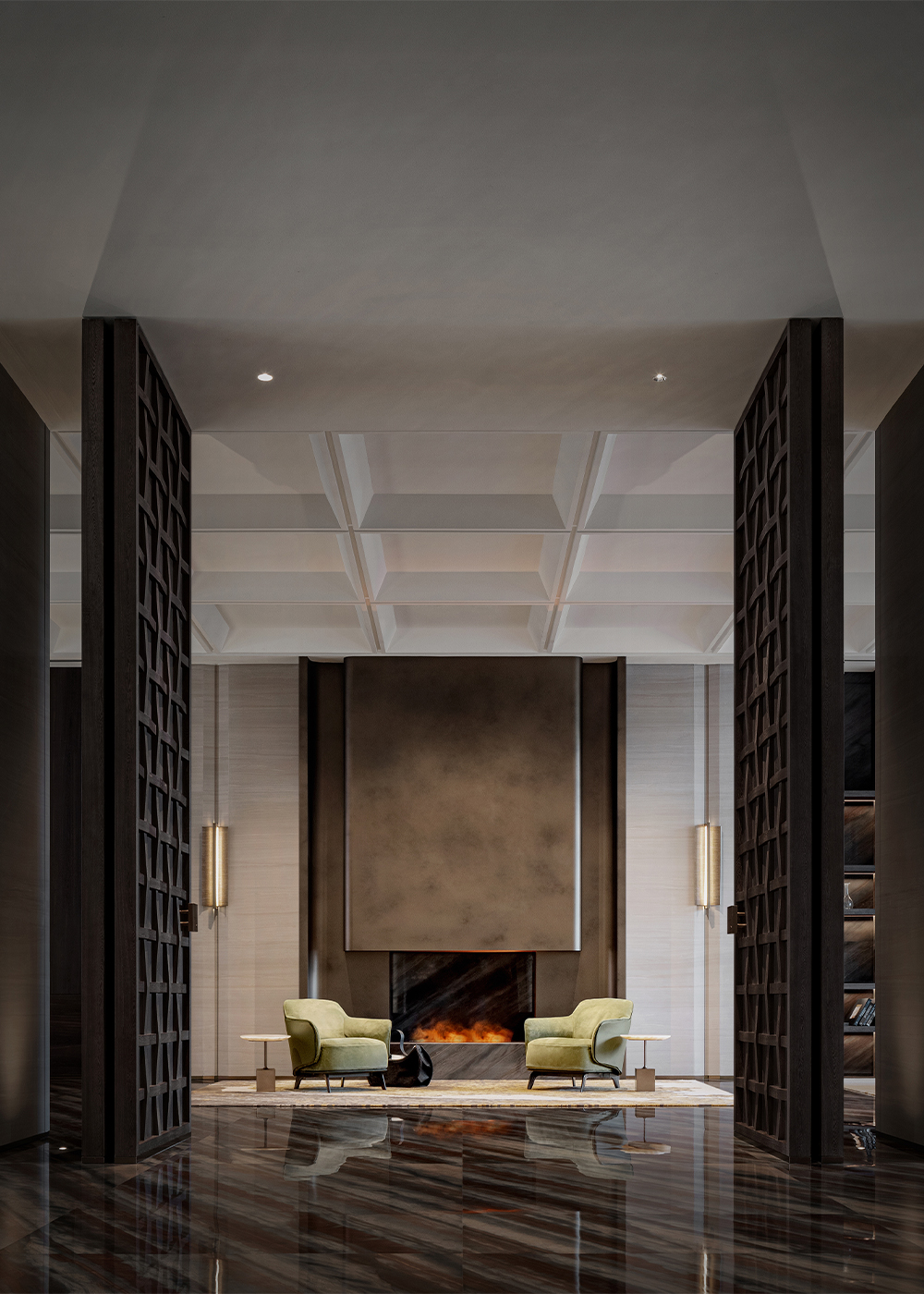
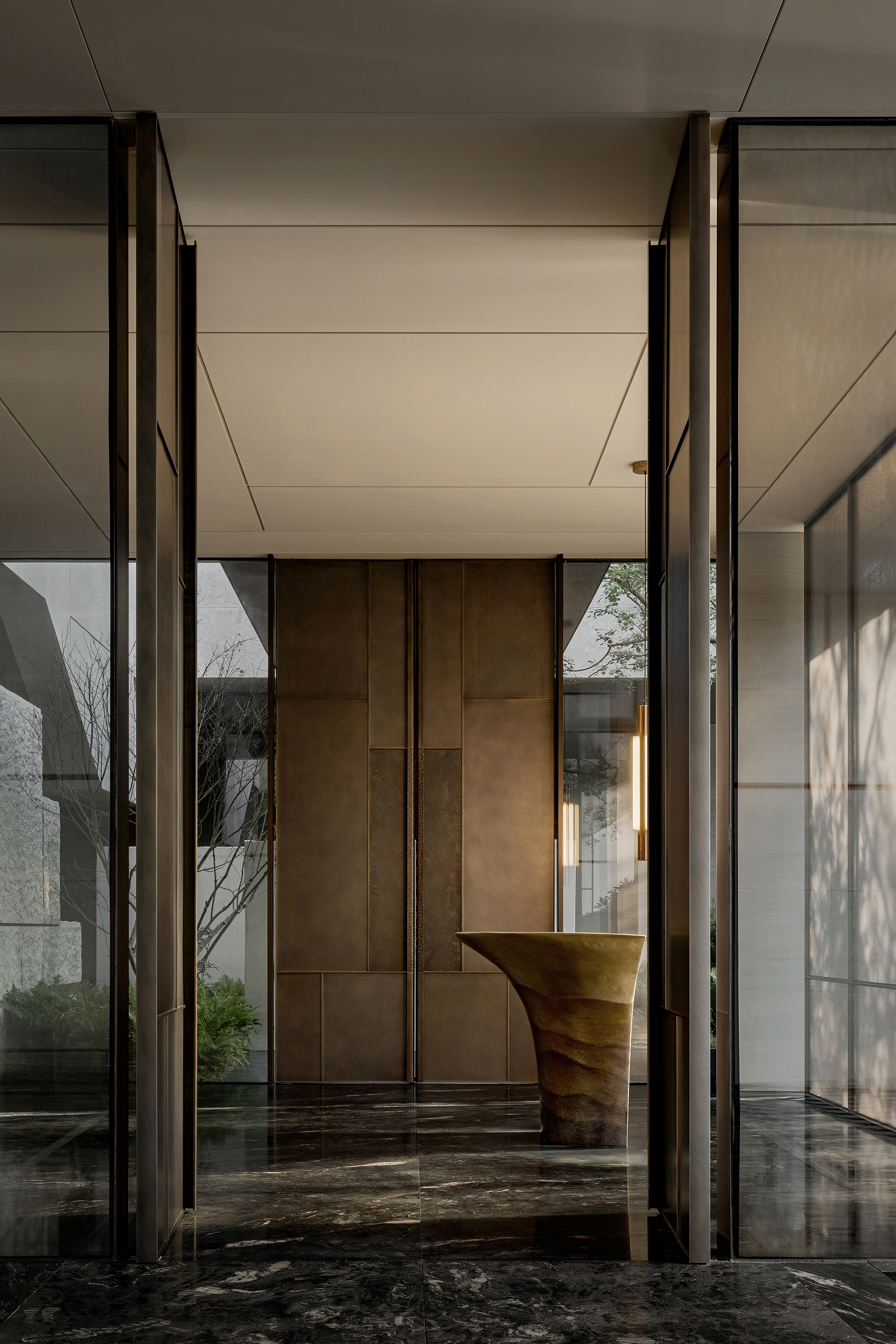
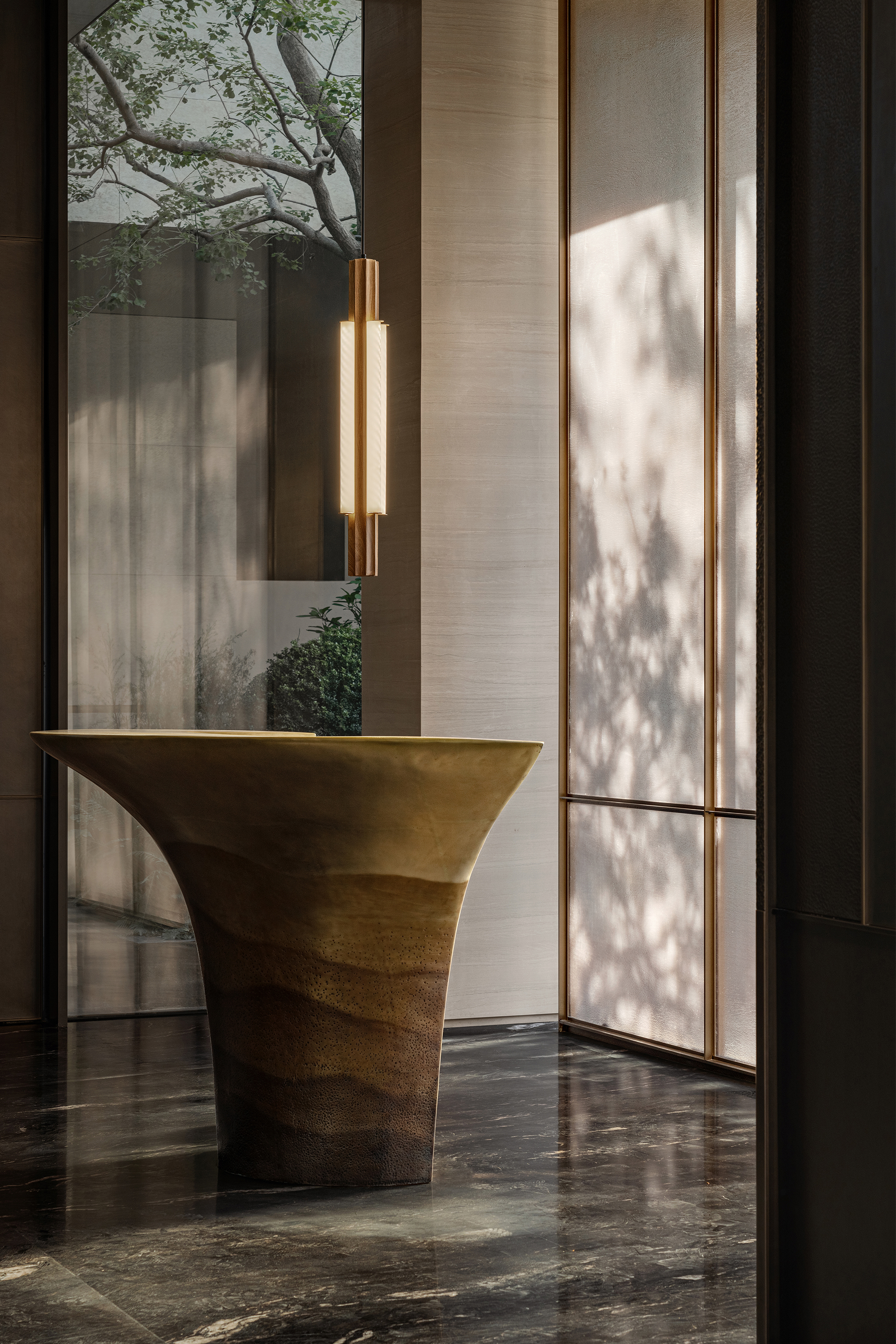
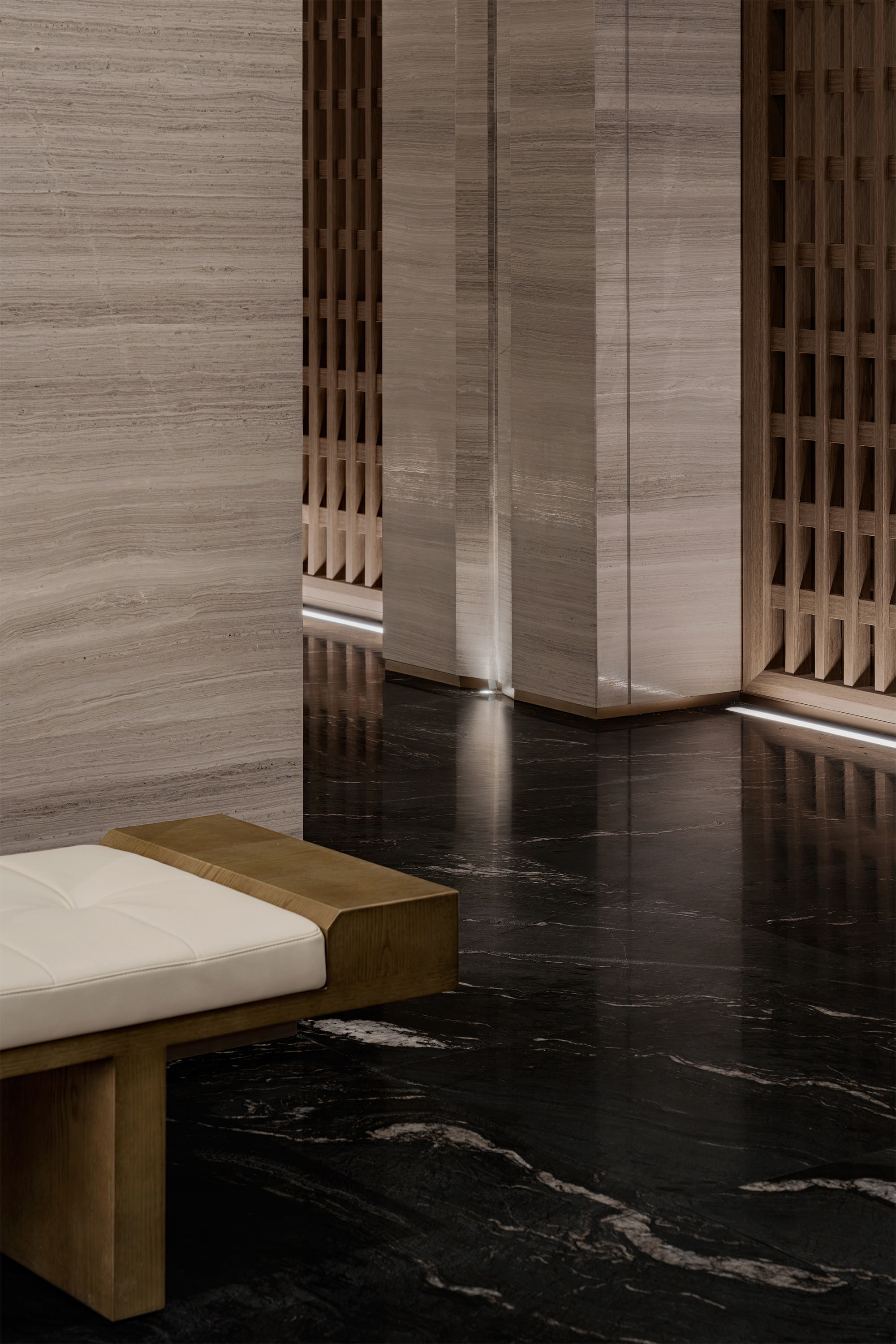
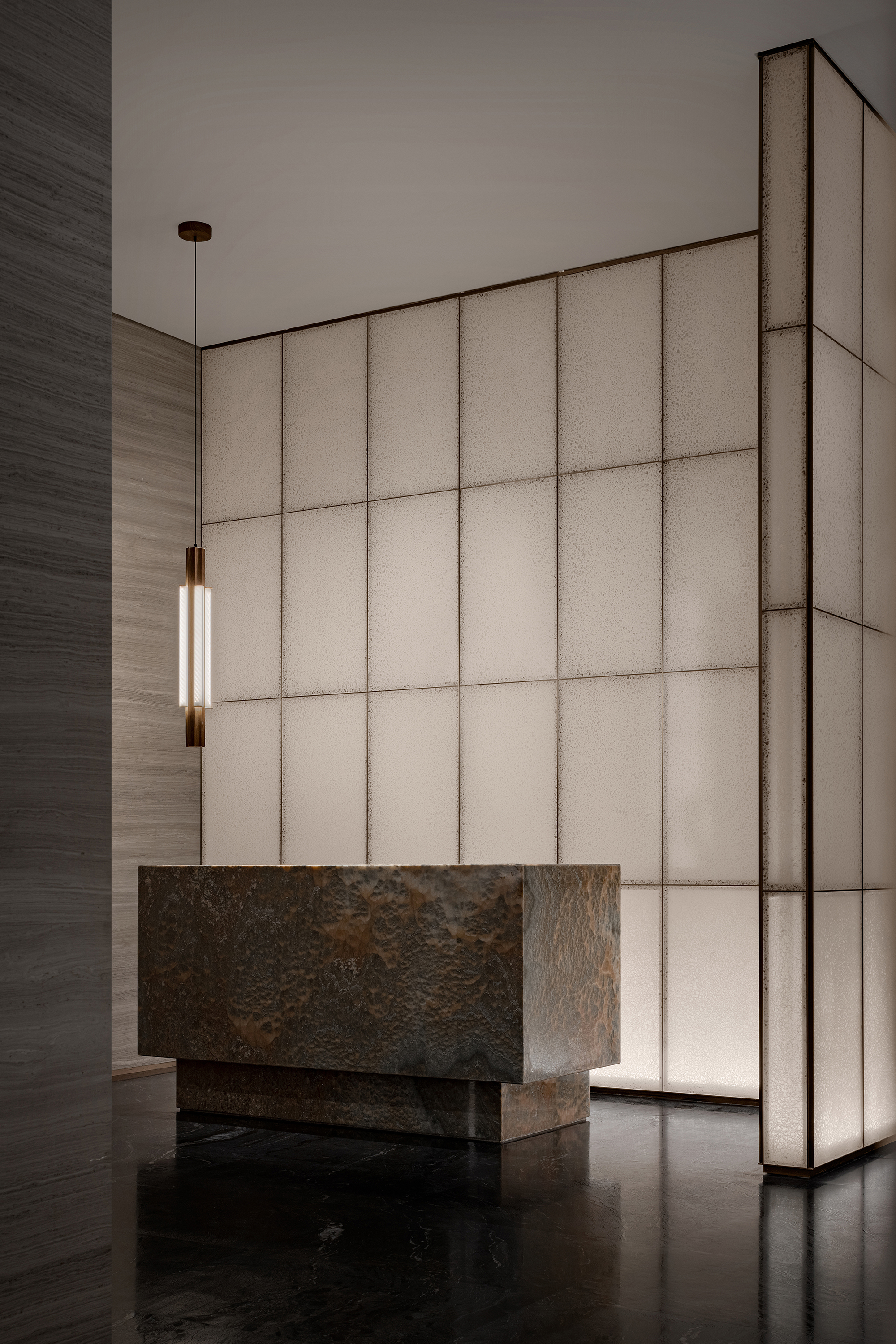
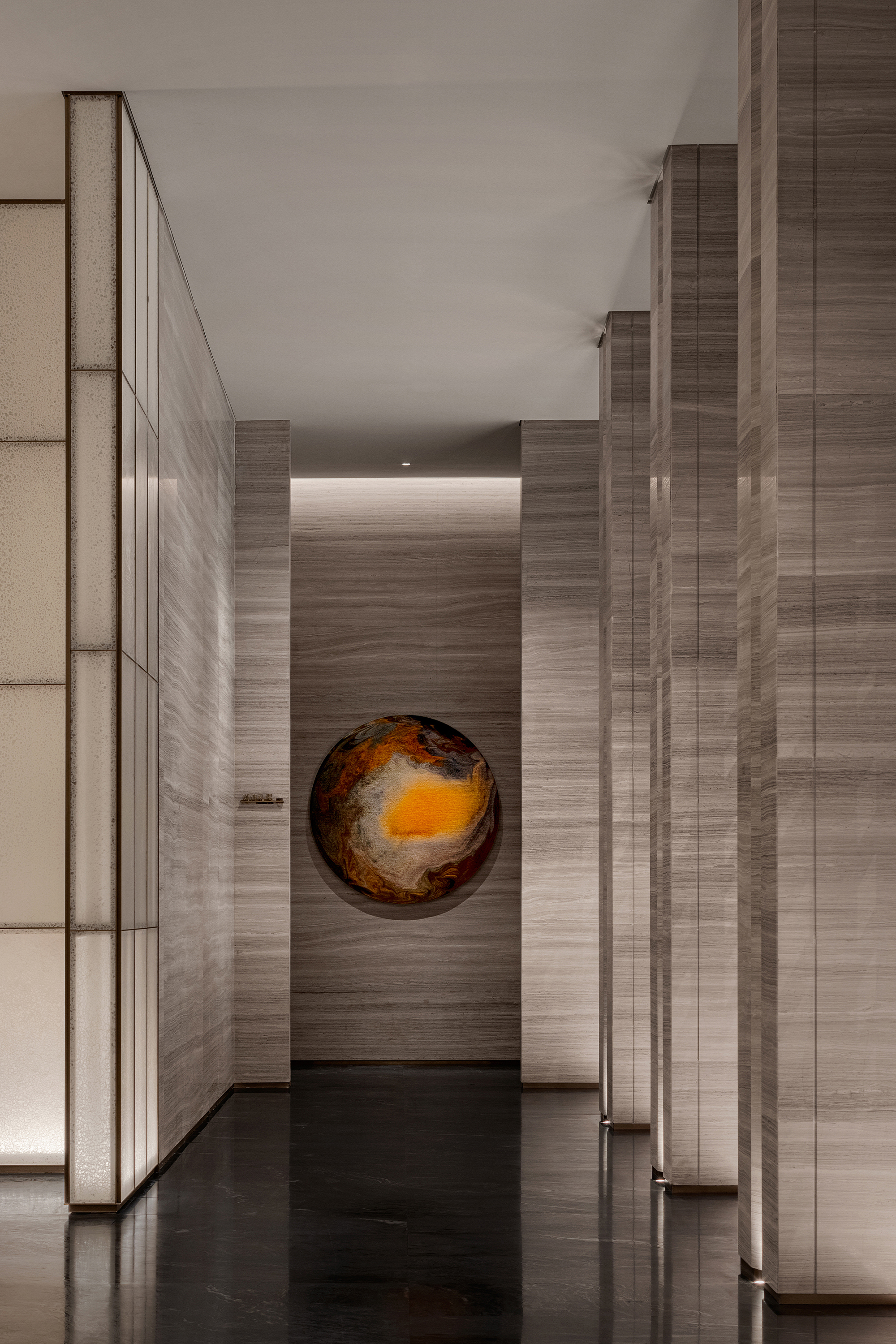
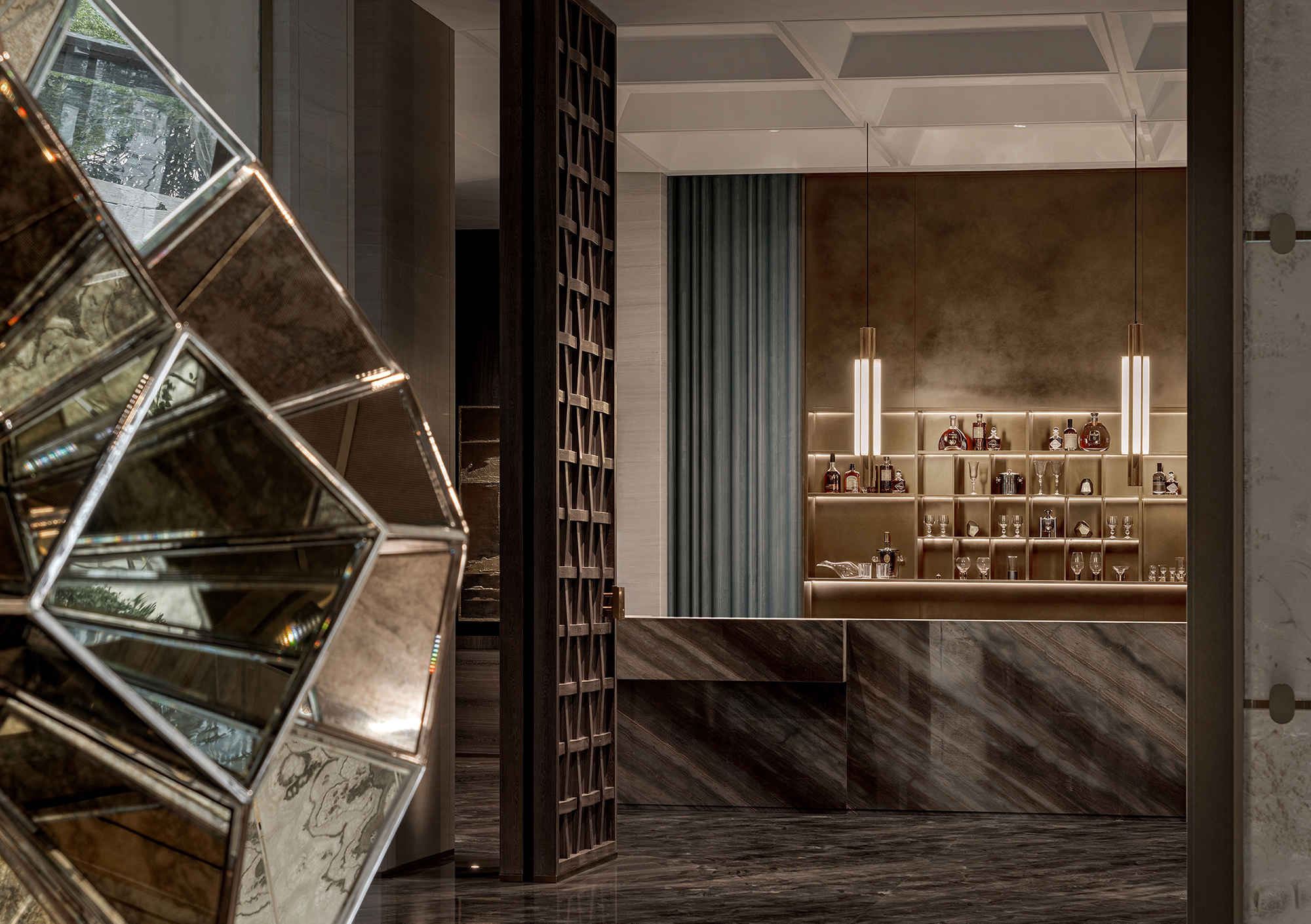
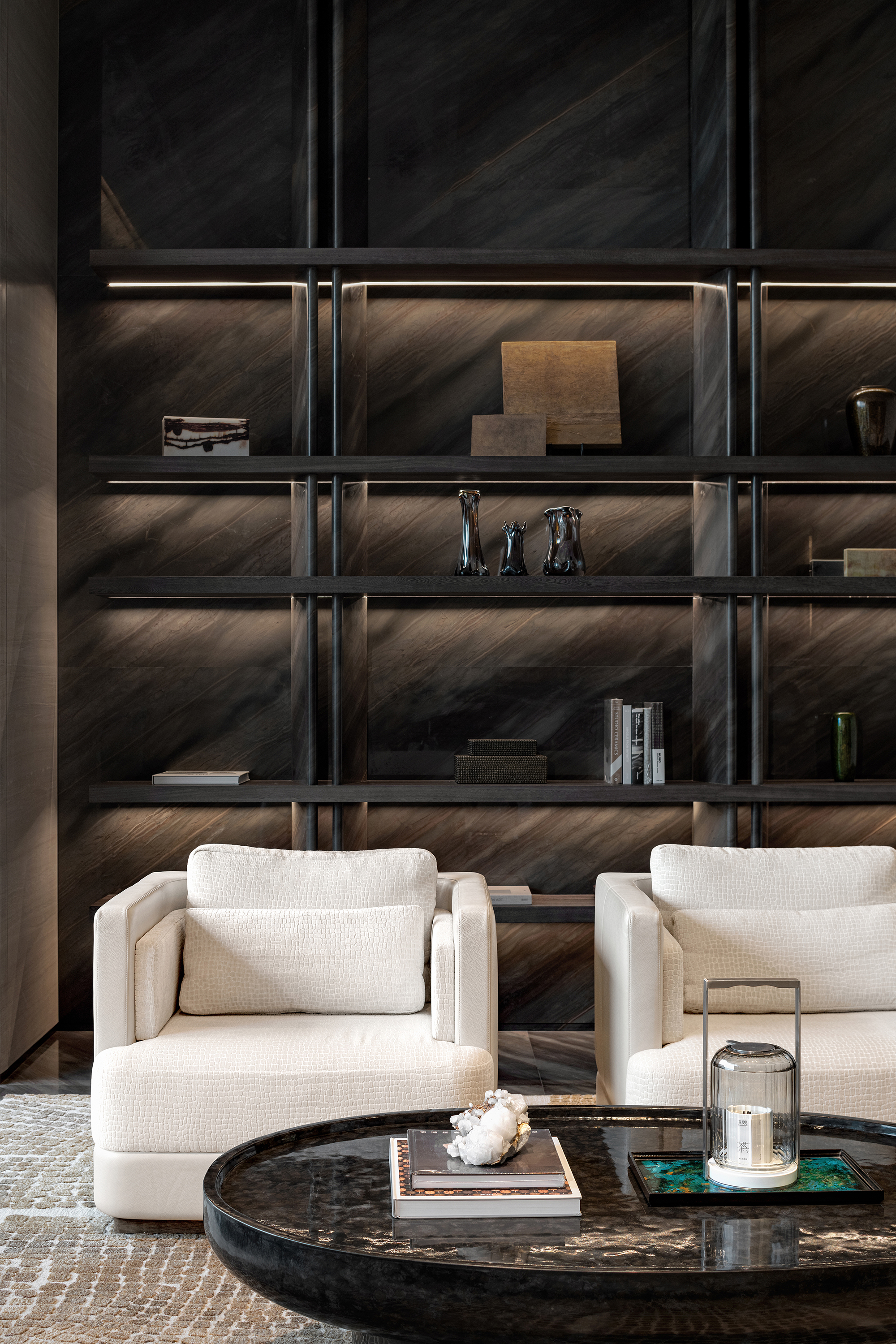
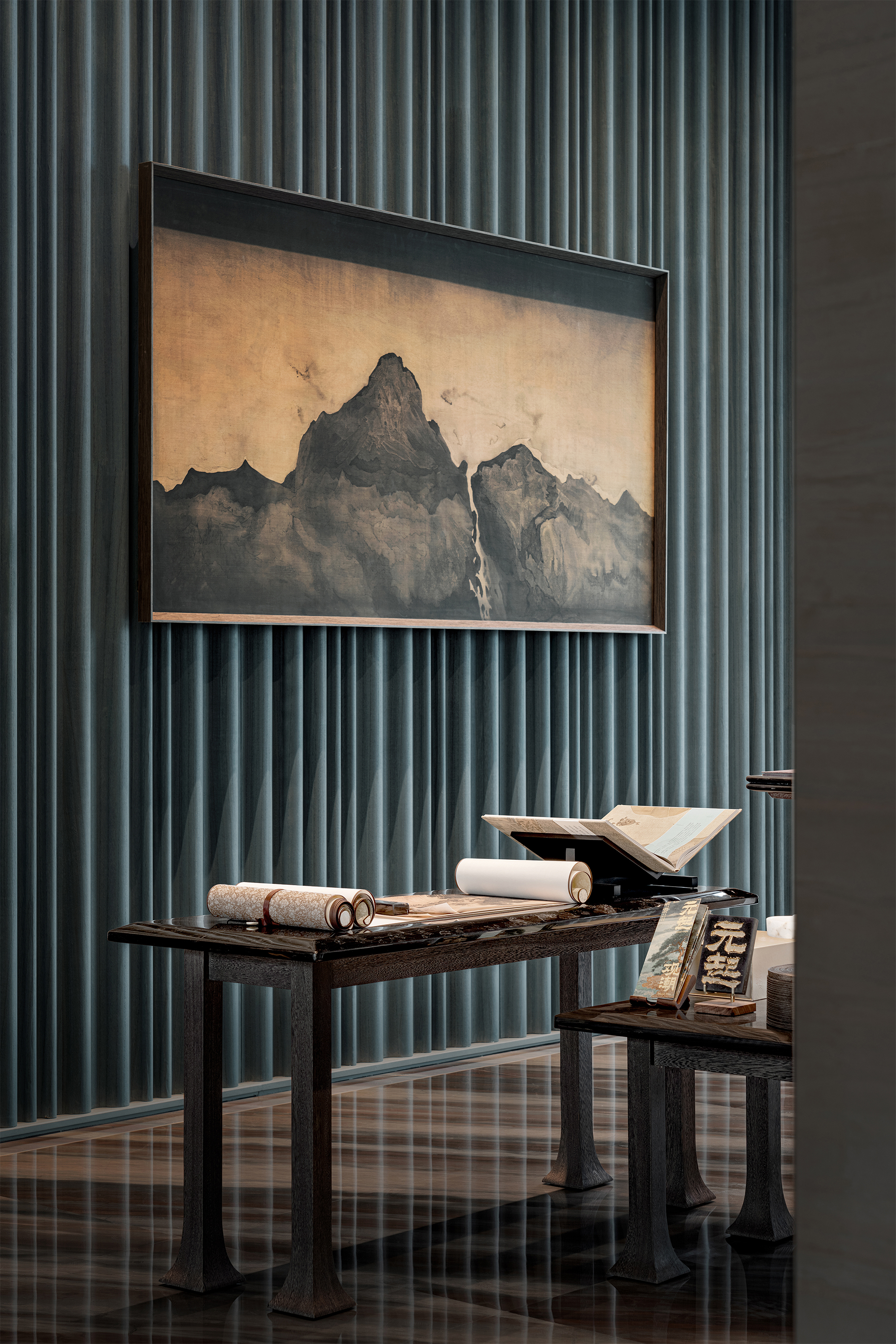
In a corner of the inner lounge, metal, leather and stone interplay under a soft glow. Wherever the eye falls, all is humble and restrained, with no excess adornment, yet exuding a composure that comes only with the patina of time and experience. This very composure embodies the true contemporary value: luxury is no longer a mattter of expense, but of honesty.
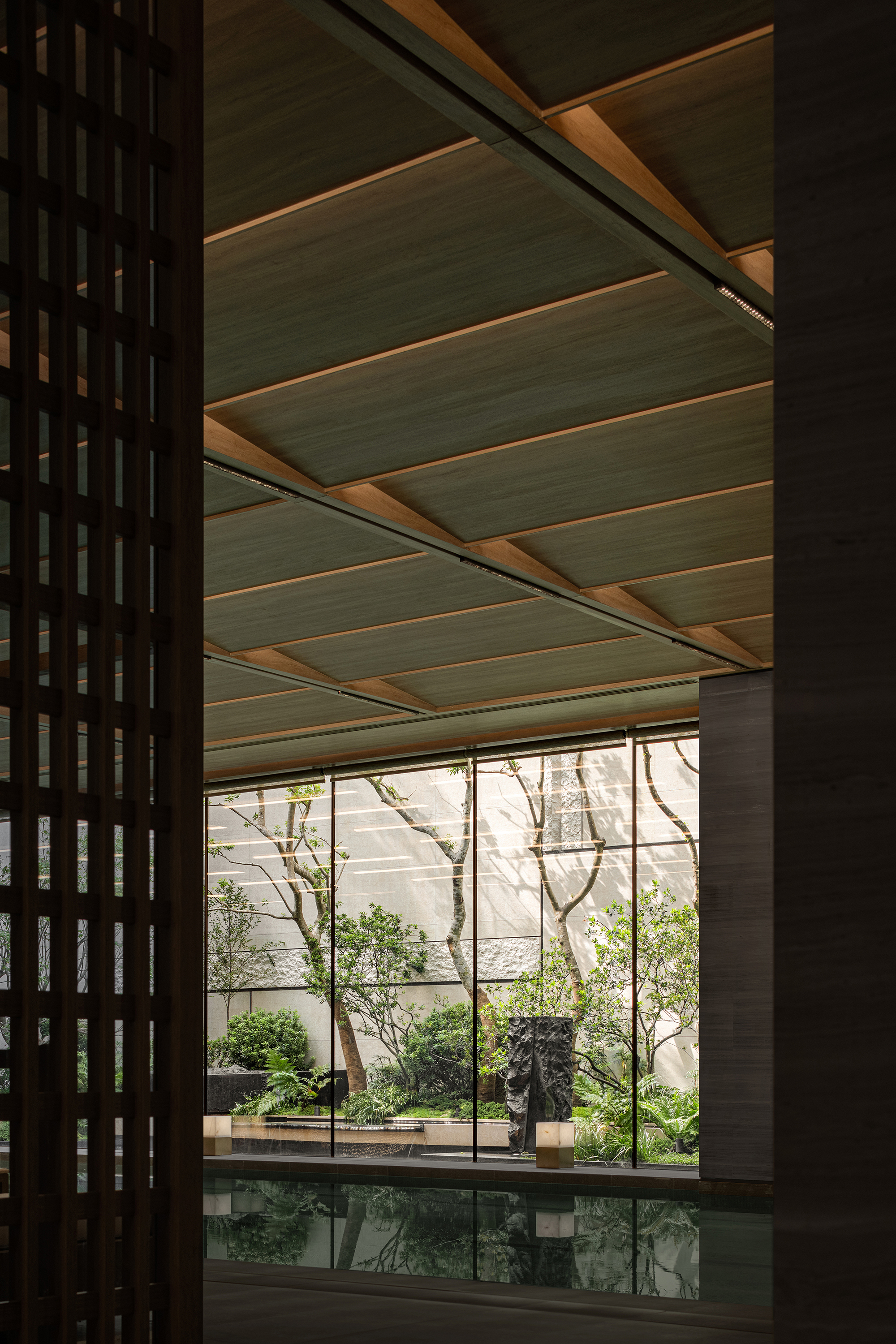
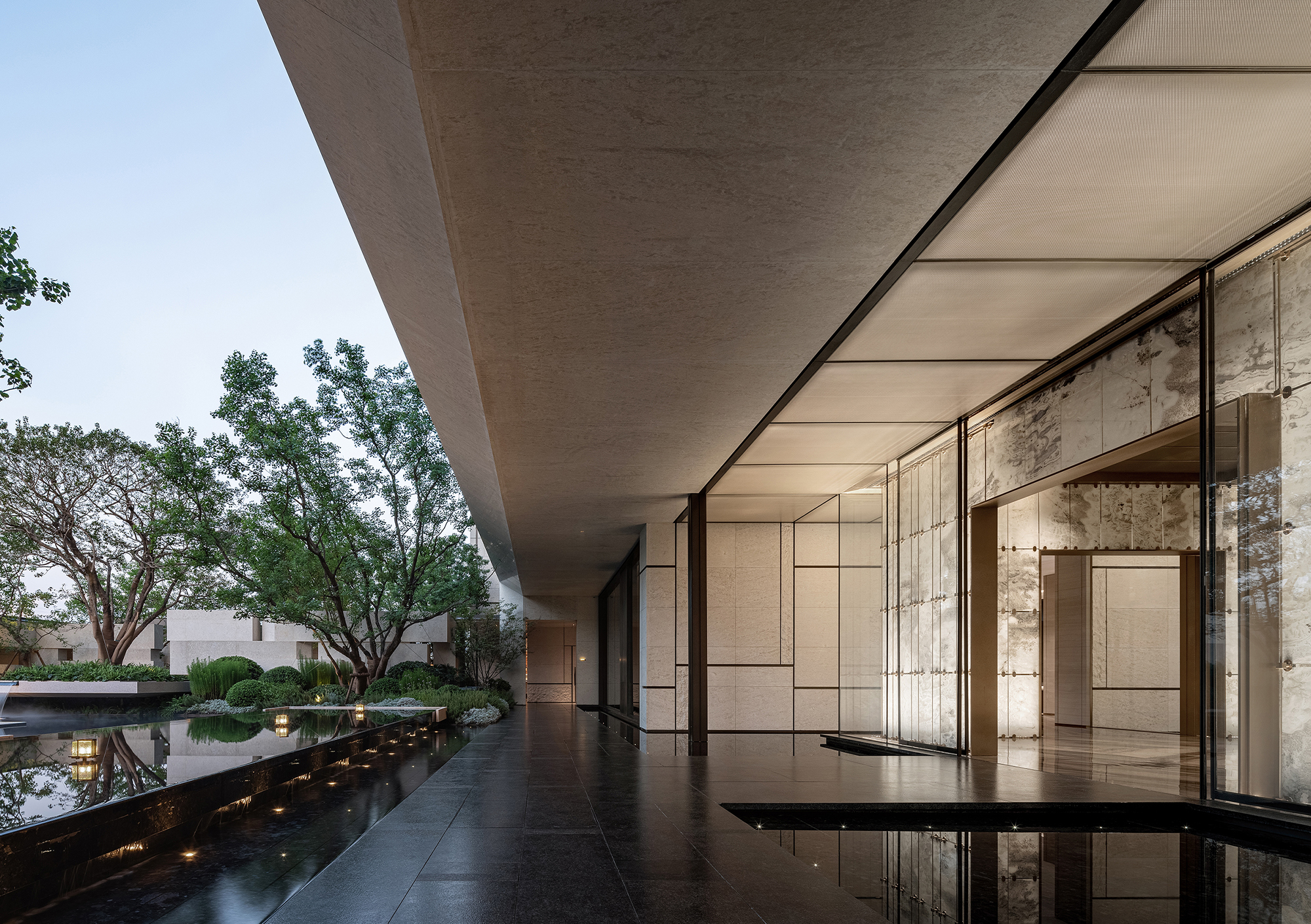
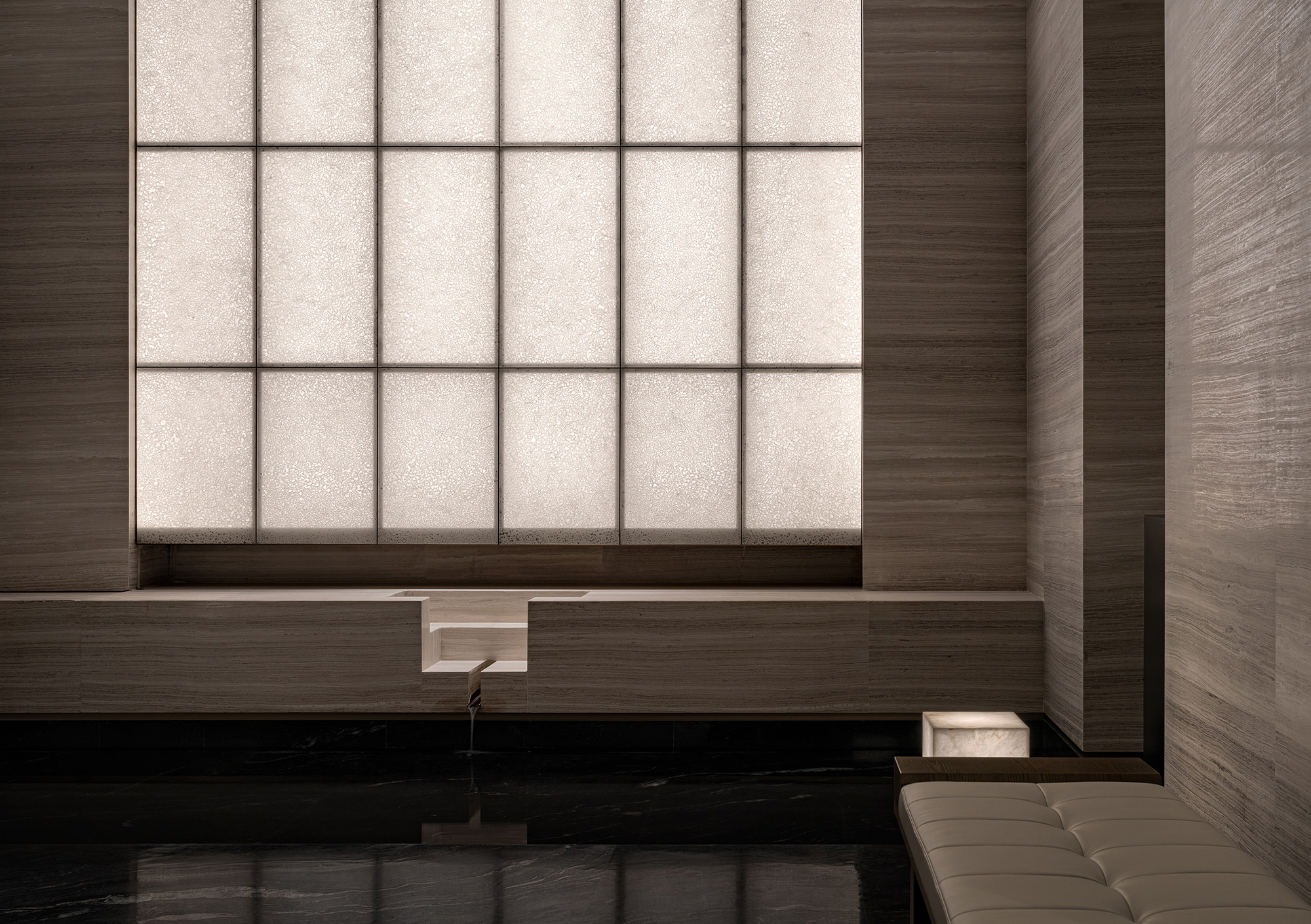
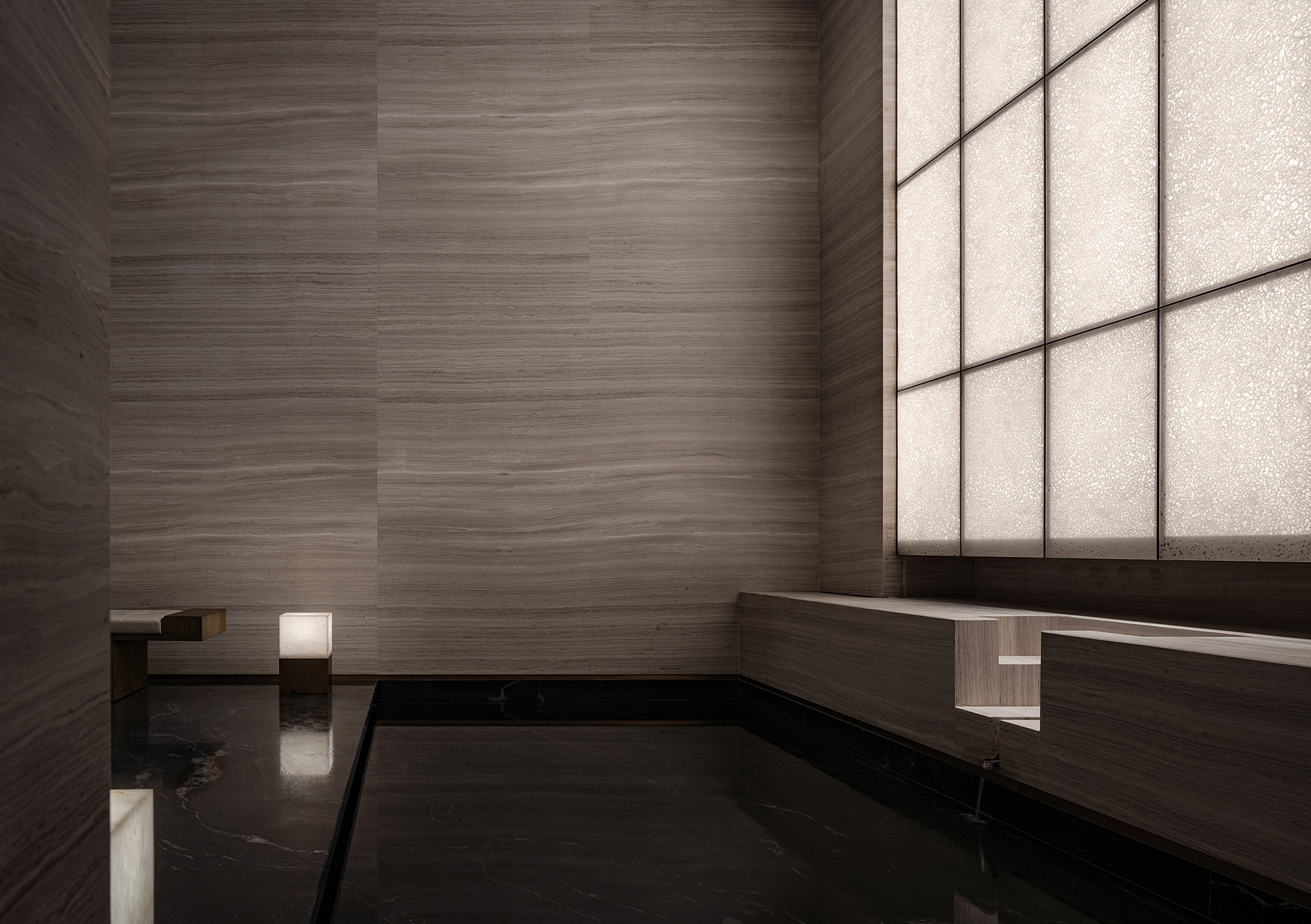
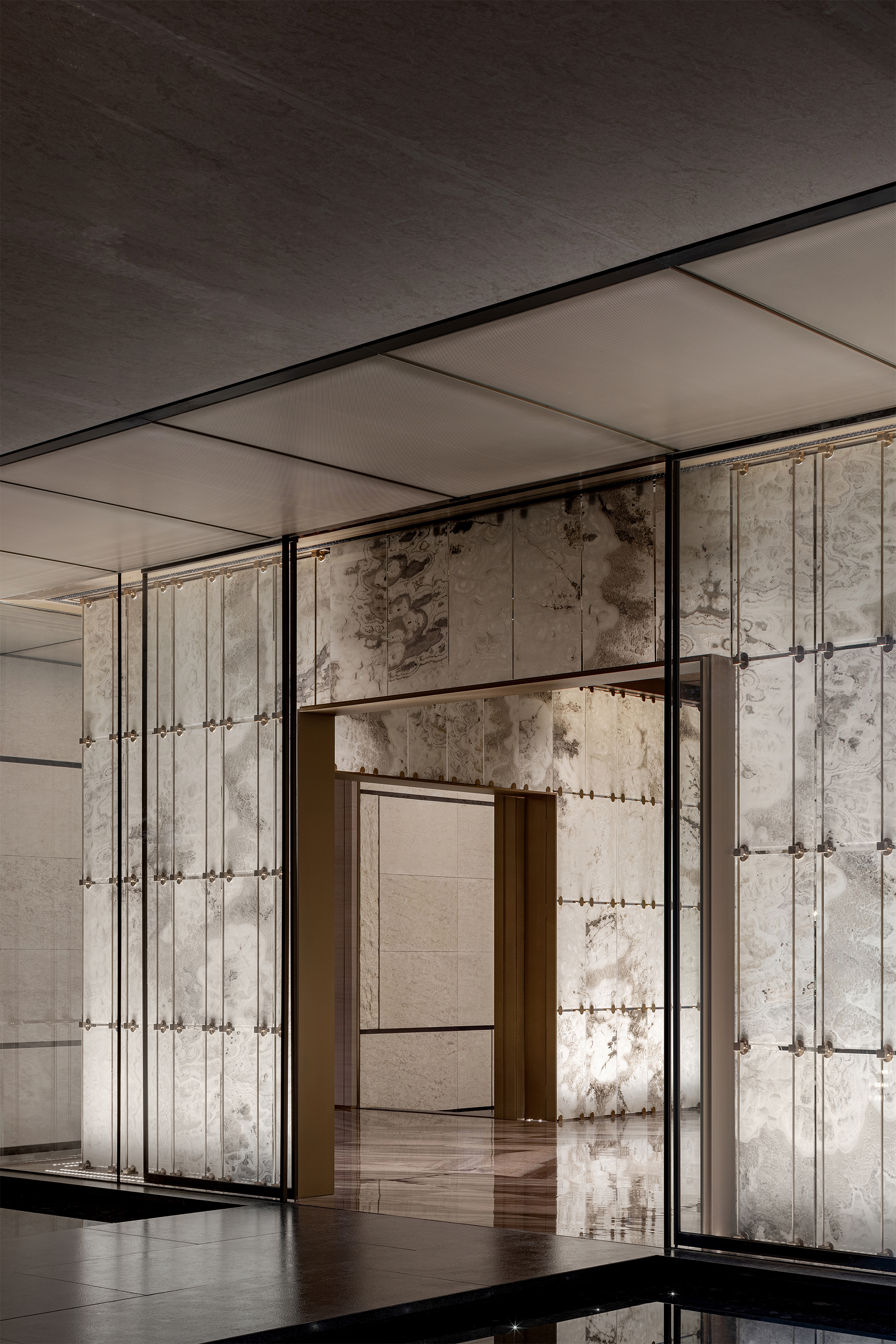
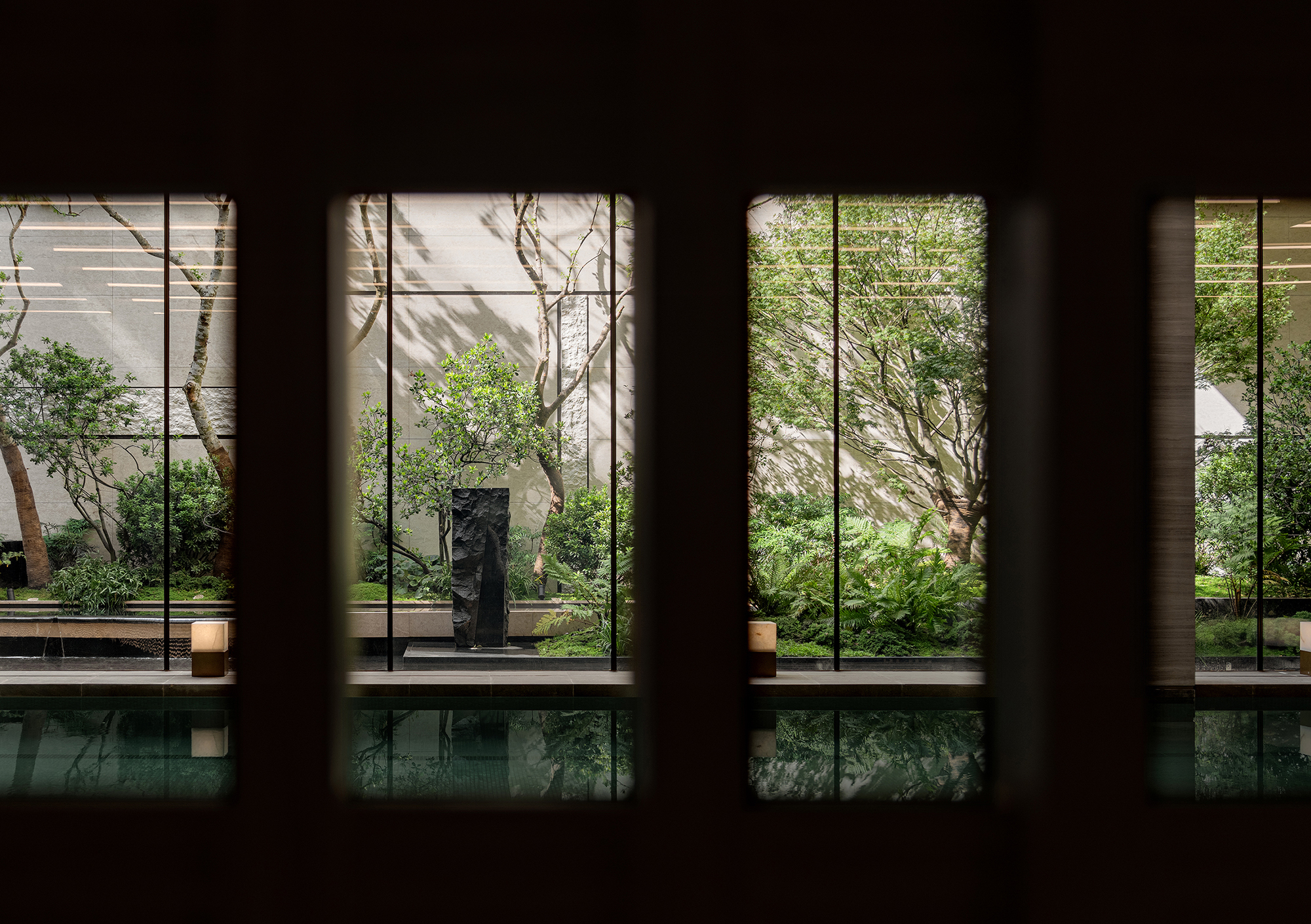
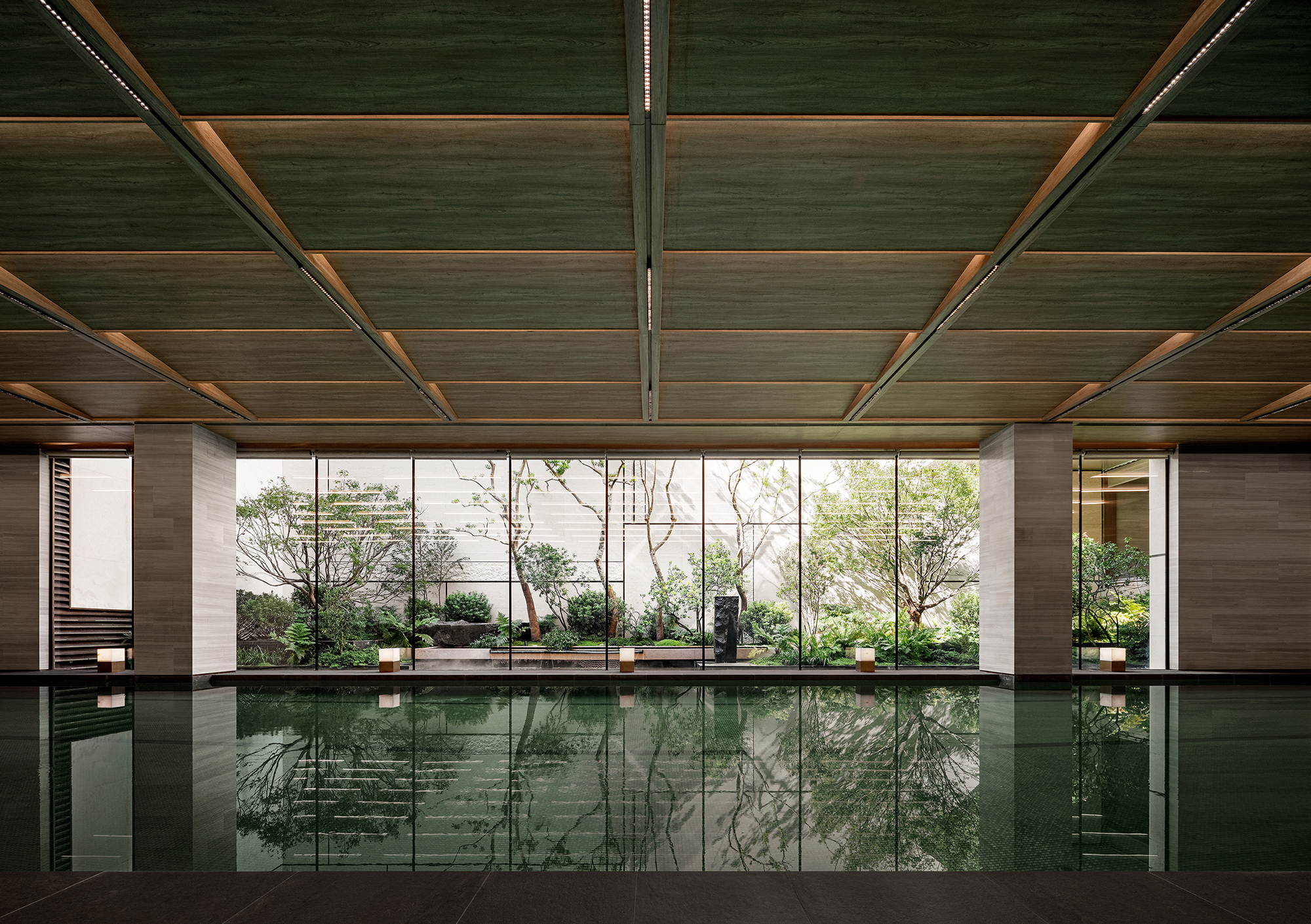
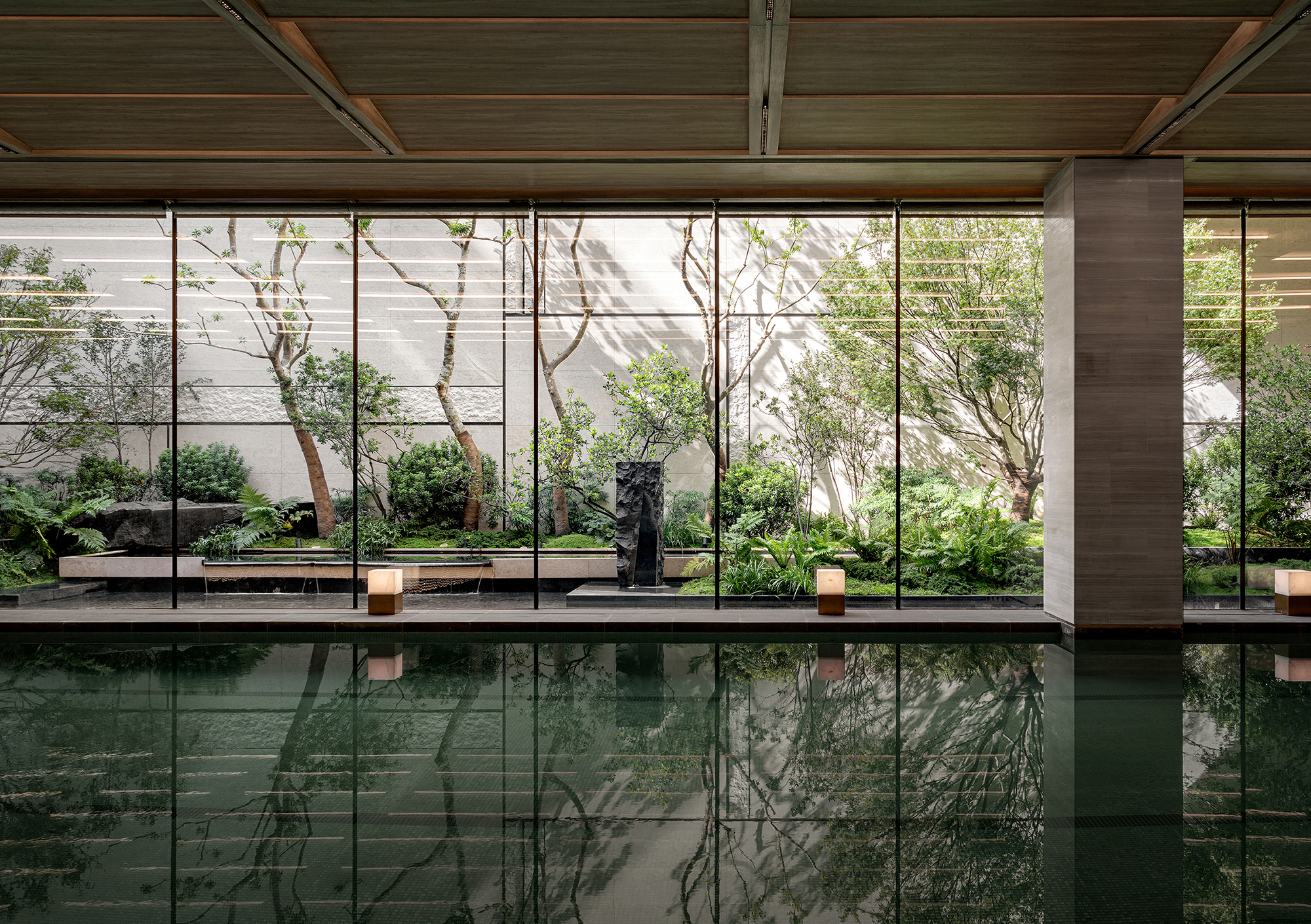
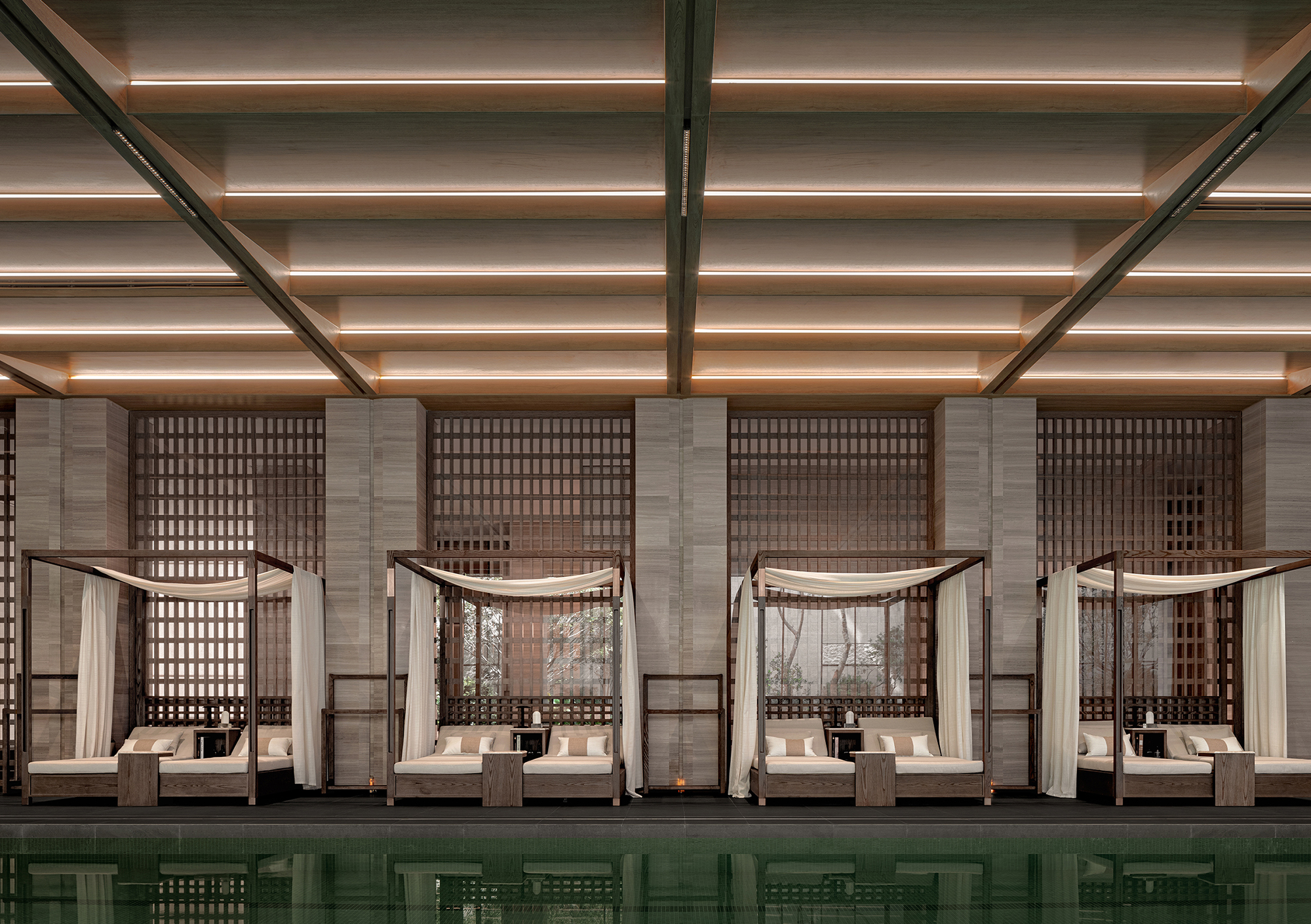
On the lower level, the swimming pool’s surface and the inner court’s shallow reflective pool release their fullest power in a language of pure minimalism. Shadows of trees, grilles, stone walls and the sky are all gathered into them; a meticulously designed luminous wall emits a Zen-like glimmer, as water slips slowly down the stone, light and water undergo subtle, yet tangible, changes over time. This gentle, undazzling light invites a profound sense of peace. In such profound stillness, we rediscover a long-neglected sense of relaxation: depth often emerges from blank spaces. What truly endures are the moments that anchor the heart. In the slight undulations of the water surface, space is no longer shaped by abundant outward display, but by the awakening of layered perception and the inner echo.
Under the pressure of today’s real-estate market, we have to admit that many projects still follow the conventional logic of "surface value". Developers reach for louder words, costlier materials, denser symbols—anything to hide the hollowness of experience, only the gilded shell remains. This is the clearest contradiction of the moment: the emptier the real value, the louder the outward show. But time will tell. Surface glamor sinks with the tide, inward experience transcends the cycle. What ultimately withstands the test of time is the establishment of an authentic connection between a place and human emotion.
At Hangzhou CR Land·Eternal Center, we take "order", "nature", "light and shadow" as our core themes, allowing people to step into a carefully folded realm of tranquility from the fast-paced world outside. This constructs a homeward journey —from matter to spirit, from sense to soul, from clamor to serenity.
A person’s sense of value does not depend on what they own, but on what they can feel; a space’s sense of value is also not decided by the abundance of its ornament, but by the depth of experience it affords. The contemporary ideal of "House of Gold and Jade" has long transcended its traditional material meaning—it is the decisive turn from decoration to feeling.
公开 不公开