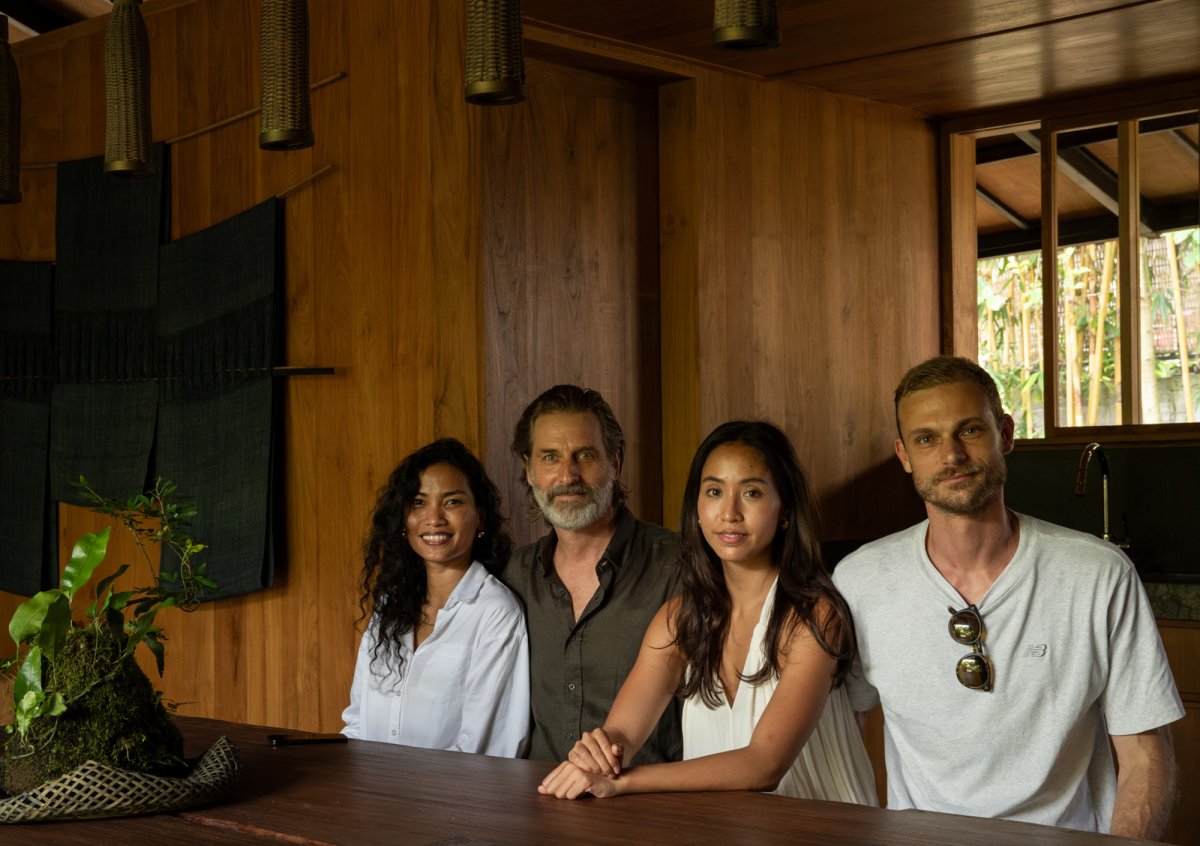
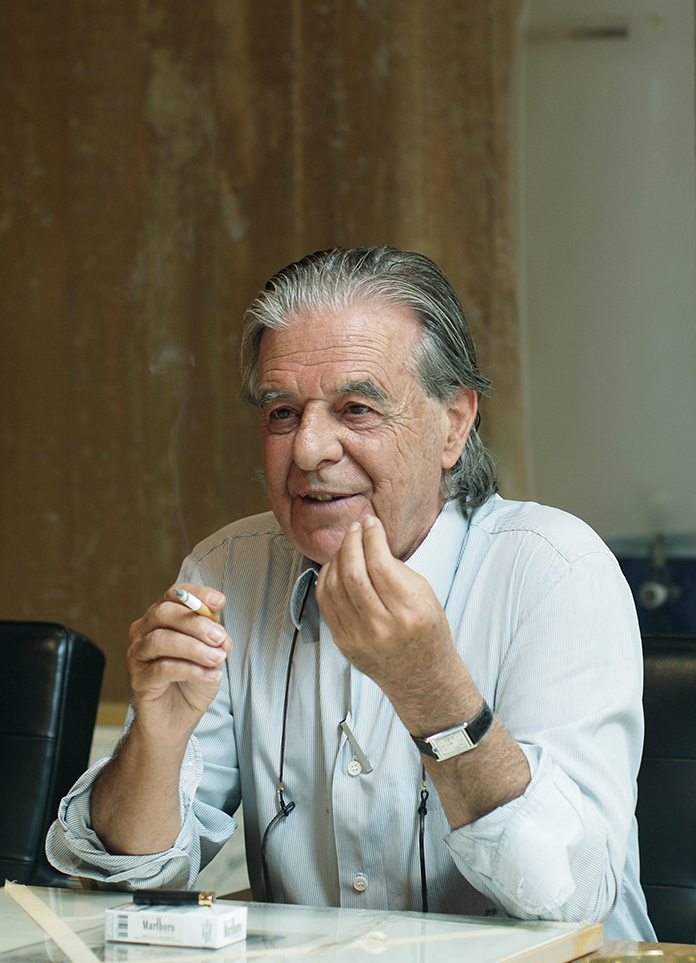
Architect Conchita Blanco's childhood was shaped by two artistic lineages—her Spanish painter grandfather's palette and her Balinese dancer grandmother's movement. Her talent did not lead her toward canvas or stage, but found its home in the grain of timber and the pores of stone.

Homeowner Sebastian Mesdag and his wife, jewelry designer Ayu Purpa, are practitioners of weaving nature into daily life. In Bali, they founded Tian Taru Studio, where organic textiles are dyed with plant-based indigo.“Indigo does not conquer the fabric,” Sebastian says, brushing a piece of deep-blue cloth. “It invites the fibers to breathe with it.”When the couple asked their close friend Conchita to design their home, a building ritual centered on patience began.

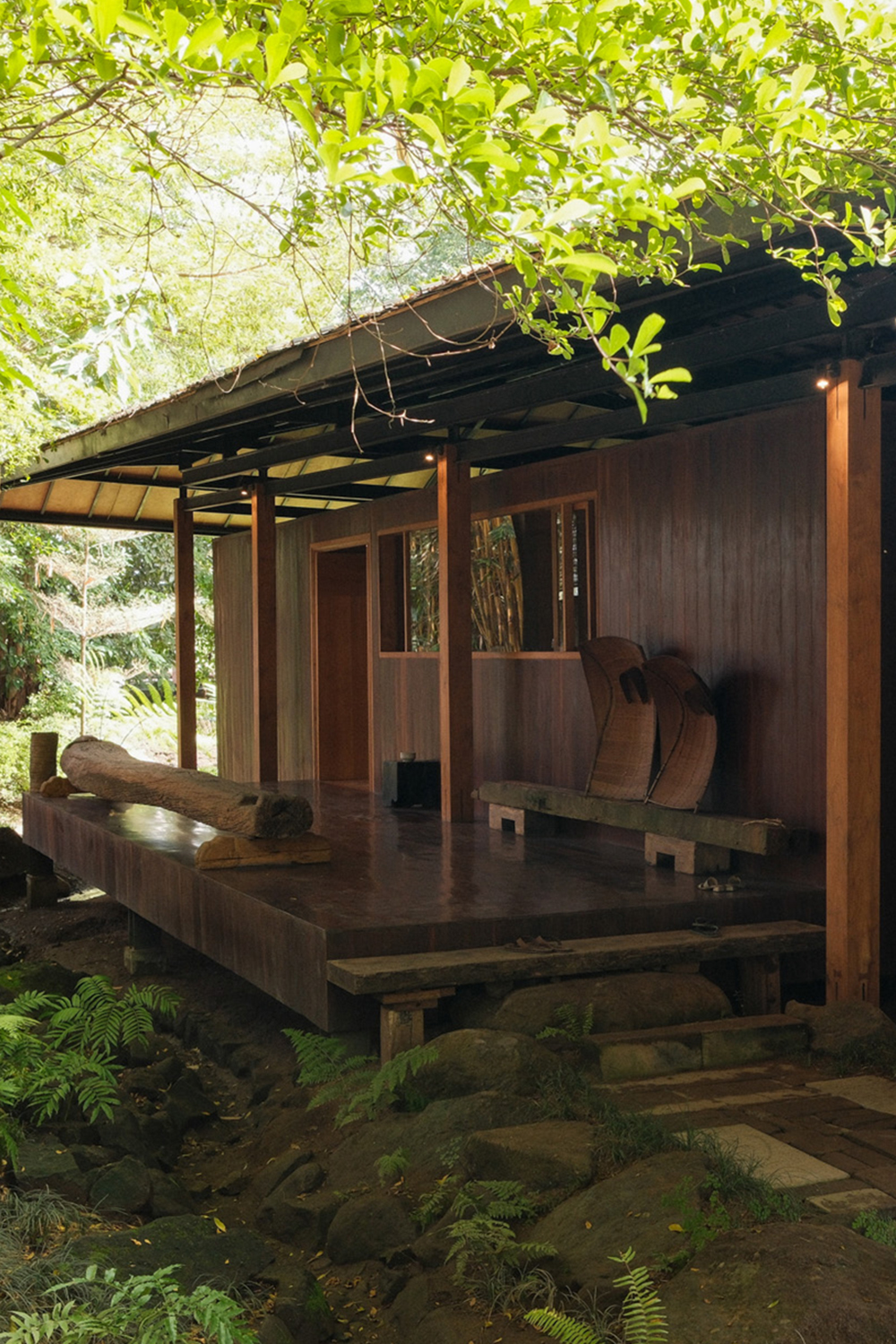
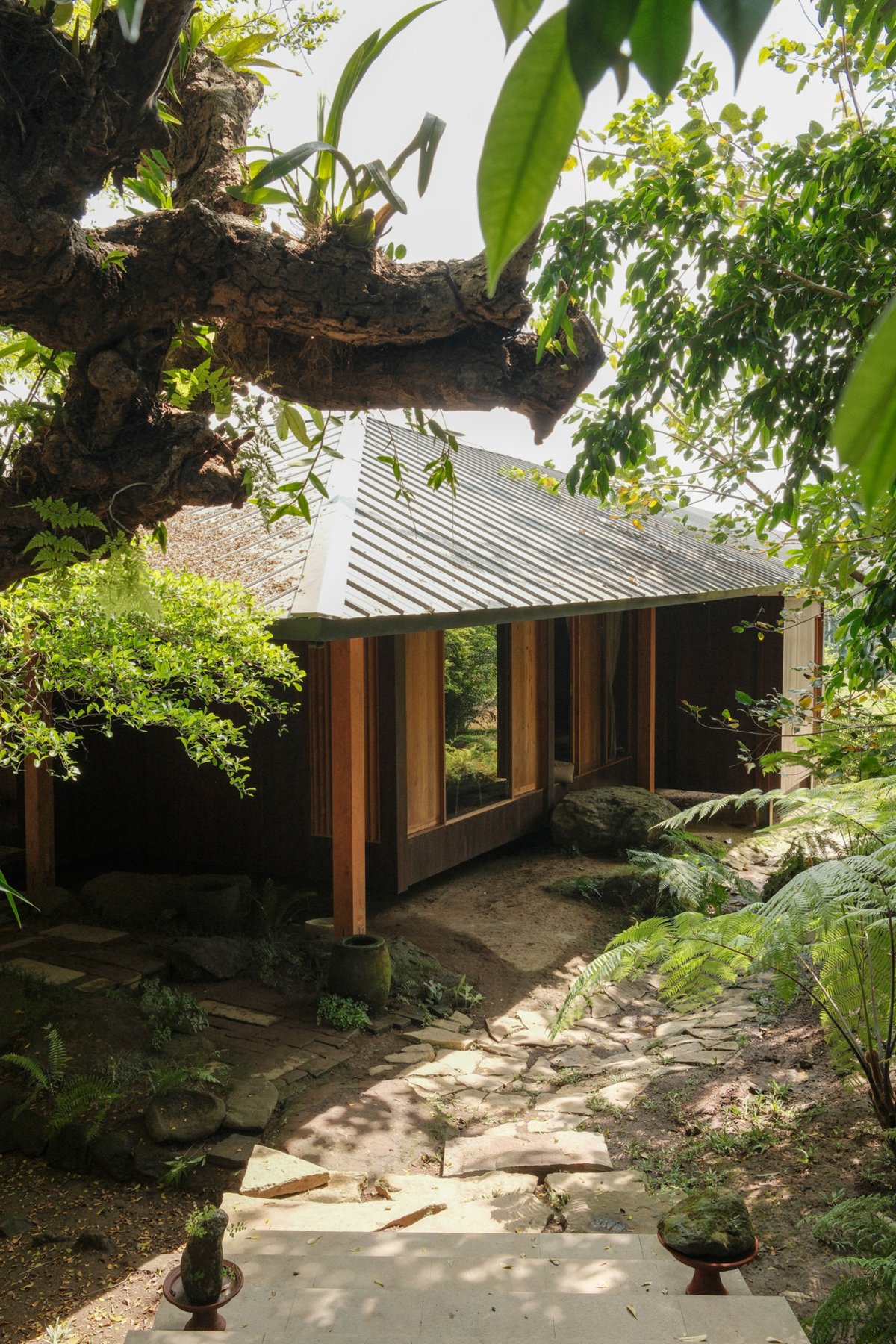
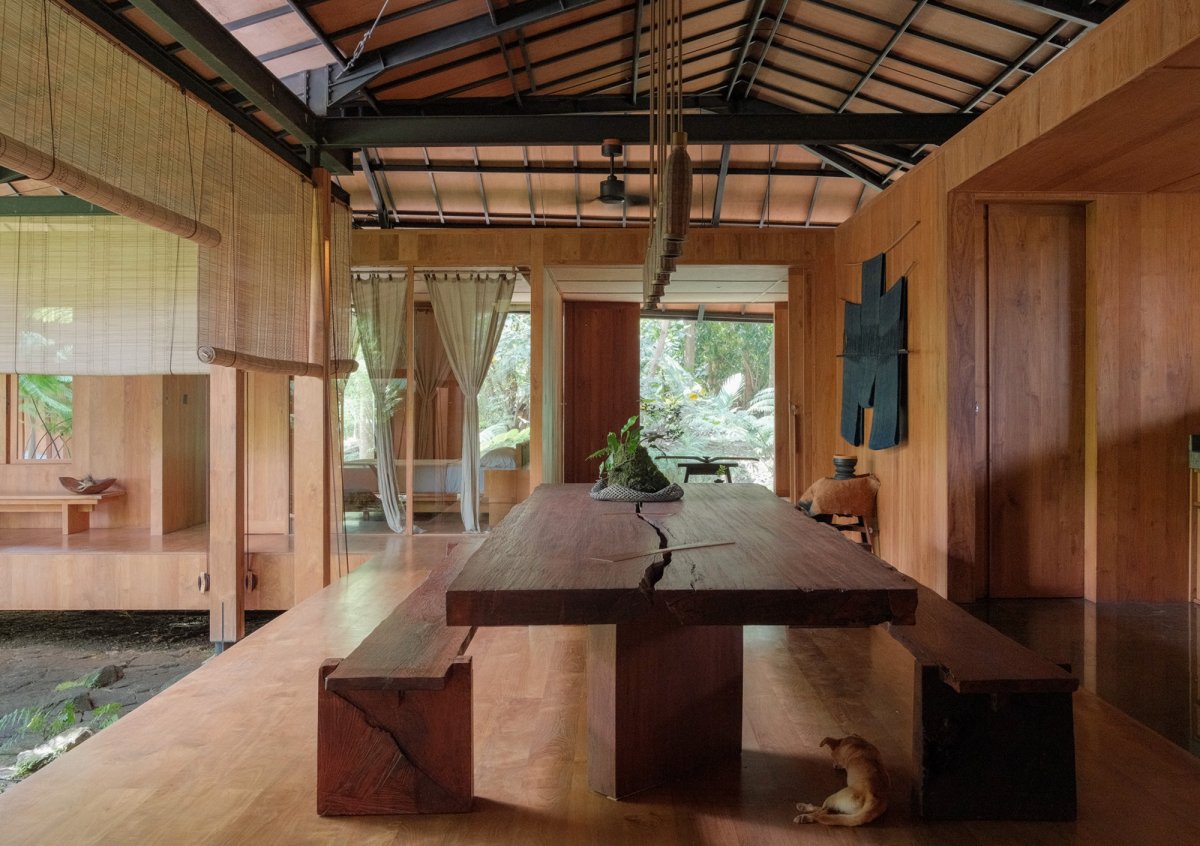
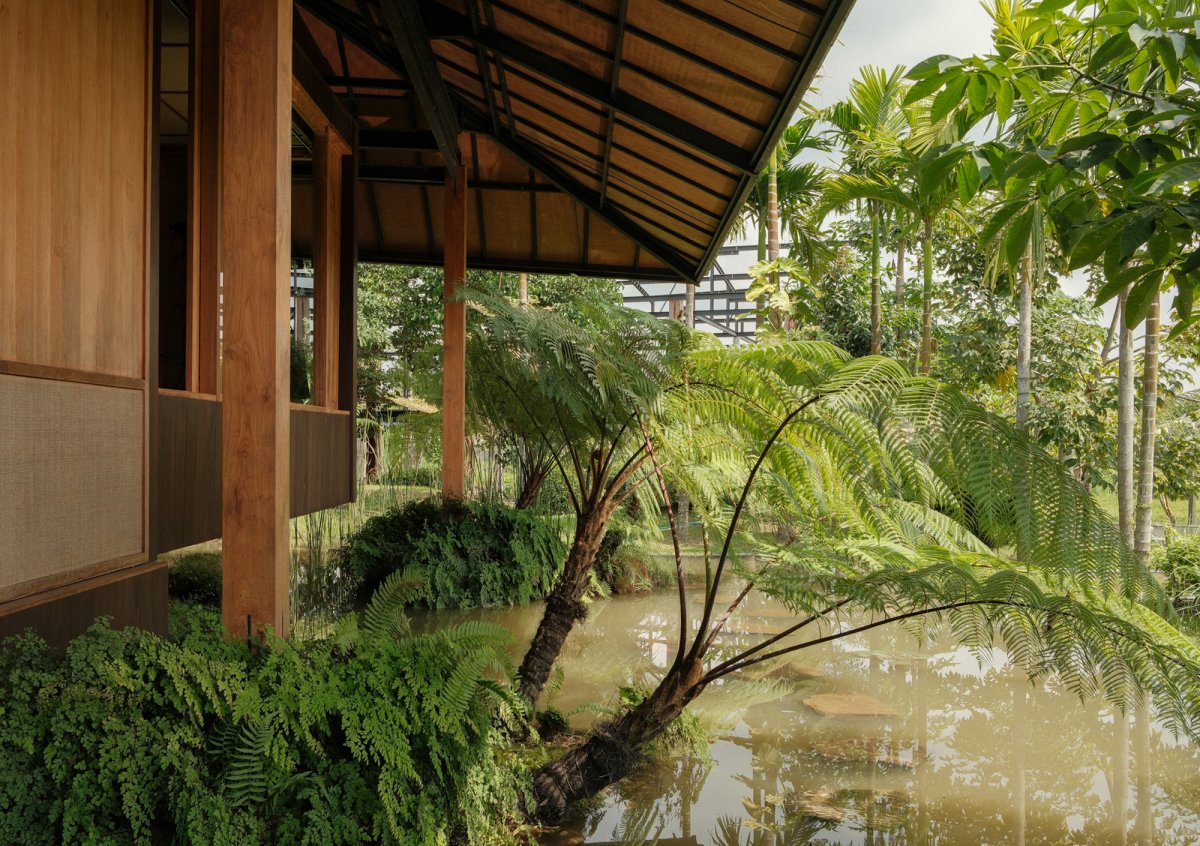
When the car stopped at the edge of the rice fields, a cluster of pitched roofs appeared to float above the ground like origami cranes resting on the landscape. Avalon—Conchita's husband and the builder—pointed toward the steel columns: “We began by erecting the skeleton of the roof.”

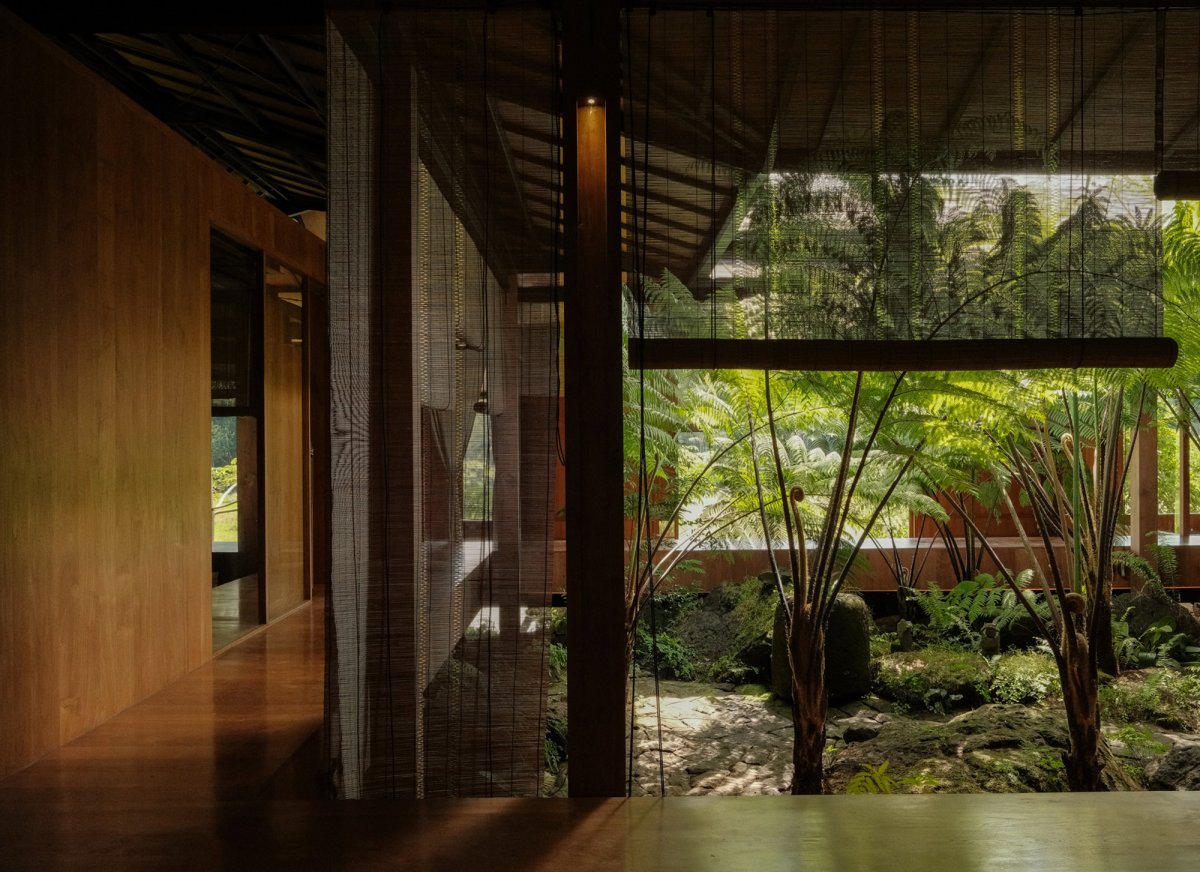
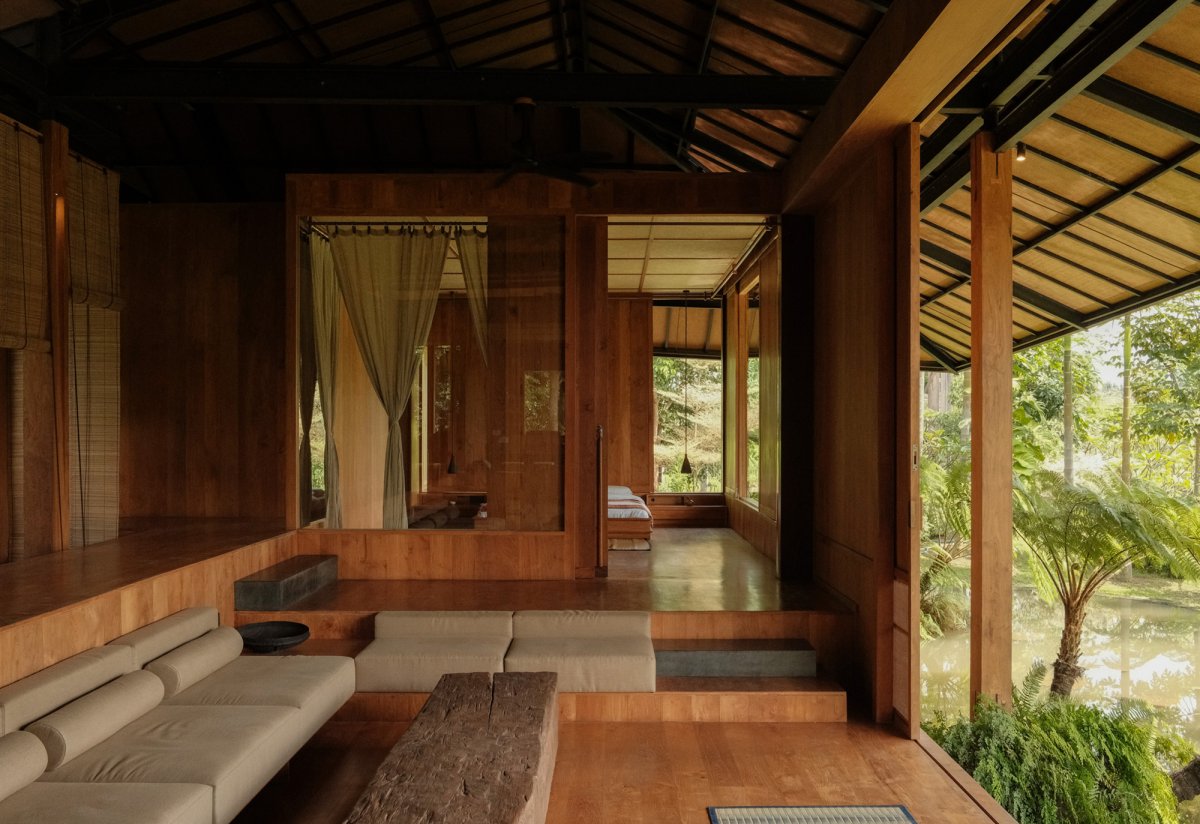
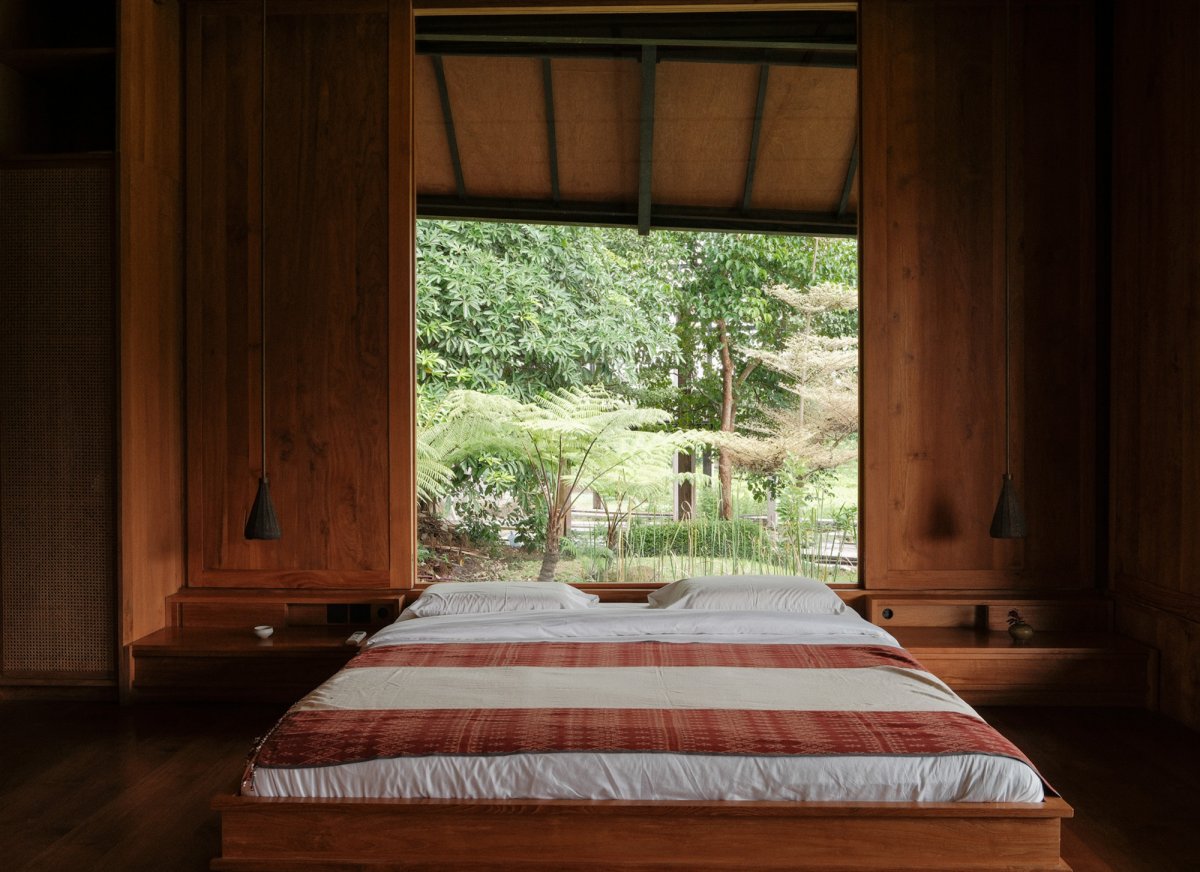
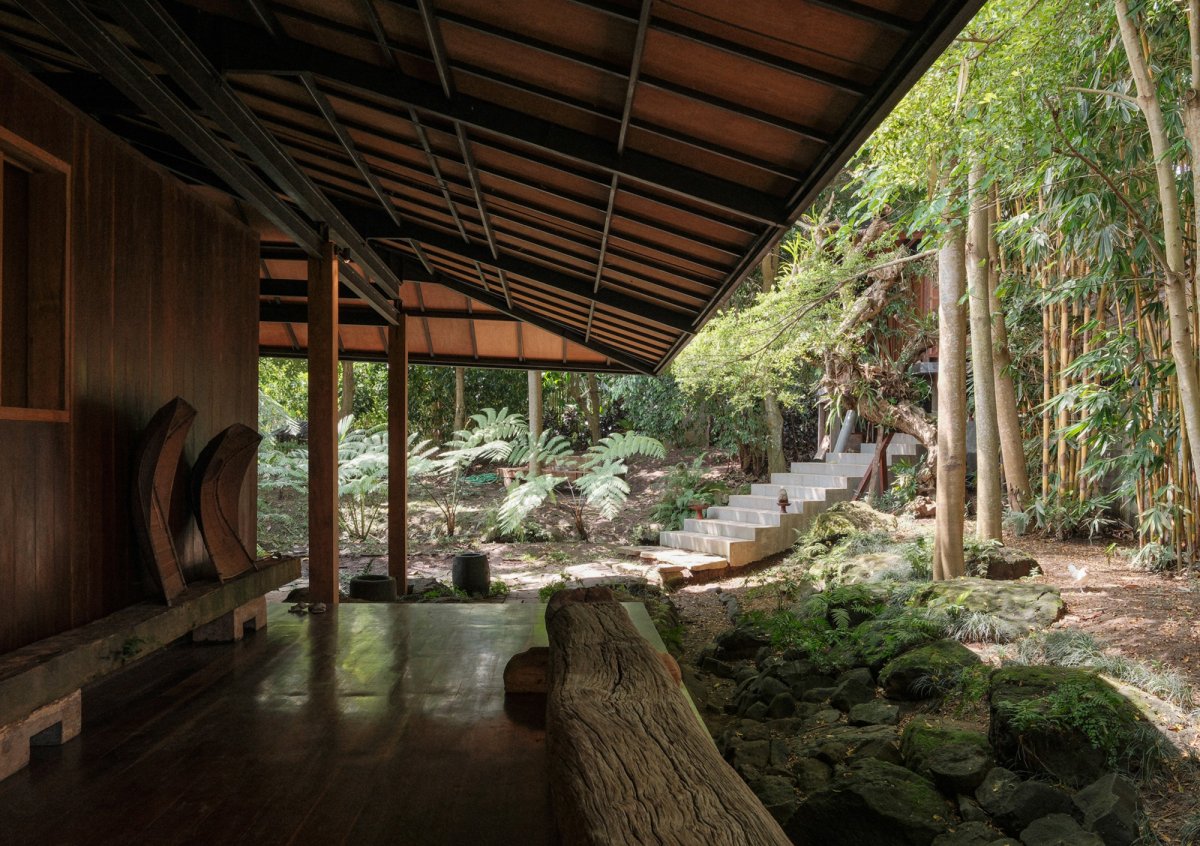
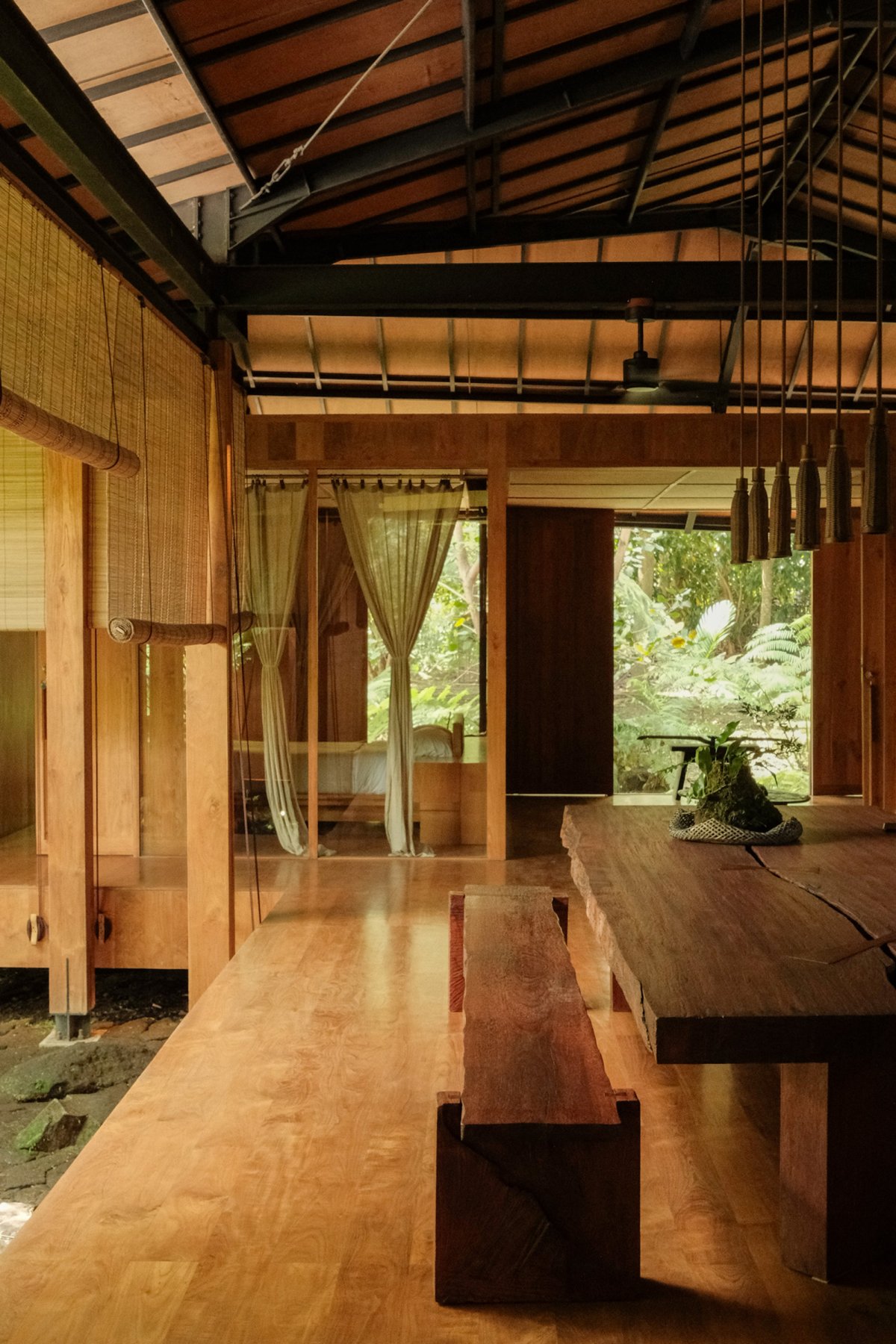
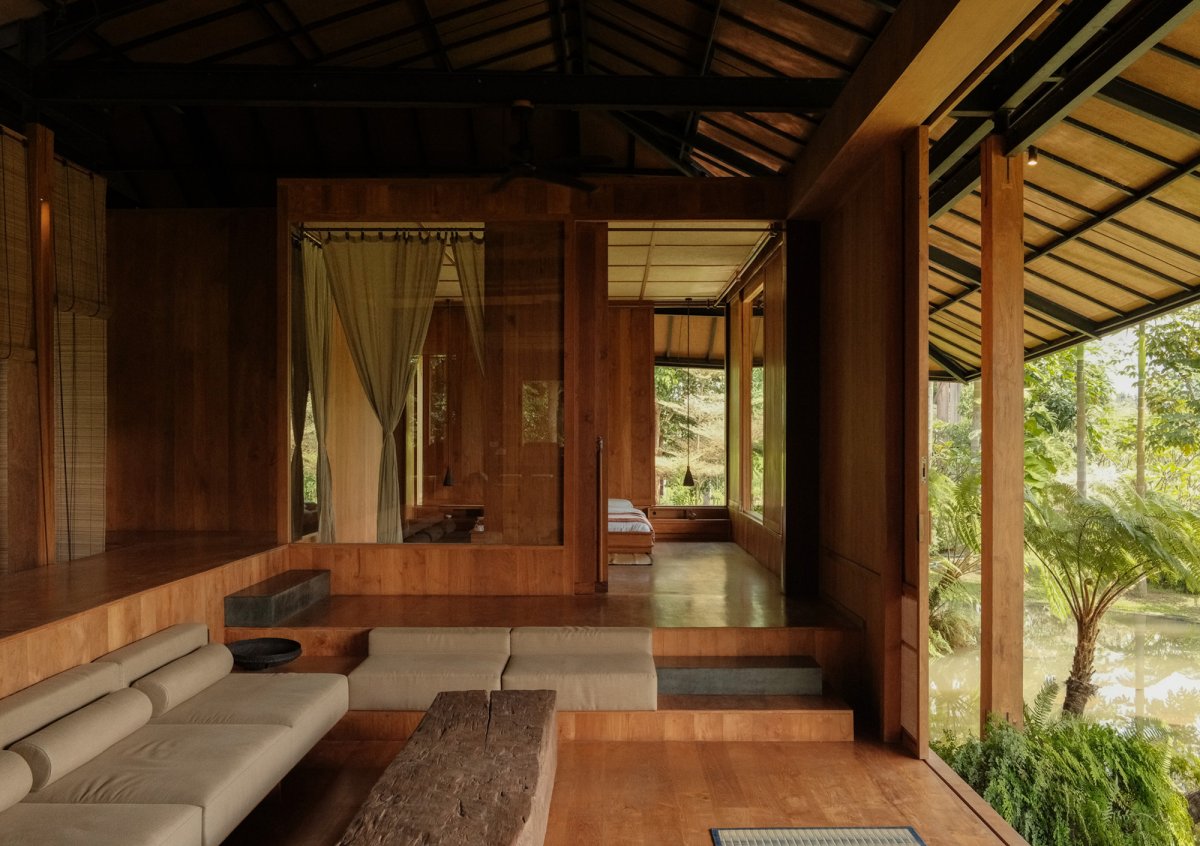
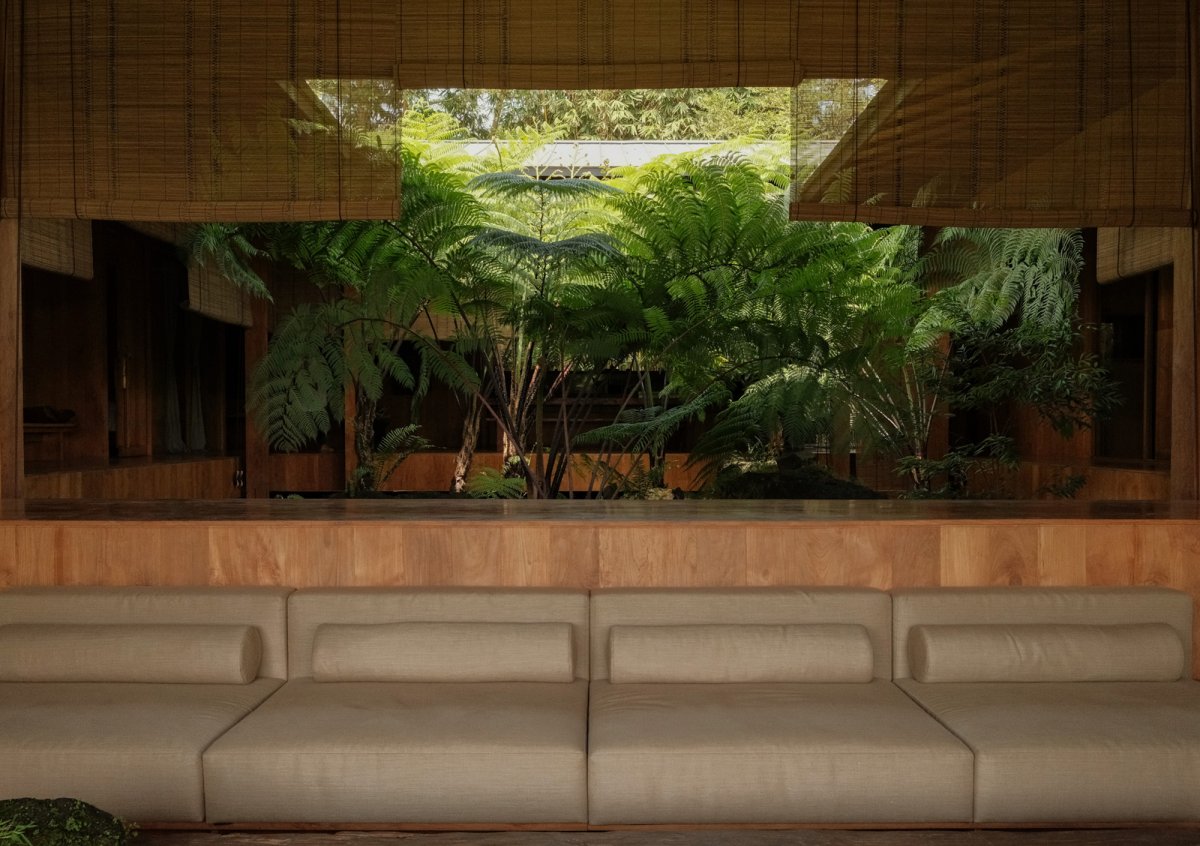
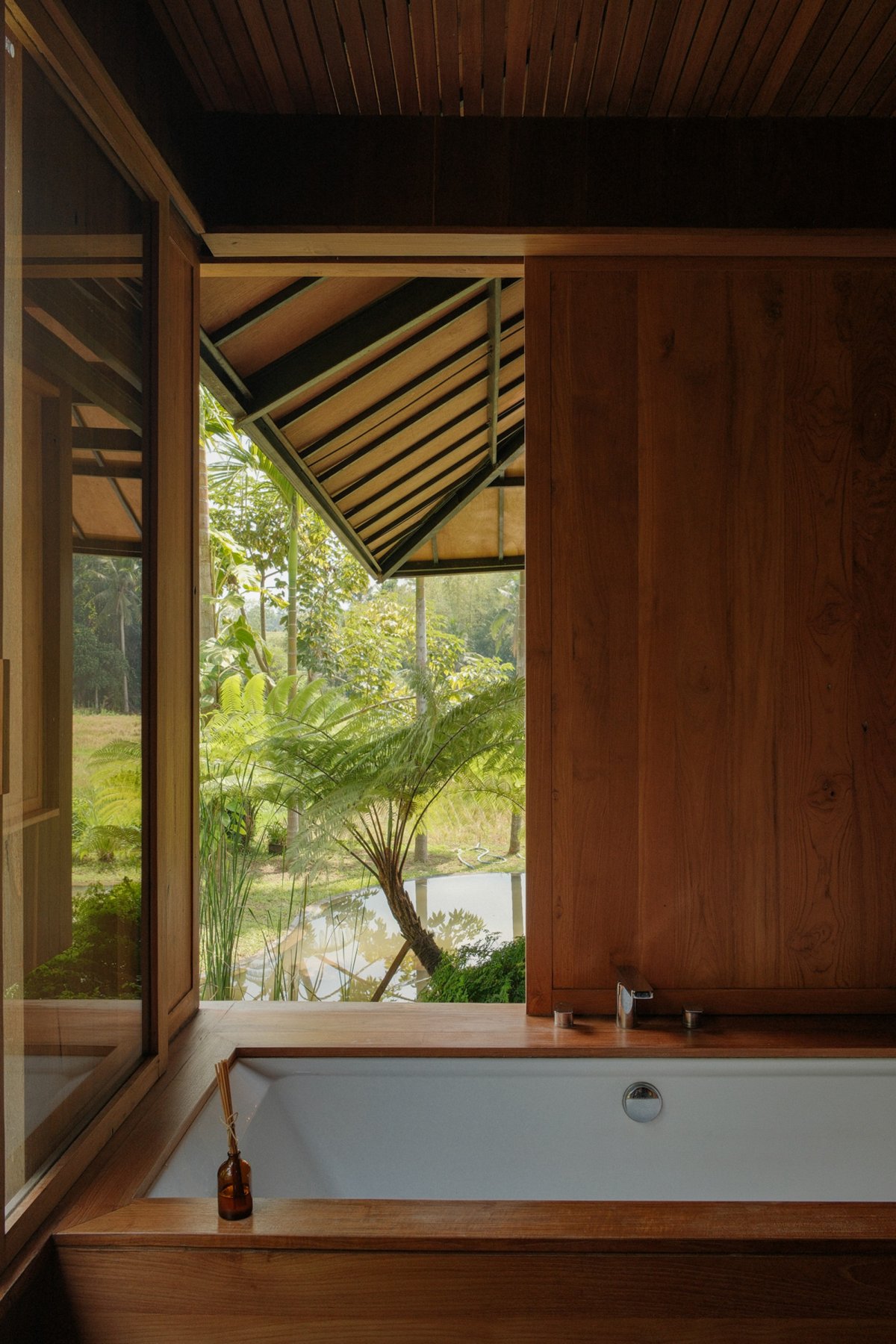
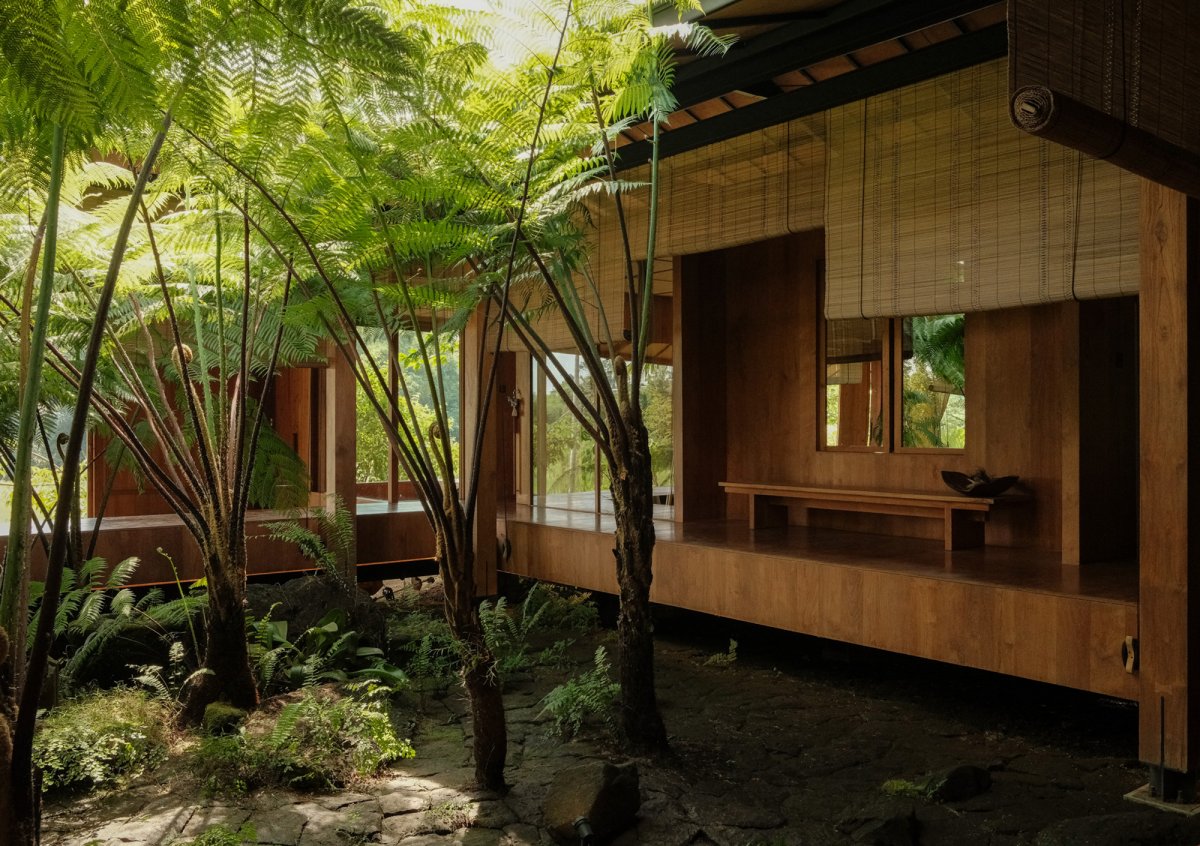
A radical construction logic unfolded: the roof, like a great umbrella, remained open for four years, while rain threaded beaded curtains along its eaves. On the bare ground beneath, Sebastian planted wild saplings gathered from riverbeds, letting them grow freely during the pandemic's construction halt. When work resumed, luminous ferns had already appeared in the volcanic-stone courtyard, and branches had woven themselves into natural partitions.“The layout of the rooms and the placement of windows were determined by how the plants grew,” Conchita said, pointing toward the living area. “That little sapling from back then is now the frame for our view.”

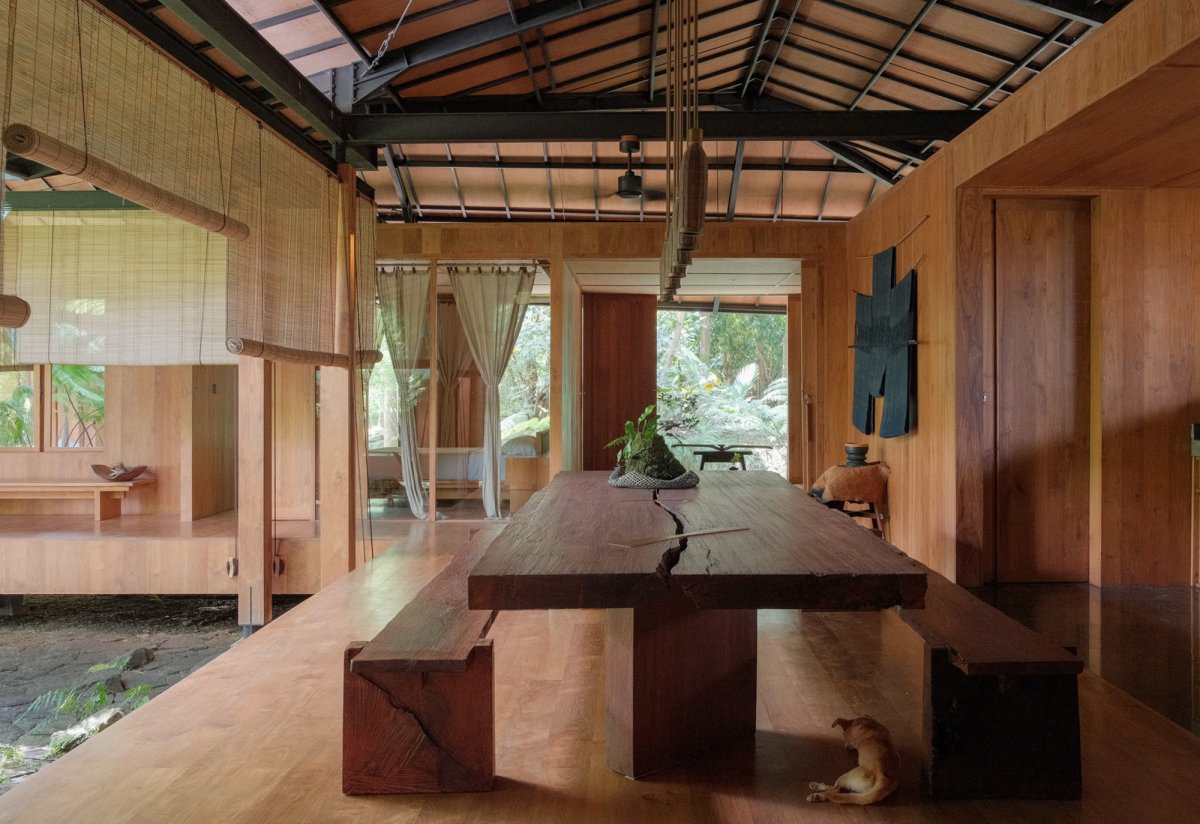
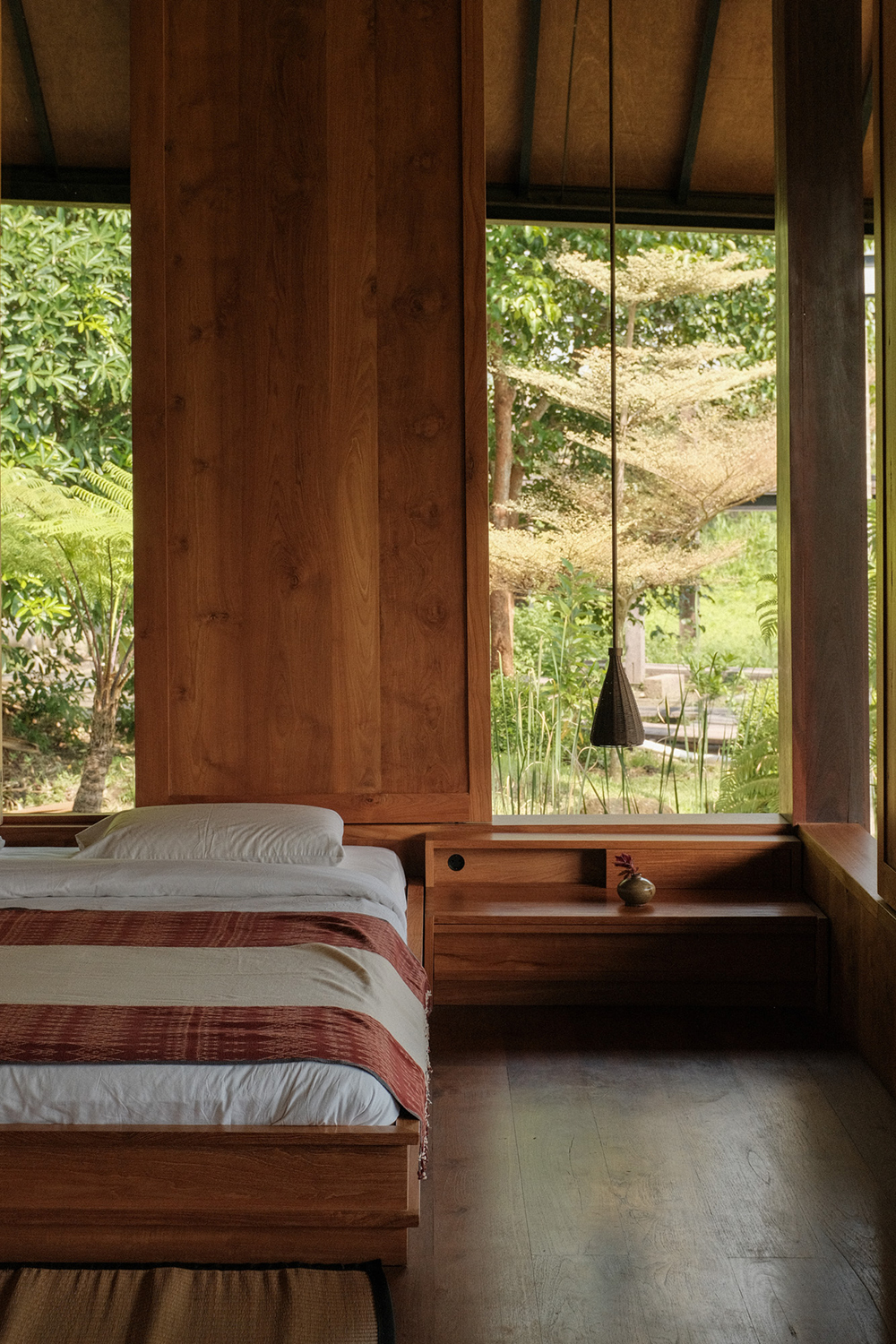
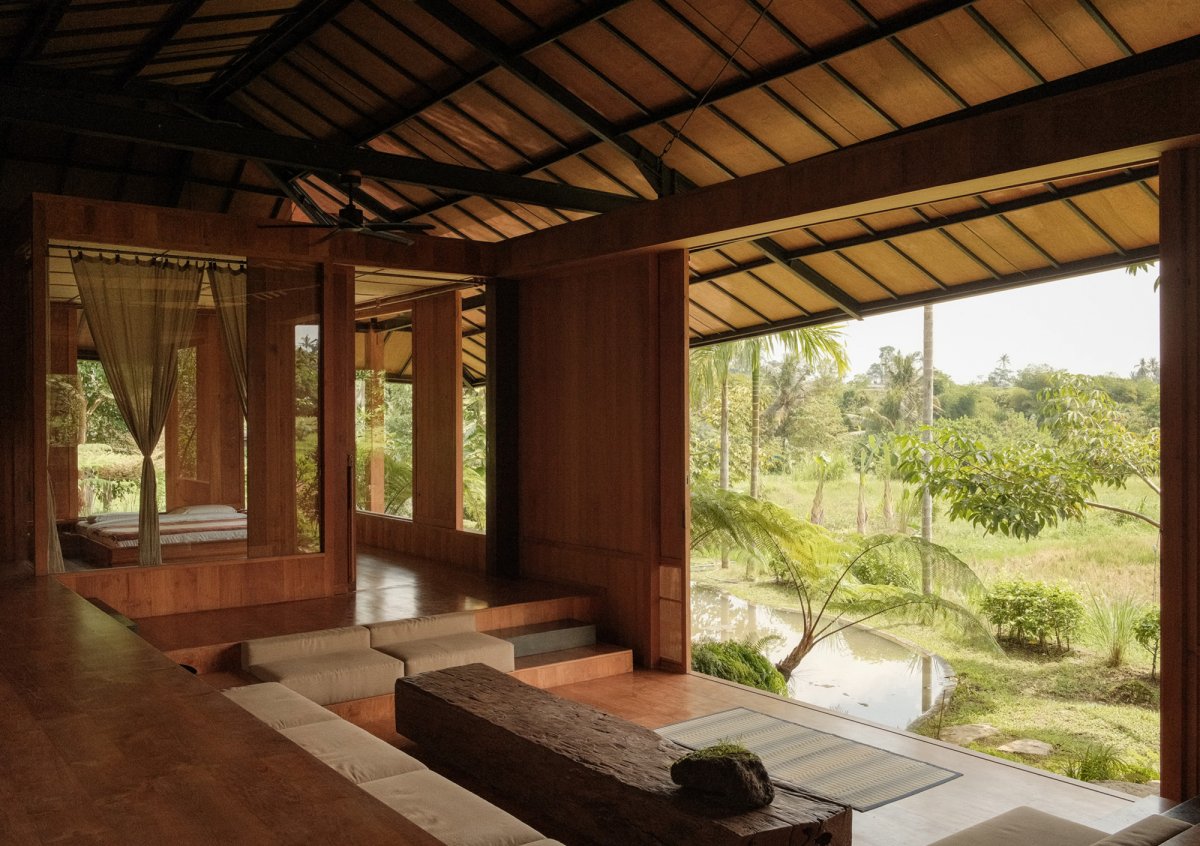
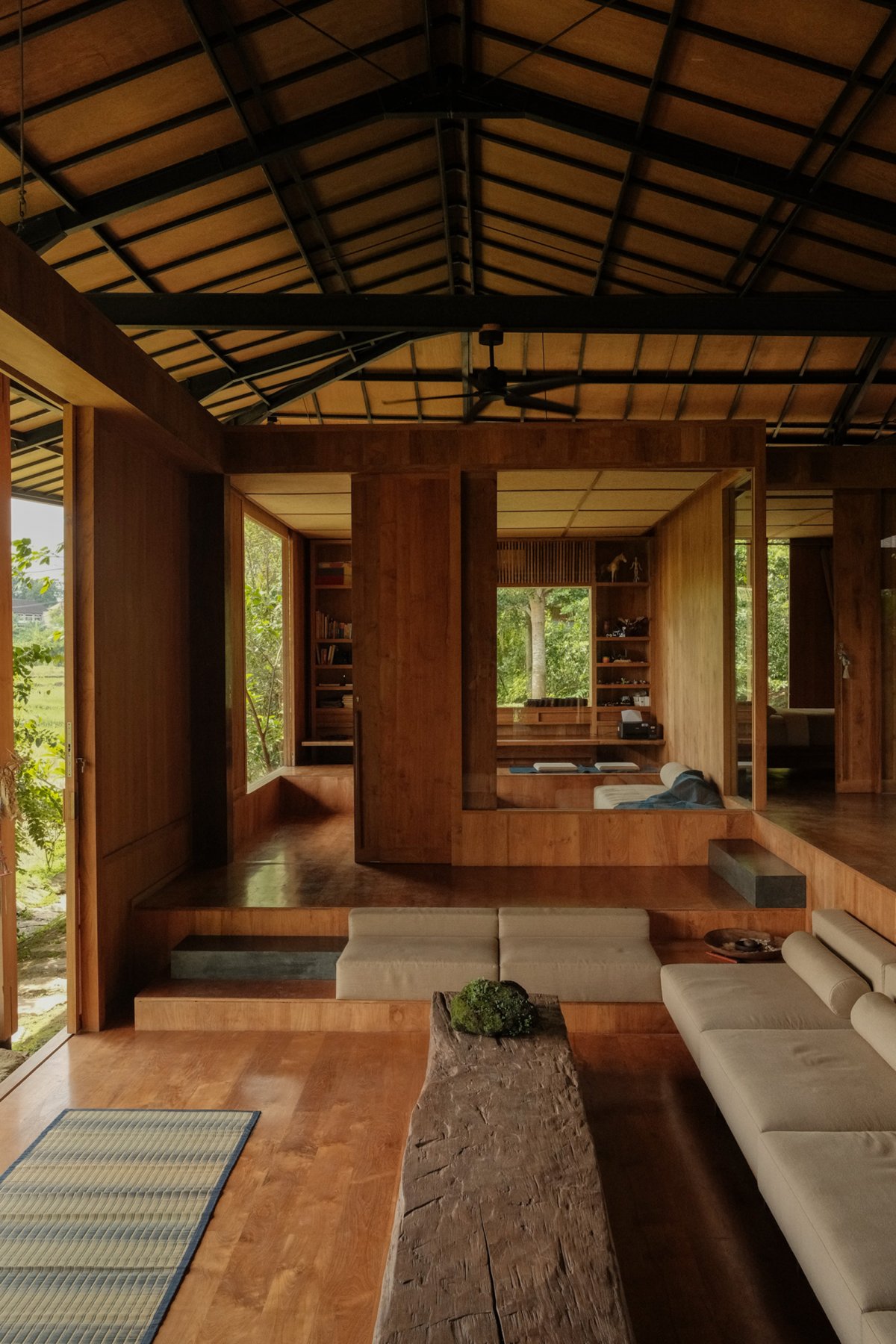
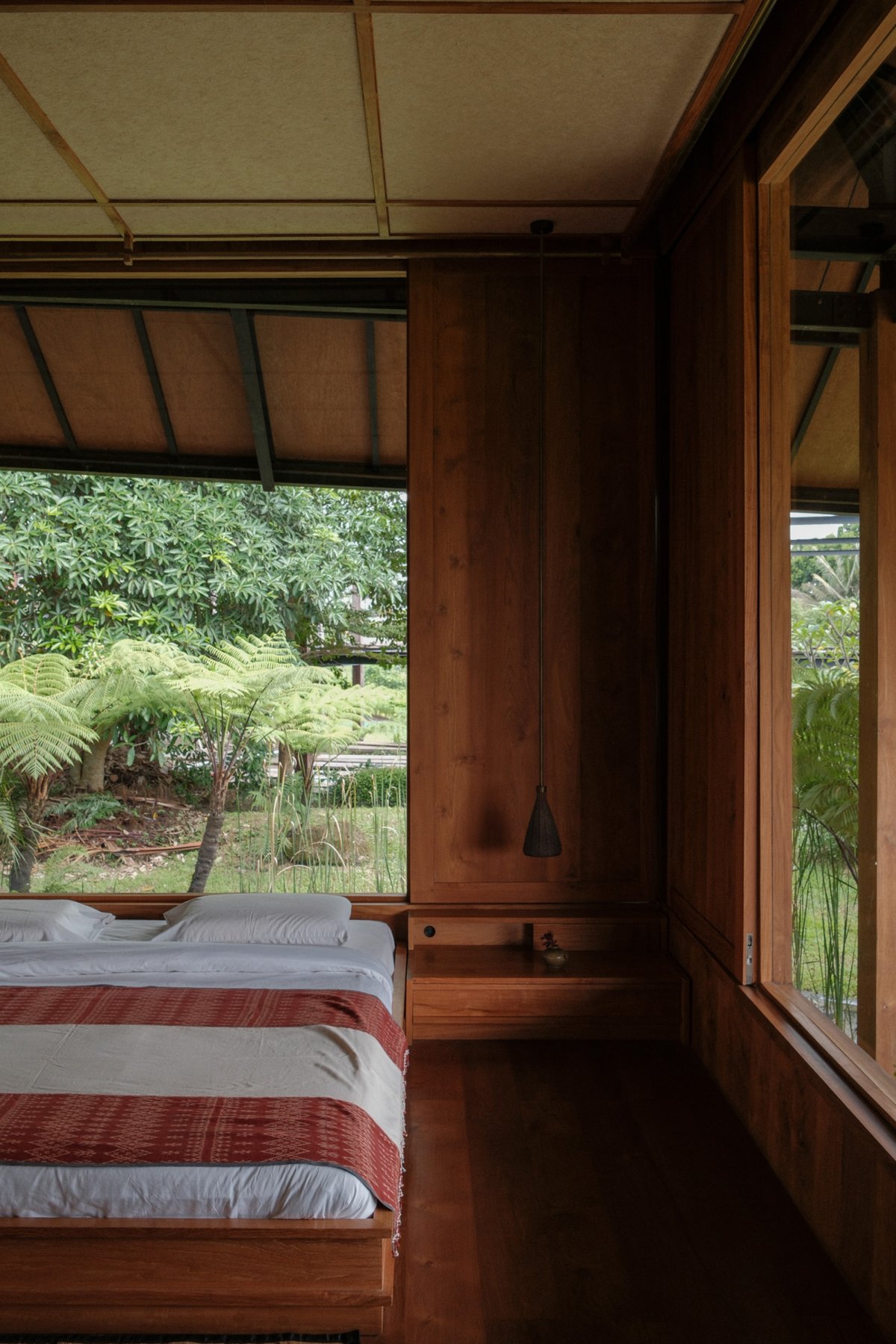
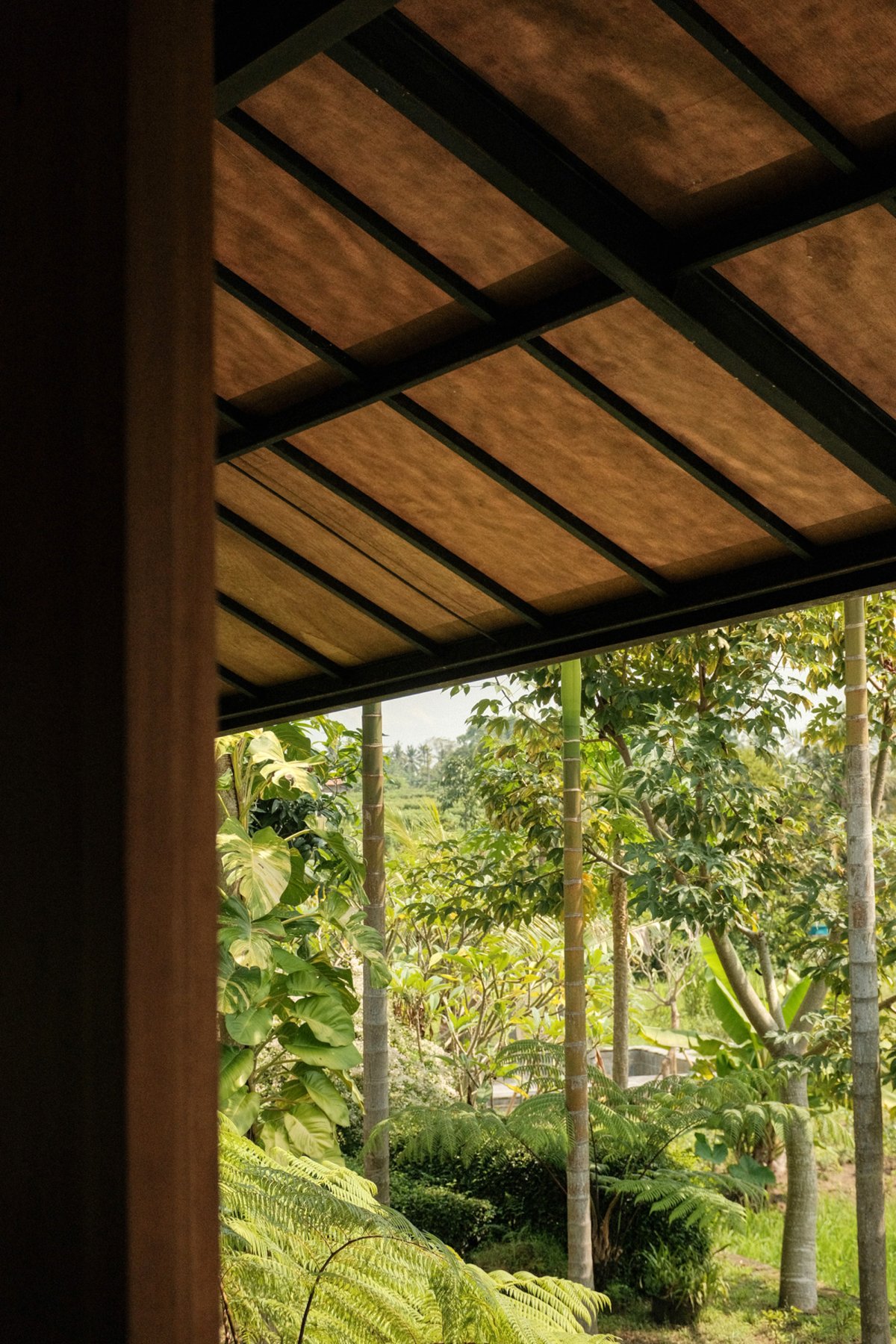
The roof's double pitch holds a secret of light: a subtle asymmetry allows morning and evening rays to enter diagonally, casting warm gold across the teak floor, while the harsh noon sun is softened and diffused. From afar, the folded roofline stretches parallel to the terraced rice fields, echoing the land's own pleats.
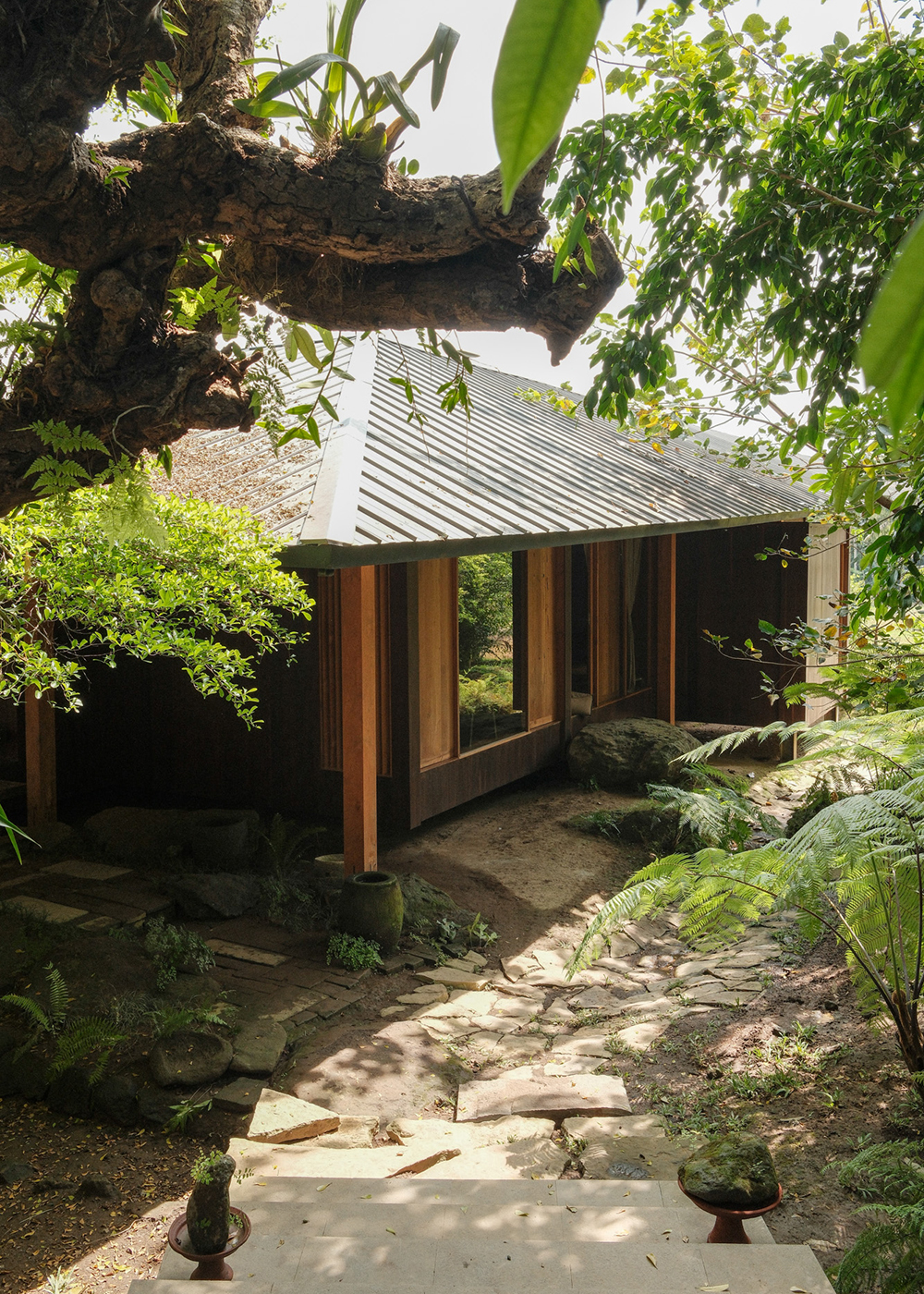
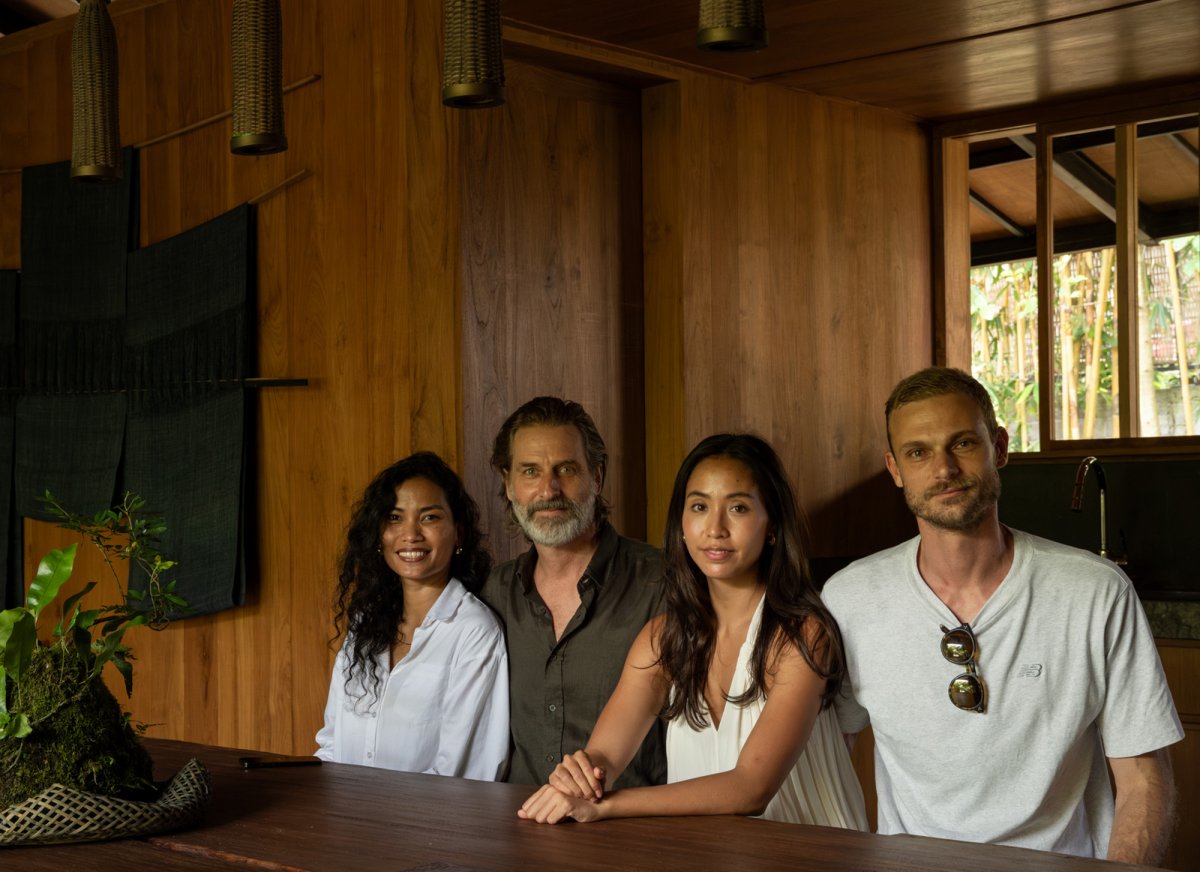
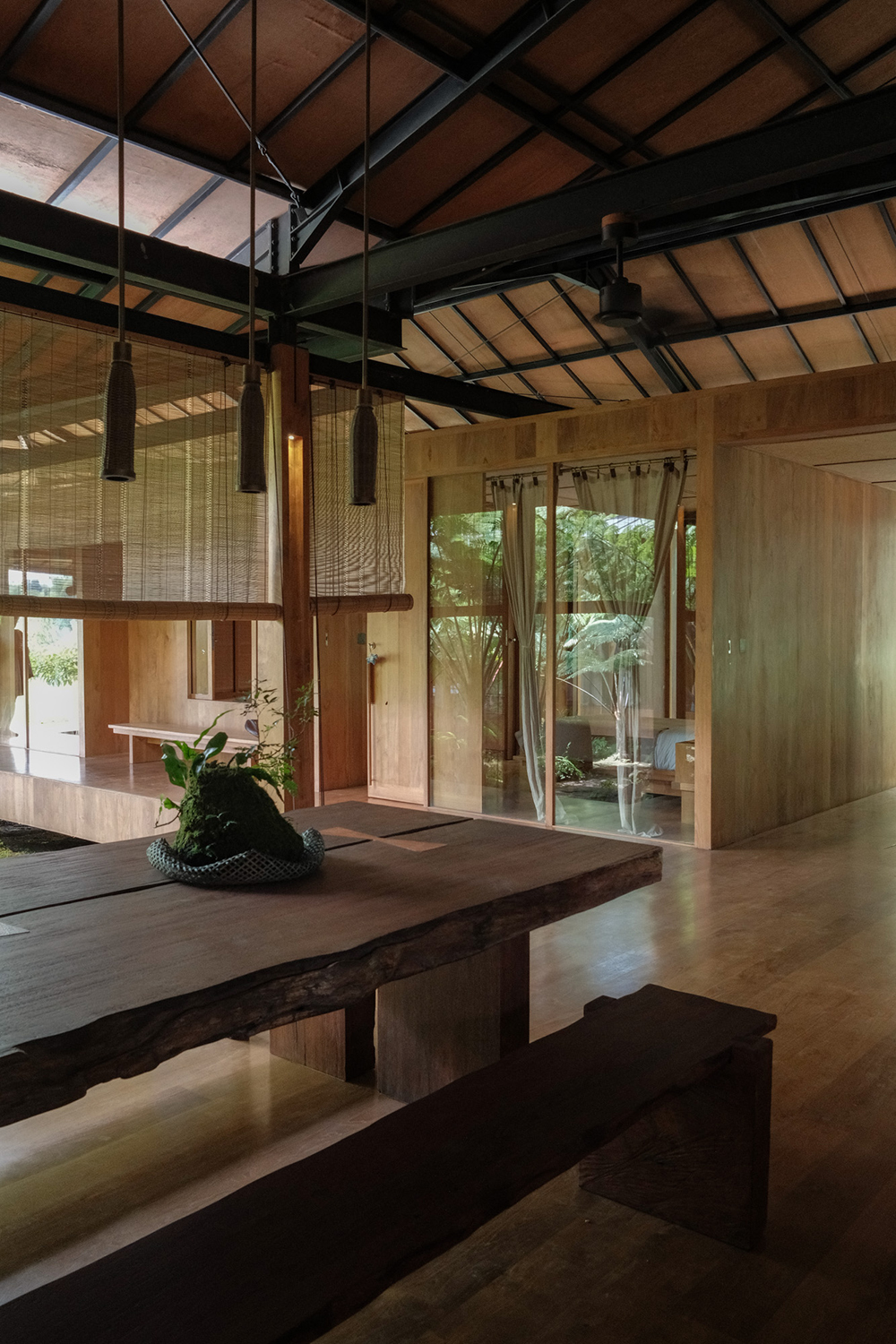
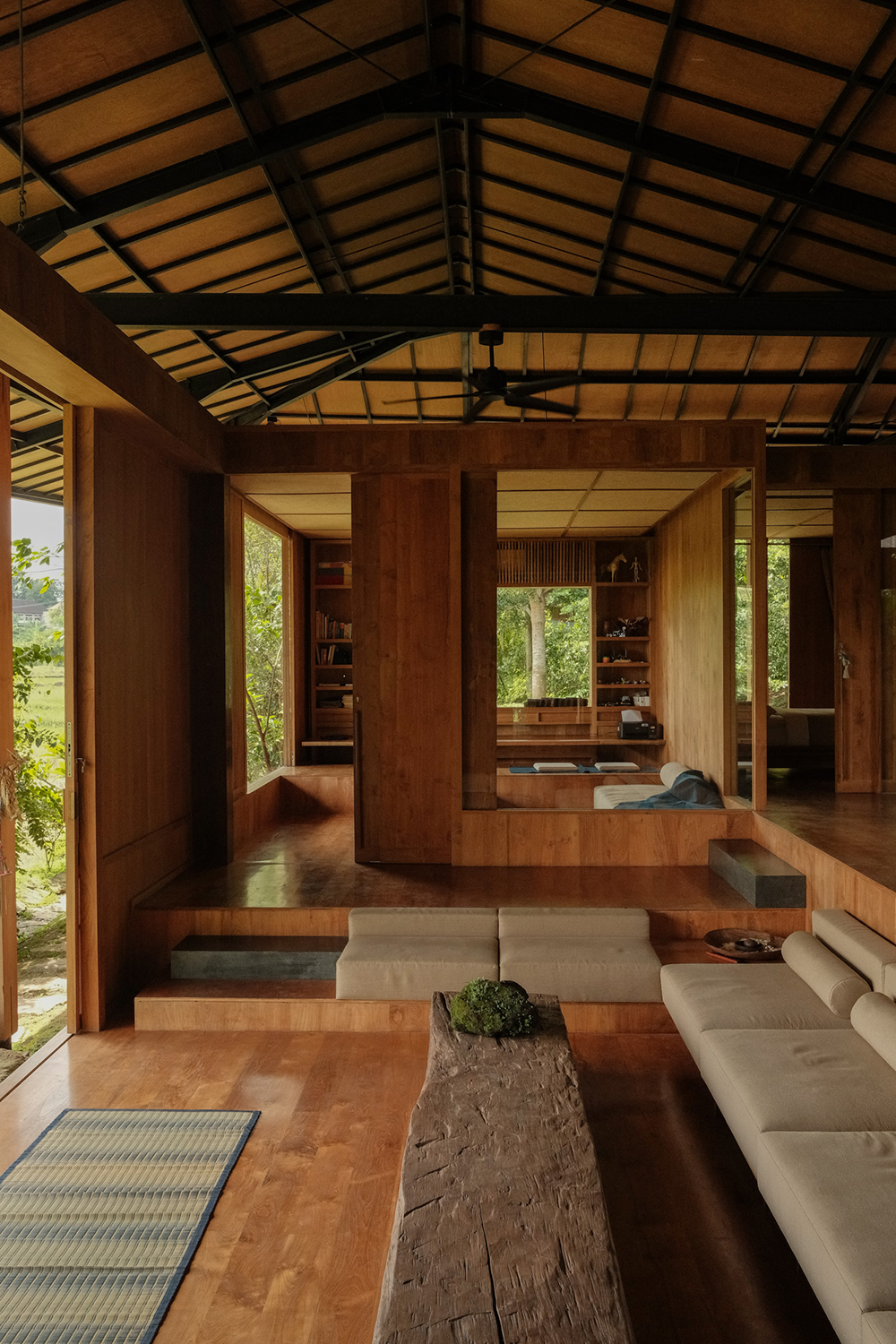
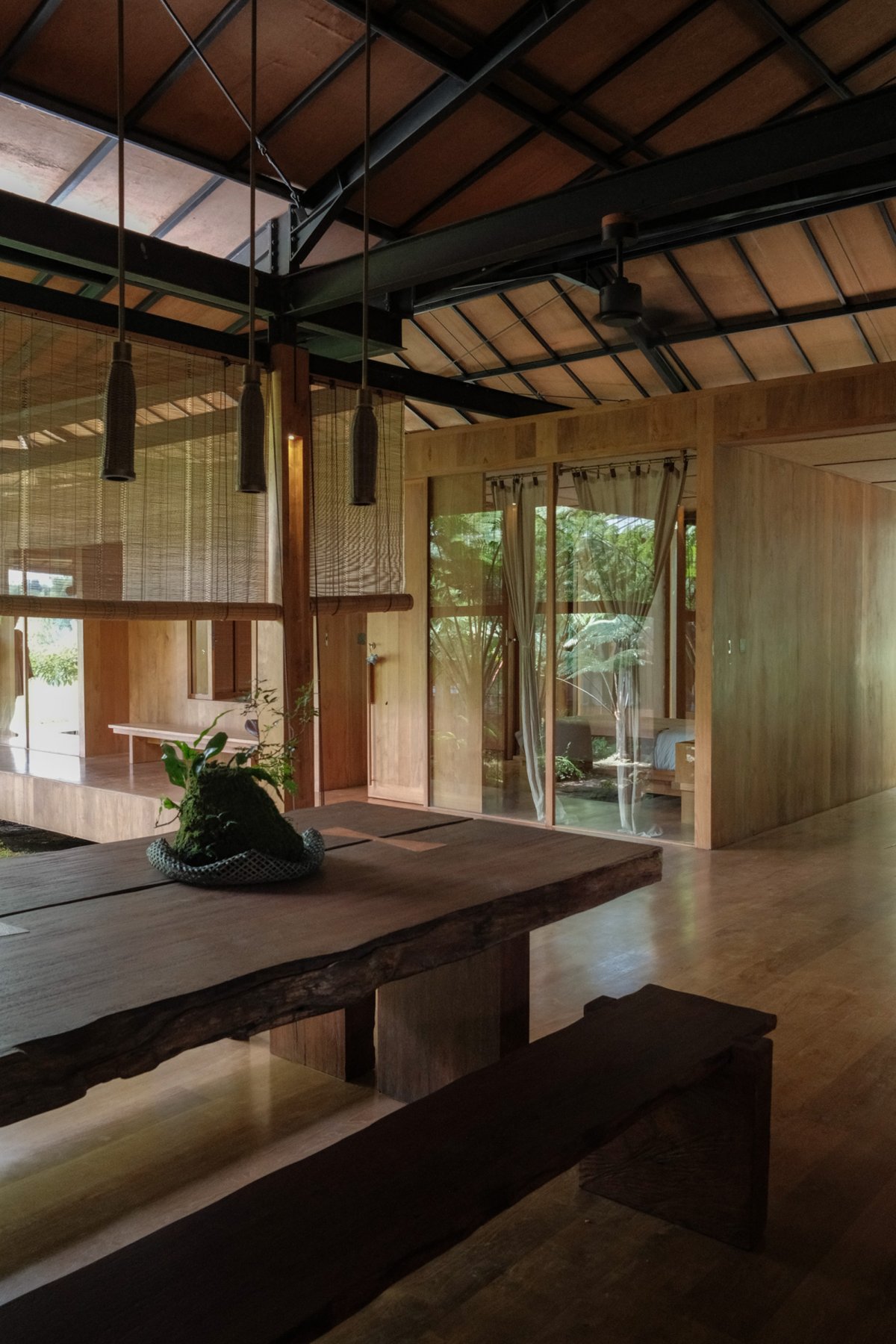
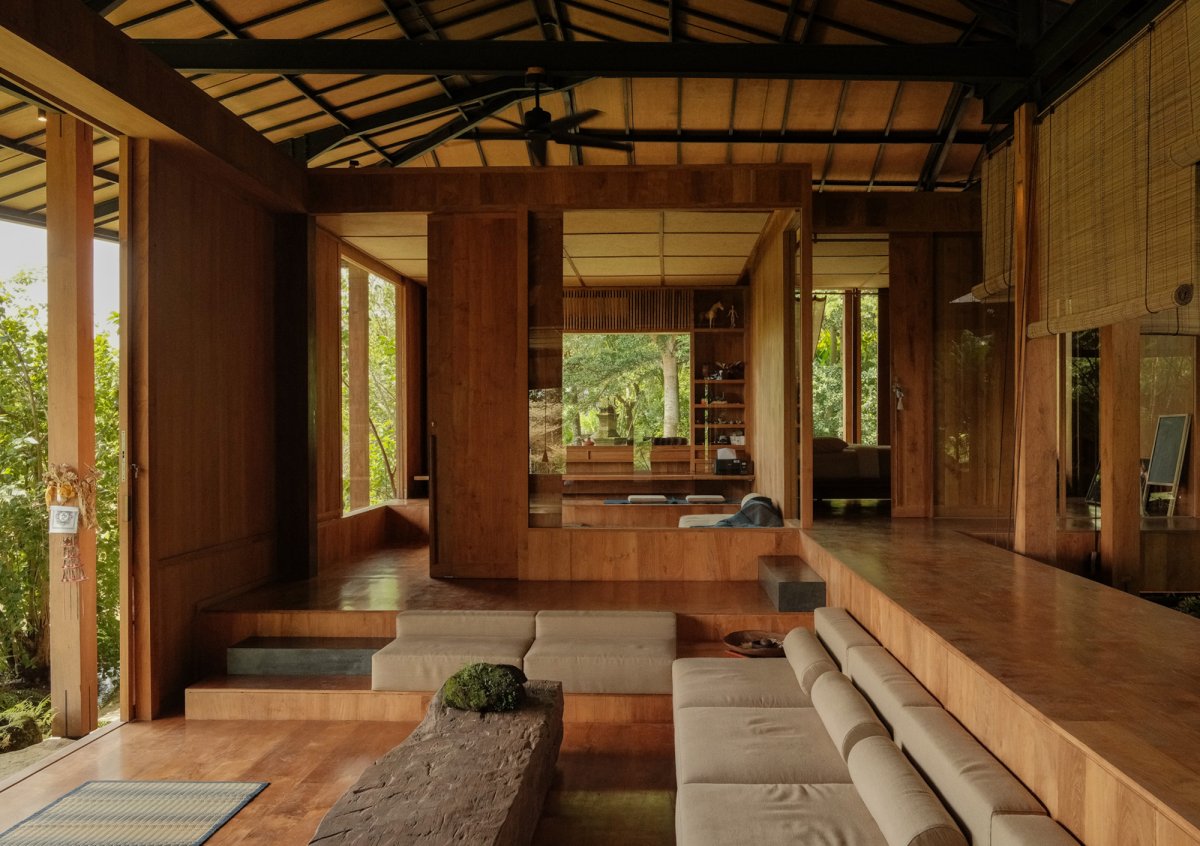
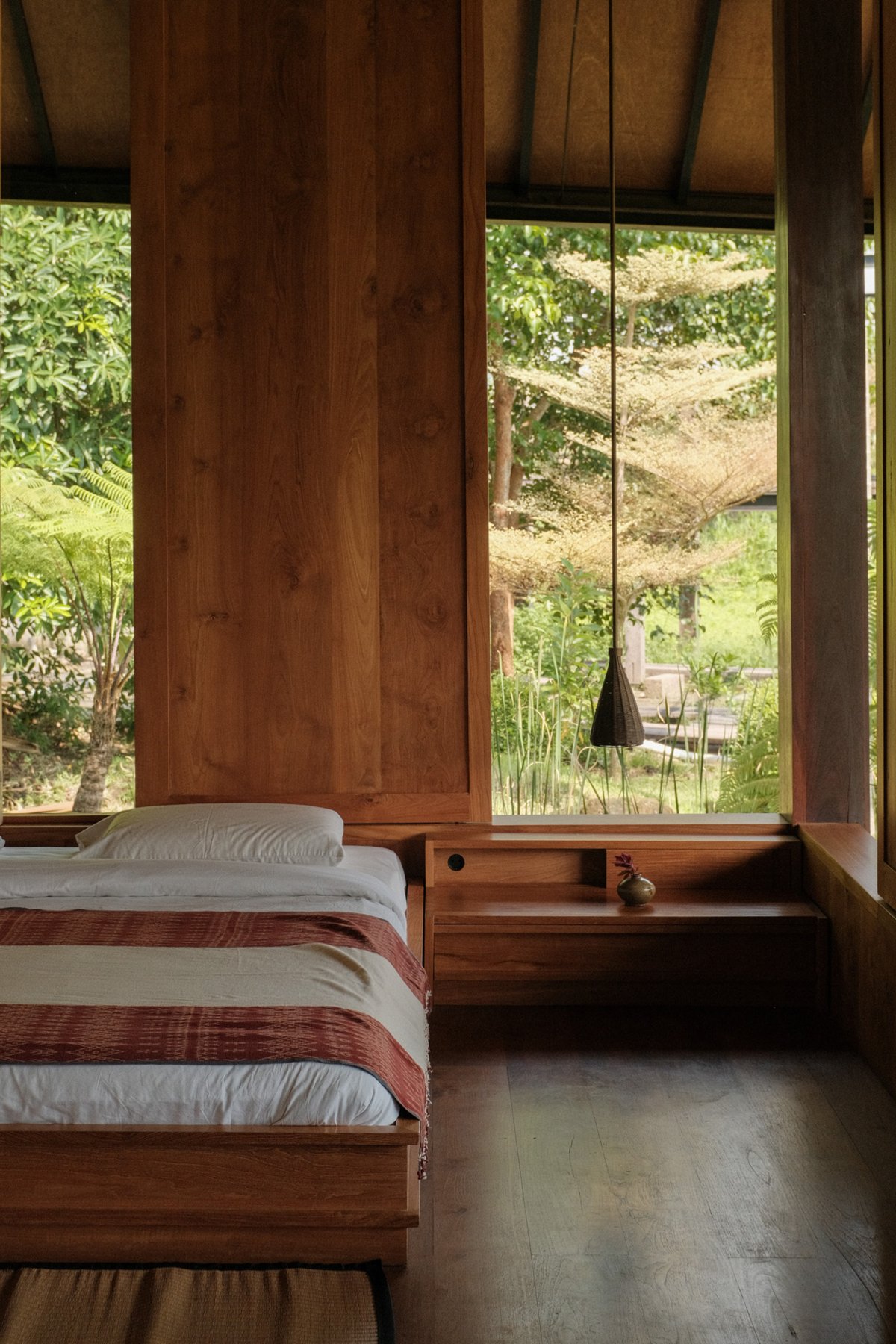
Passing through the Japanese garden, the volcanic stone ground still carried the moisture of recent rain. The sunken living room, embedded in the earth like a transparent ark, frames the swaying rice fields as a vast horizontal scroll. Avalon paused at the crack running through the dining table—lightning-shaped, stitched together with butterfly joints like silver needles.“In Indonesian, the word for ‘eternal' is the same as the word for ‘teak,'” he said, brushing the raised joinery. “Because teak endures. We embrace its cracking, its color shifts, its warping. These aren't flaws—they're stories the material chooses to tell.”This philosophy reappears throughout the house: the angled joints of benches, the concealed connections at column heads—quiet marks of the home's soul.
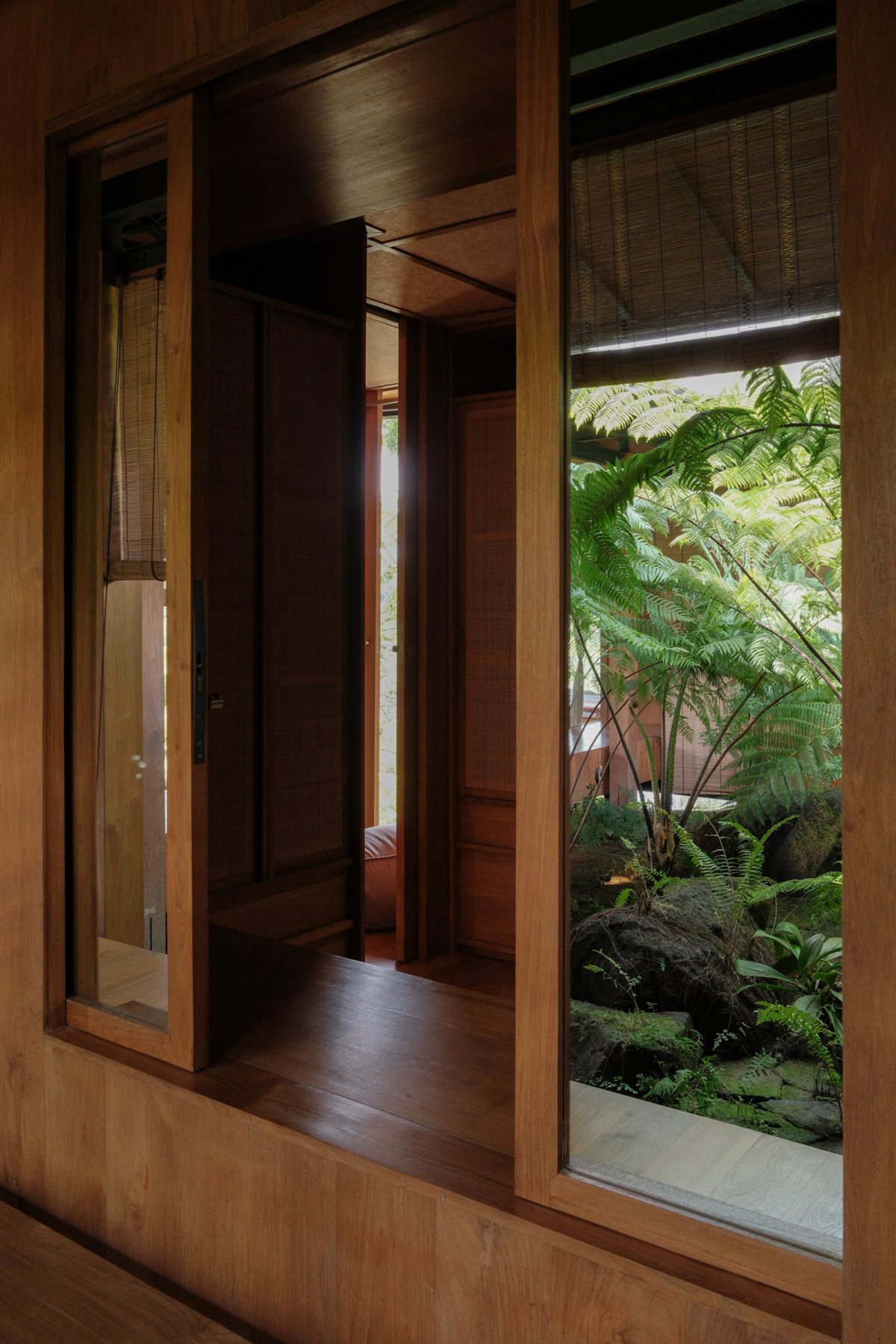
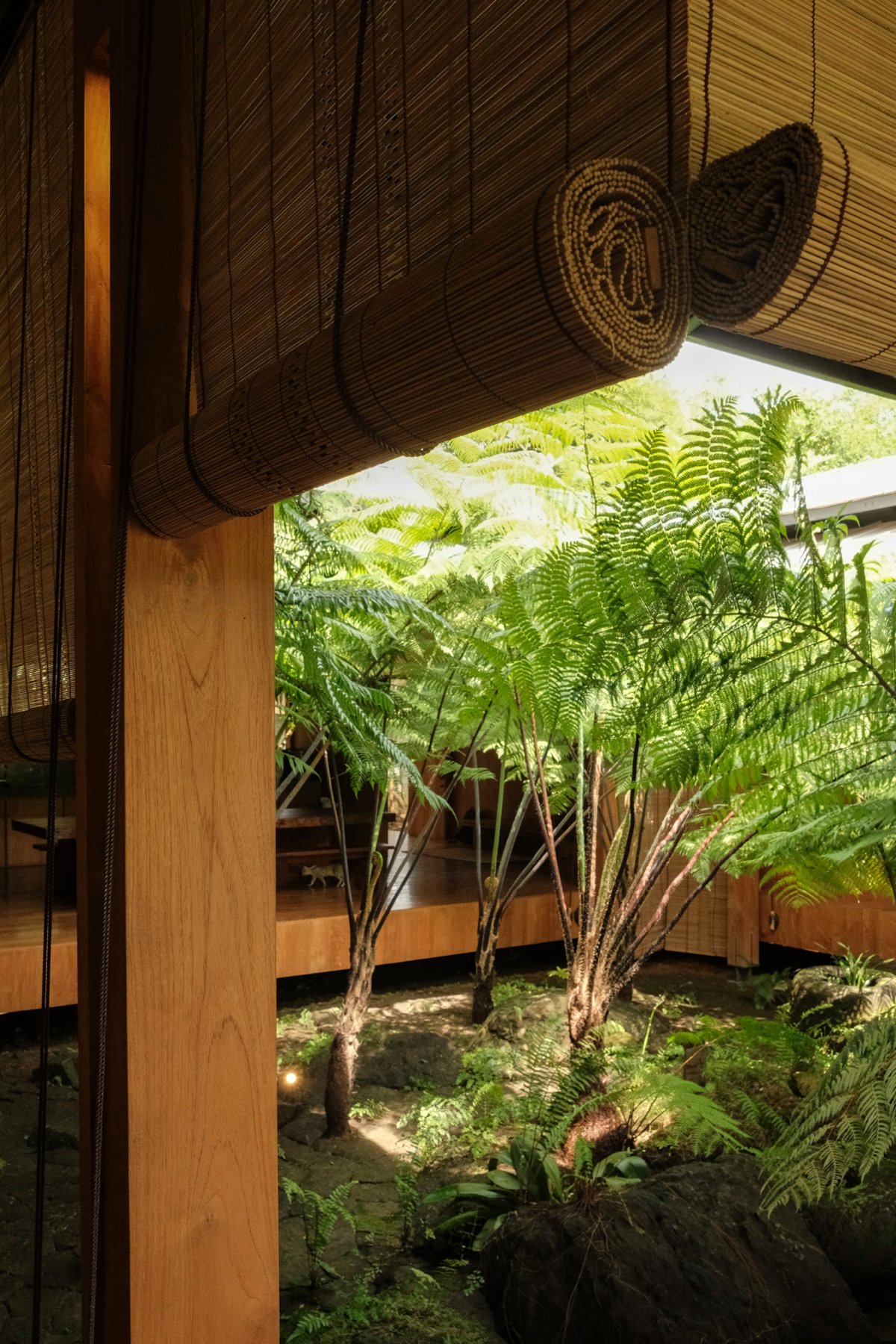
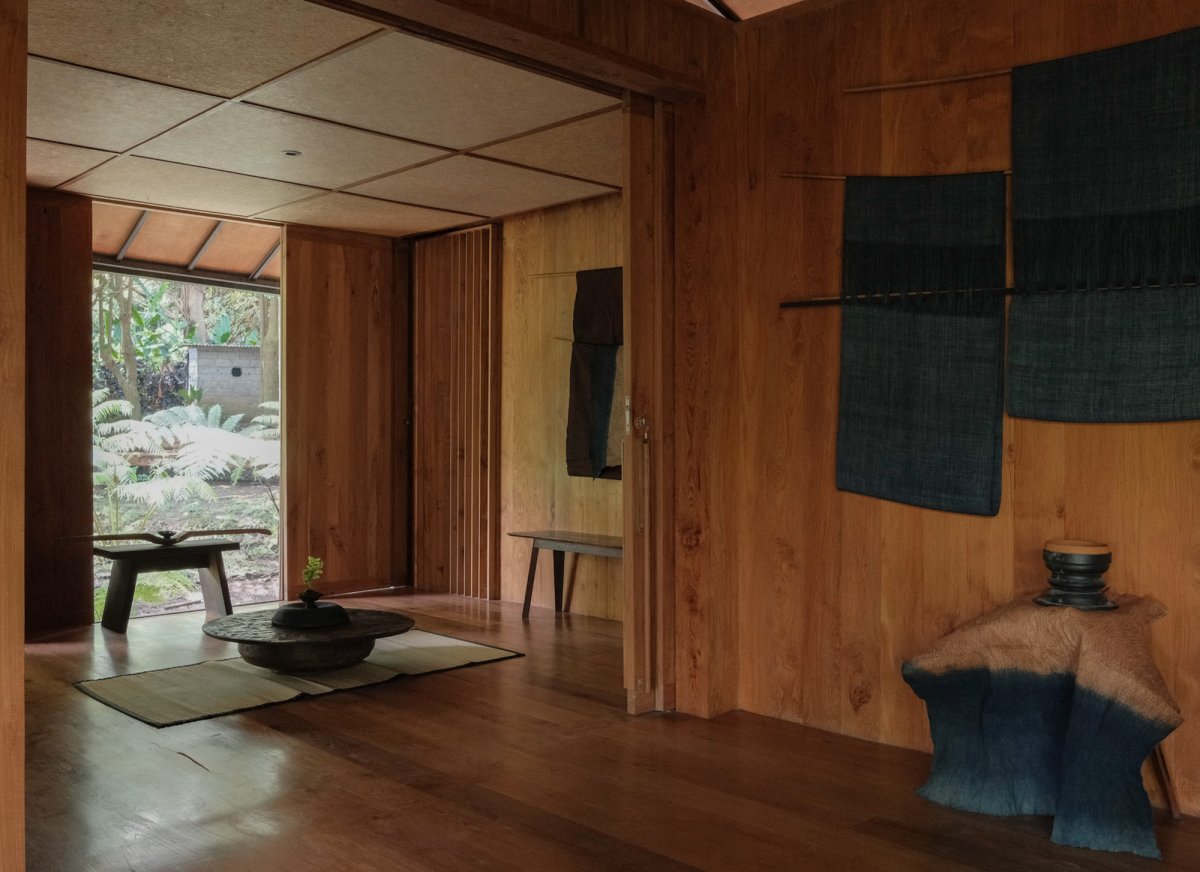
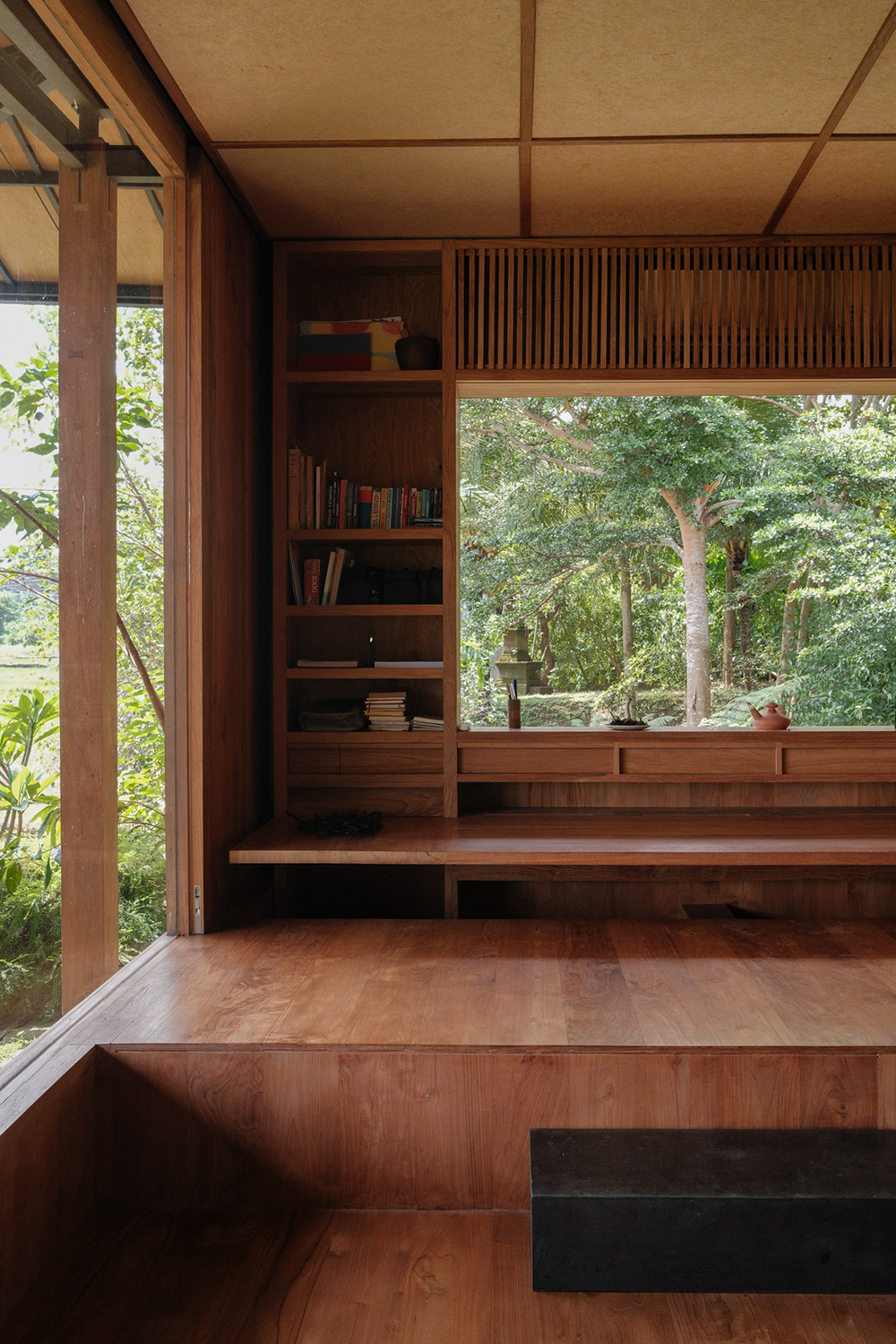
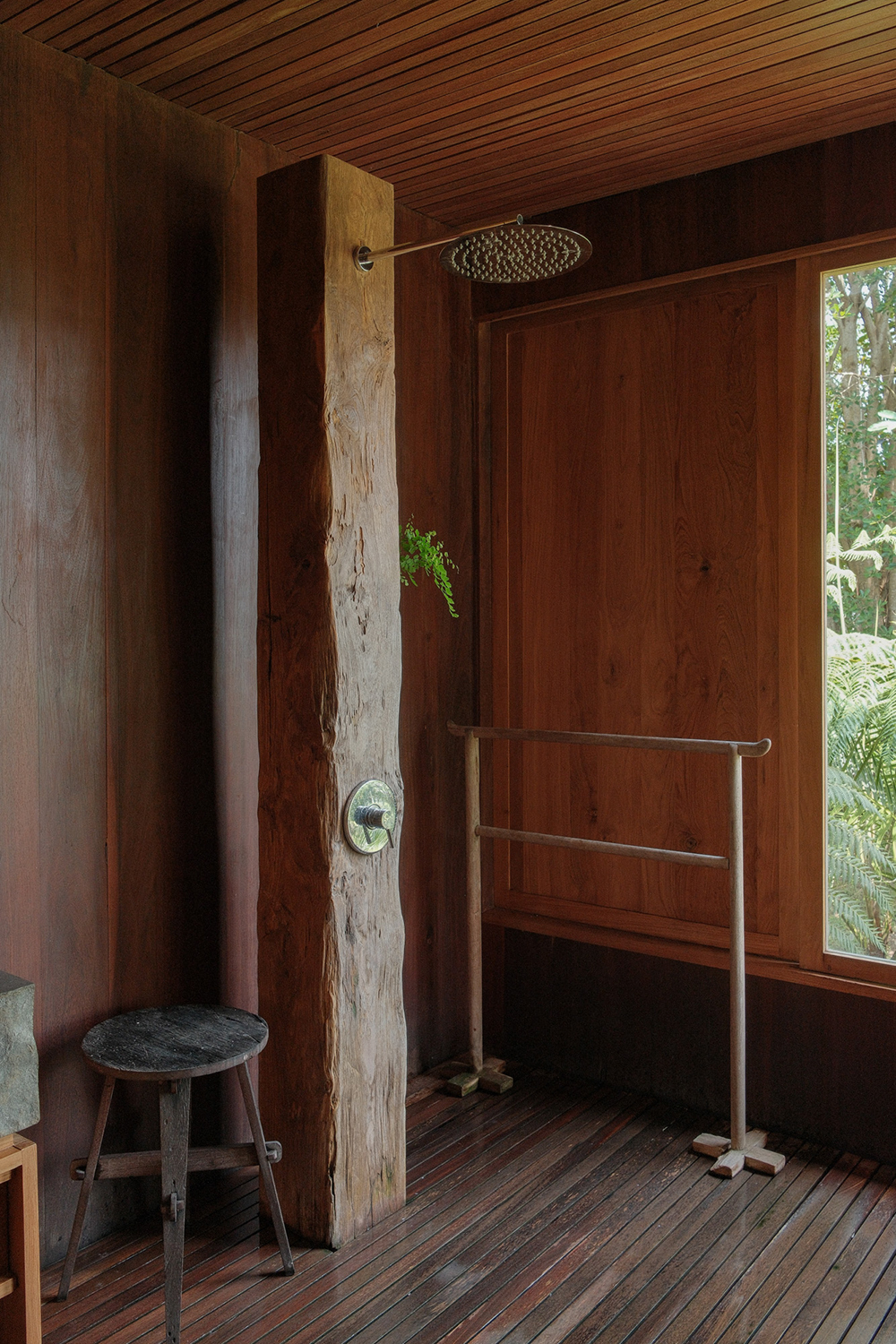
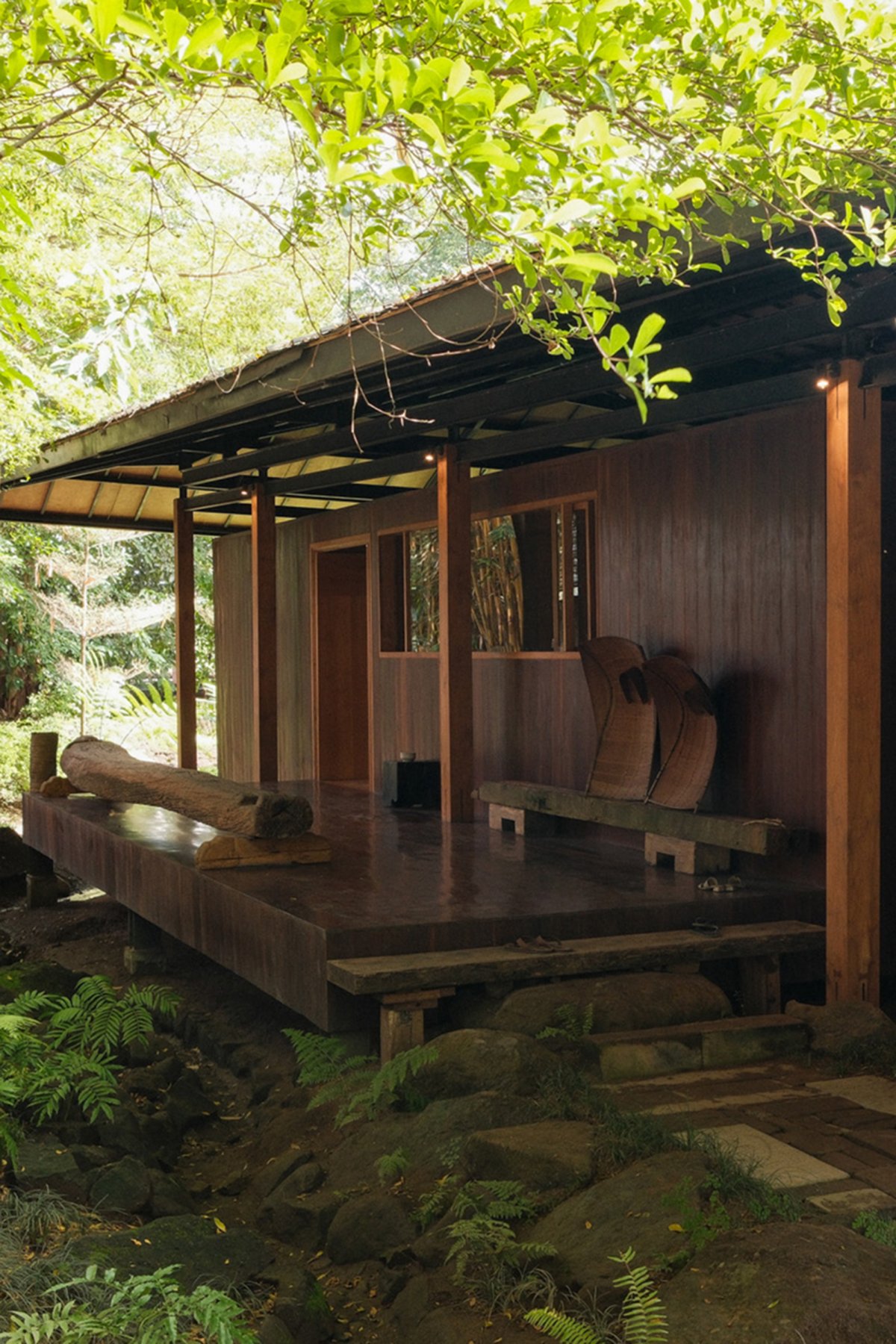
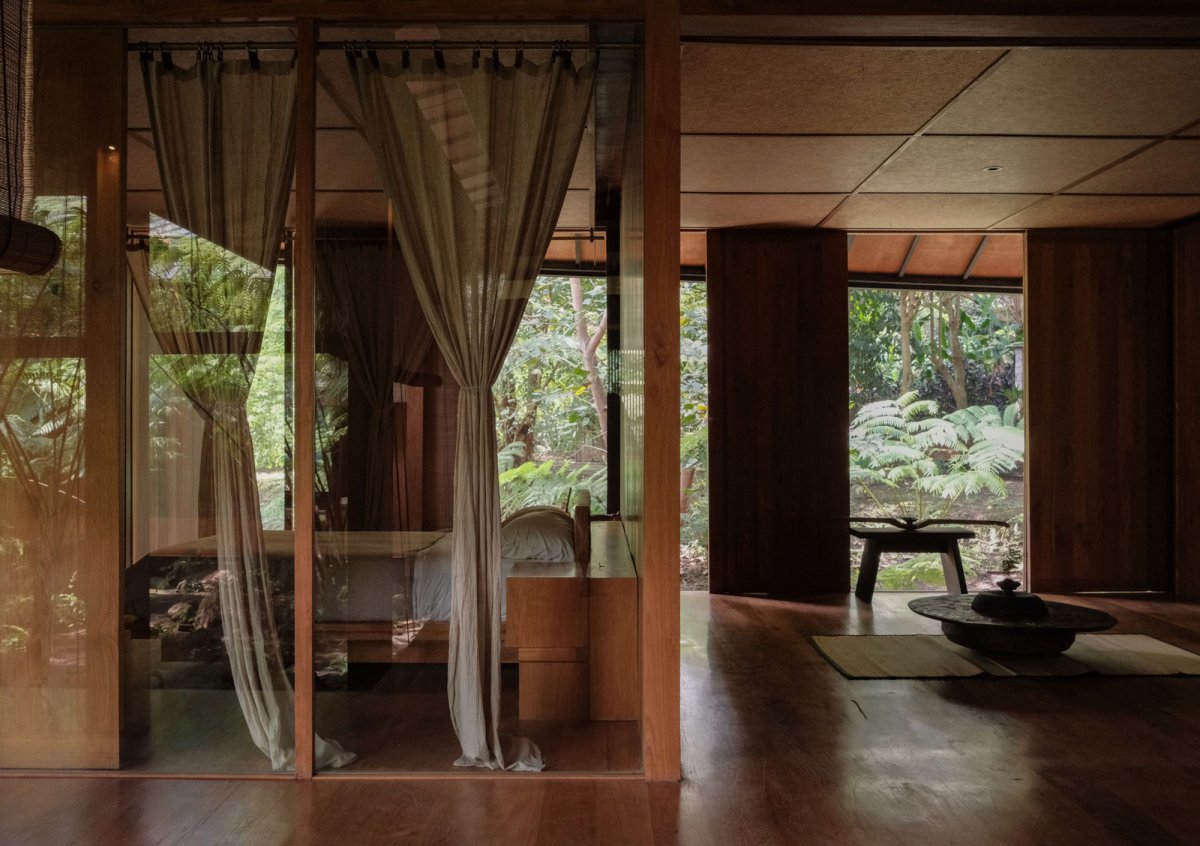
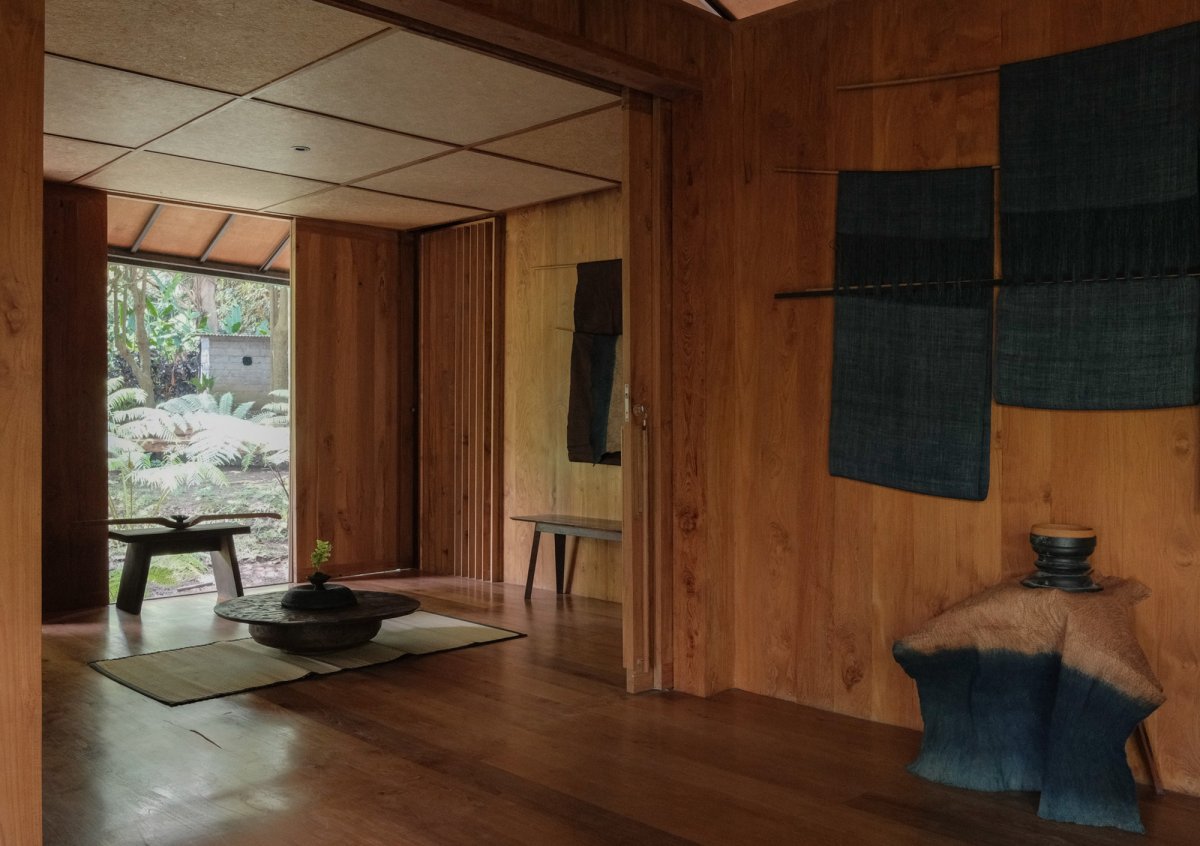
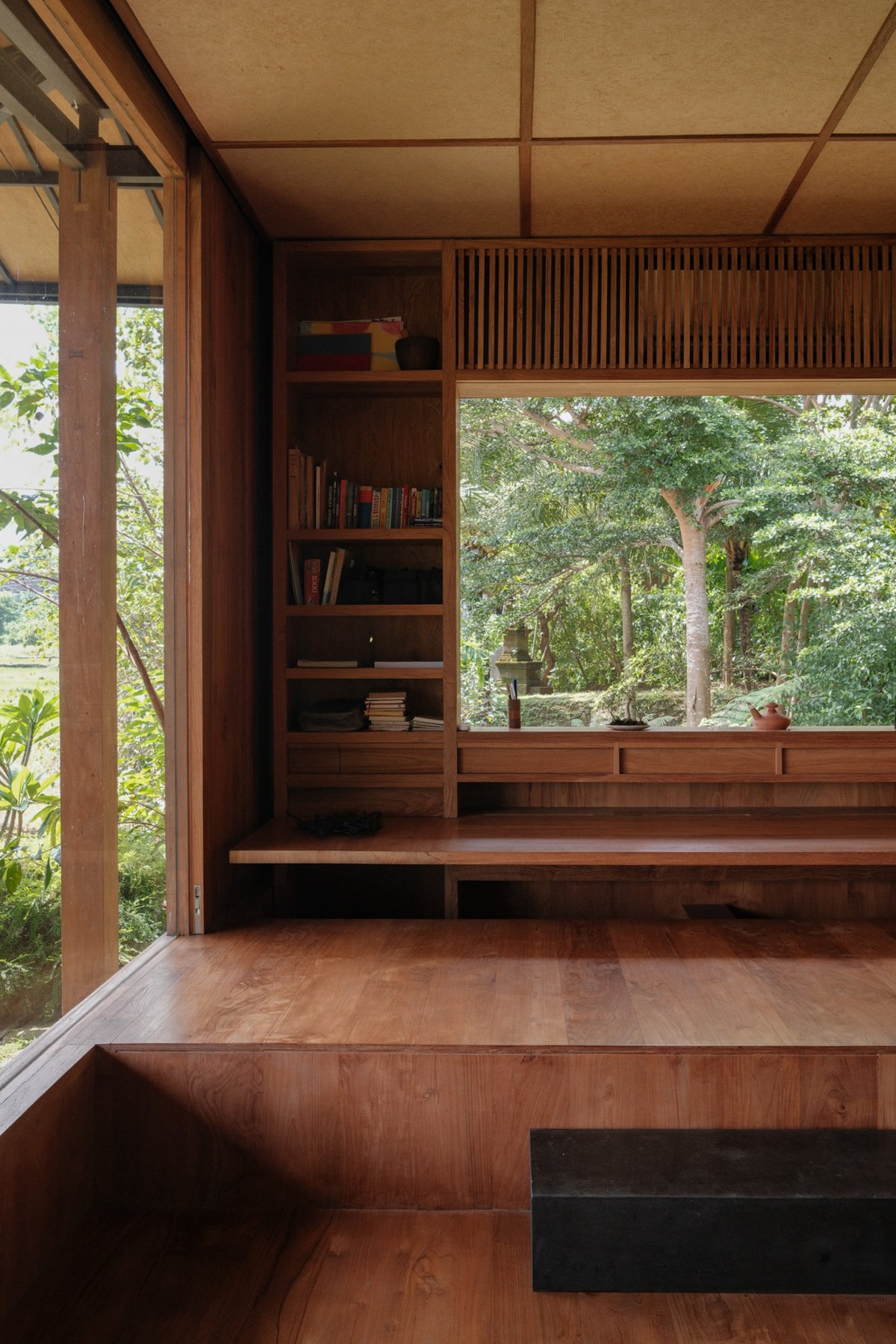
Material authenticity runs through the project: reclaimed ironwood on the façade fades to a moonlit gray; banana-fiber paper handmade by Japanese artisans forms a ceiling that seems to breathe with the light; river stones set into teak steps offer alternating warmth and coolness under bare feet.

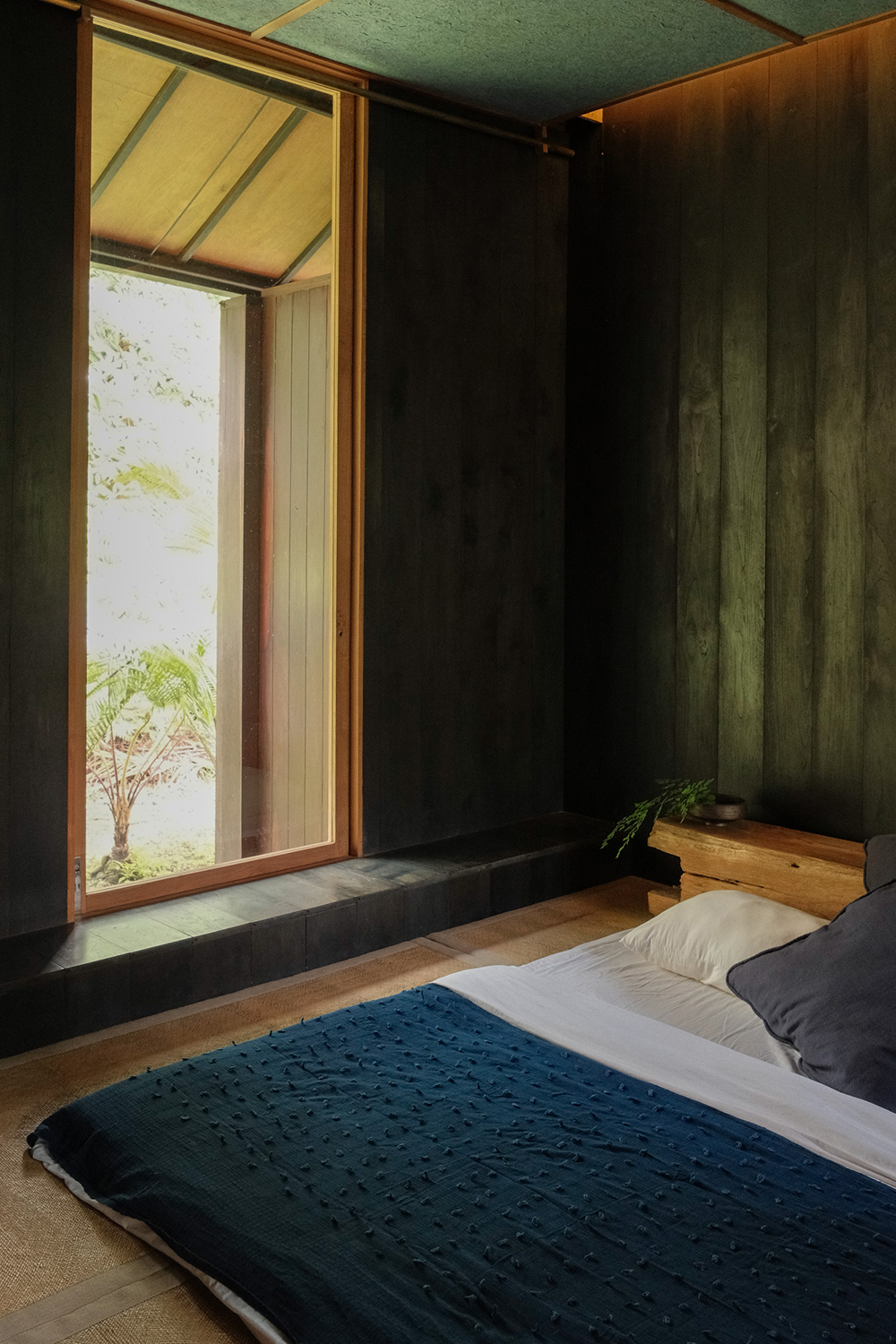
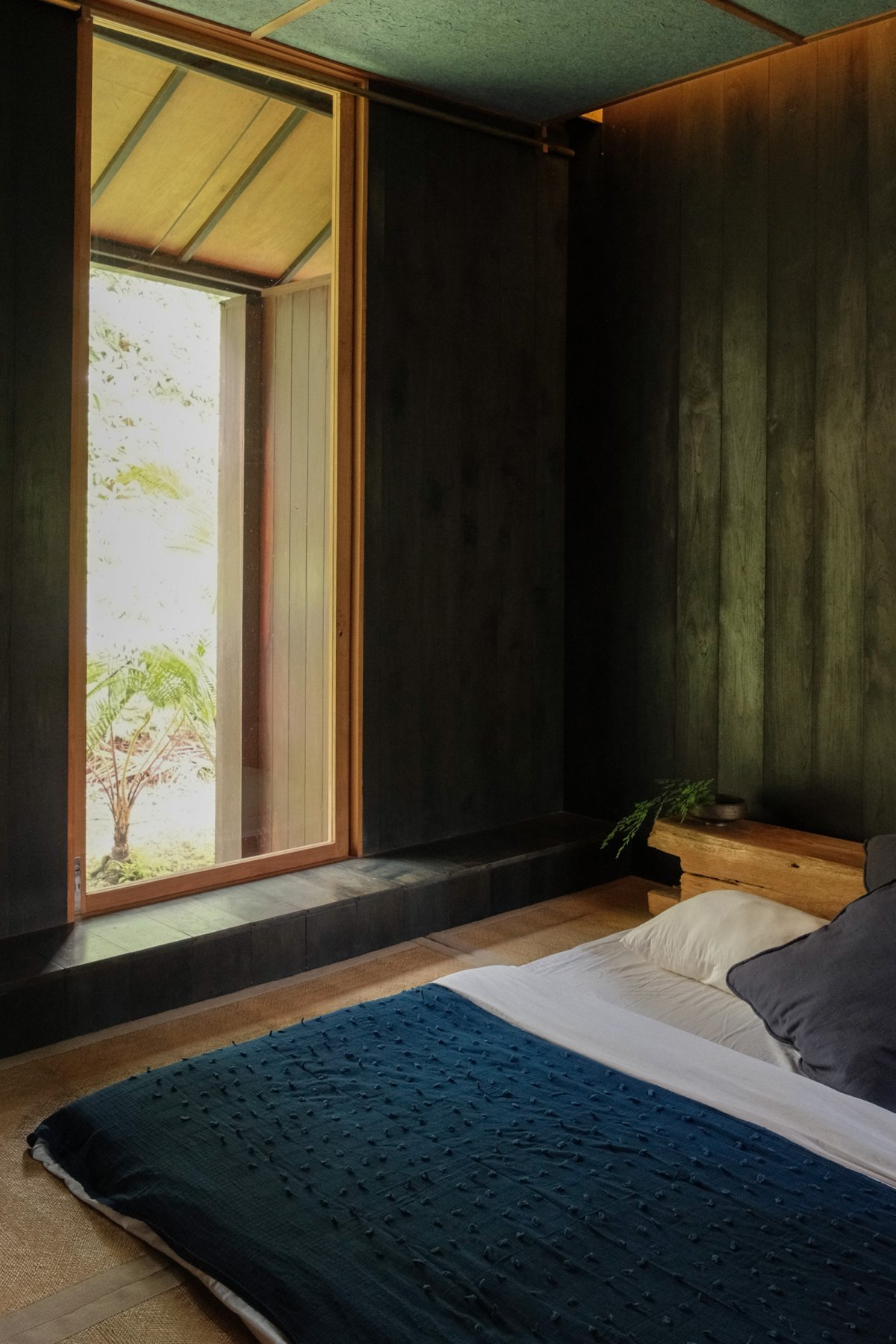
The room called Indigo becomes the home's most evocative statement. Its teak walls are dyed five times with natural pigment and left to oxidize for three weeks before settling into color.“Chemical finishes hide the grain,” Sebastian says, gazing at the blue wall, “but indigo makes it clearer.”Light filtered through the banana-fiber ceiling shifts across the deep-blue wood grain like ripples in an underwater forest.

When asked how they deal with rainforest mosquitoes, Sebastian smiled and pointed toward the eaves. “See the dewdrops on that spiderweb? I'm sure it caught quite a few last night.”

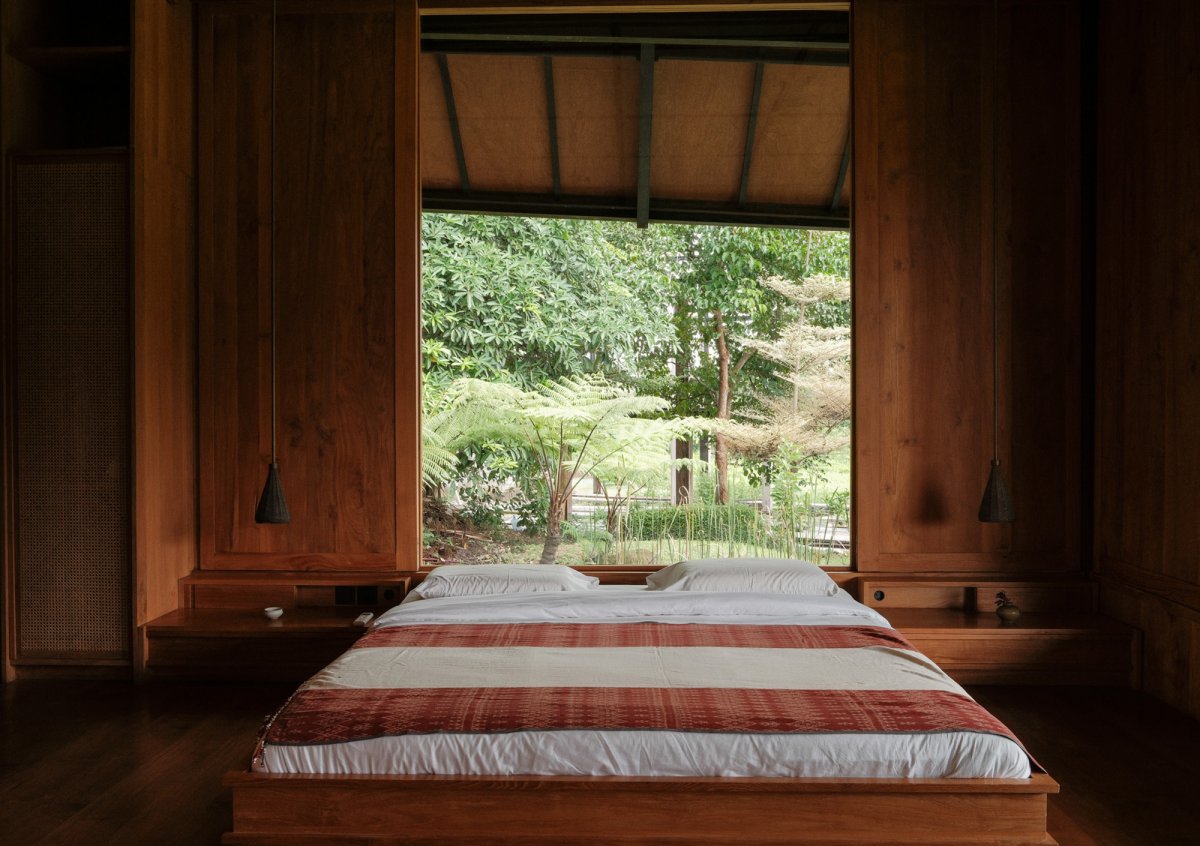
The ecological balance he maintains is simple yet precise: sloped terrain allows rainwater to flow swiftly beneath the house, washing away mosquito eggs; doors and windows stay open during the day to welcome breezes, and are closed at dusk for the bedrooms.“We adapt to nature's rhythm,” Ayu said, drawing the sheer curtain, “just as we accept the alternation of wet and dry seasons.”

Moonlight drifts across the eaves of Kubu Taru—the tree house—and the teak releases a warm scent. Conchita and Sebastian stand in the courtyard, watching silver tones rise on the ironwood façade.

In this moment, every detail converges: eternity is the patience of waiting four years for trees to take root, the humility of honoring cracks in the wood, the wisdom of leaving room for a spider. When a building learns to breathe in rhythm with nature, time becomes its most faithful ally.

MORE PHOTOS