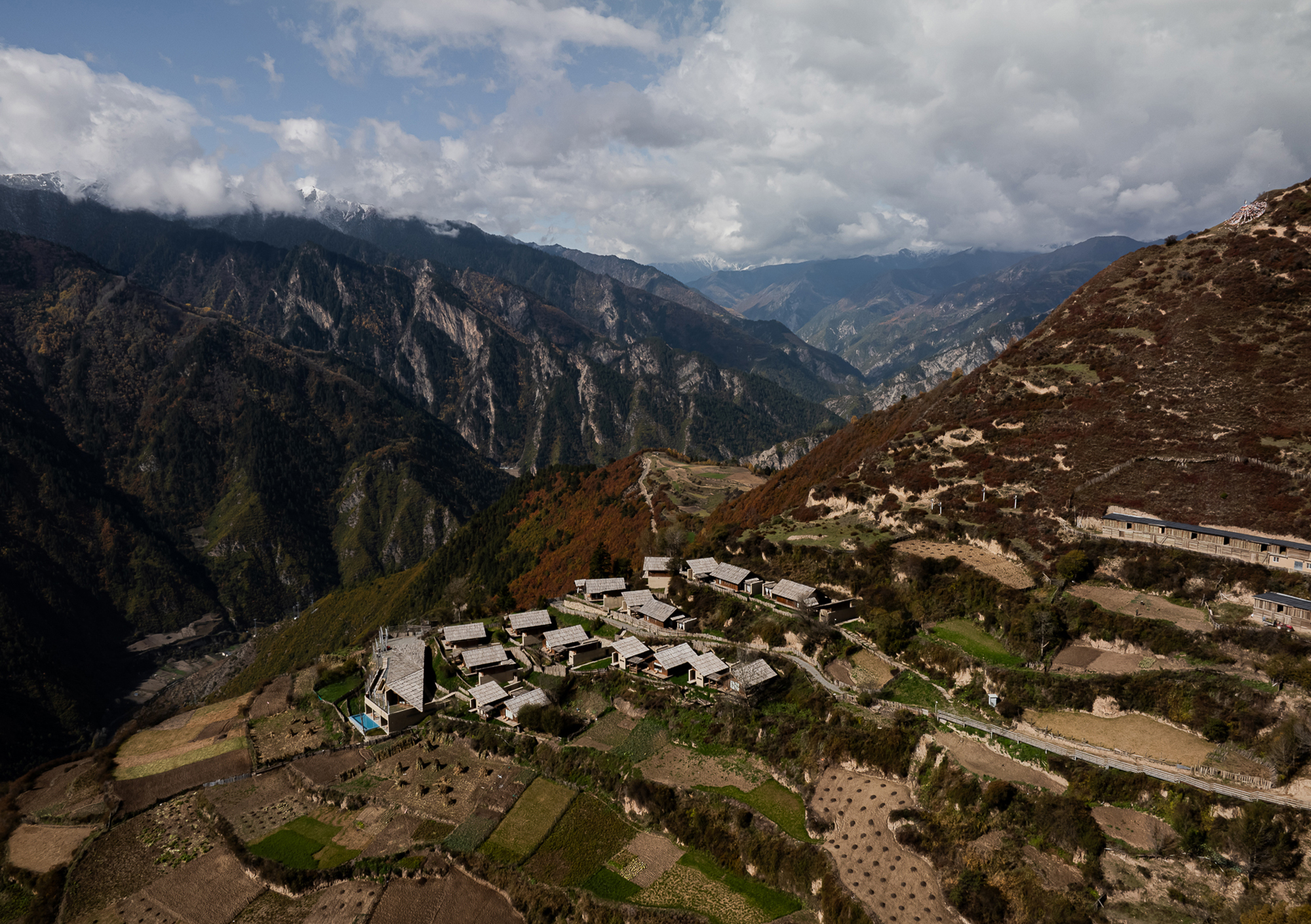
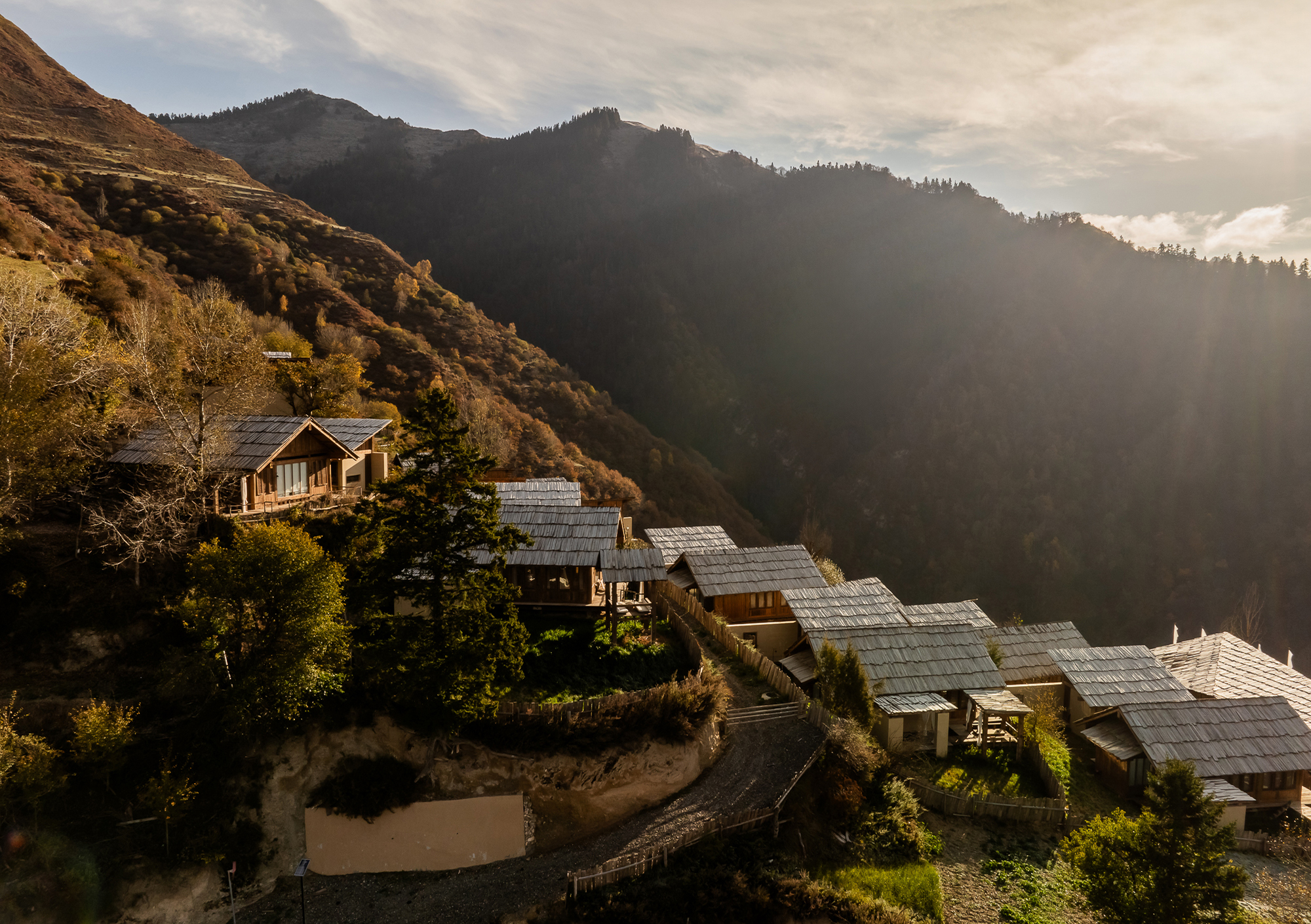
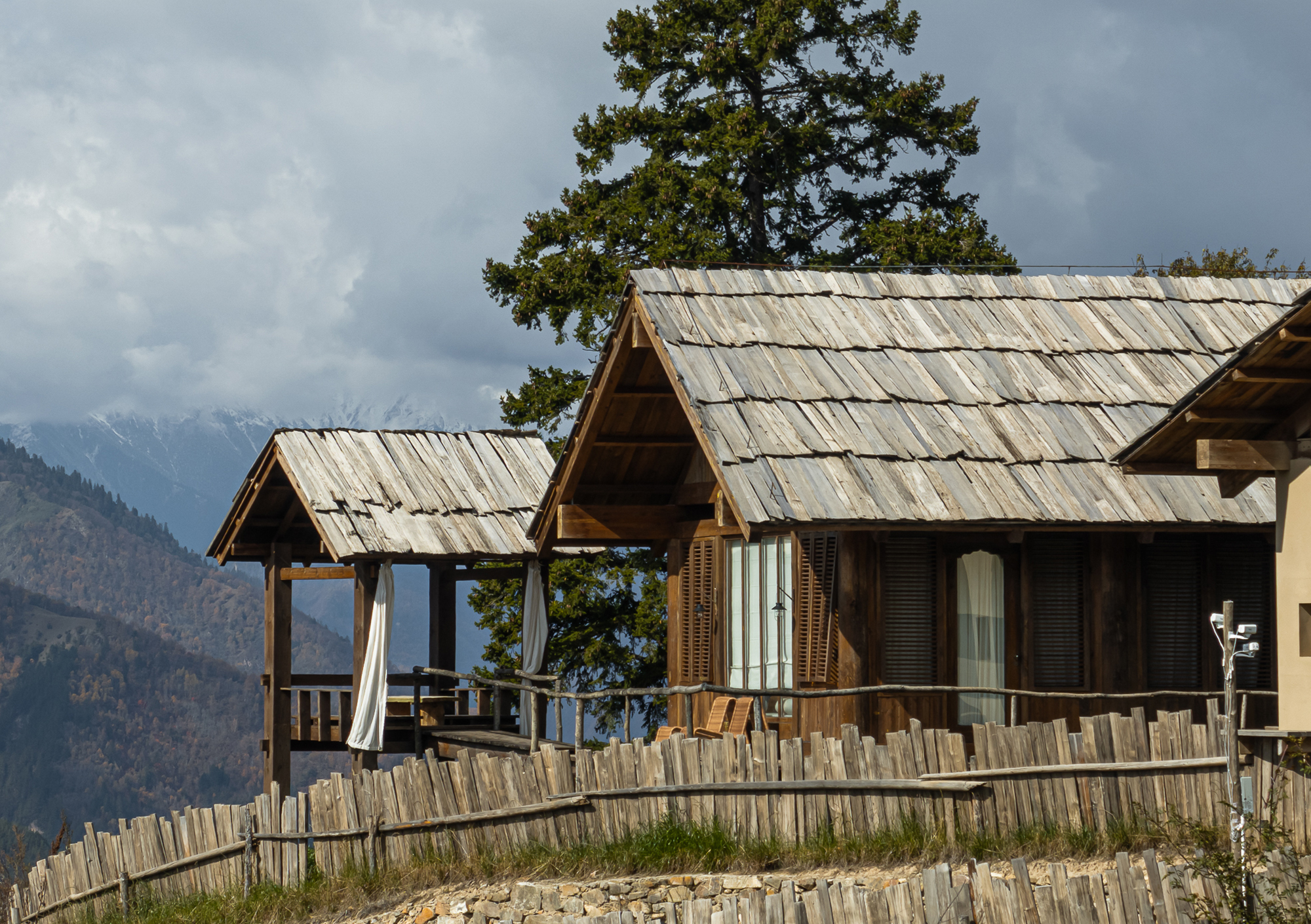
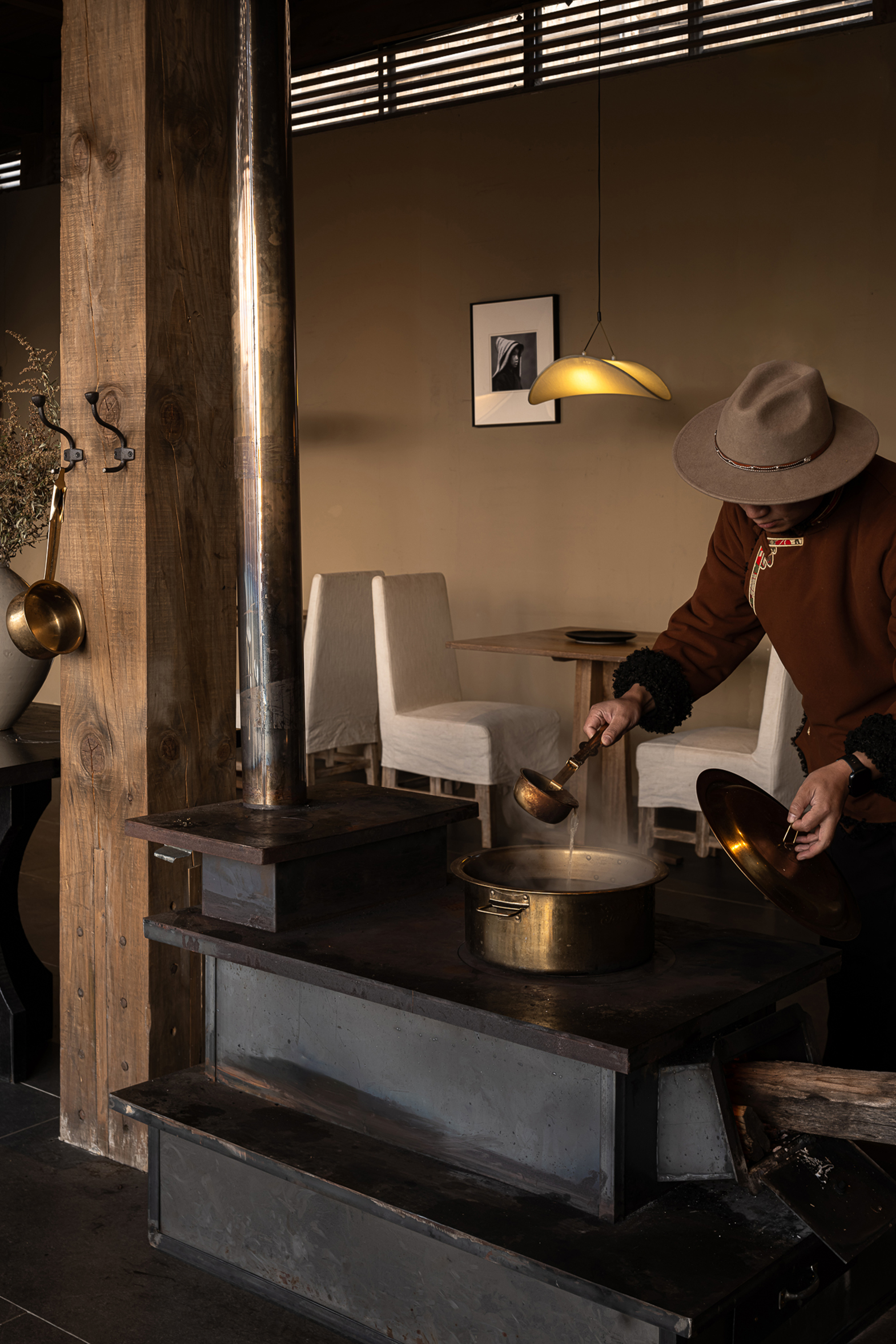
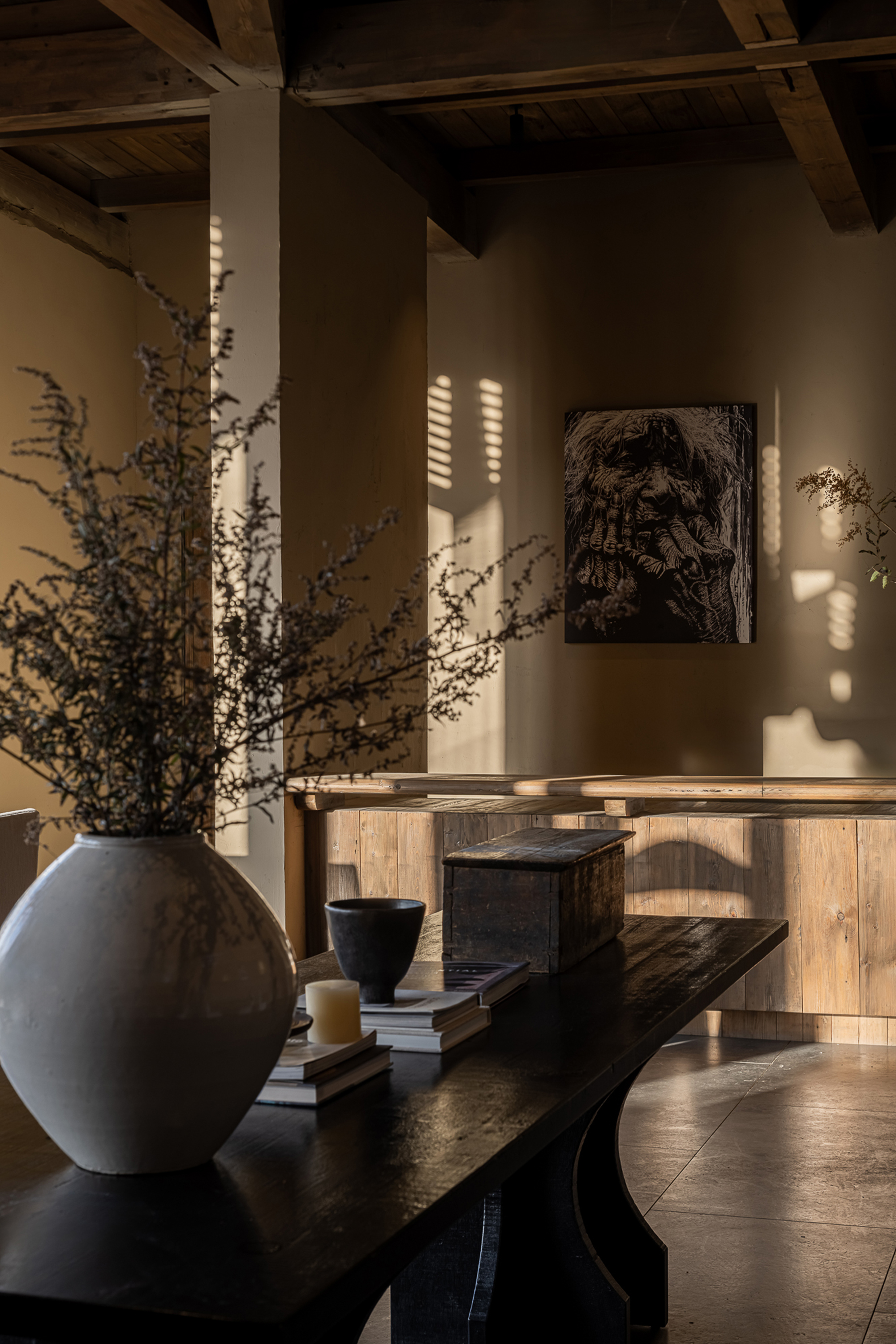
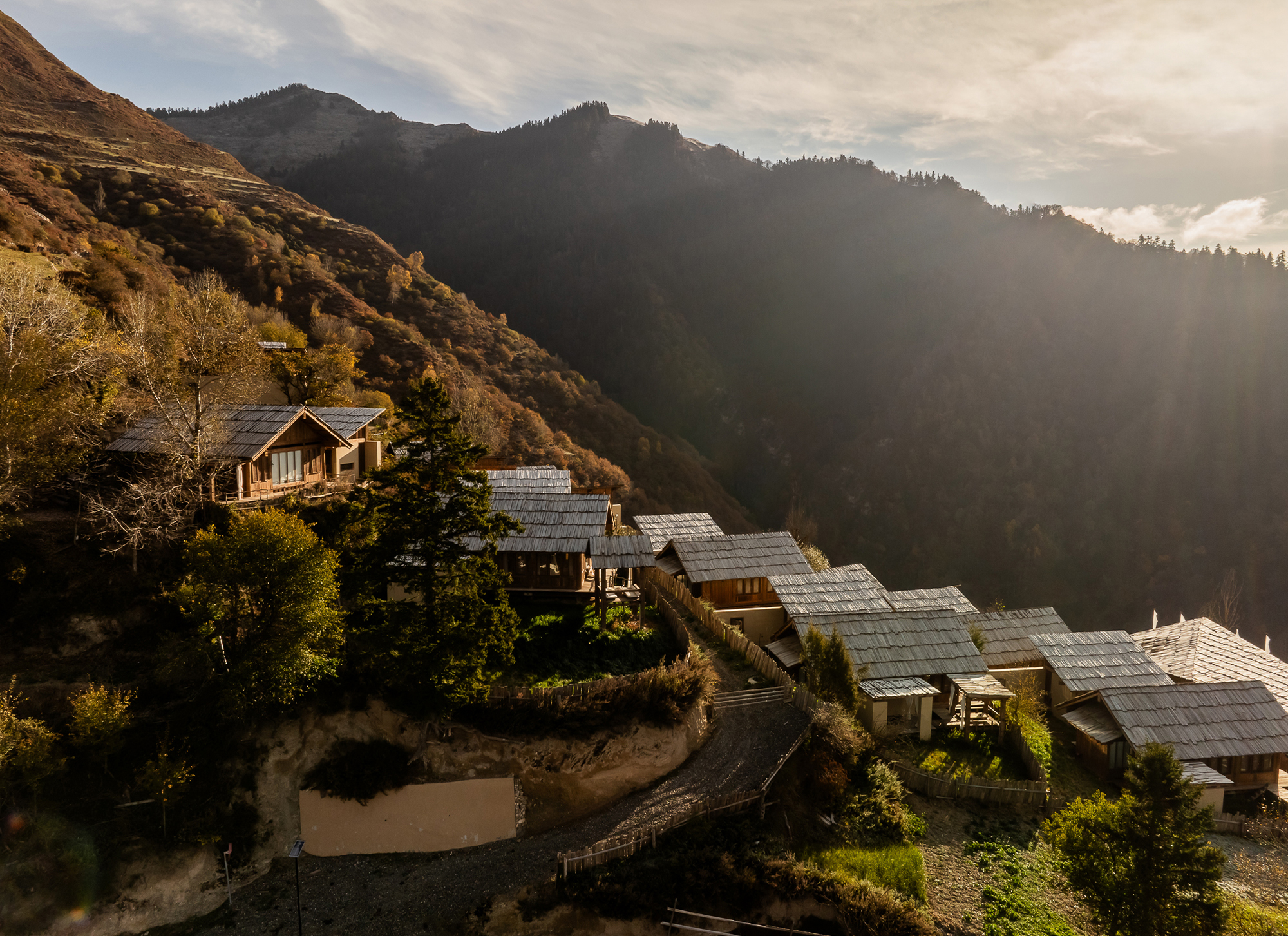
On a 3,000-meter-high ridge in Jiuzhaigou, nestled a micro-village of just eight wooden cabins — China's smallest administrative village. It appears pinned against the sky by the wind, coexisting with clouds, fir trees, and gravel. And now, we are tasked with designing this unique land into a resort. Design here is not "renovation," but a process of "recalling": recalling the memory sealed within the dusty land, the breath hidden in the mountain forests and timber, and the traces of time buried in the layered mountains. Let aged wood be rekindled, let old houses rise again, let mountain springs sing once more. Let every piece of old timber return to the slopes, and let every crack tell the story of wind and frost.

The design concept for this project: a return to the essential nature of the natural world. The extensive use of wood elements and timber structures is not merely a formal choice, but a spiritual pursuit. We reject extravagance, allowing materials to converse with people through their most primitive textures and warmth. Thus, the space becomes a breathing living entity, permeated with an atmosphere of simplicity, warmth, and tranquility.

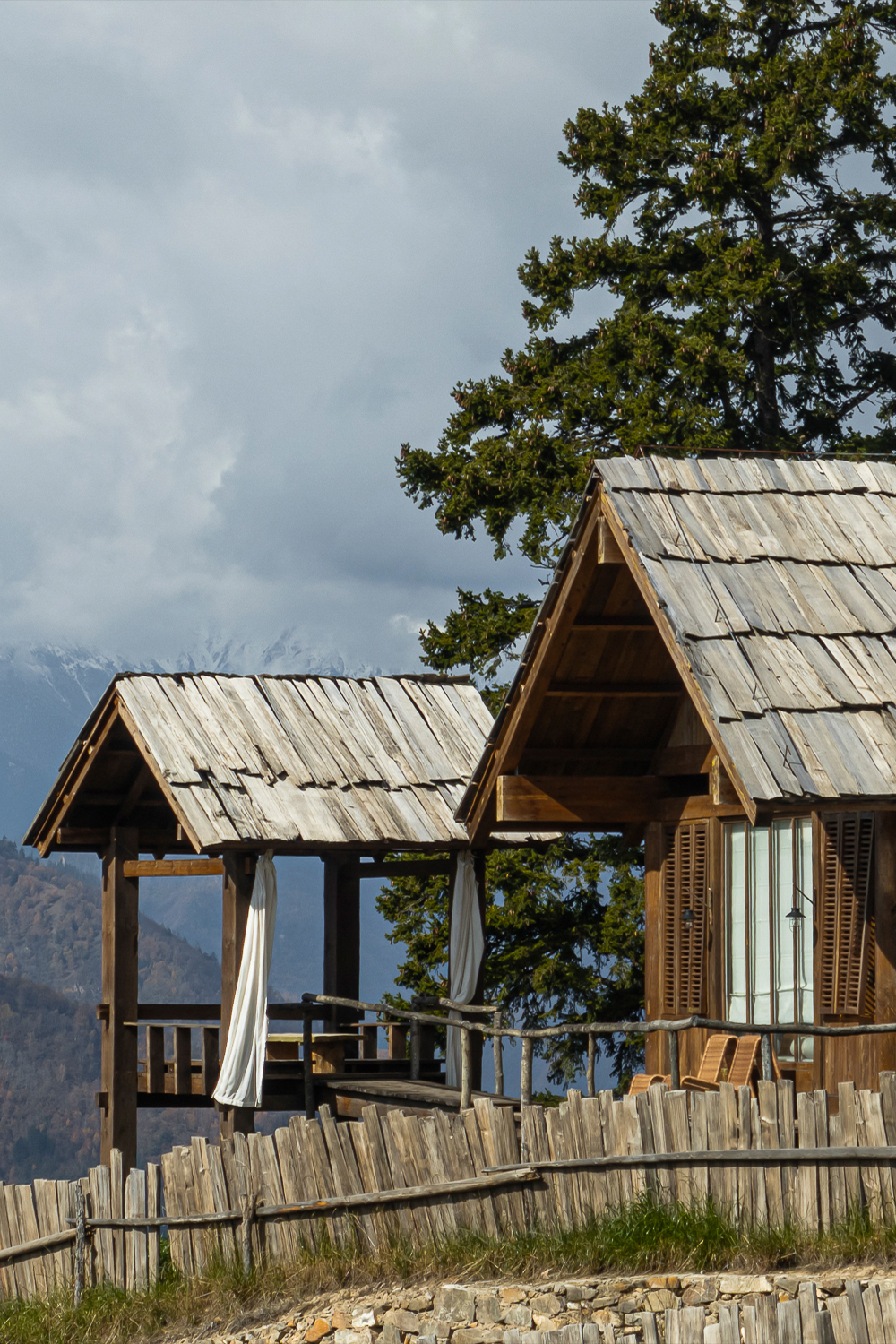
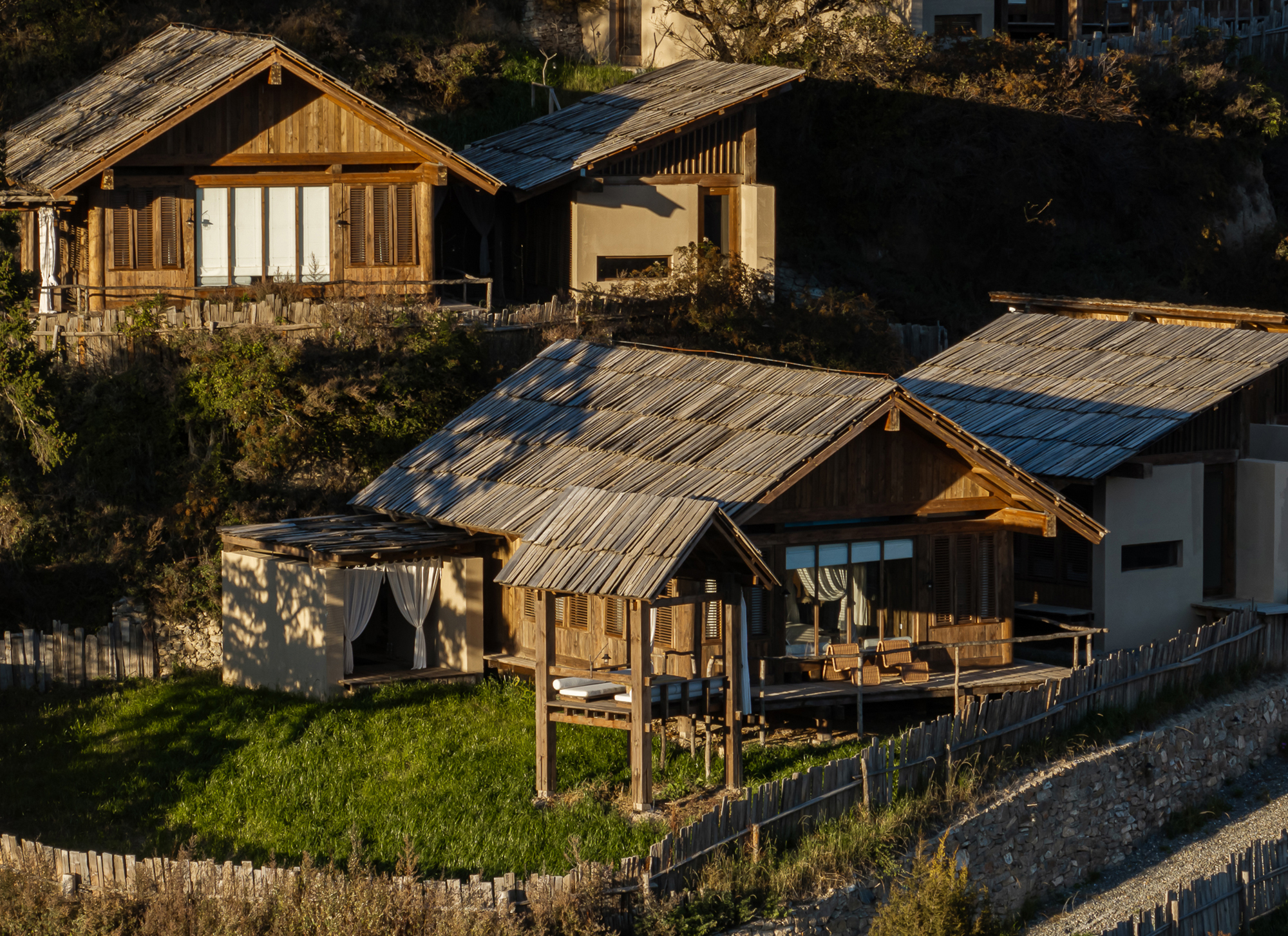
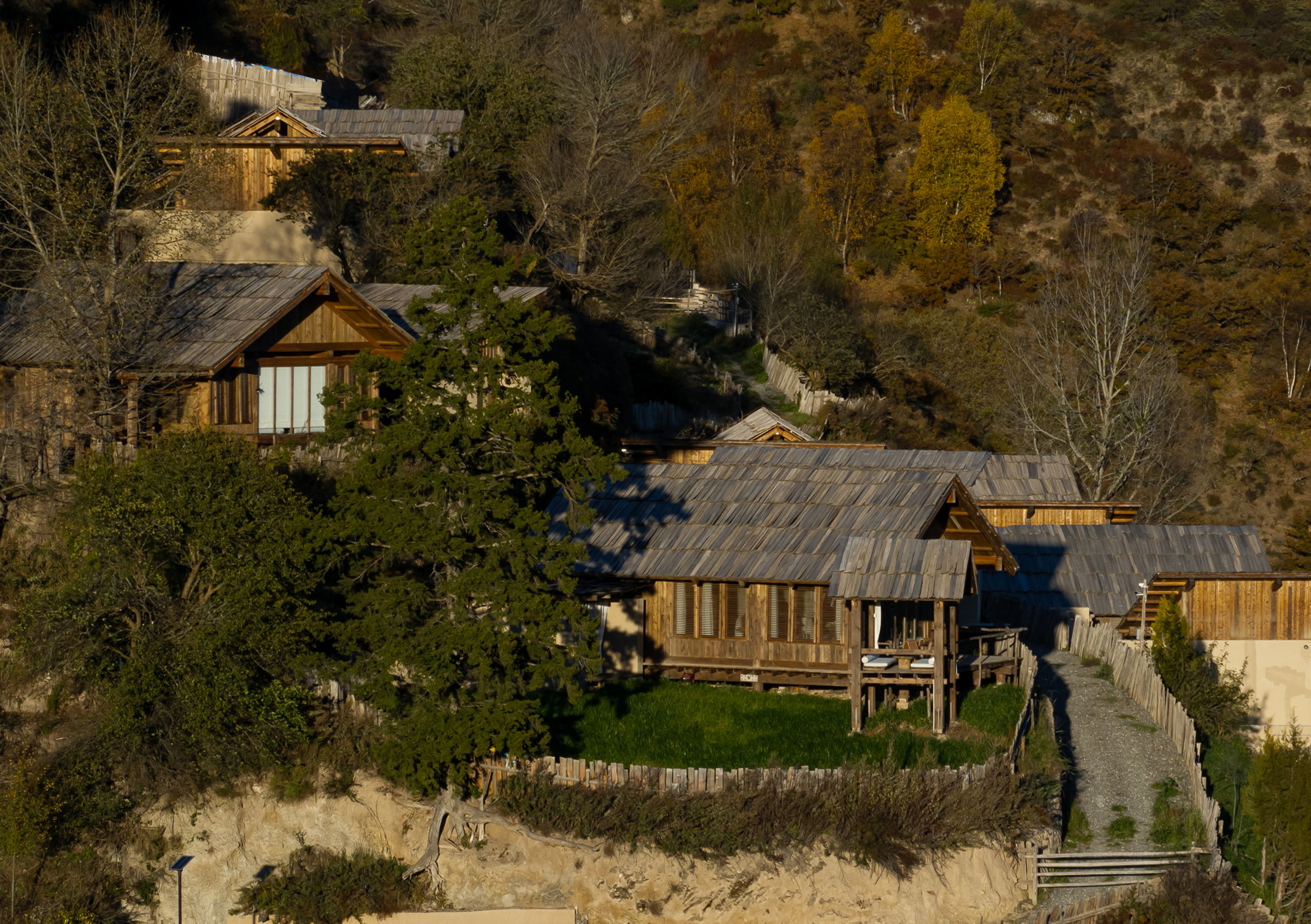
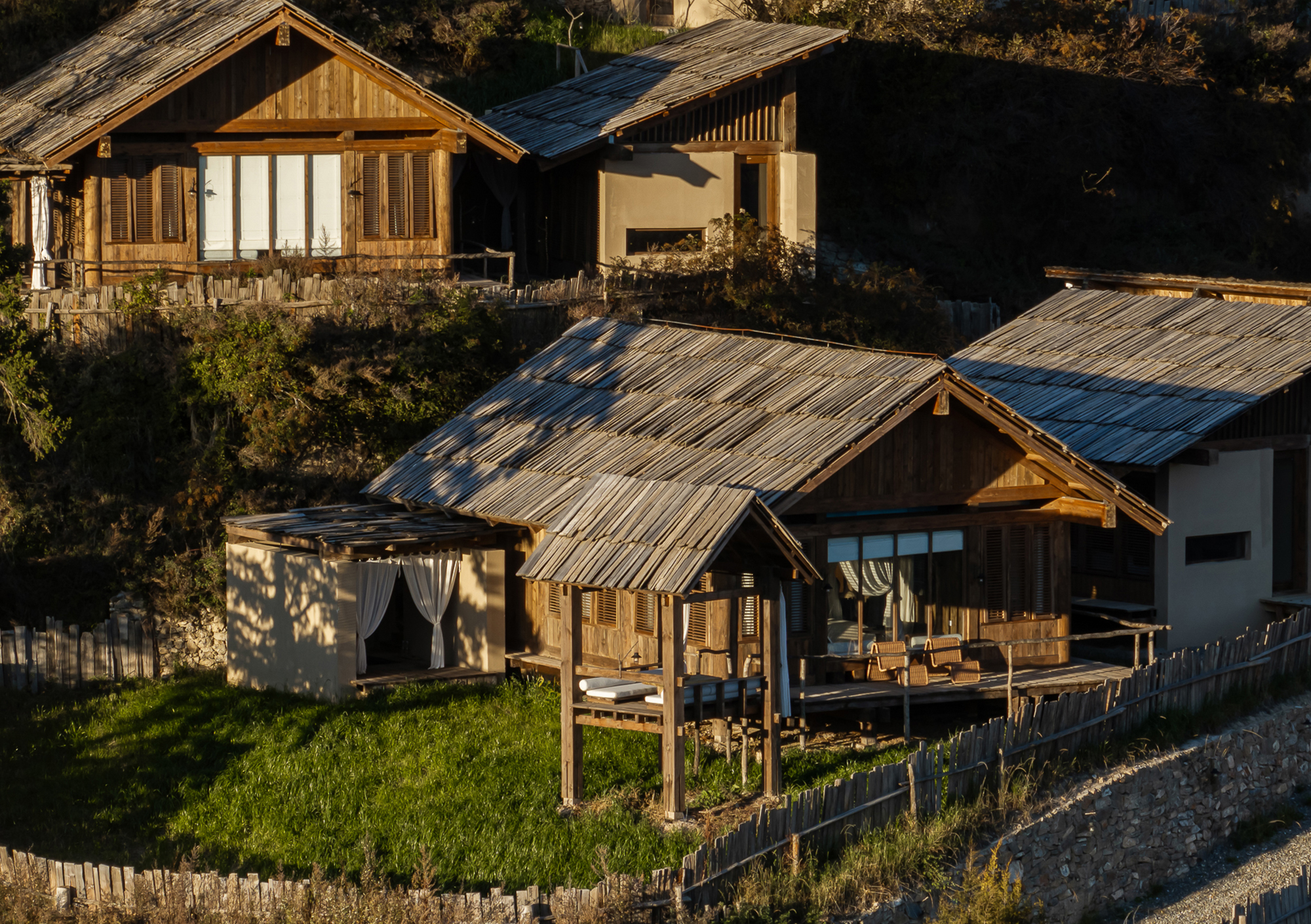
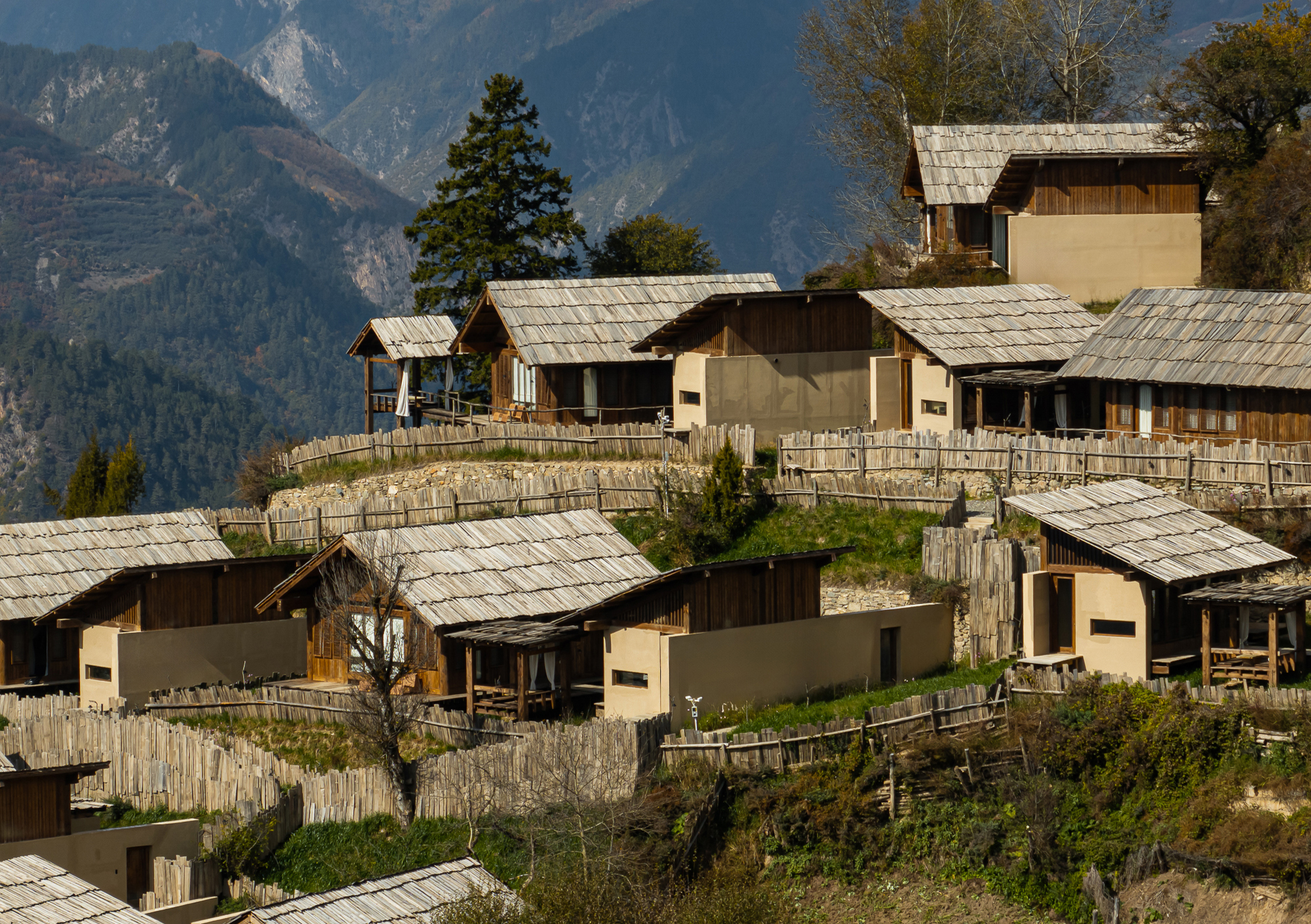
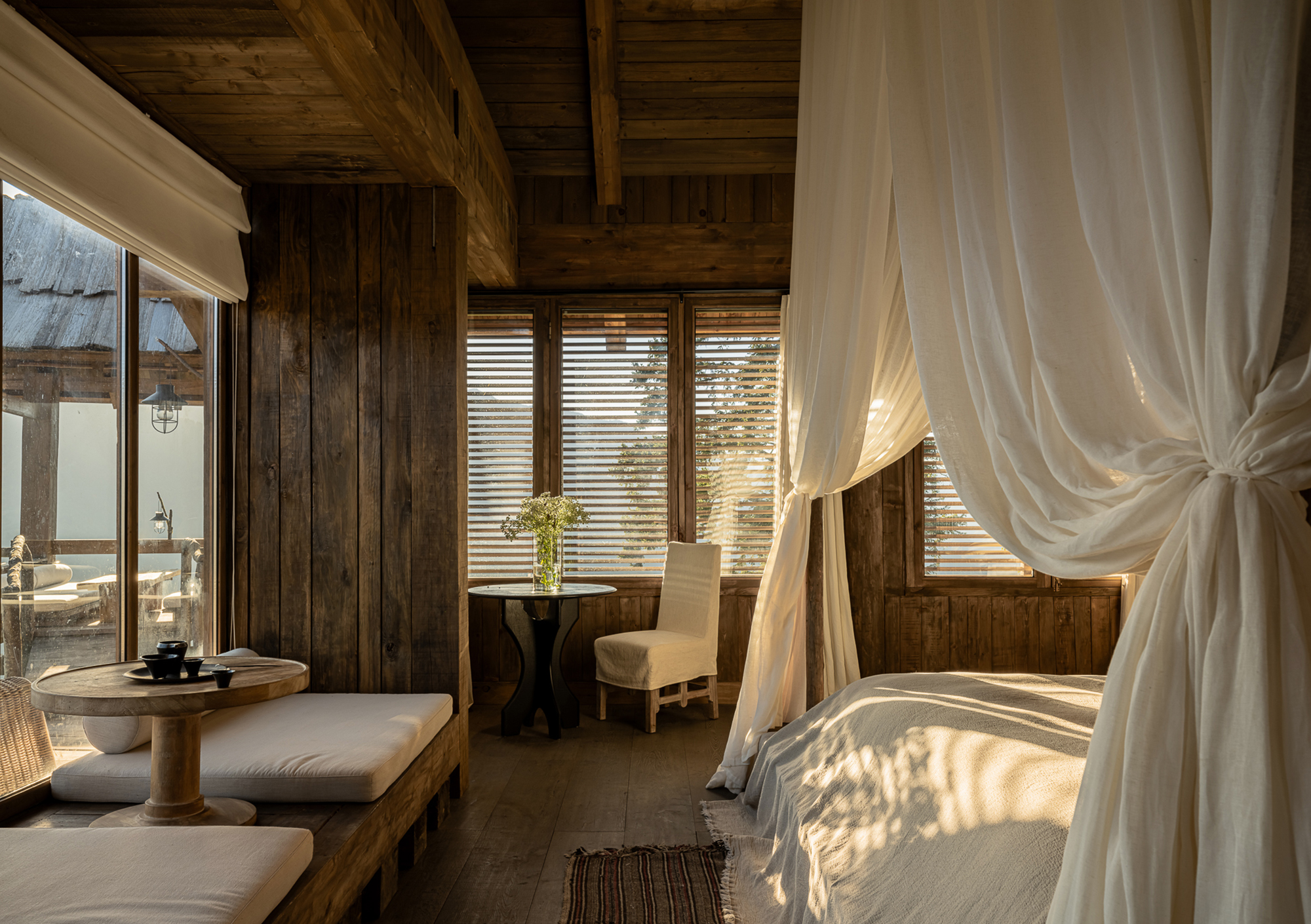
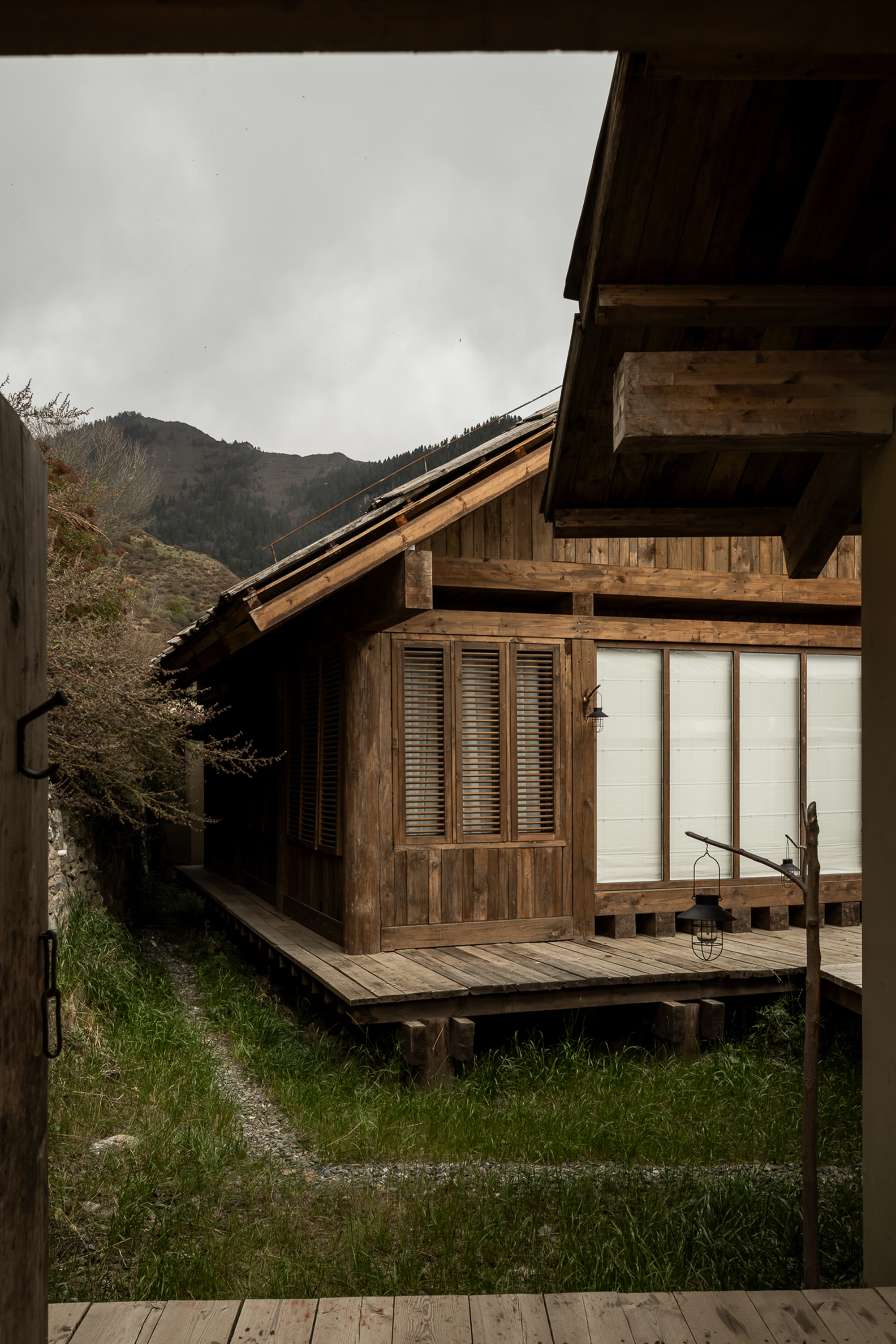
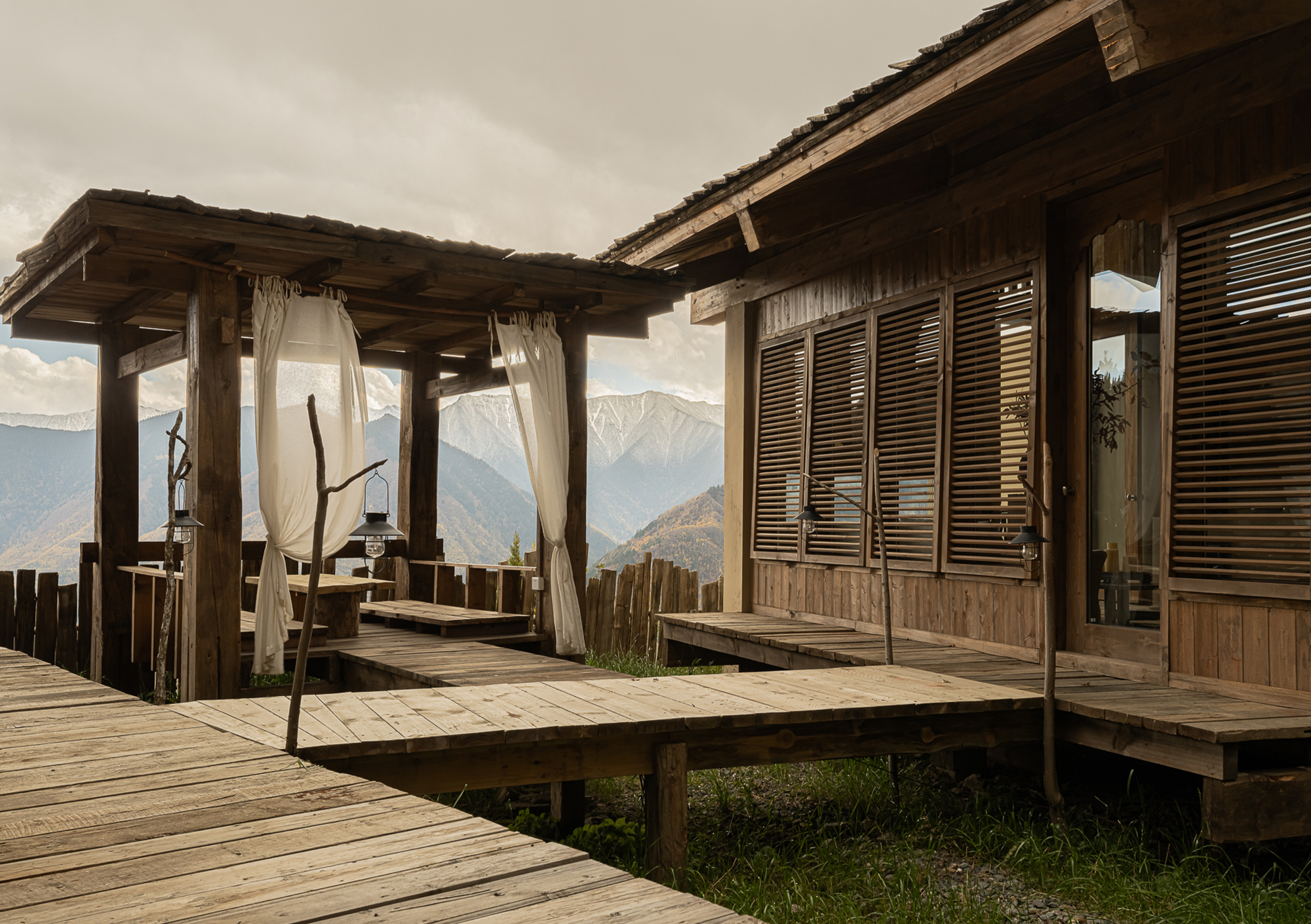
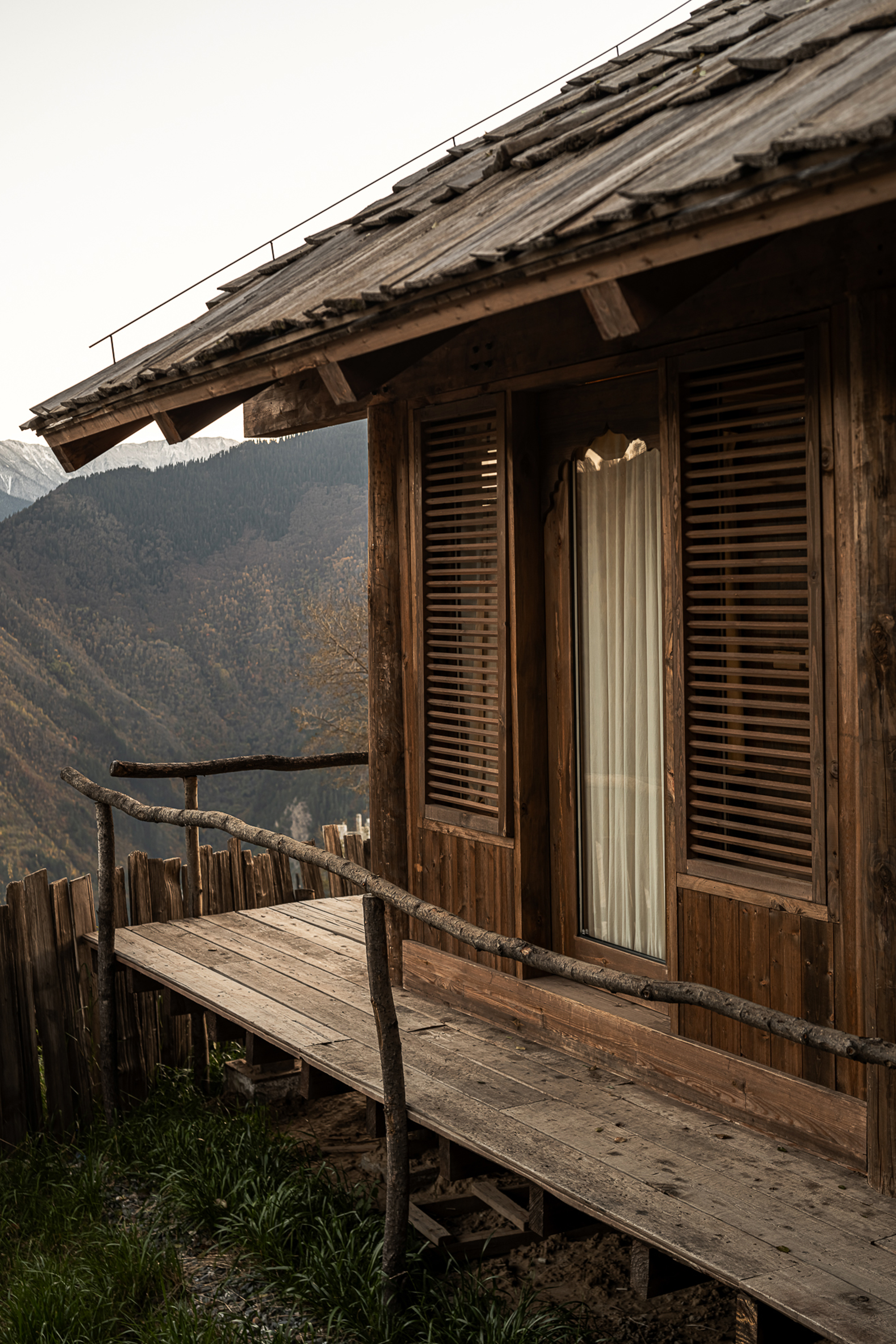
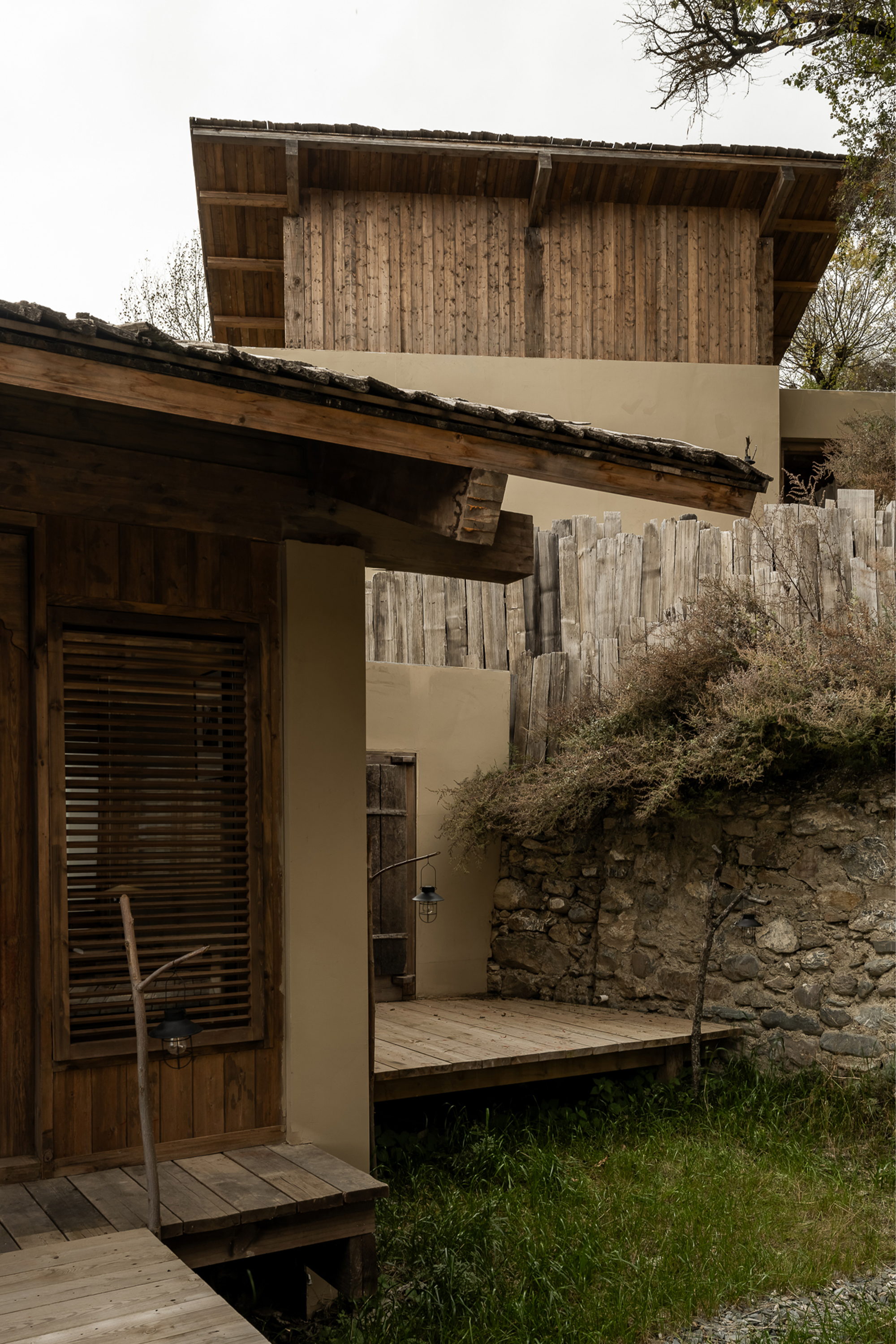
The resort comprises 12 detached guest rooms, each covering a land area of 150–180 square meters with a built-up area of over 80 square meters. We have organized the villas into four distinct clusters, where the living room, bedroom, soaking pool, and tea pavilion are thoughtfully positioned as separate structures. The architectural style incorporates elements of Tibetan vernacular dwellings, preserving traditional wooden shingles and tile roofing. Throughout the property, an aura of natural simplicity and rustic tranquility prevails.
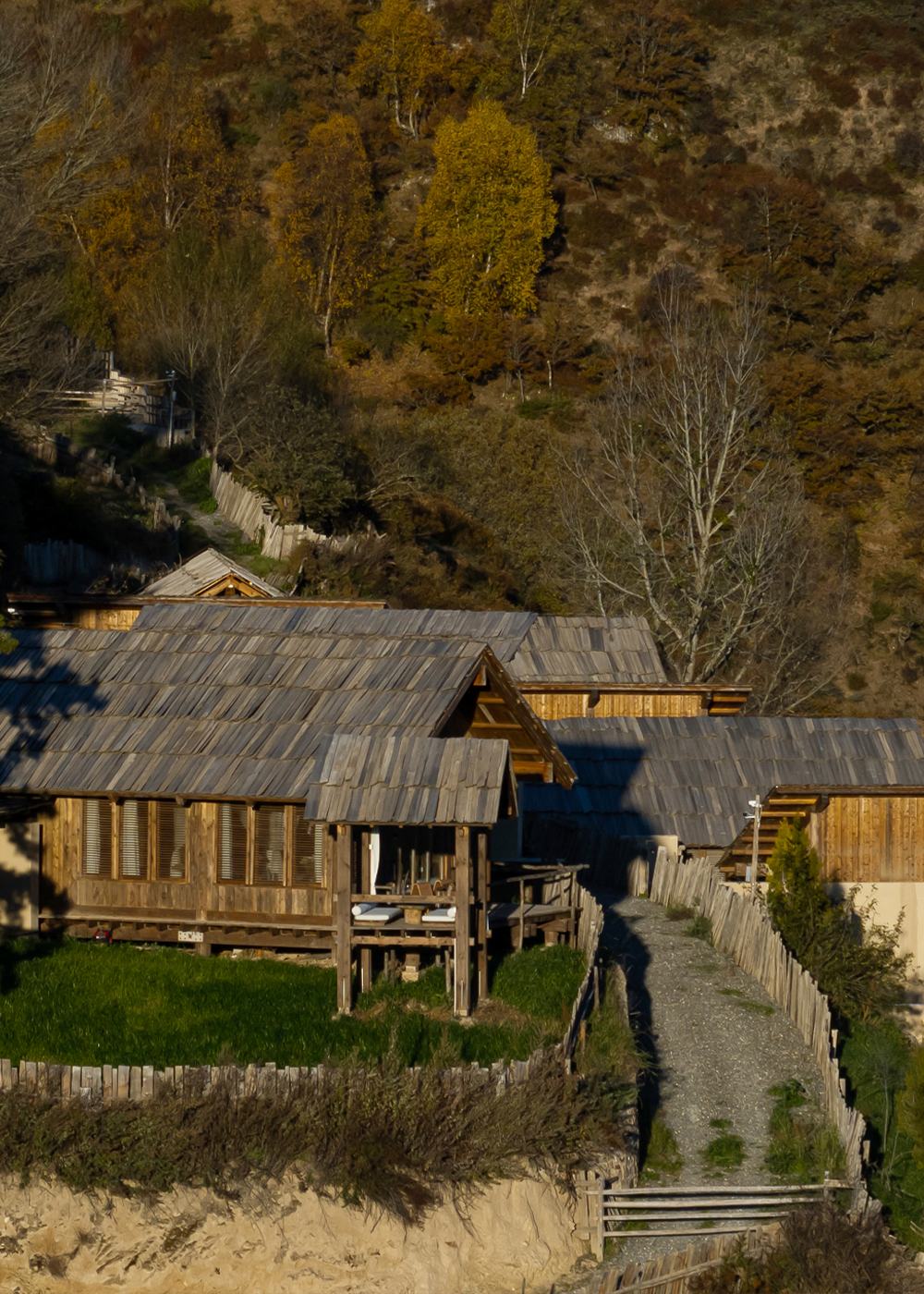
We refuse to see the suite as a monolithic whole, but instead conceive it as a rhythmic, layered sequence of spaces designed to gradually strip away the clamor of urban life. This is far more than a mere arrangement of rooms—it is a carefully choreographed journey that guides guests from observation to immersion, culminating in a profound sense of harmony between humanity and the natural world.

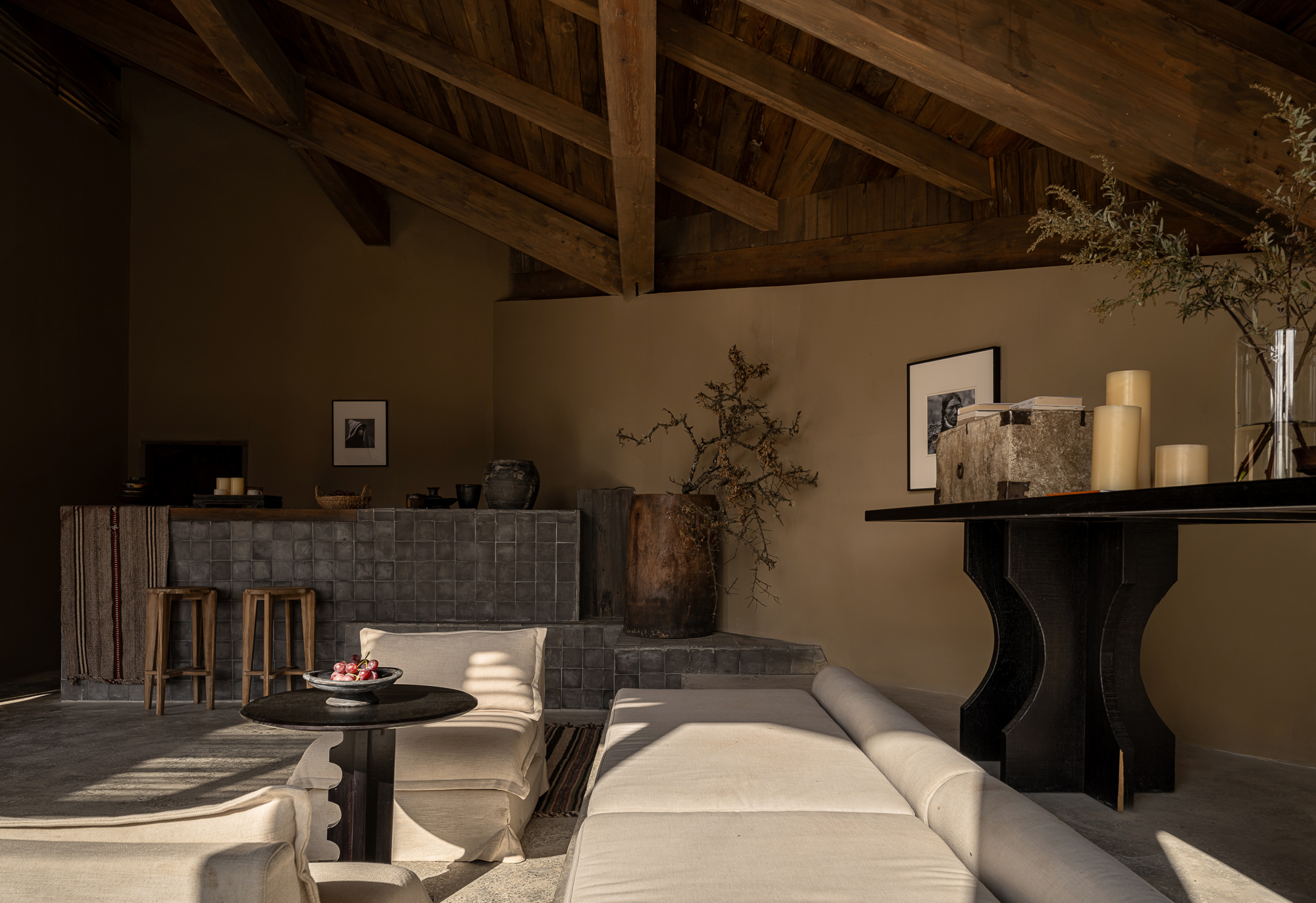
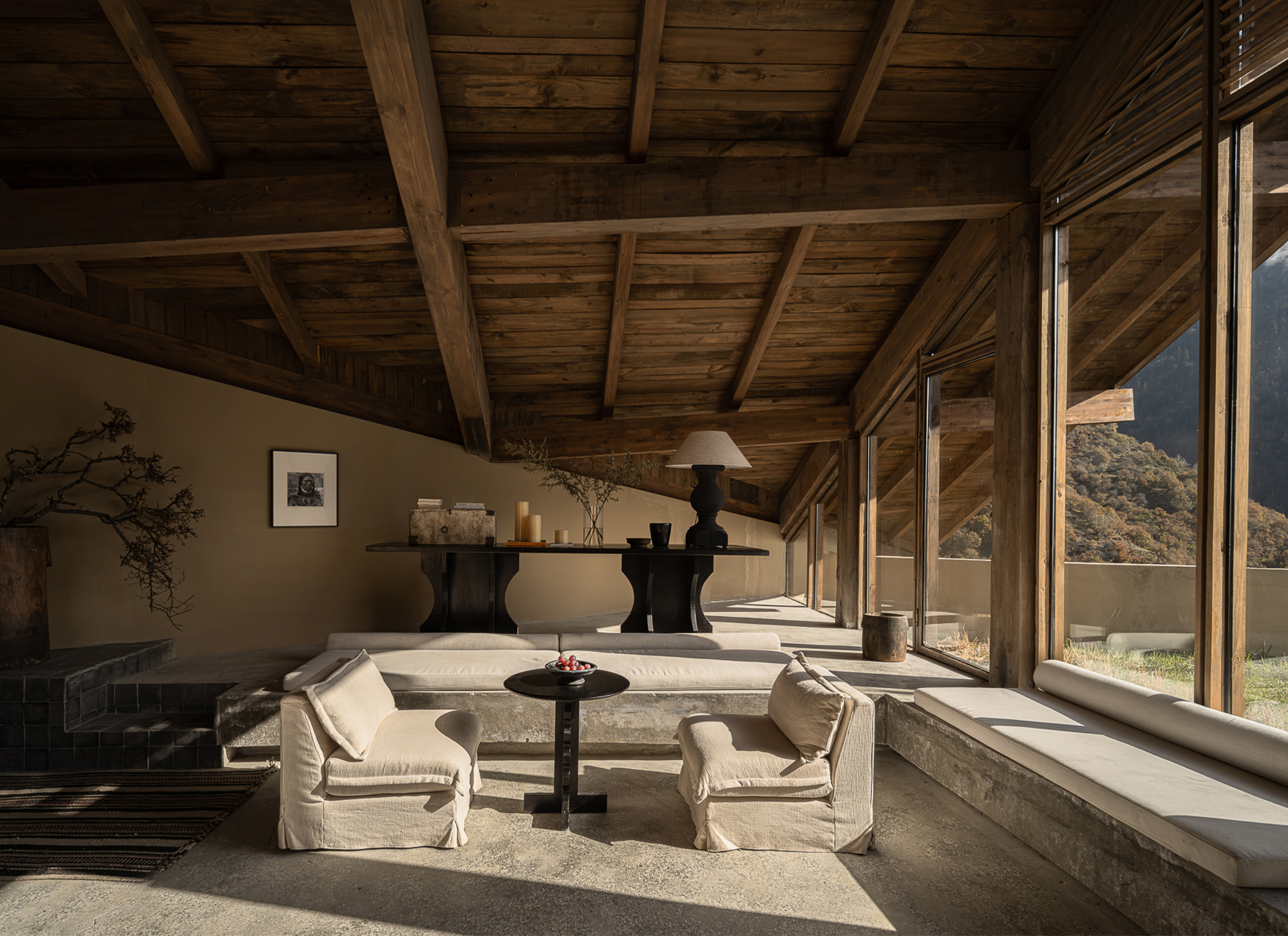
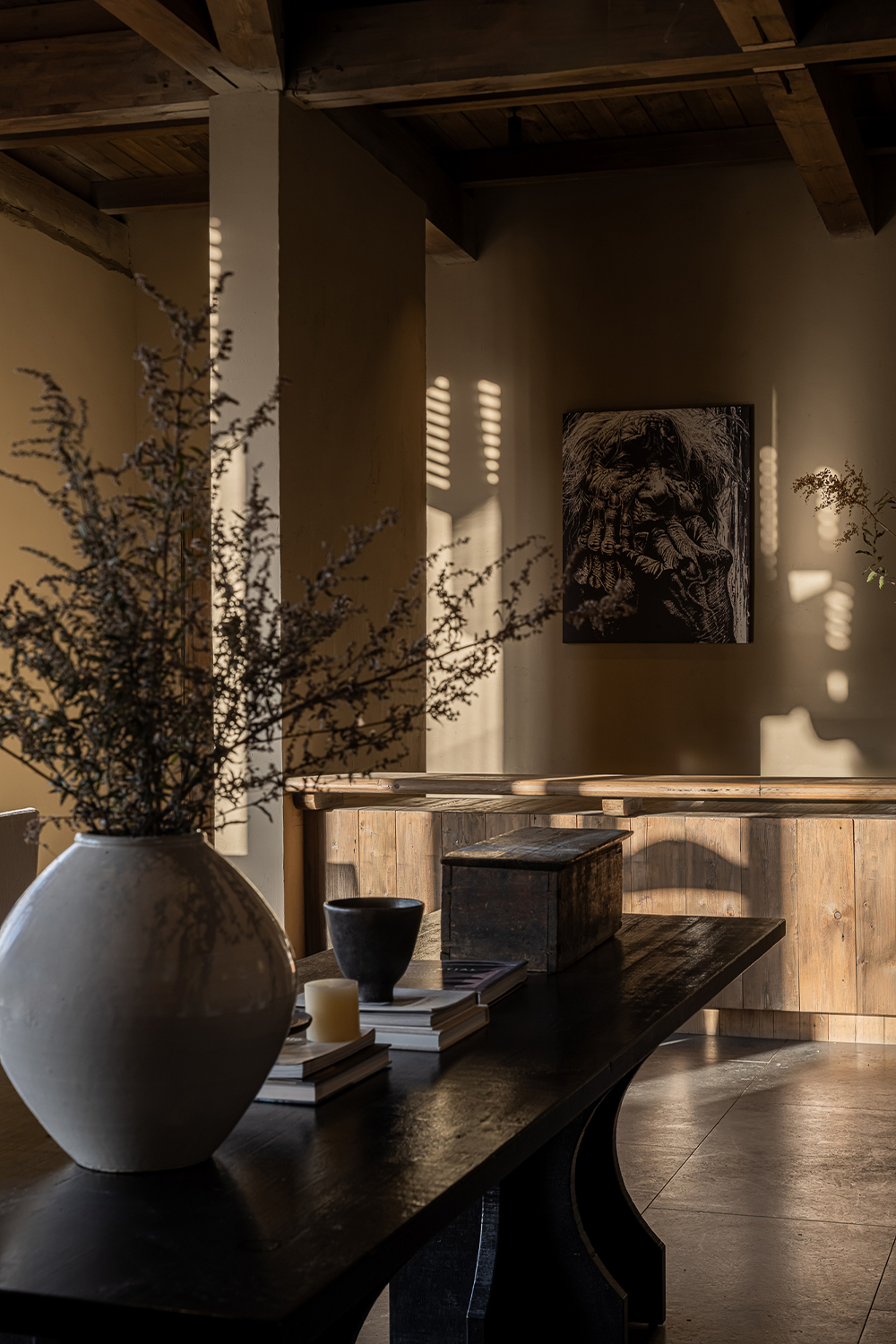
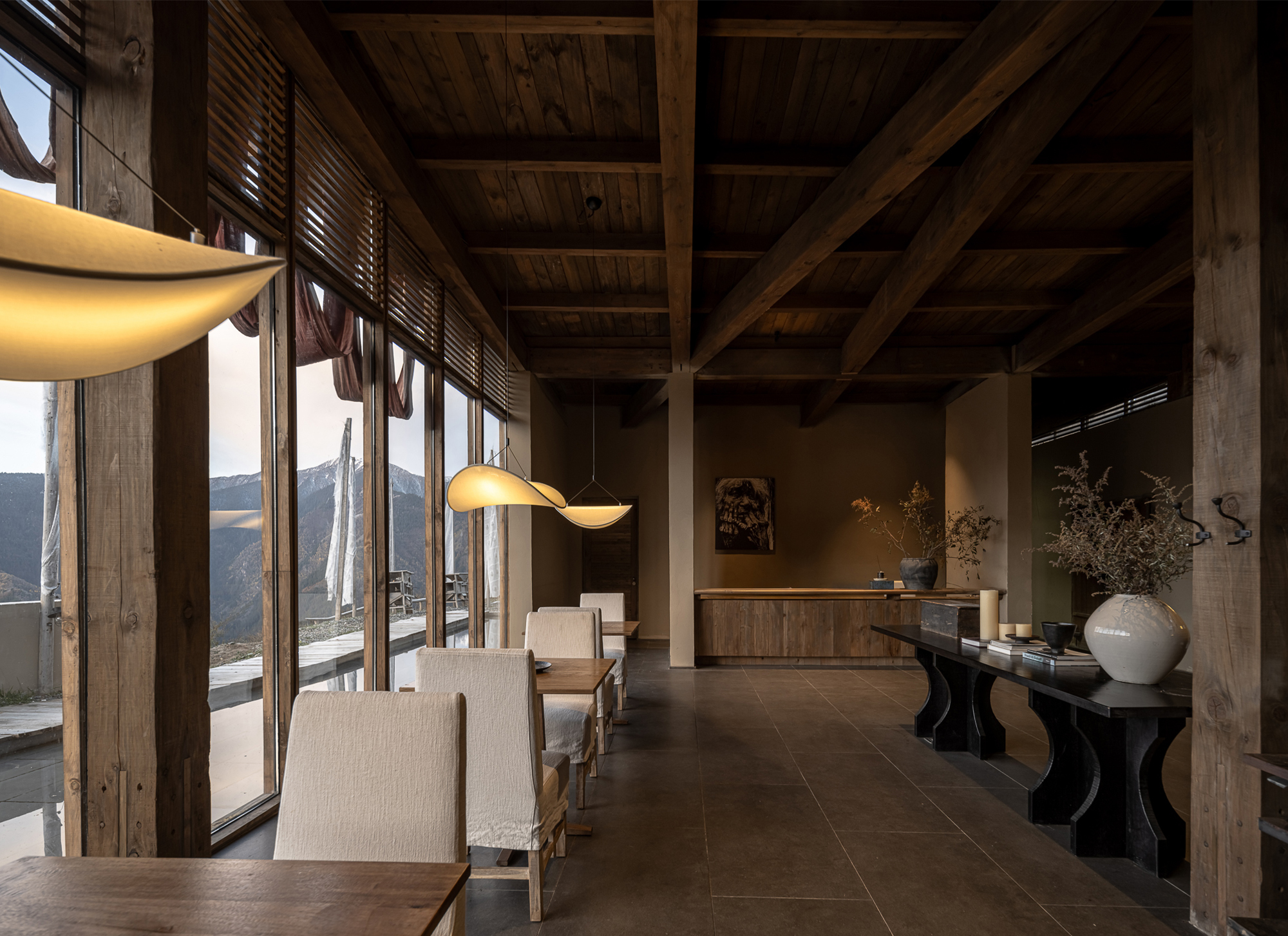
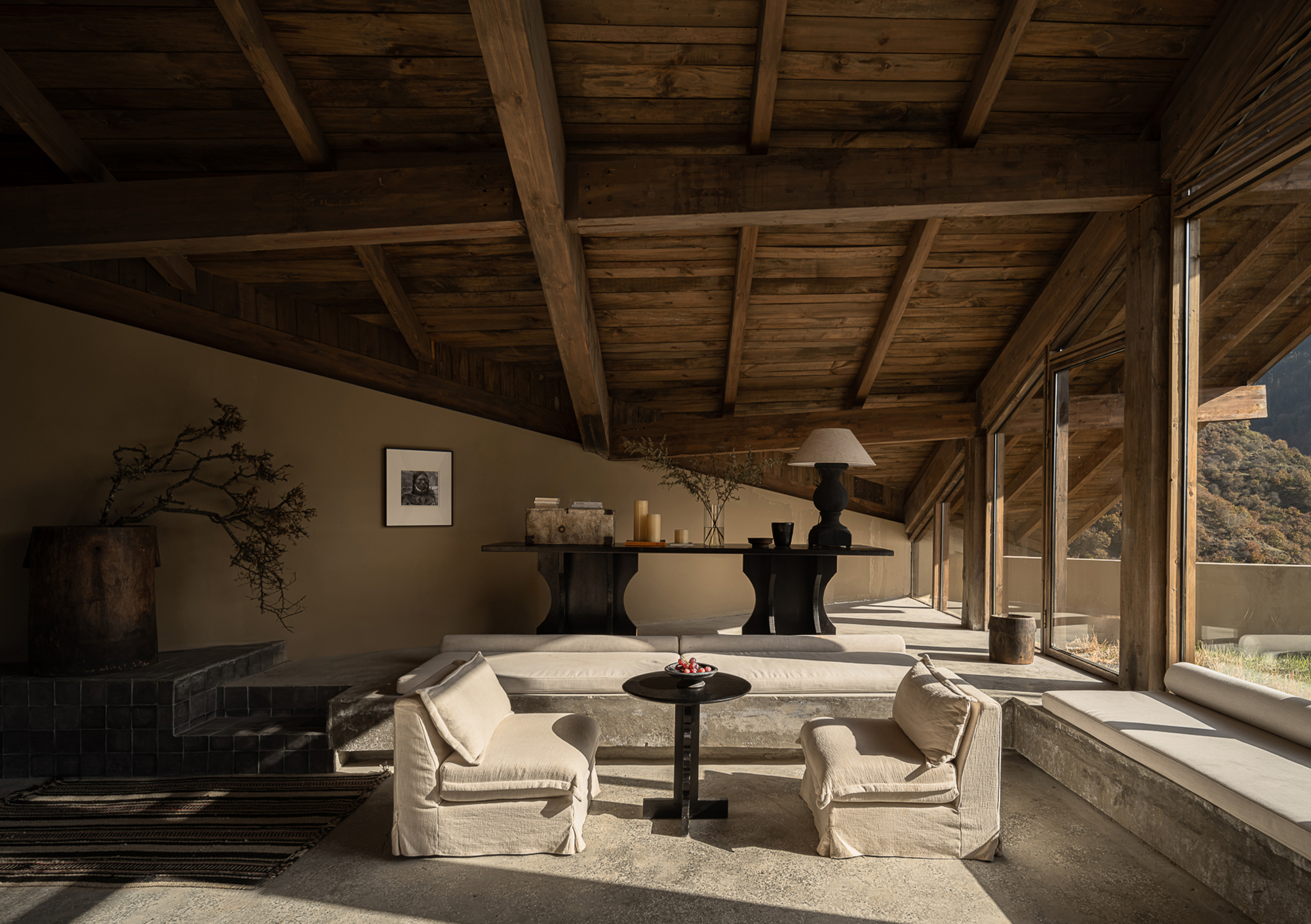
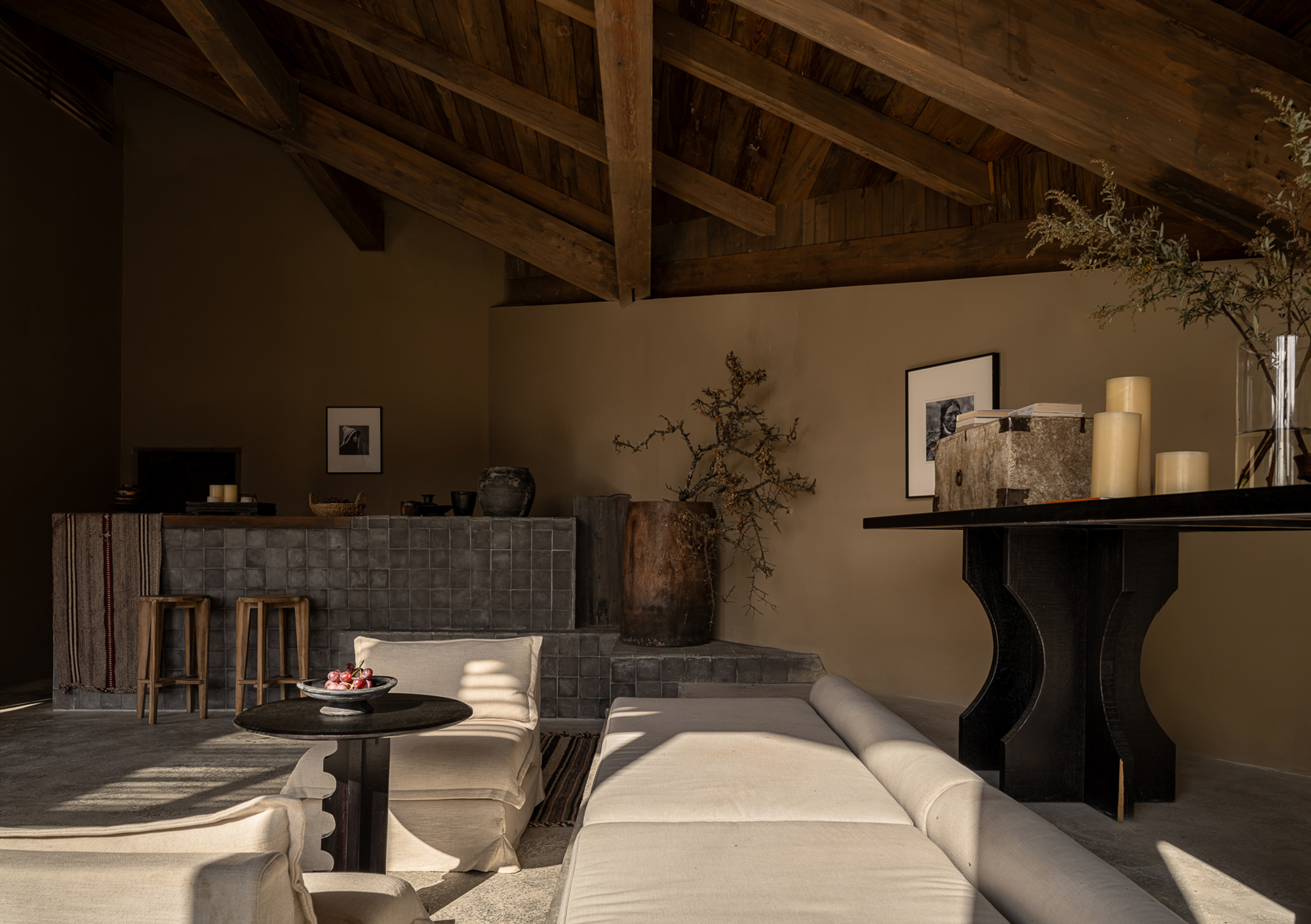
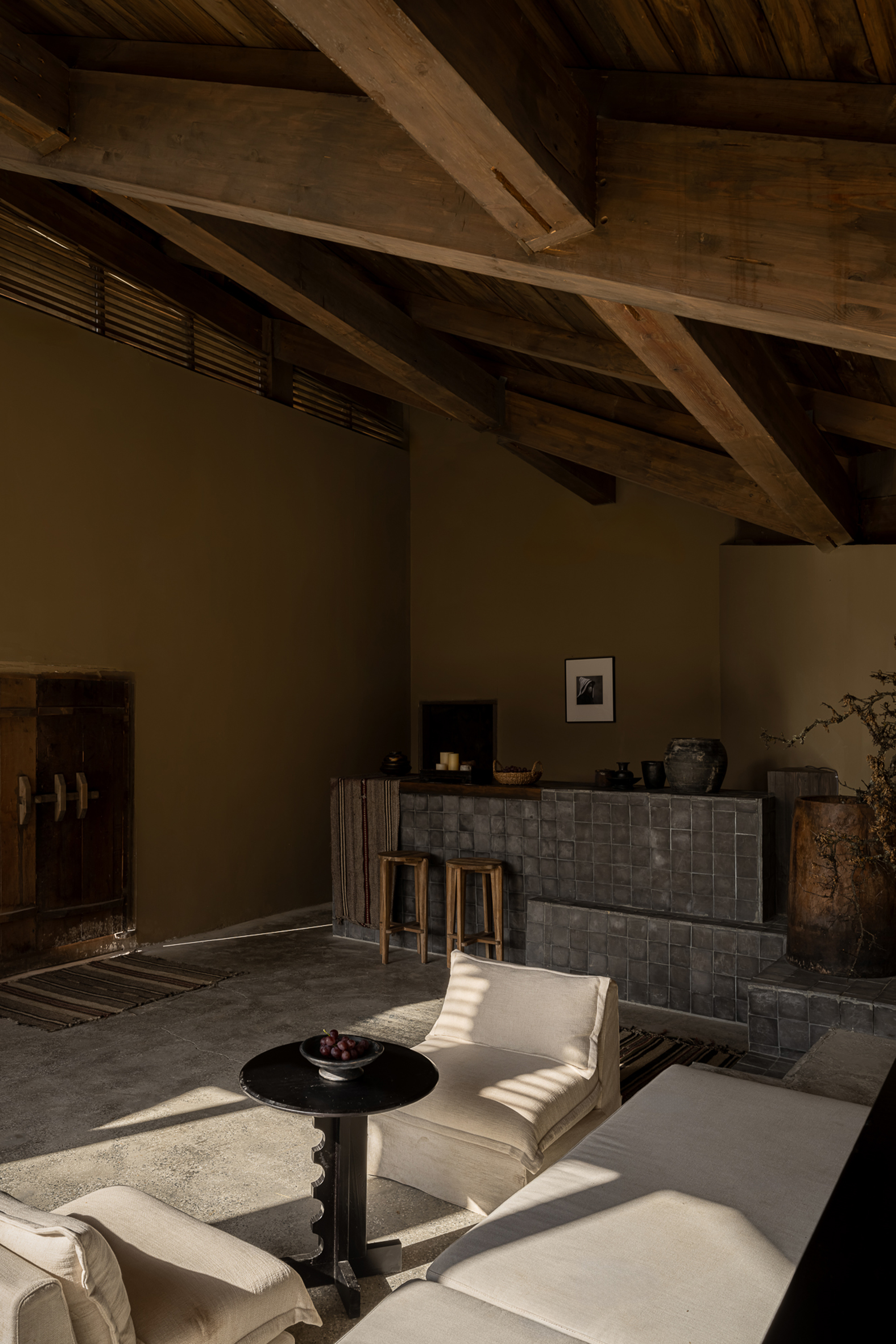
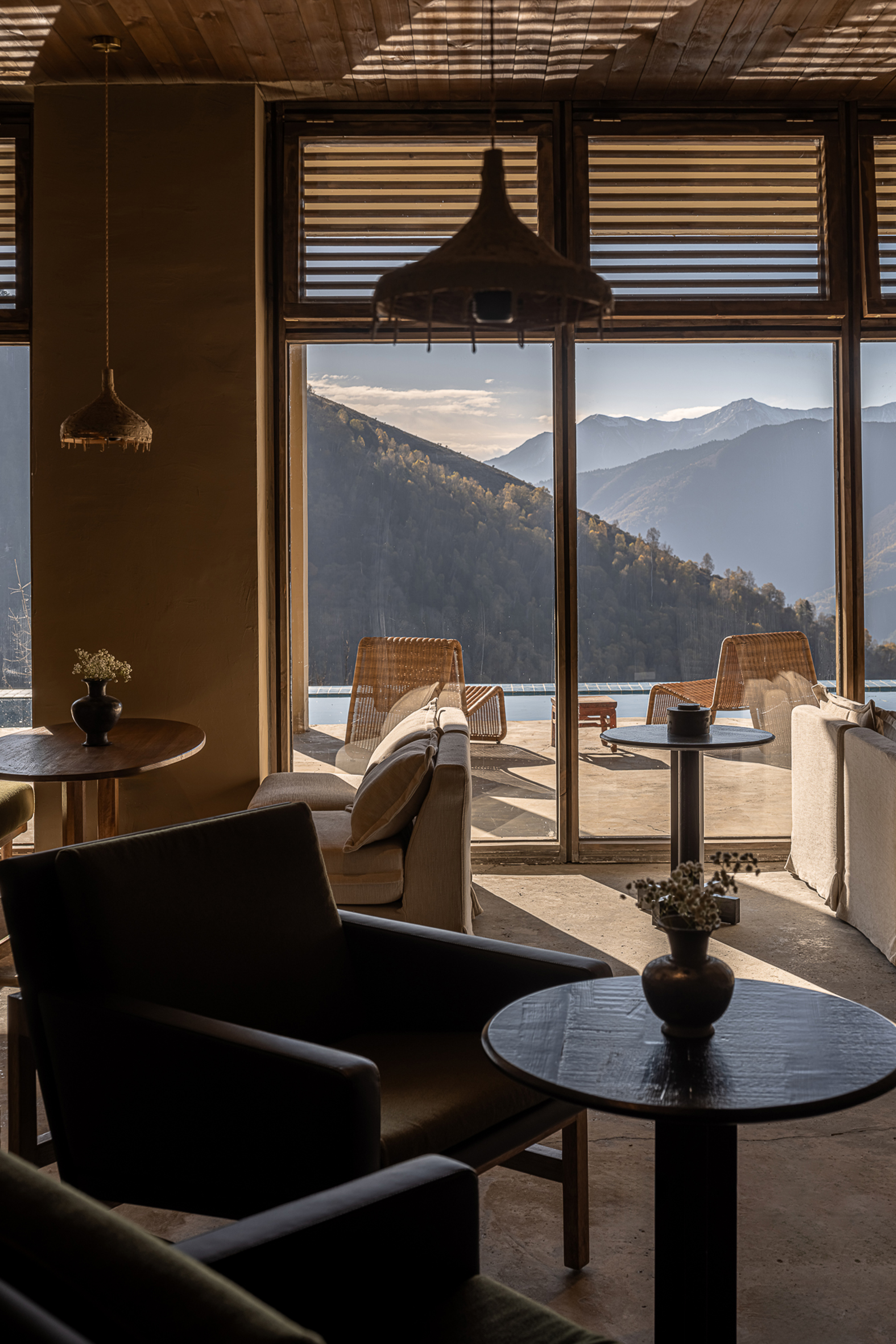
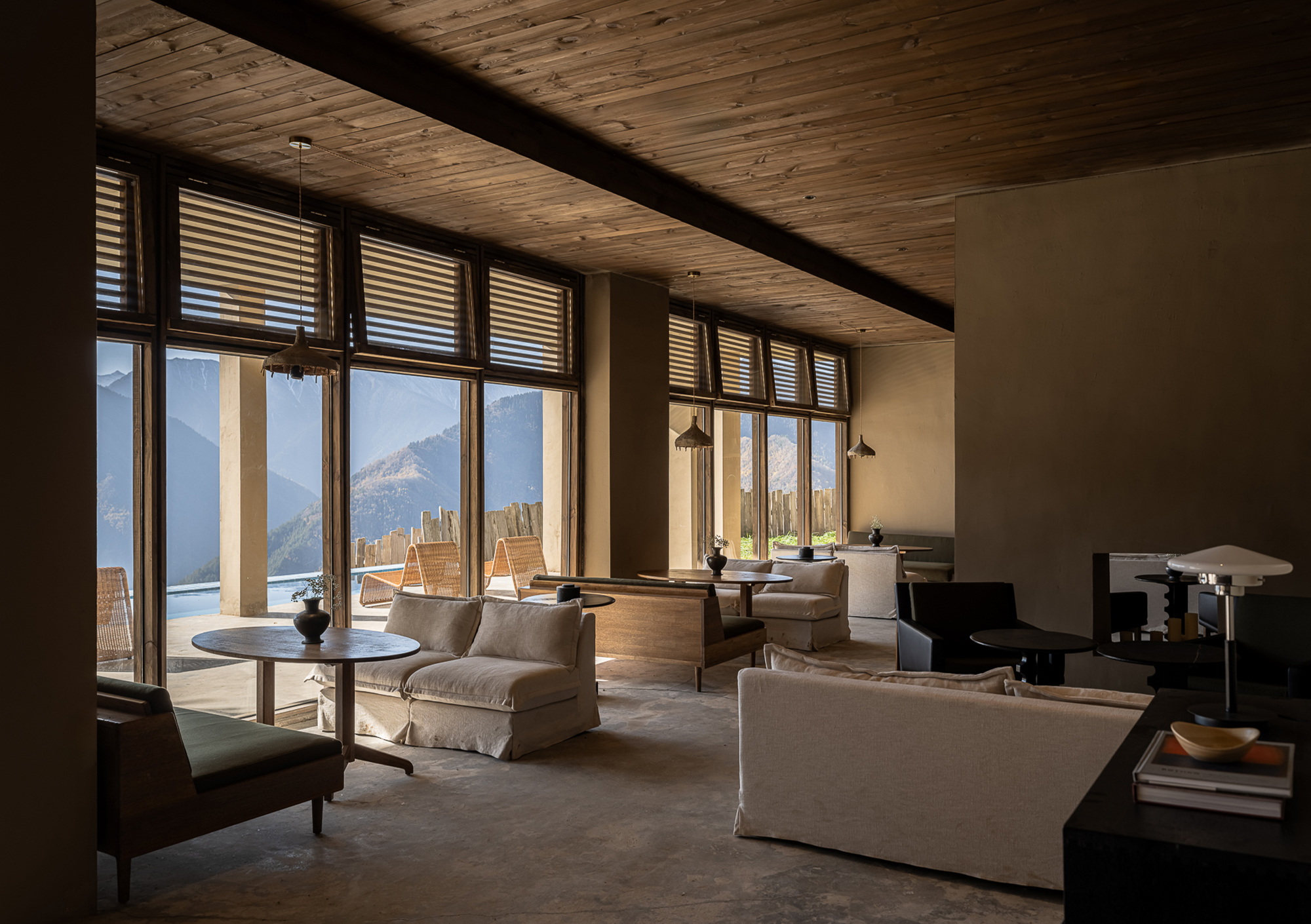
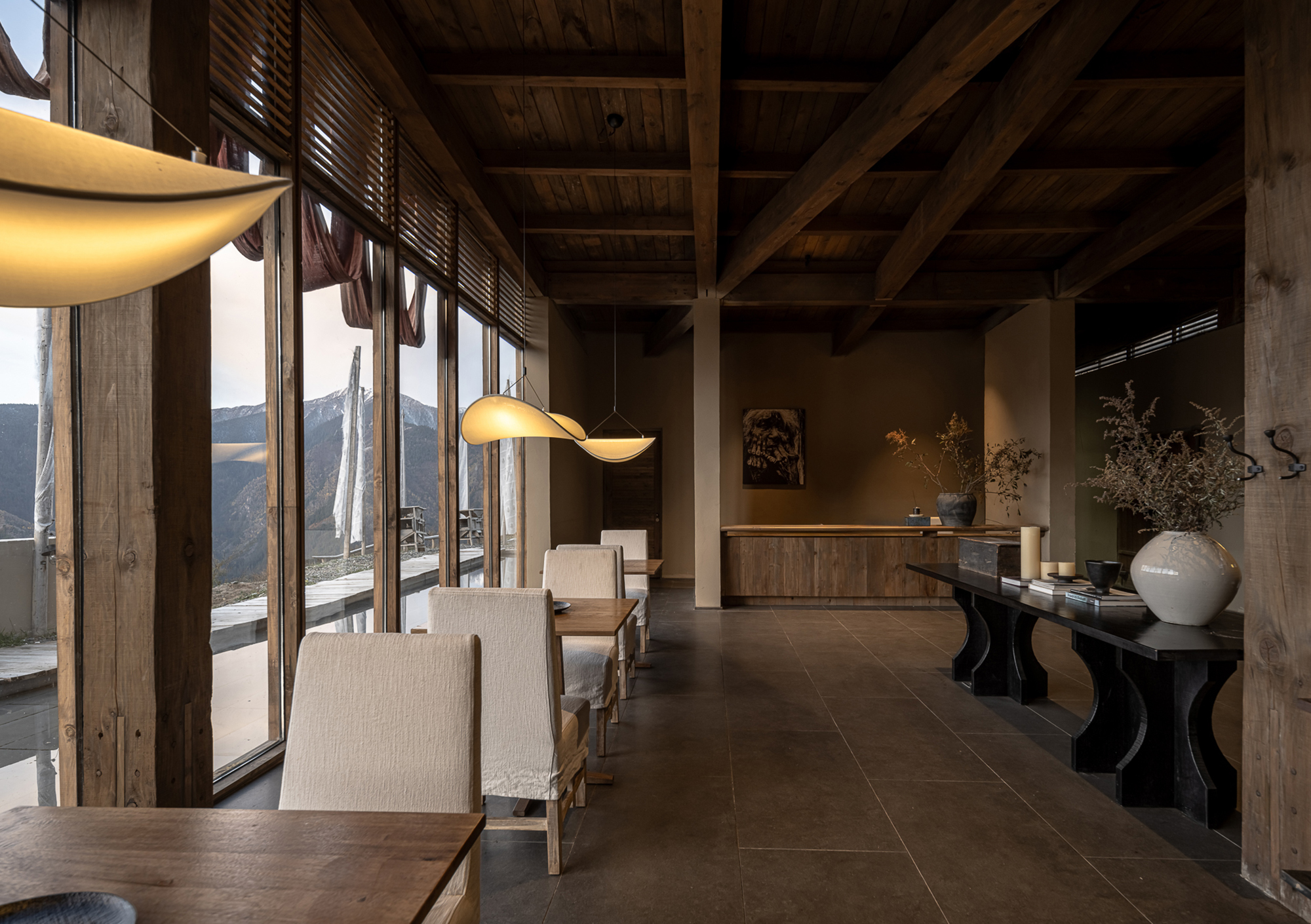
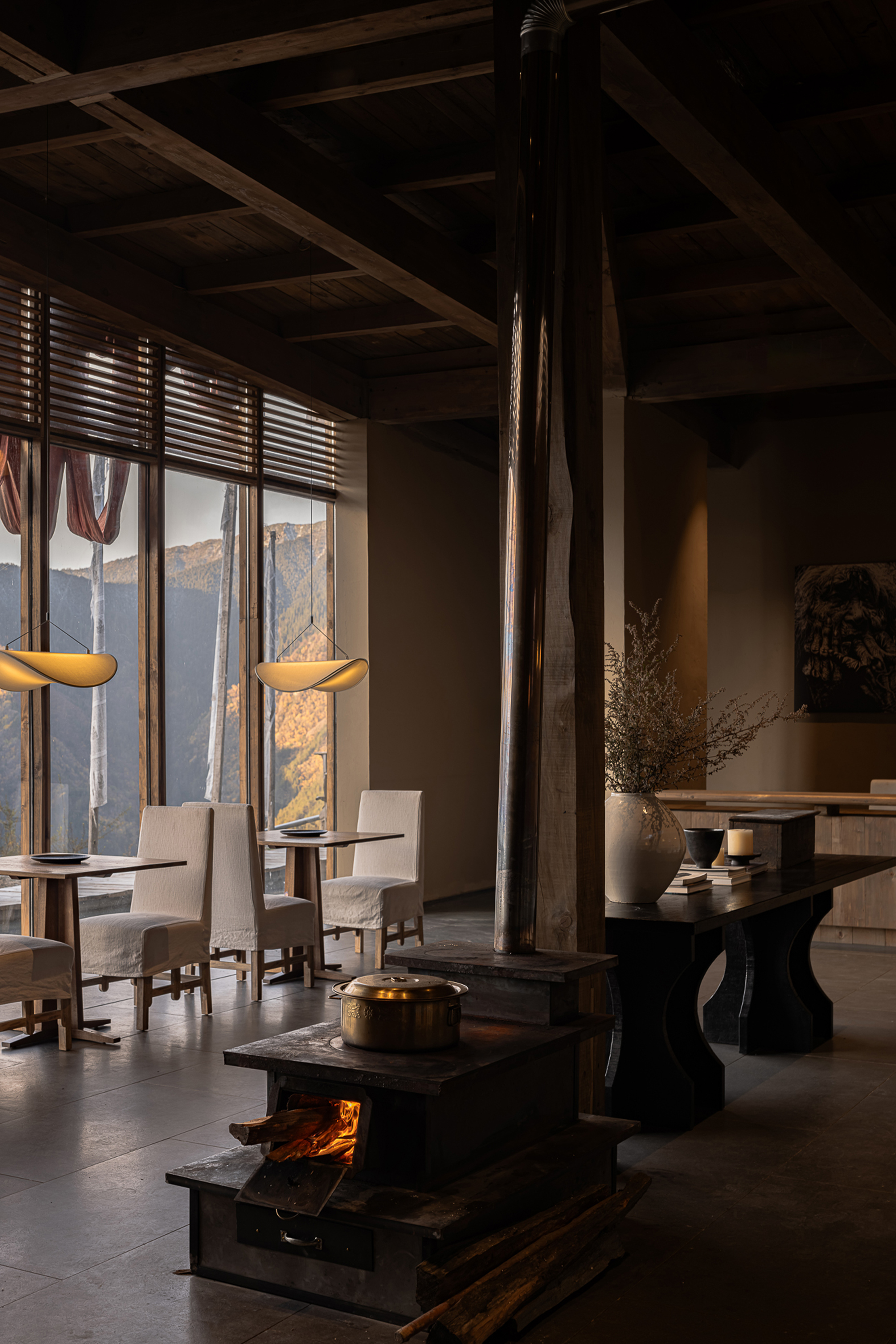
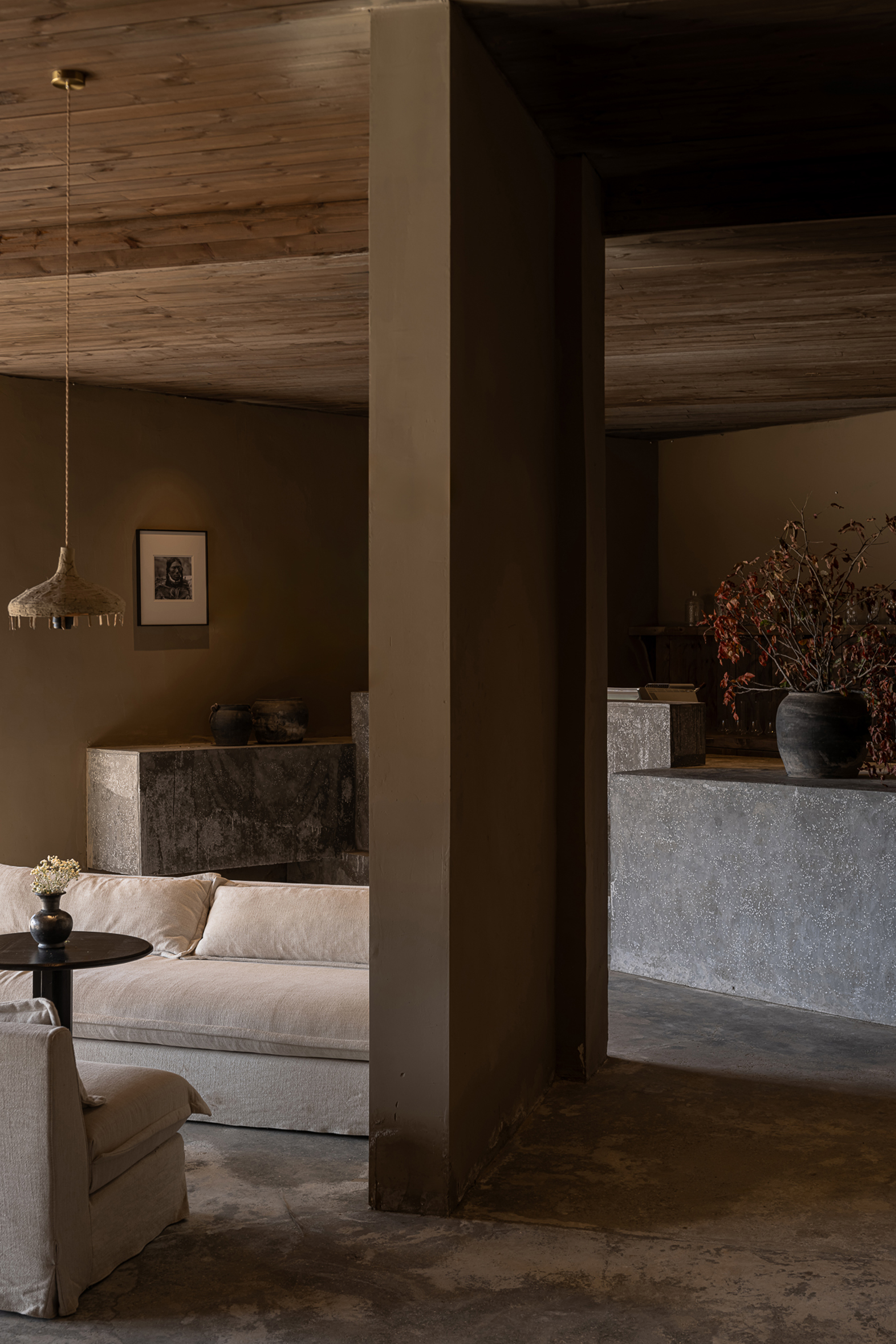
The lobby is designed as a "vessel of warm memories," breaking away from the coldness of traditional hotels to create the familiarity and ease of returning to an "old family living room." Aged wooden panels line the ceiling, their unique grain and hue infusing the space with a sense of history. Walls finished in textured artisanal plaster echo the gentle marks of time and nature. The space is furnished entirely with rustic, aged furniture. Each piece carries memories and a sense of warmth—more than just functional objects, they serve as emotional anchors in the space, creating an immediate feeling of comfort and ease from the moment guests arrive.

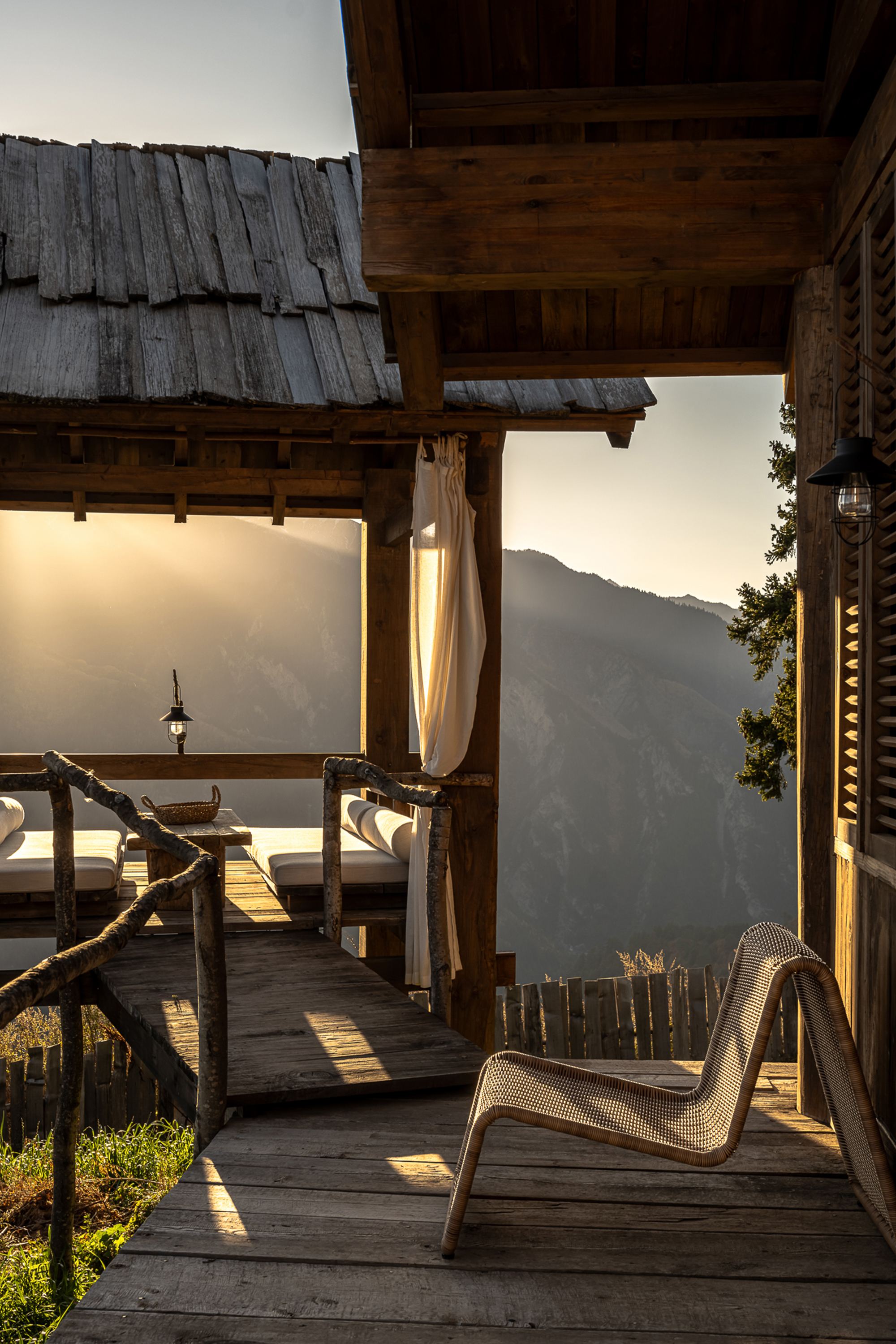
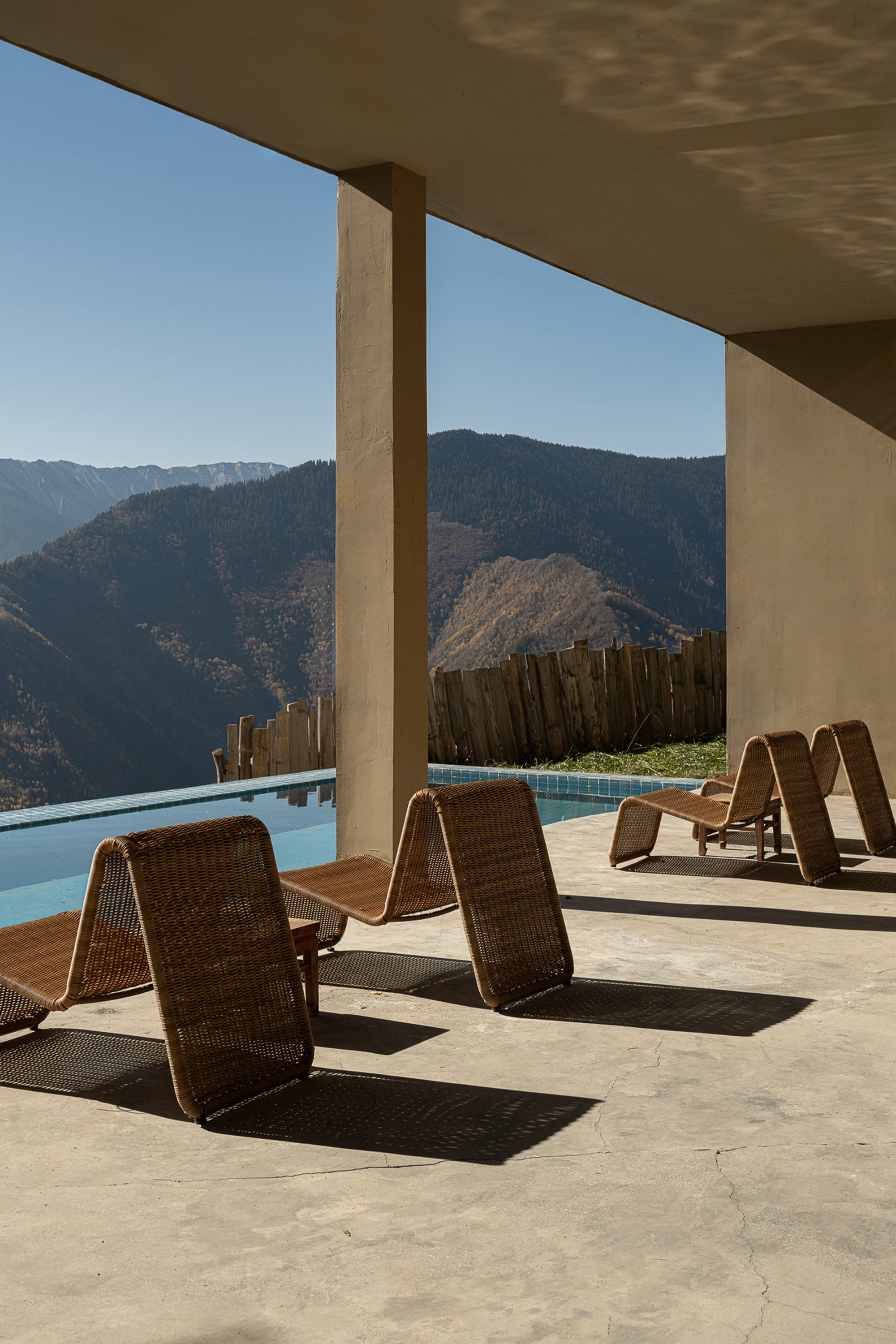
The architectural approach is conceived not as a presentation of nature, but as an invitation for active engagement with the natural environment. In the exterior leisure space, the directional arrangement of seating is intentionally calibrated to orient occupants toward celestial observation. The open structural framework facilitates tactile interaction with atmospheric elements, while botanical fragrances and ambient acoustics permeate the sensory field continuously. This orchestrated multisensory immersion facilitates a perceptual shift—transitioning the occupant from a passive spectator to an embodied participant within the ecological milieu.

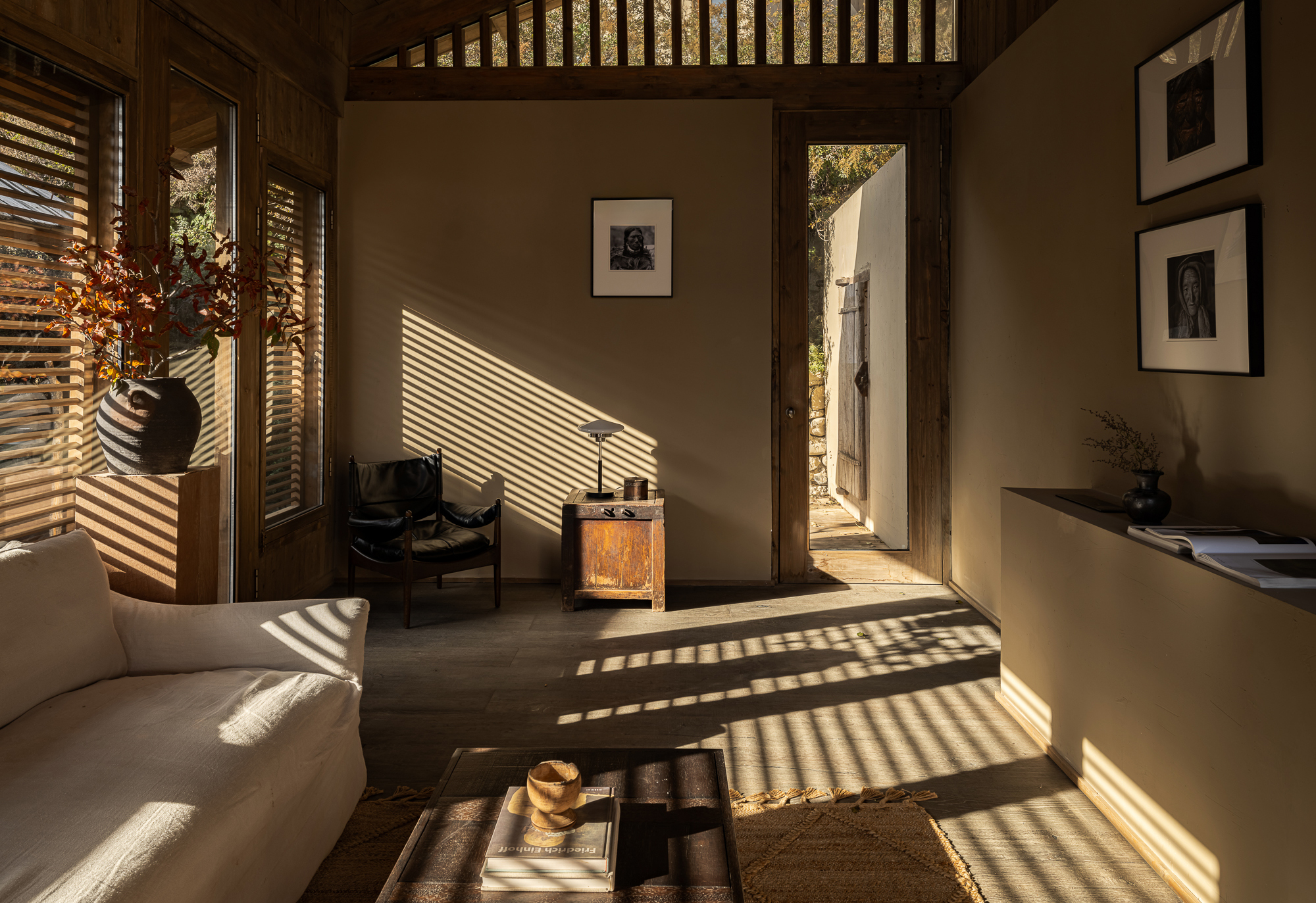
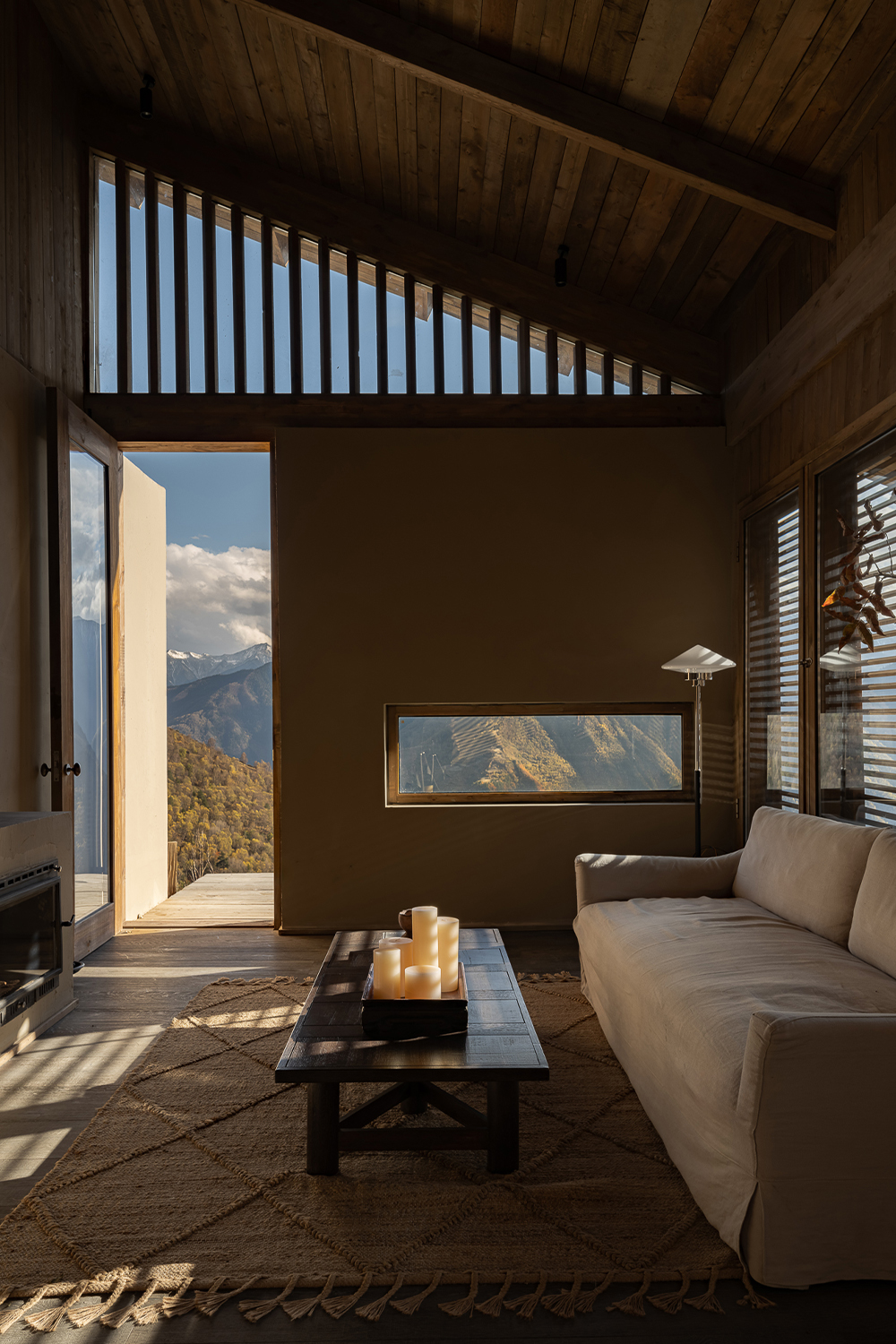
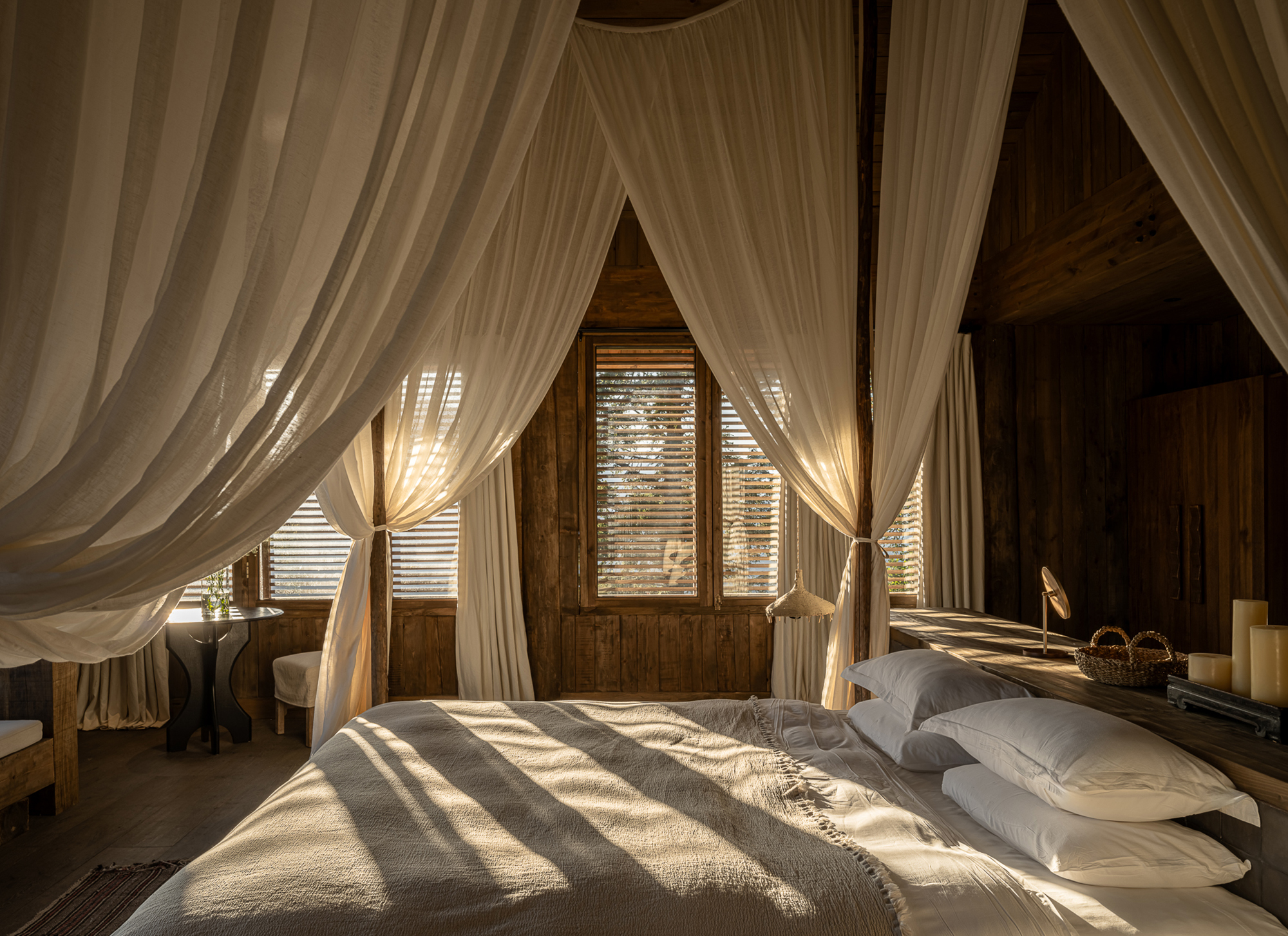
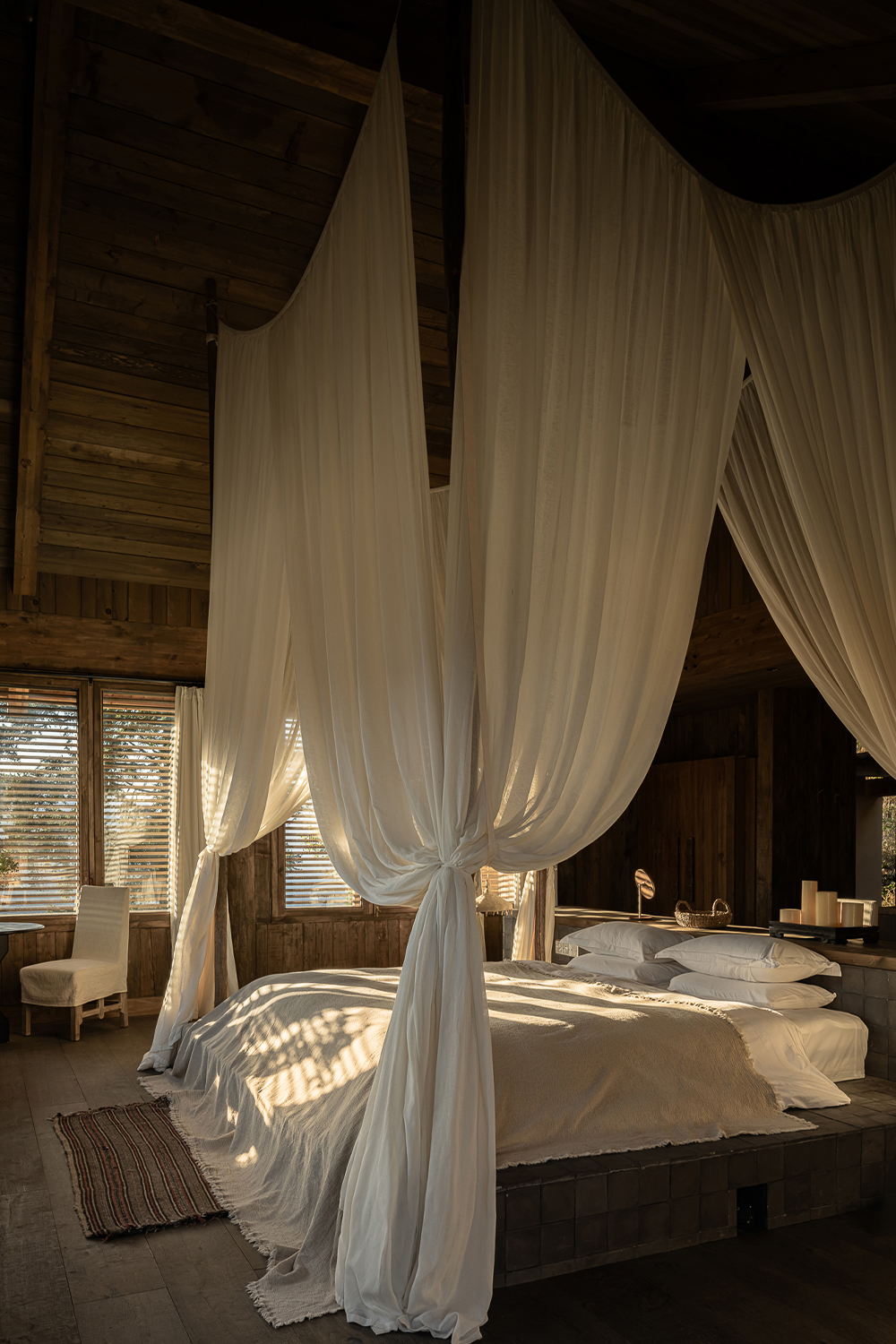
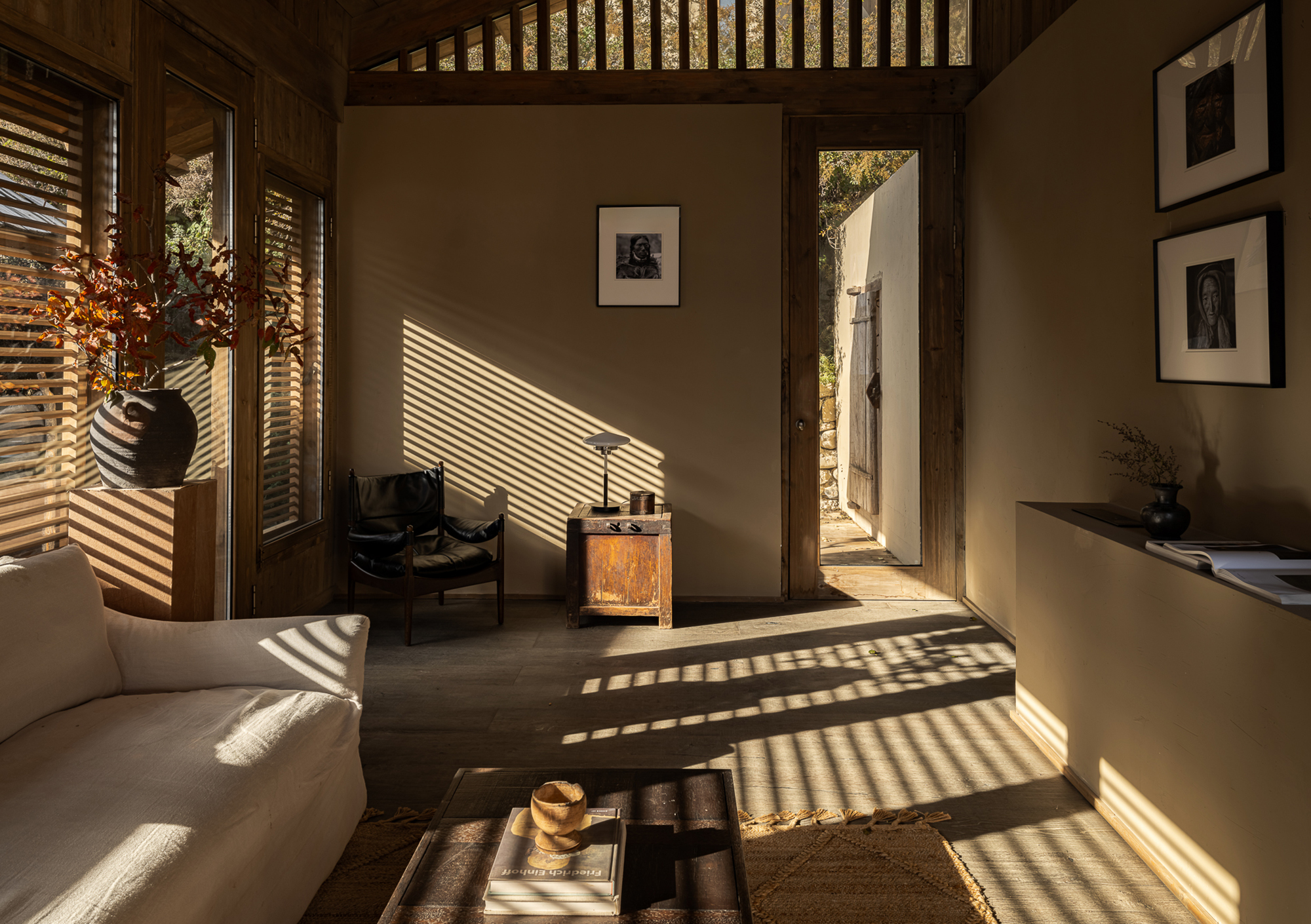
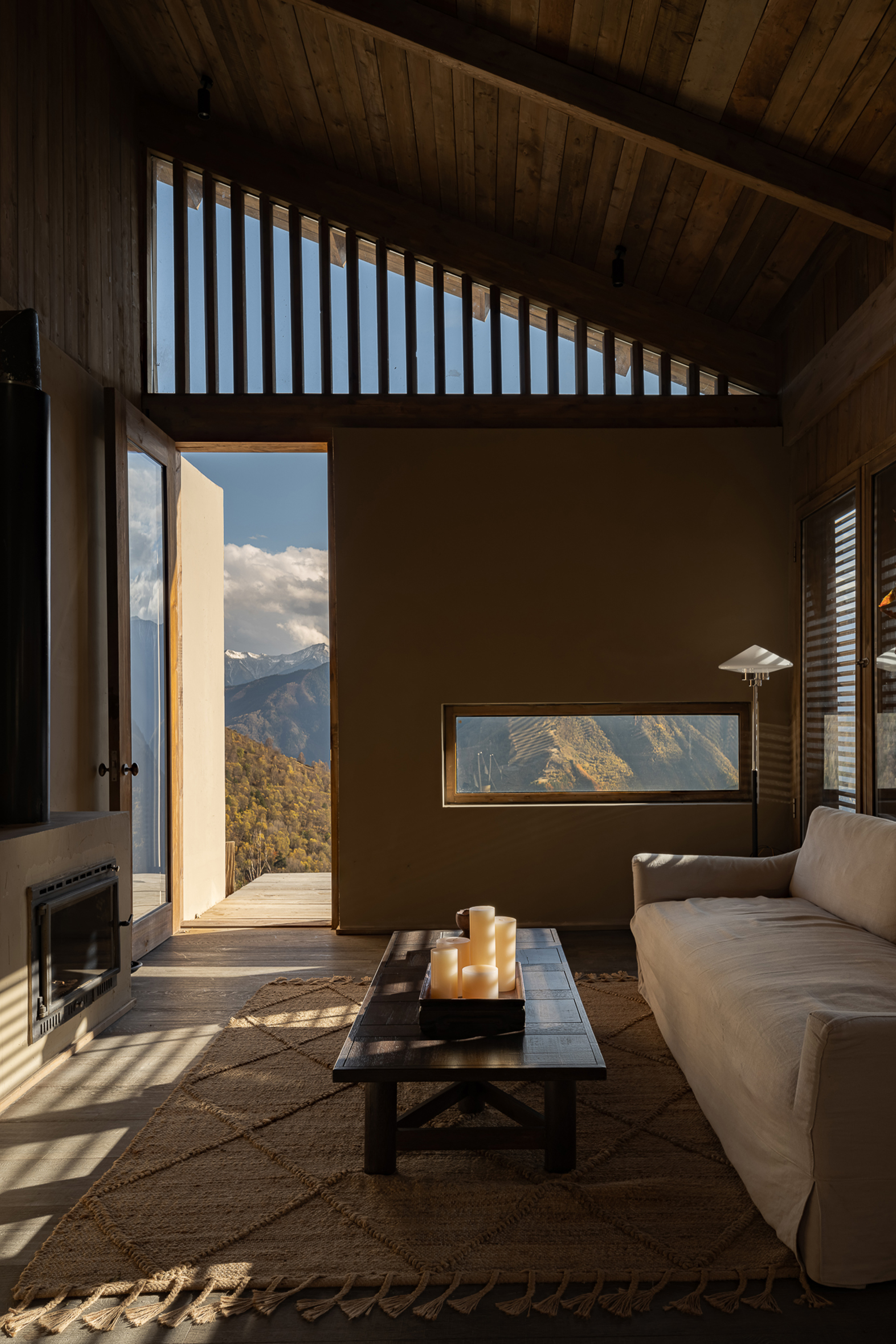
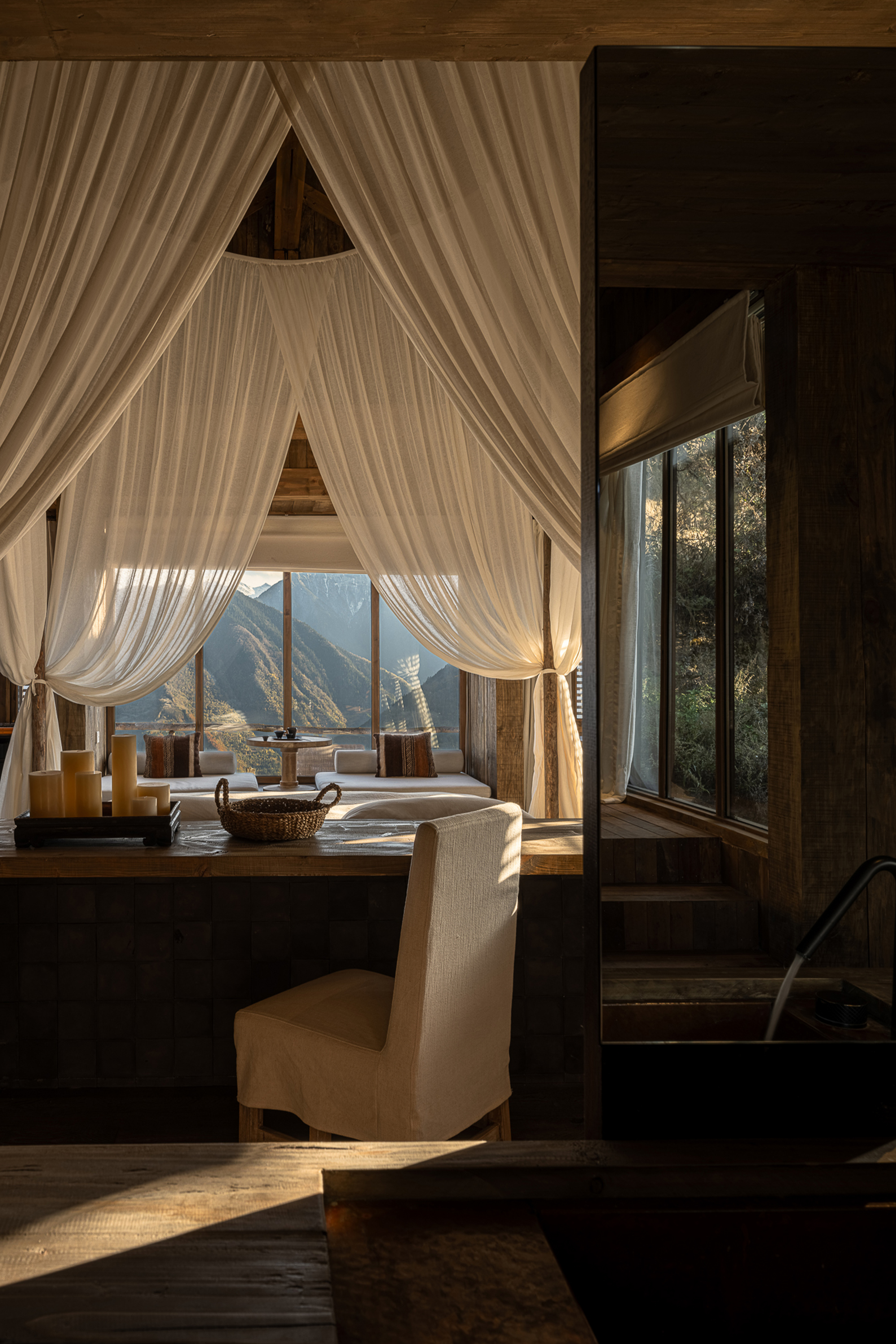
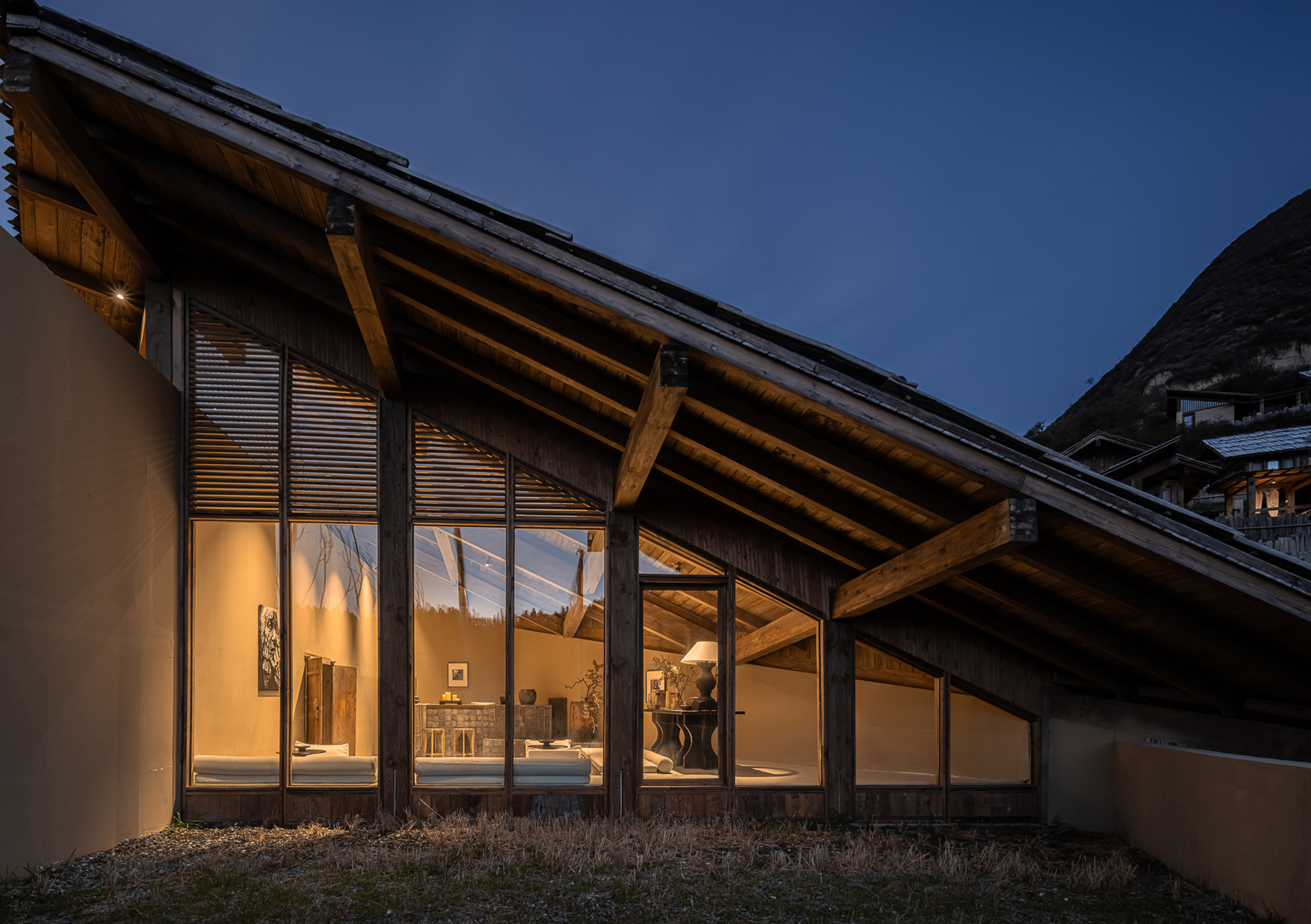
Within each suite, we have incorporated a separate living area that serves as a crucial transitional space. This is not merely a functional zone, but a psychological "sanctuary" and "threshold." Its stable, enveloping, and comforting qualities provide guests with a profound sense of security and privacy, allowing them to settle both body and mind before fully immersing themselves in the vastness of nature.

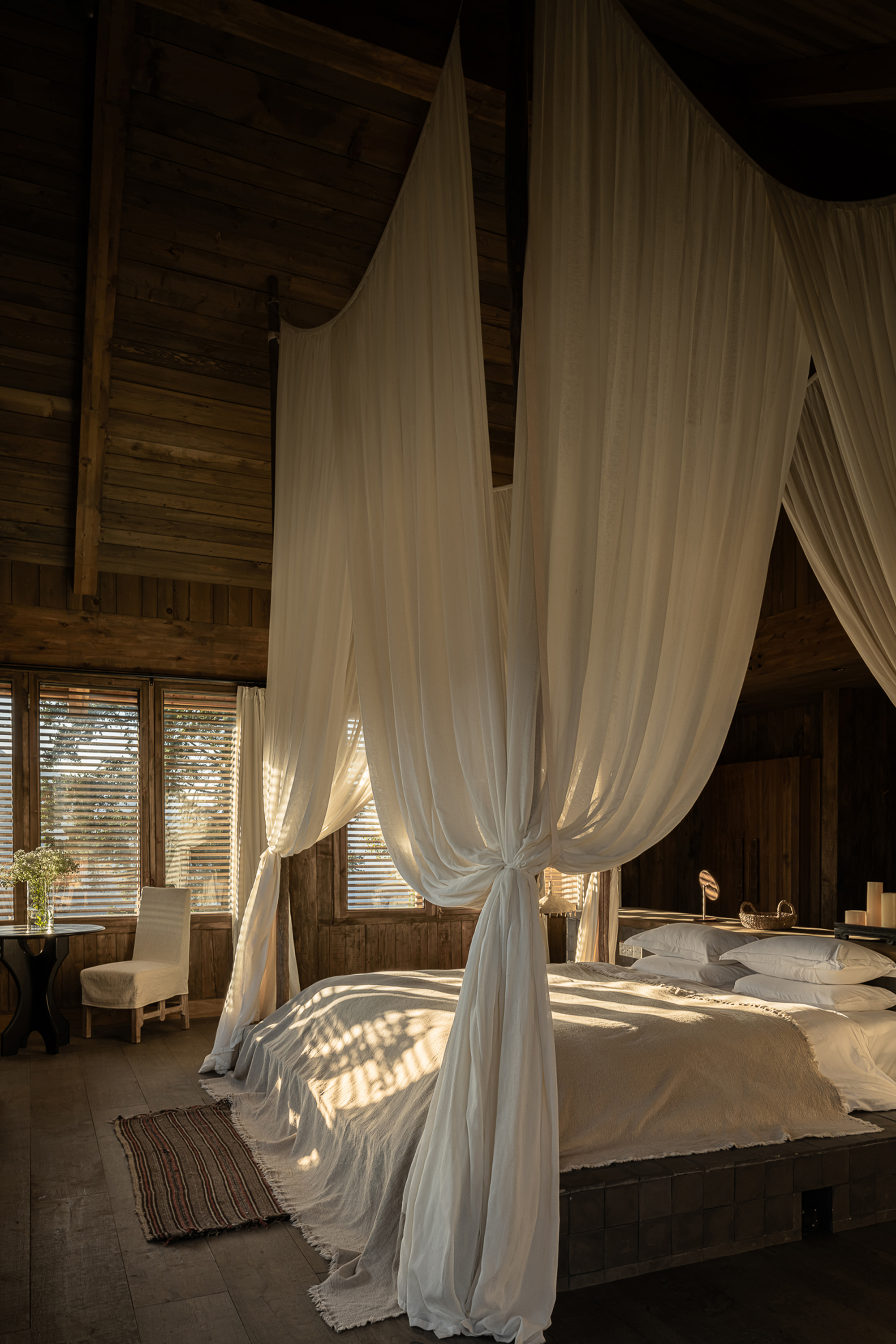
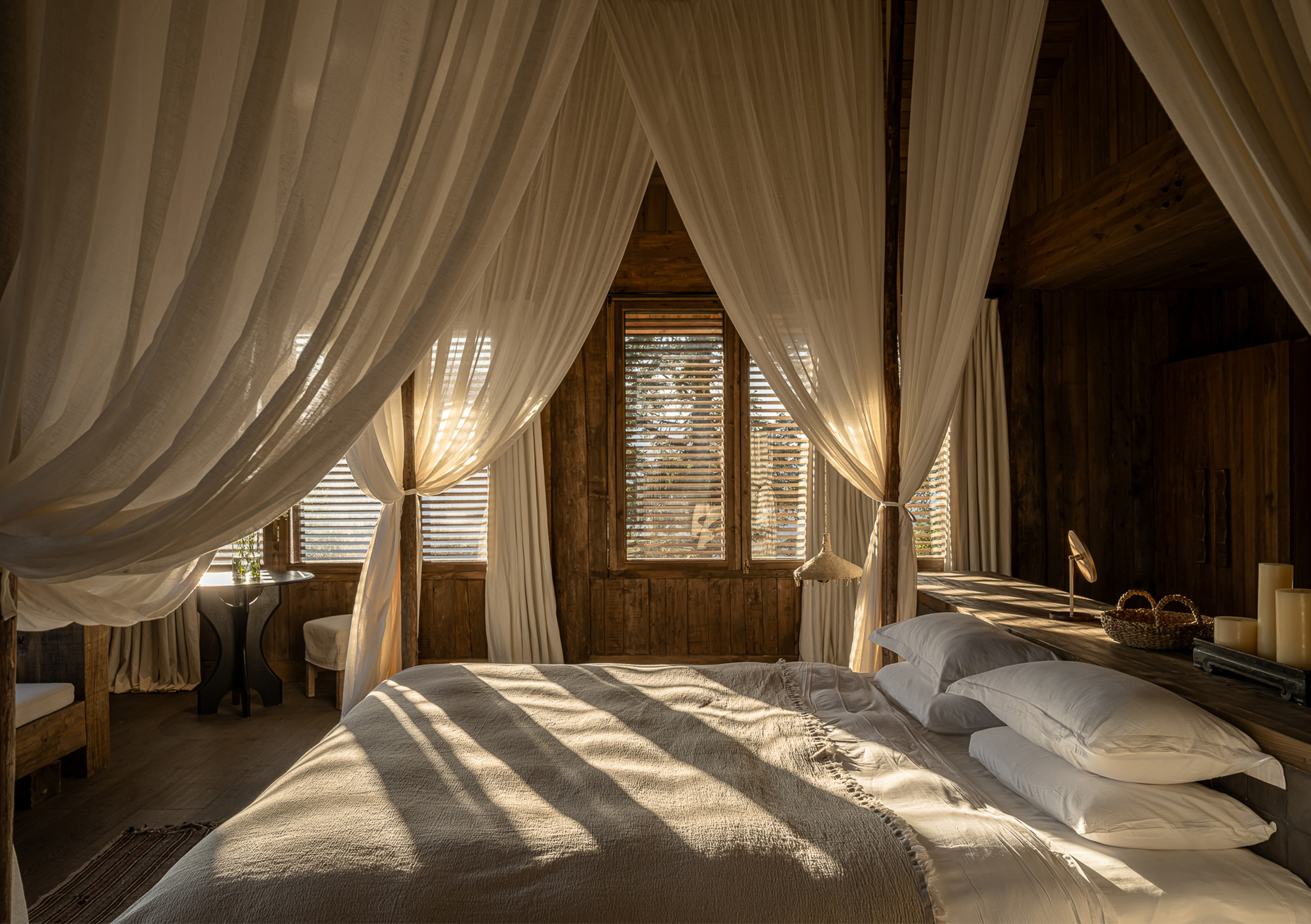
Each guest unit constitutes a singular sanctuary of seclusion, ensuring absolute privacy and tranquility. The extensive glazing installations seamlessly integrate external landscapes into the interior visual field, framing panoramic natural vistas. Without departing from their quarters, occupants may experience diurnal and nocturnal phenomena—from matutinal cloud formations to celestial nocturnes—thereby attaining a distinctive rehabilitative sojourn that rejuvenates both corporeal and psychological states.
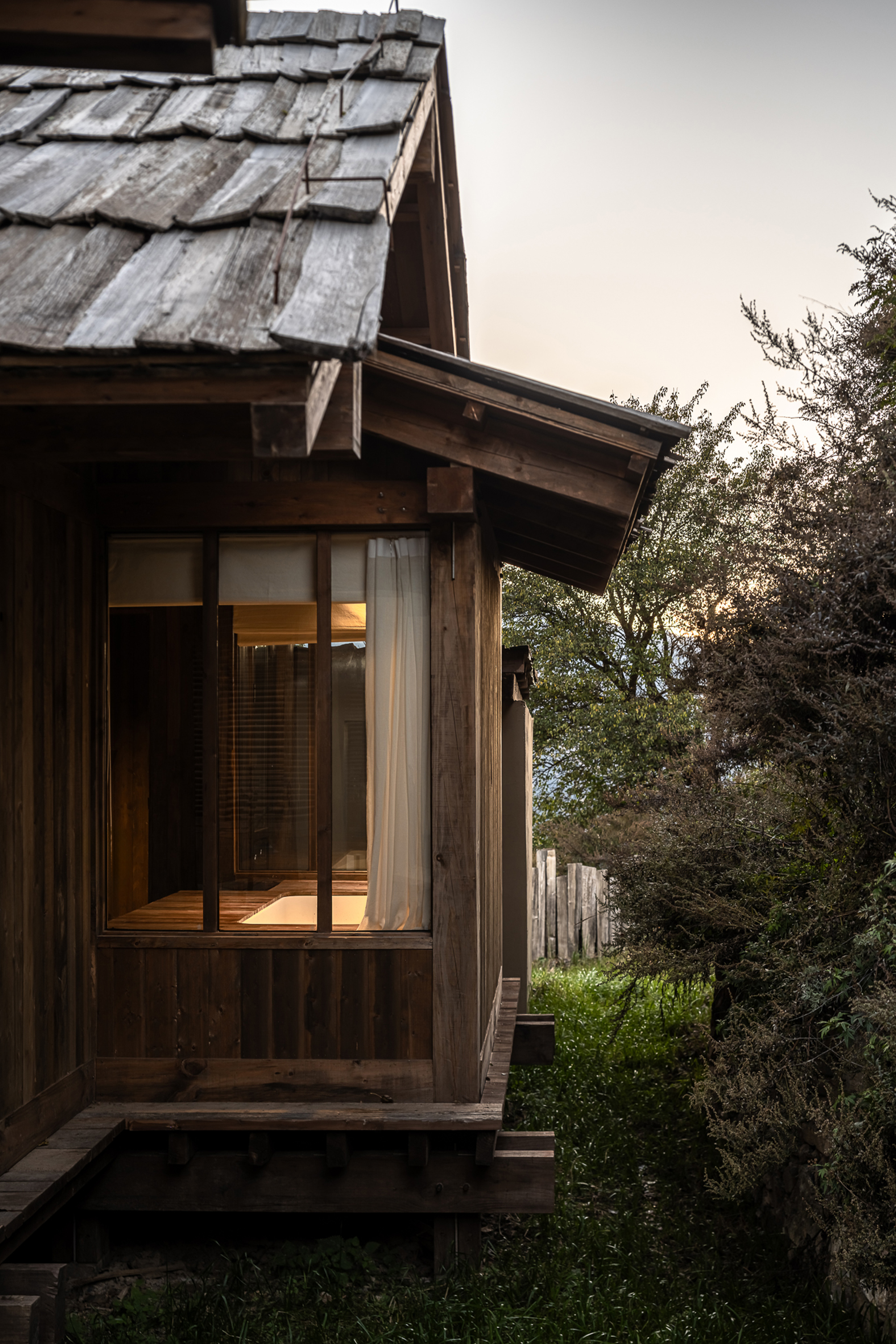
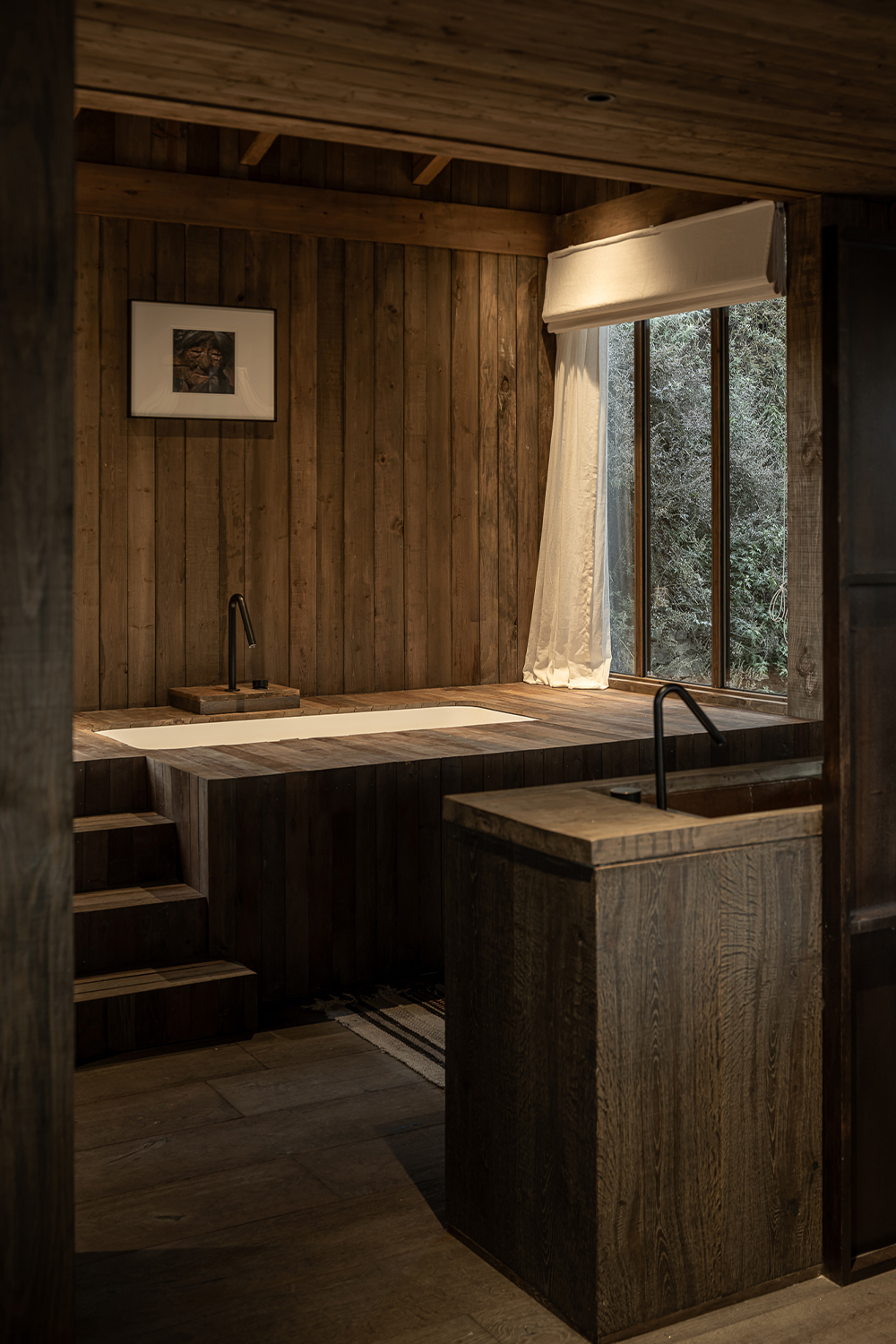
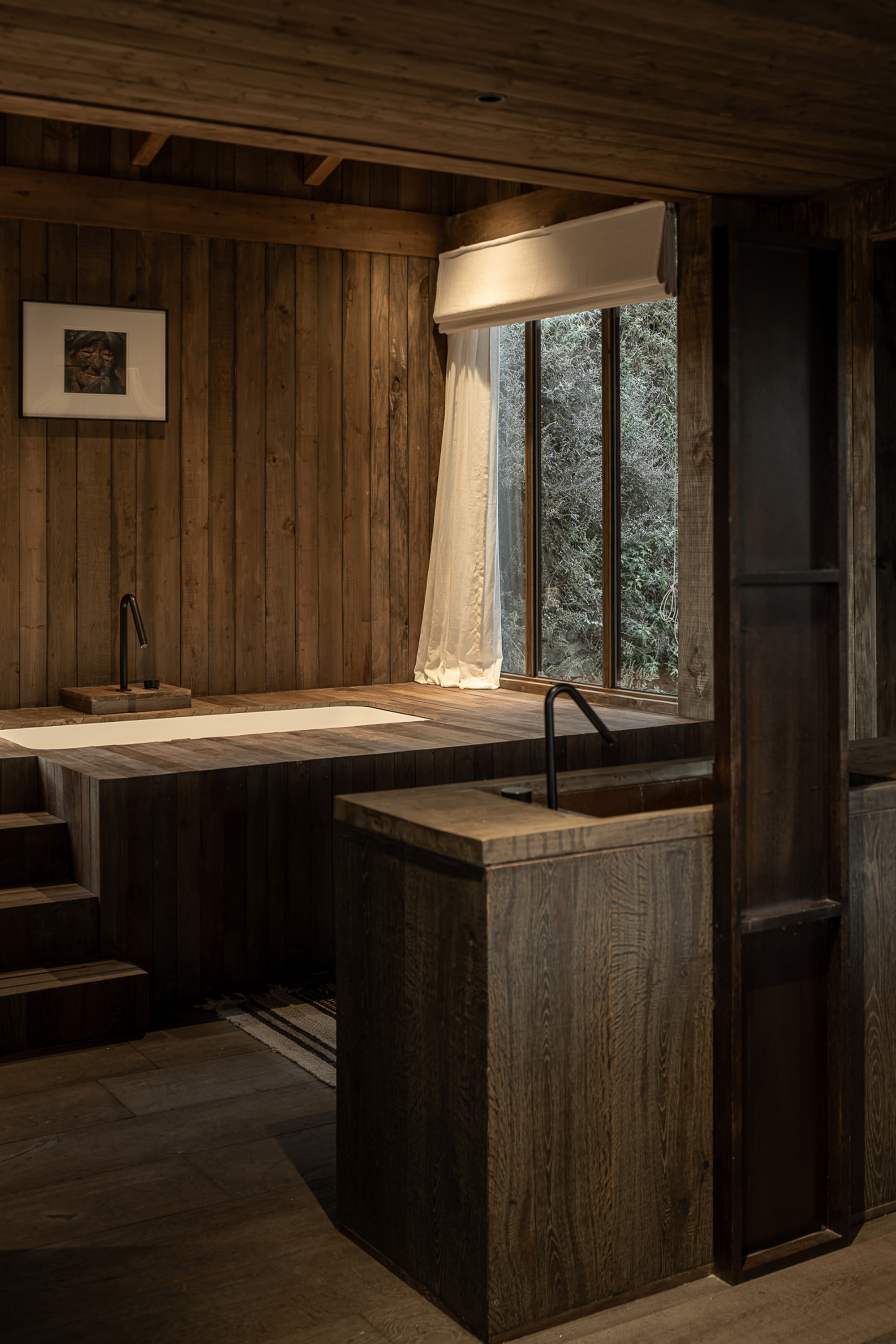
The gentle grain of wood wraps every corner of the space—even the indoor soaking pool is embraced by natural timber. By creating the poetic scene of a "wooden cabin soaking pool," we emphasize the resonance between design and nature, fostering a tranquil and healing atmosphere. Here, mind and body sync with nature, while comfort and serenity coexist.

This is not a guesthouse, nor a protected area—but a "waystation of time." All we have done is return the land to itself, and continue the story that time has long been ready to tell. When guests depart, the only thing they need to take with them is the 0.3 grams of volcanic ash clinging to their soles — the smallest, yet weightiest gift from this village in the clouds to the world.

MORE PHOTOS