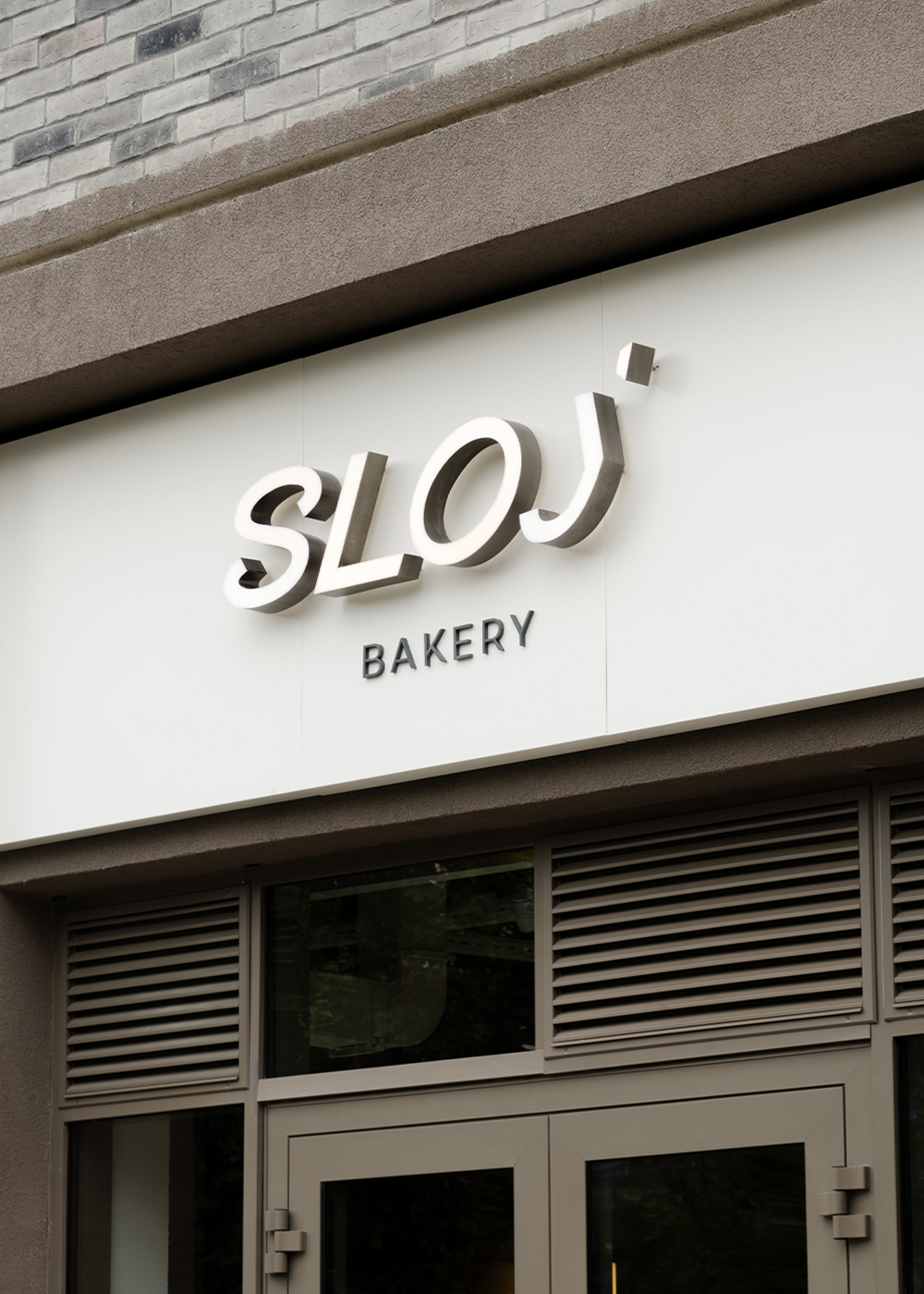
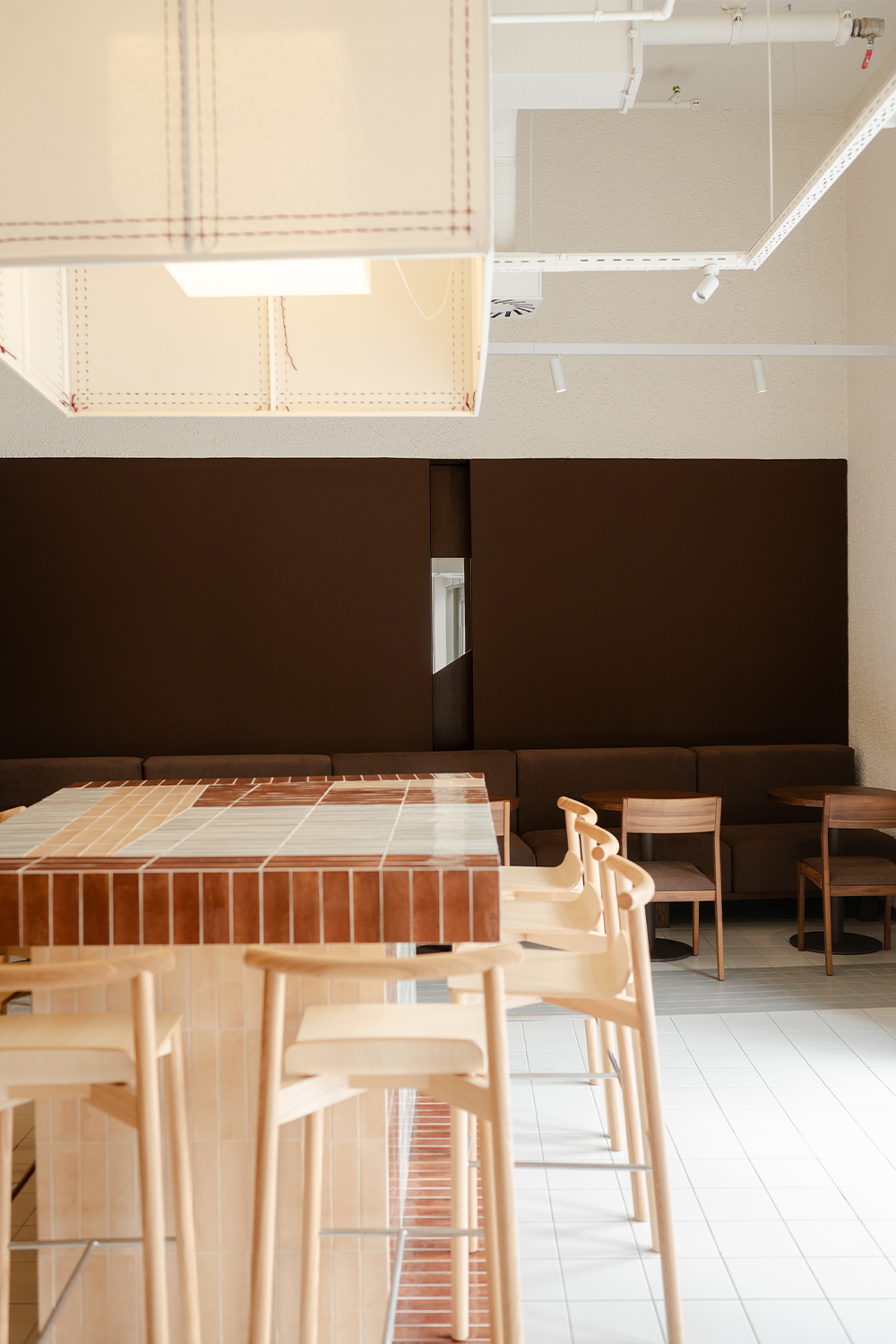
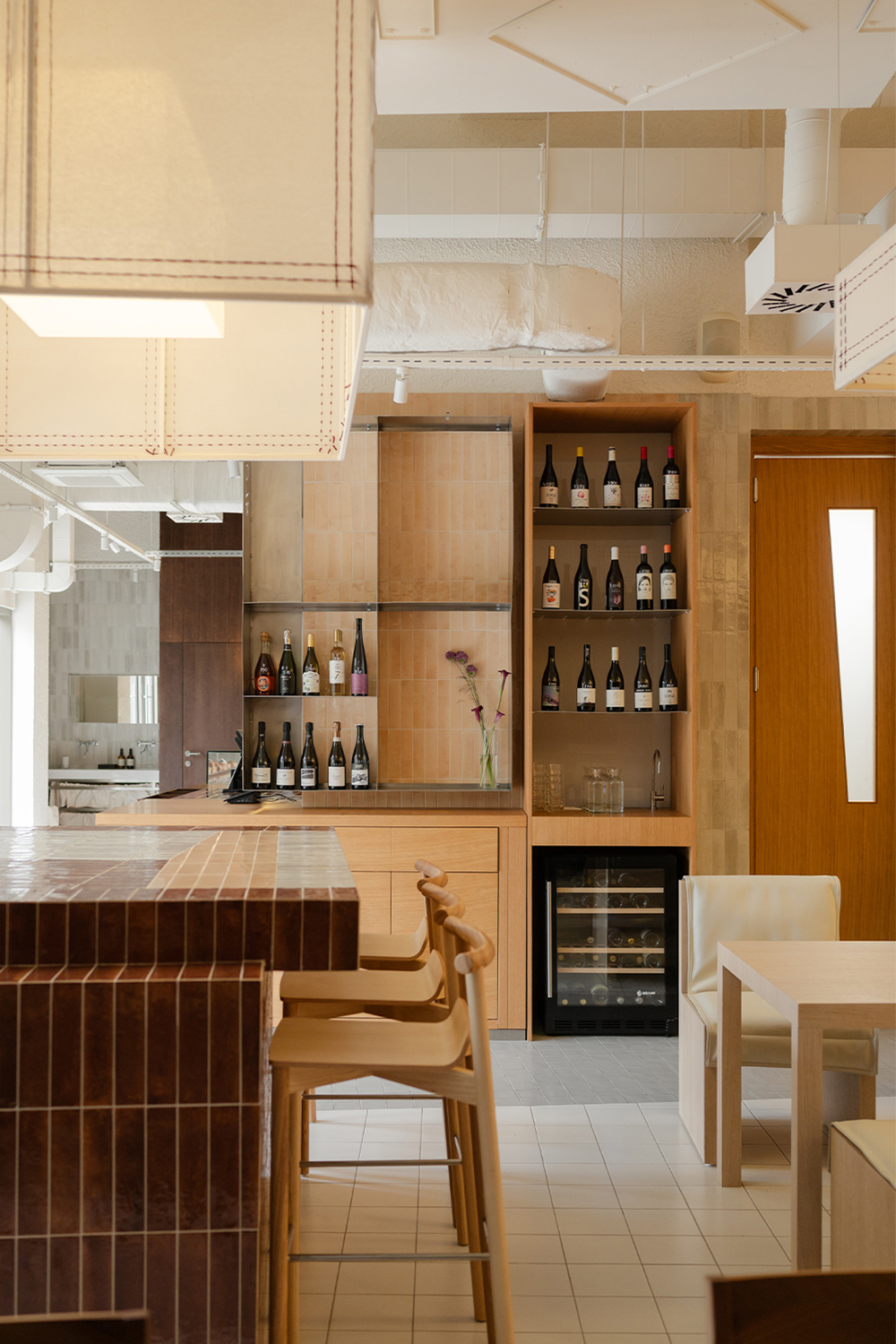
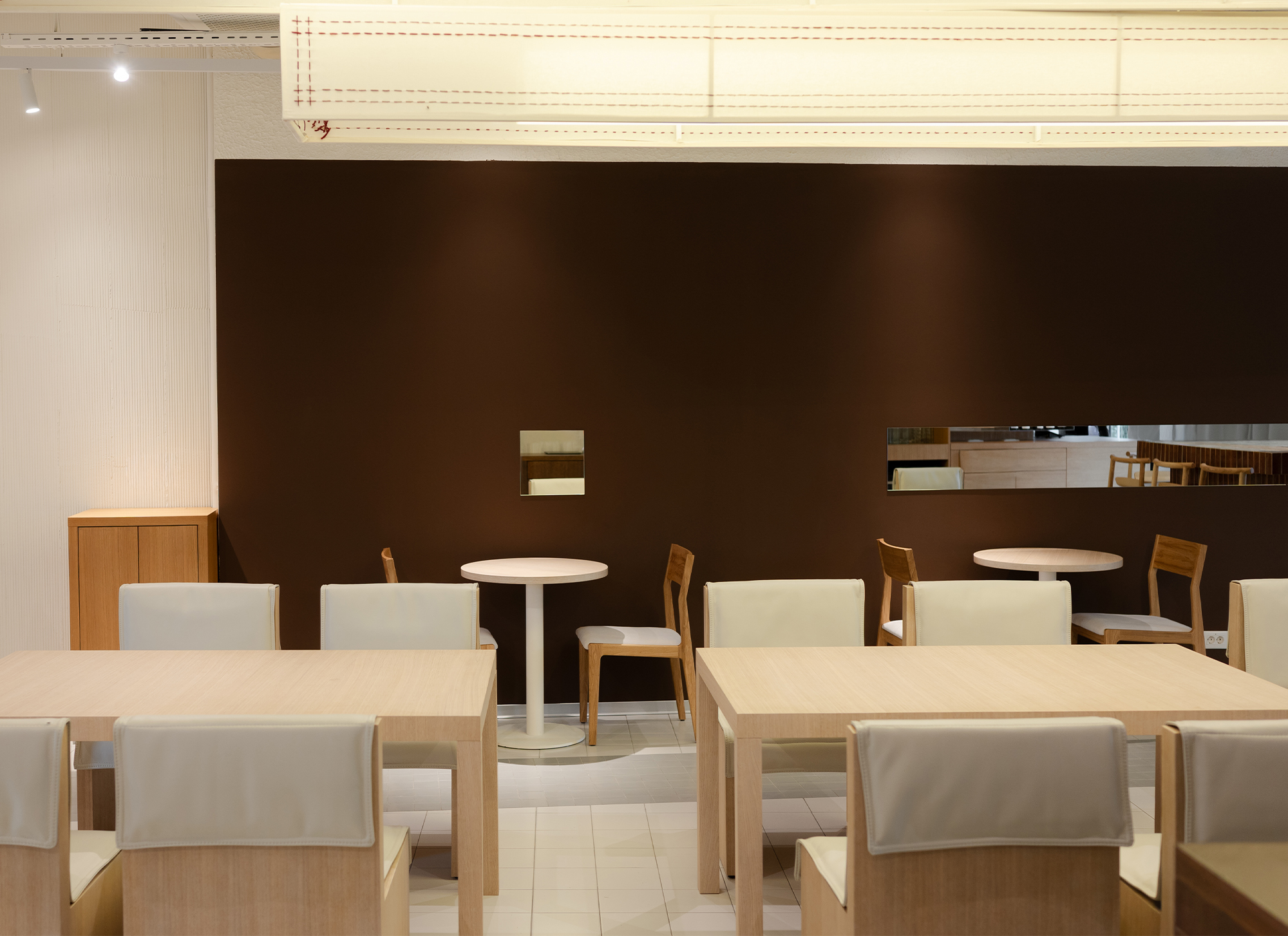
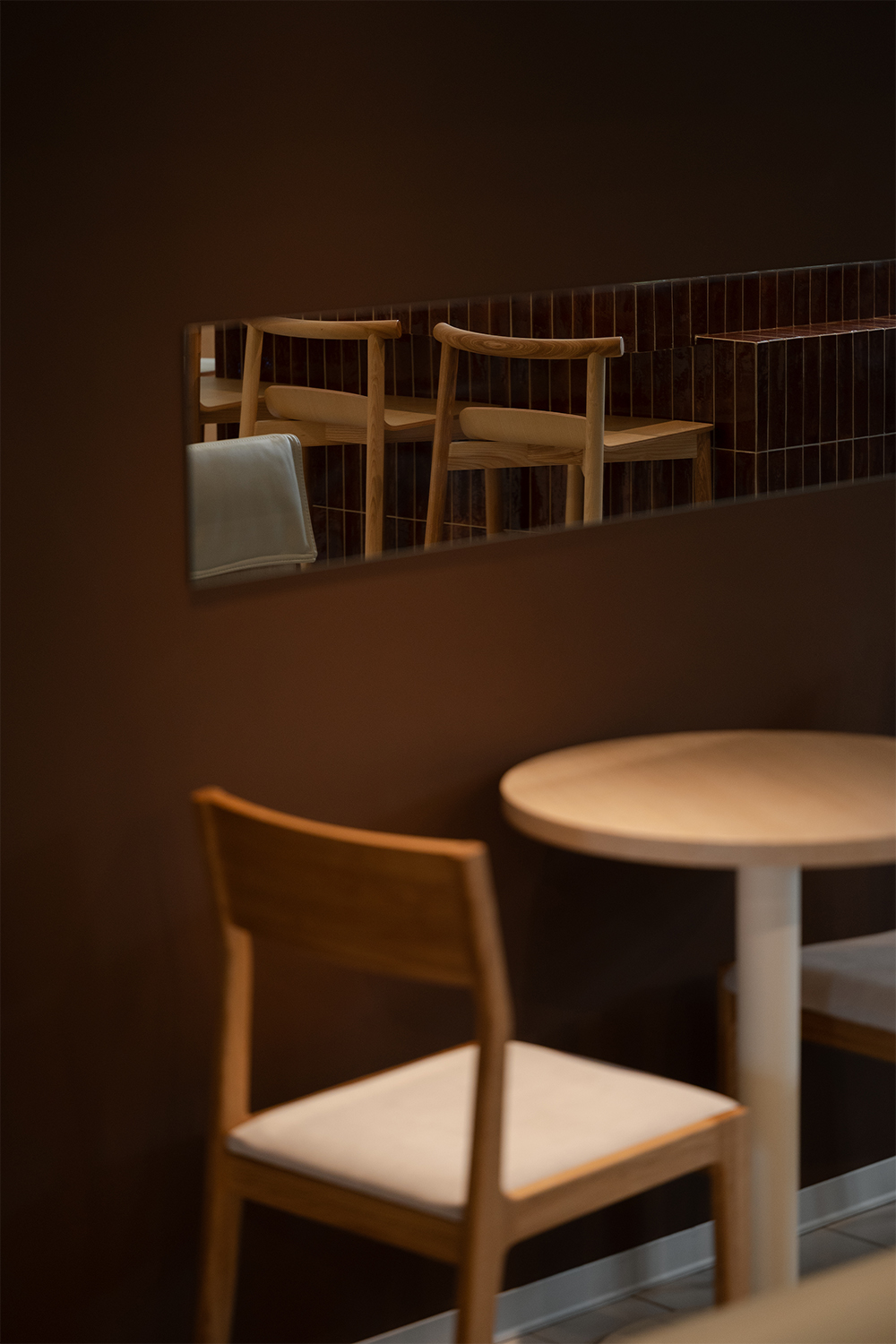
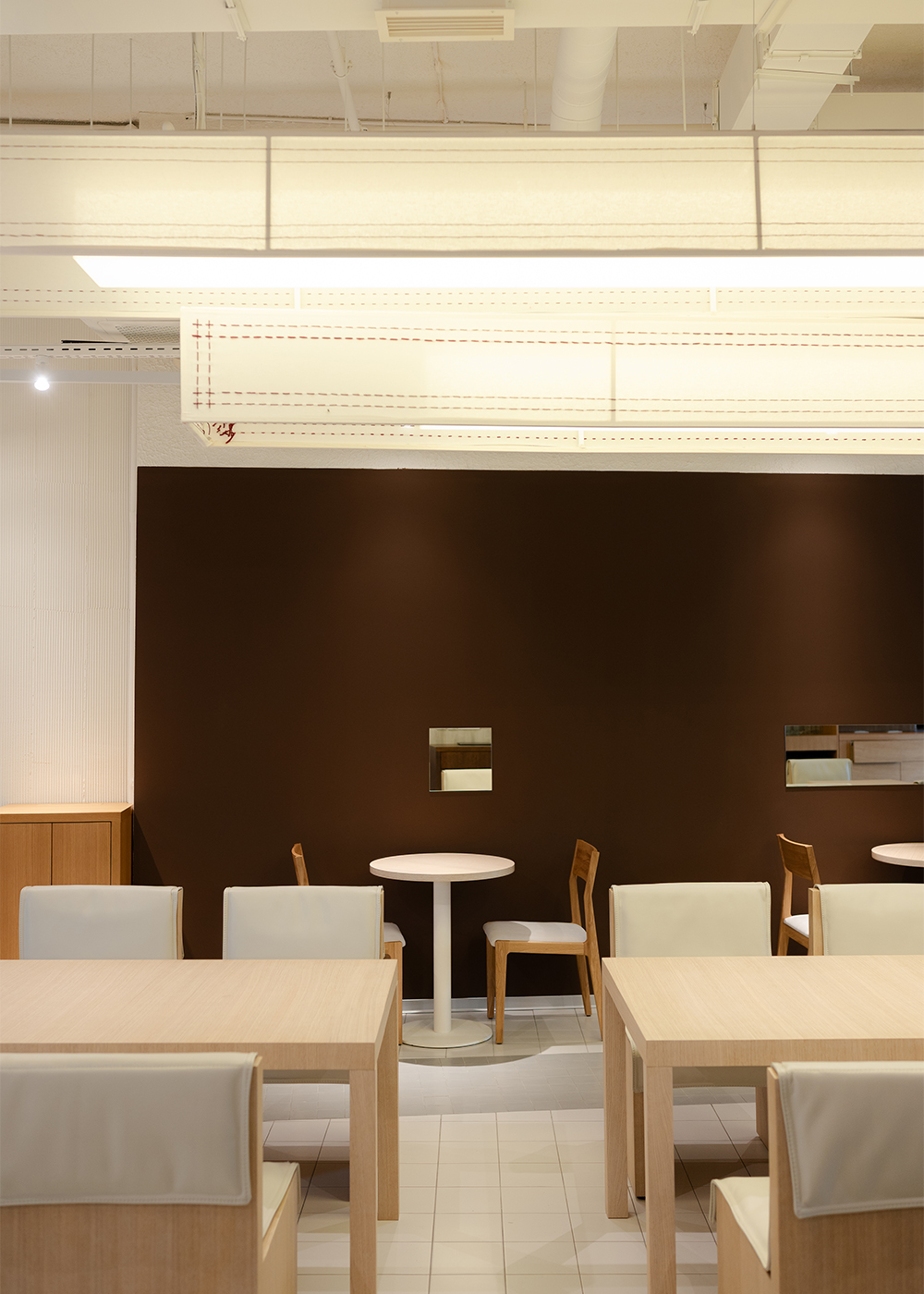
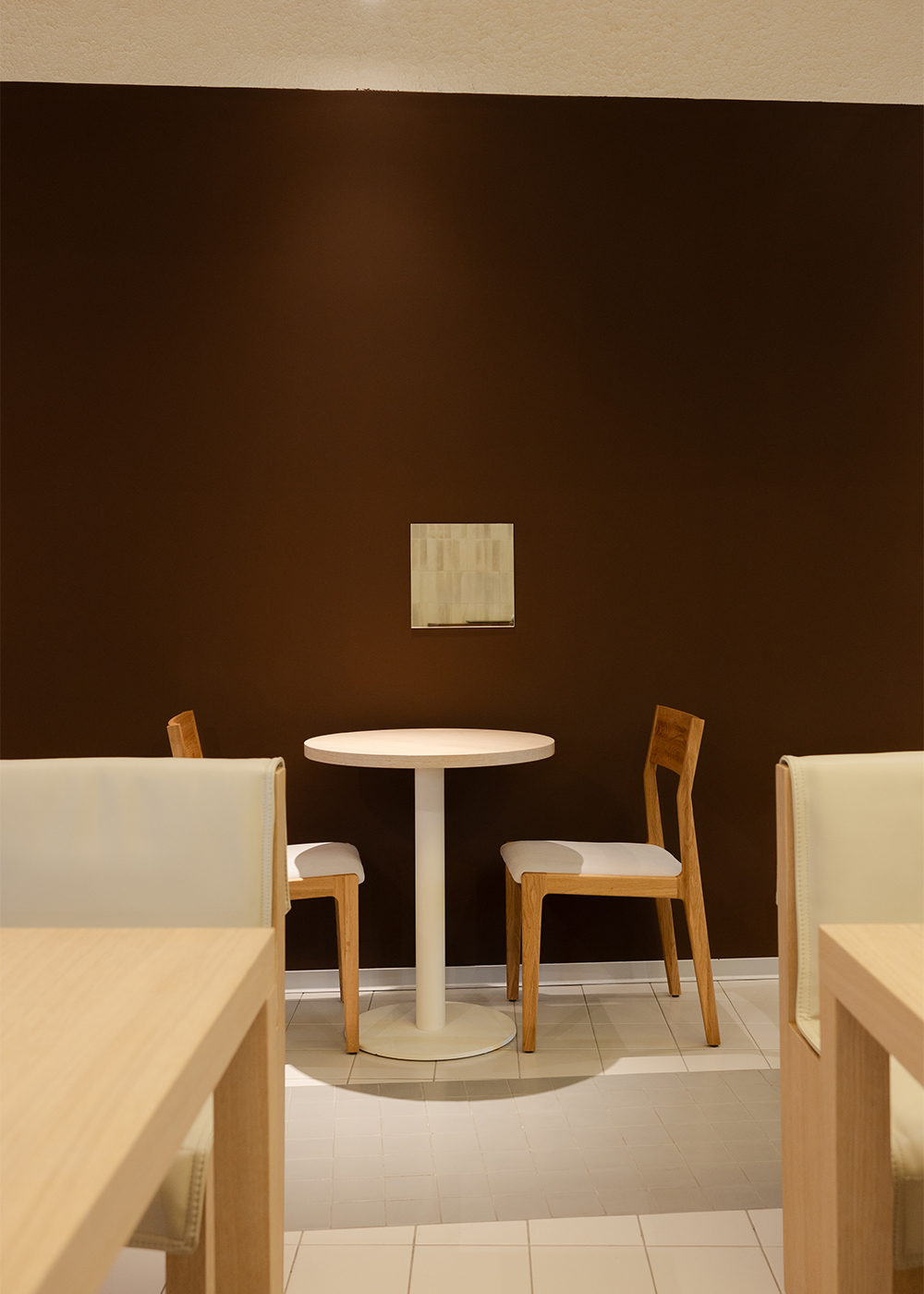
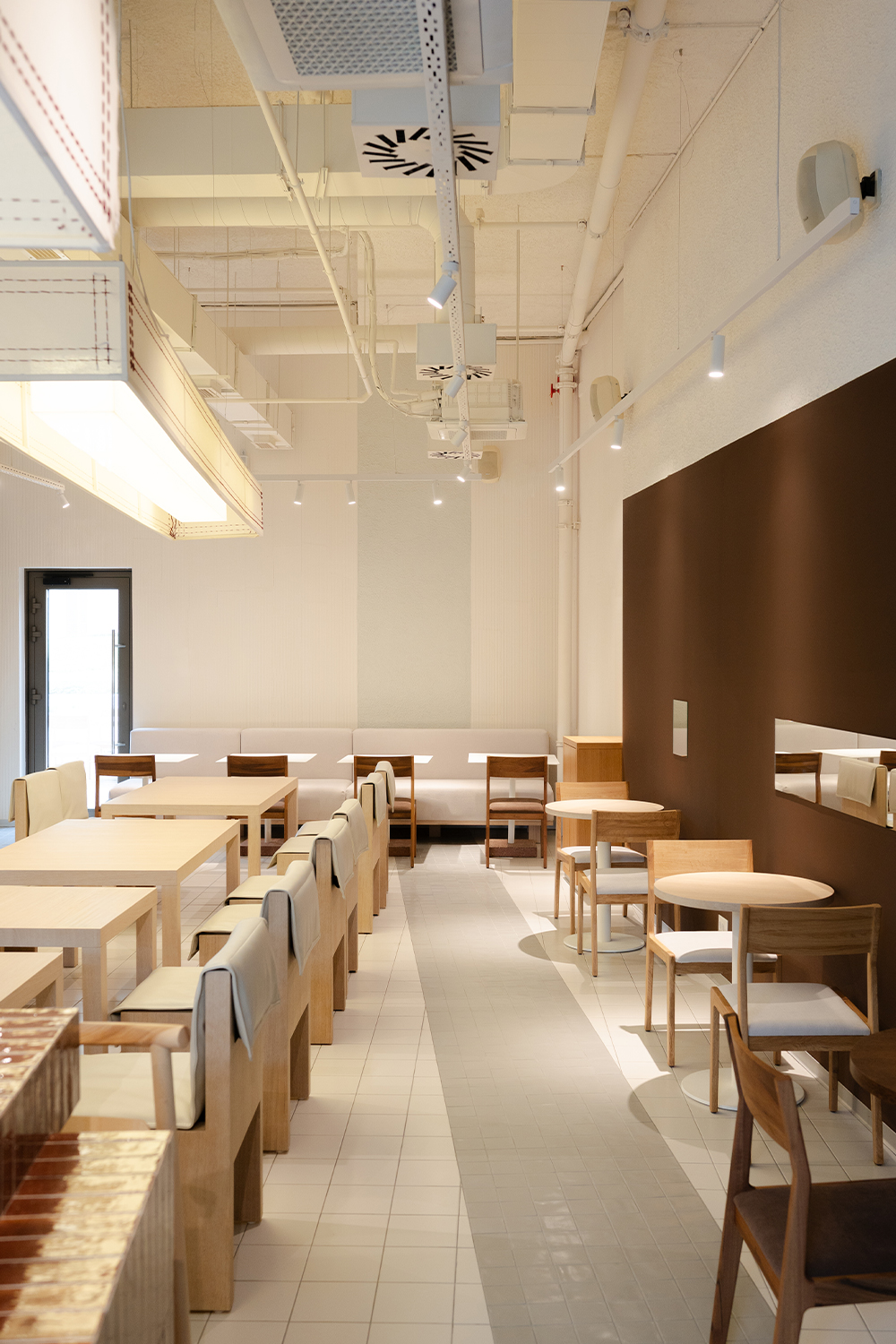
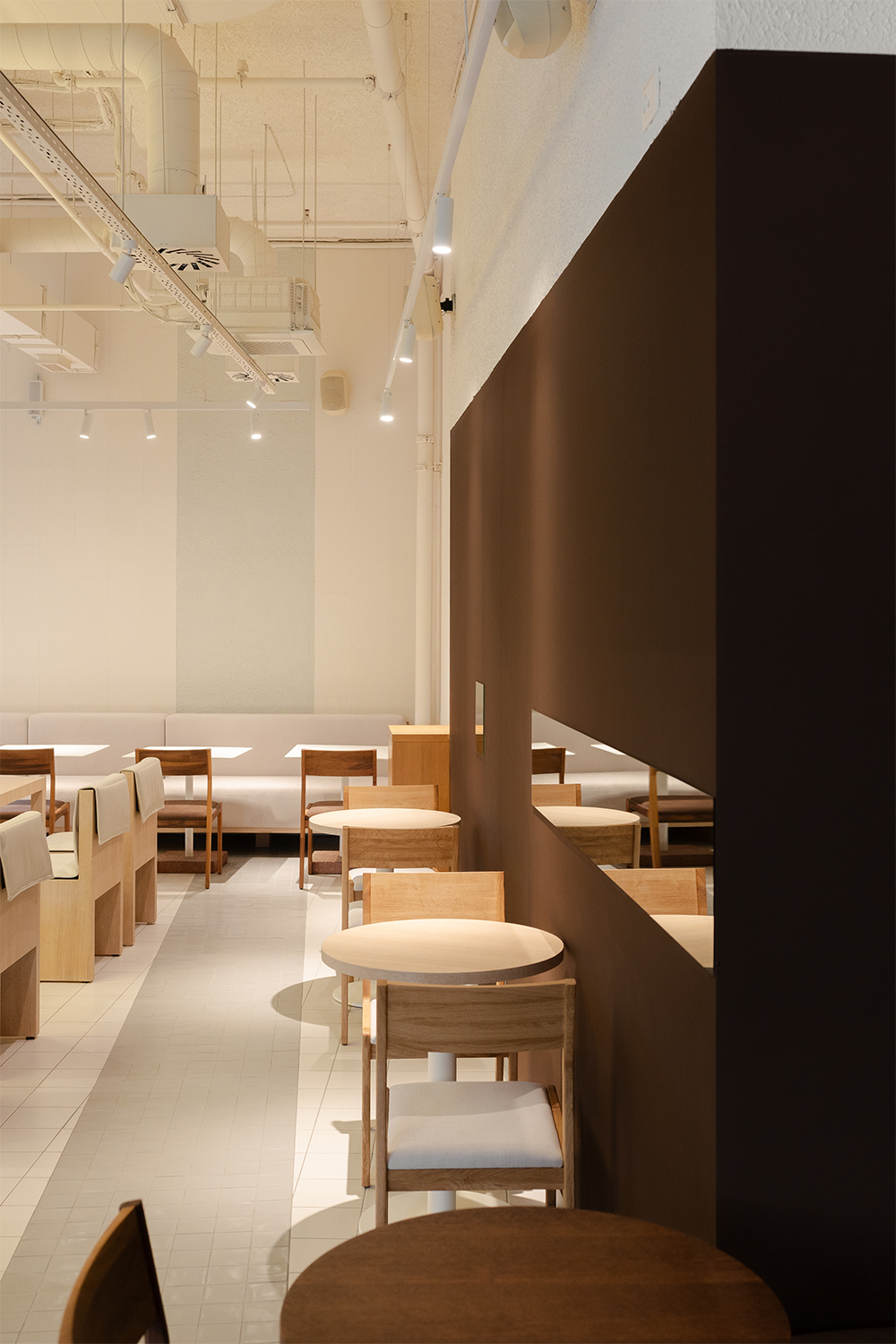
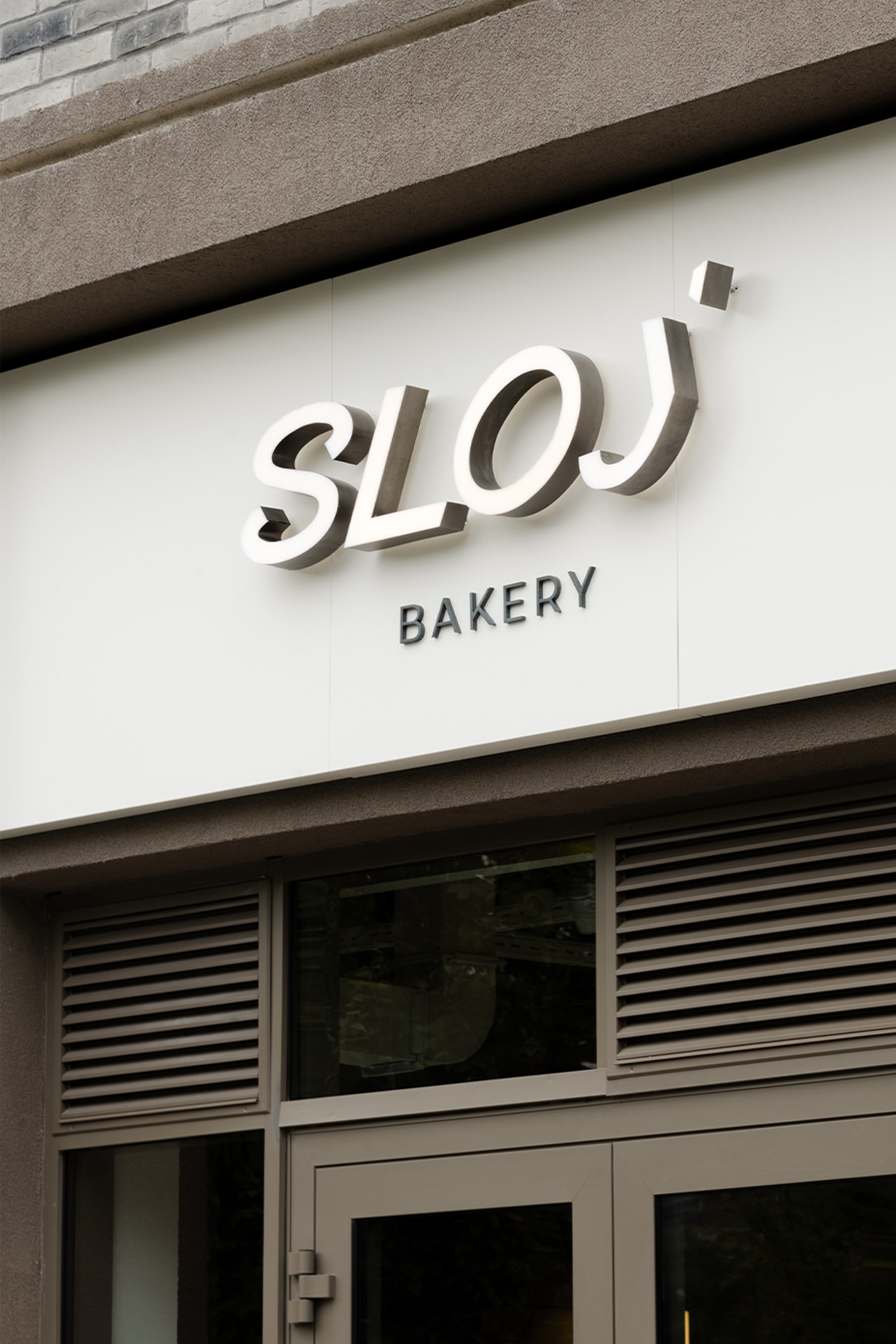
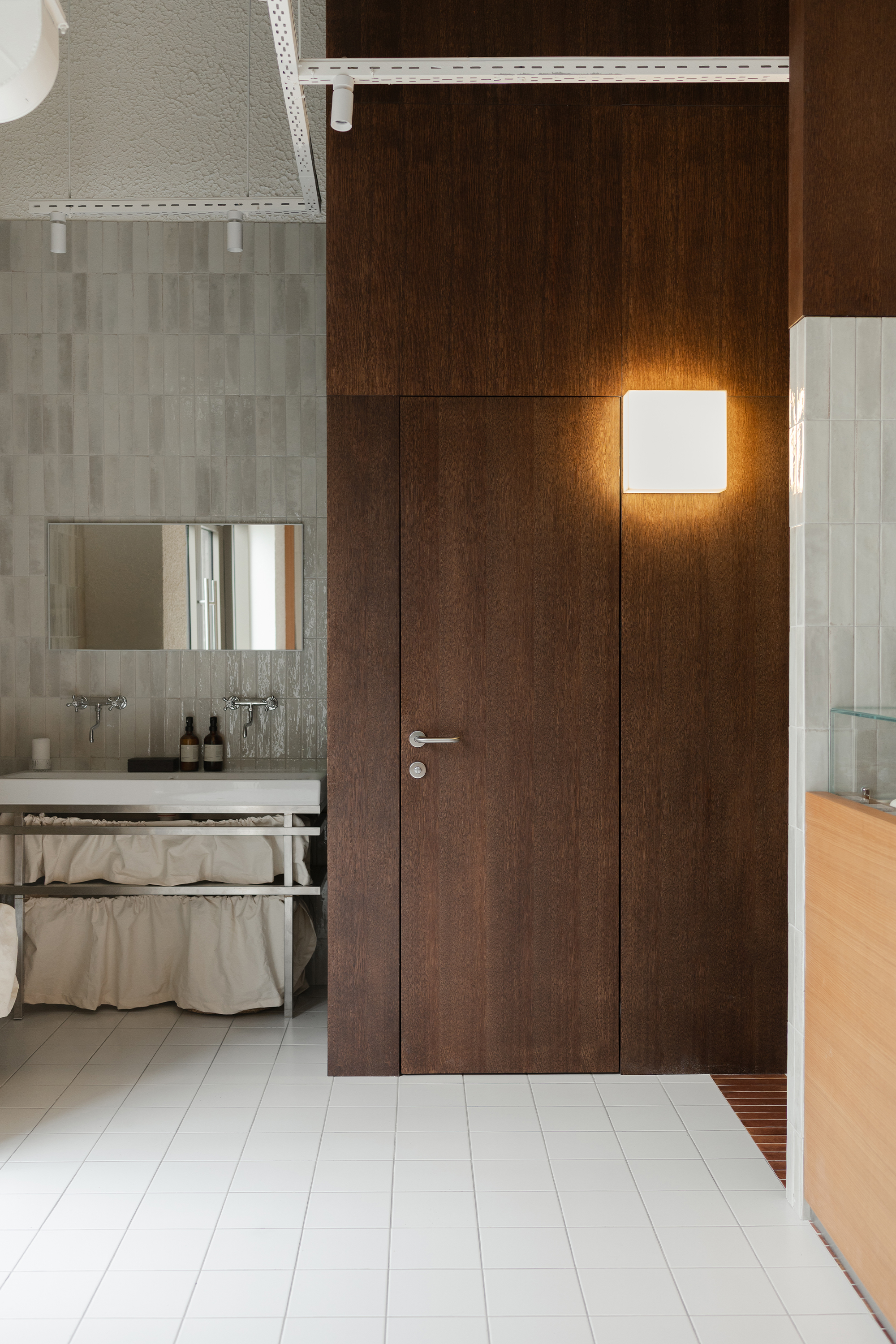
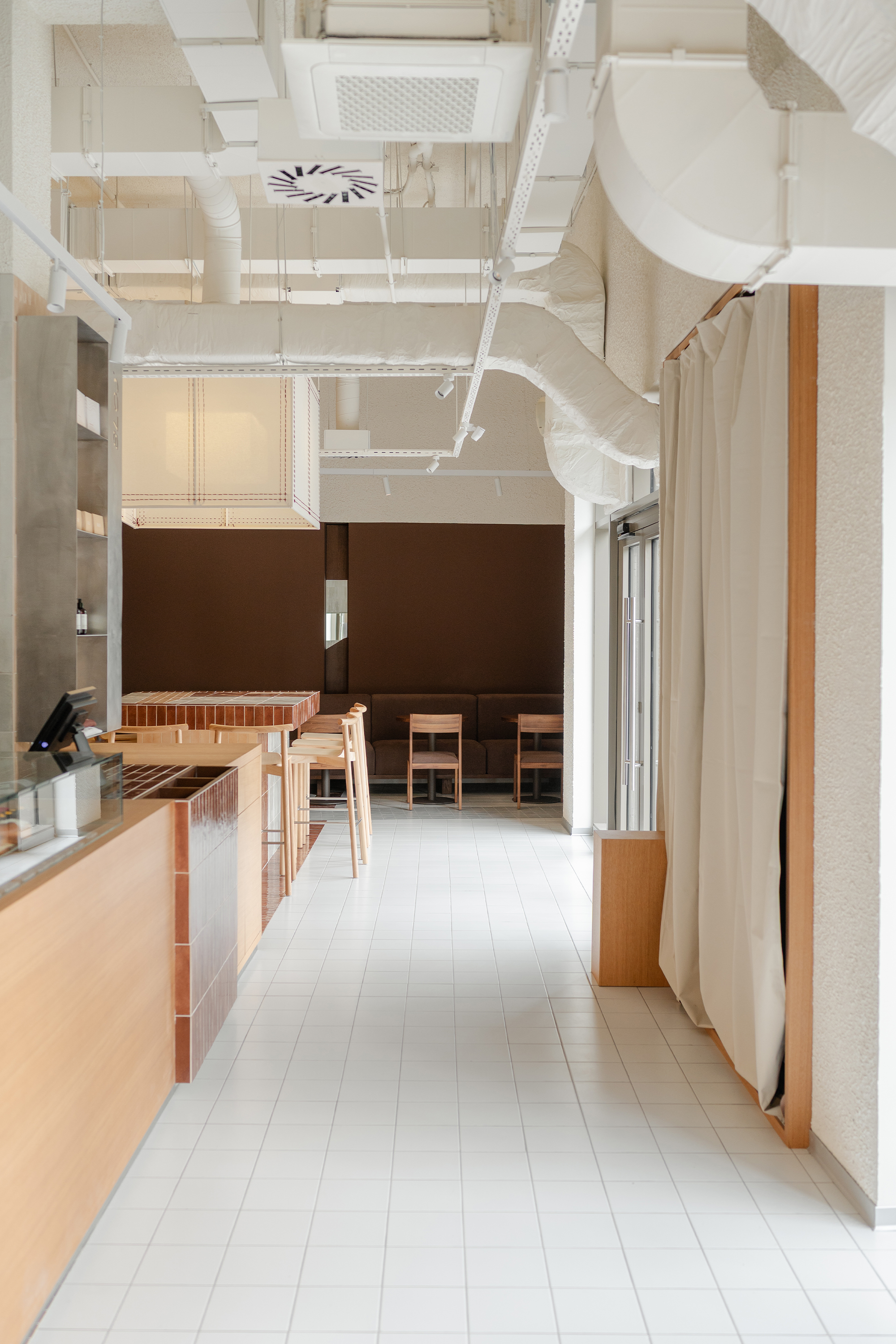
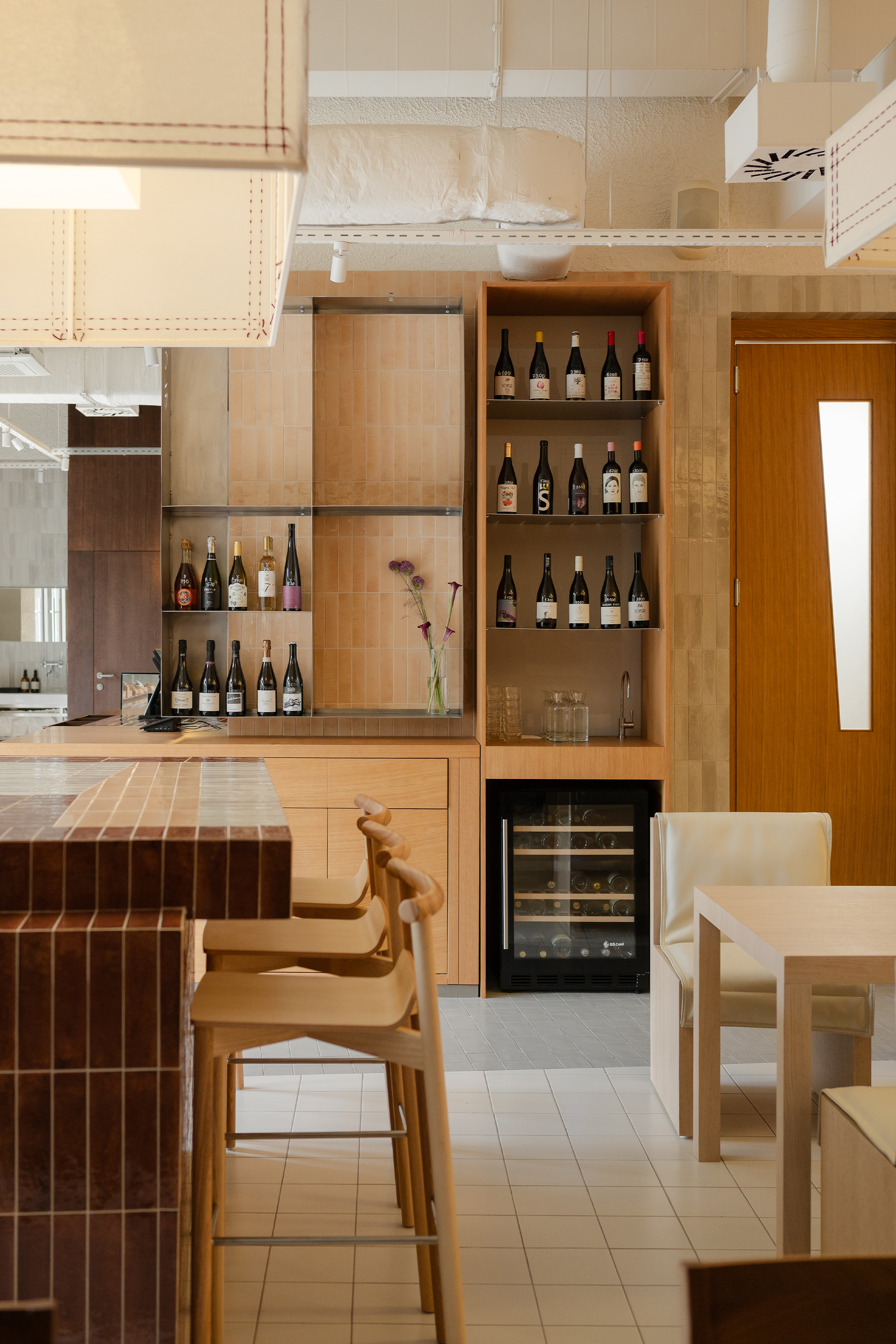
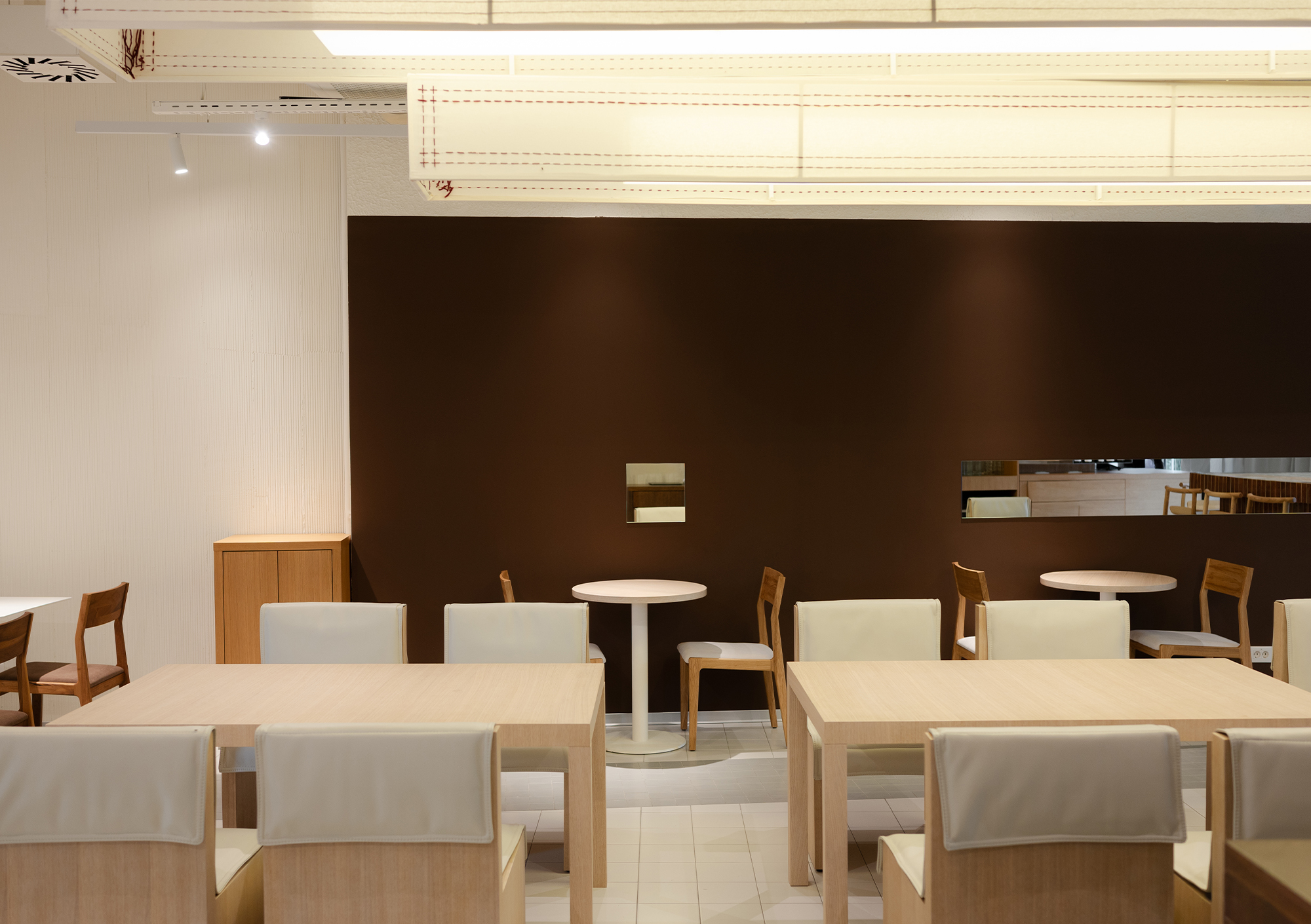
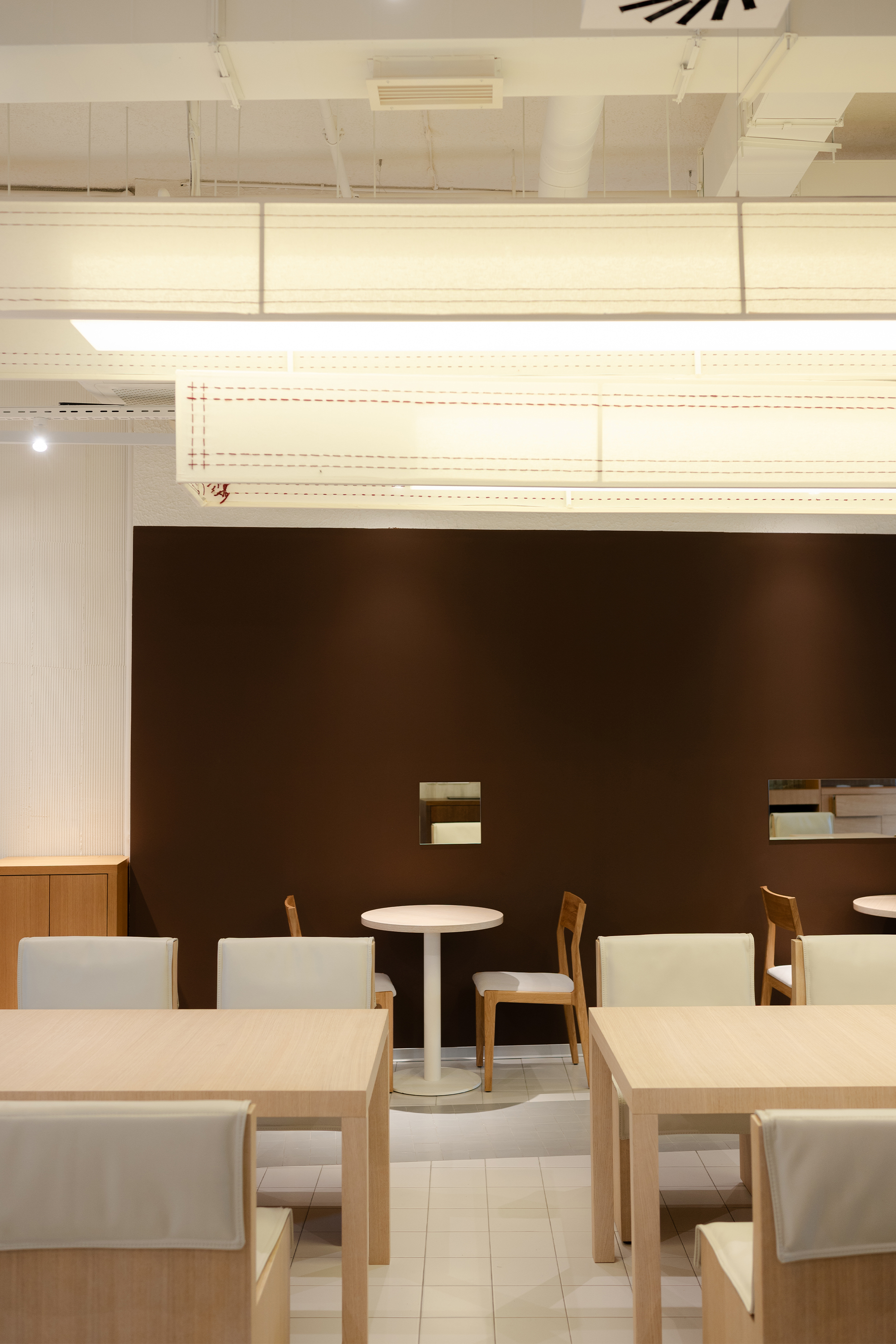
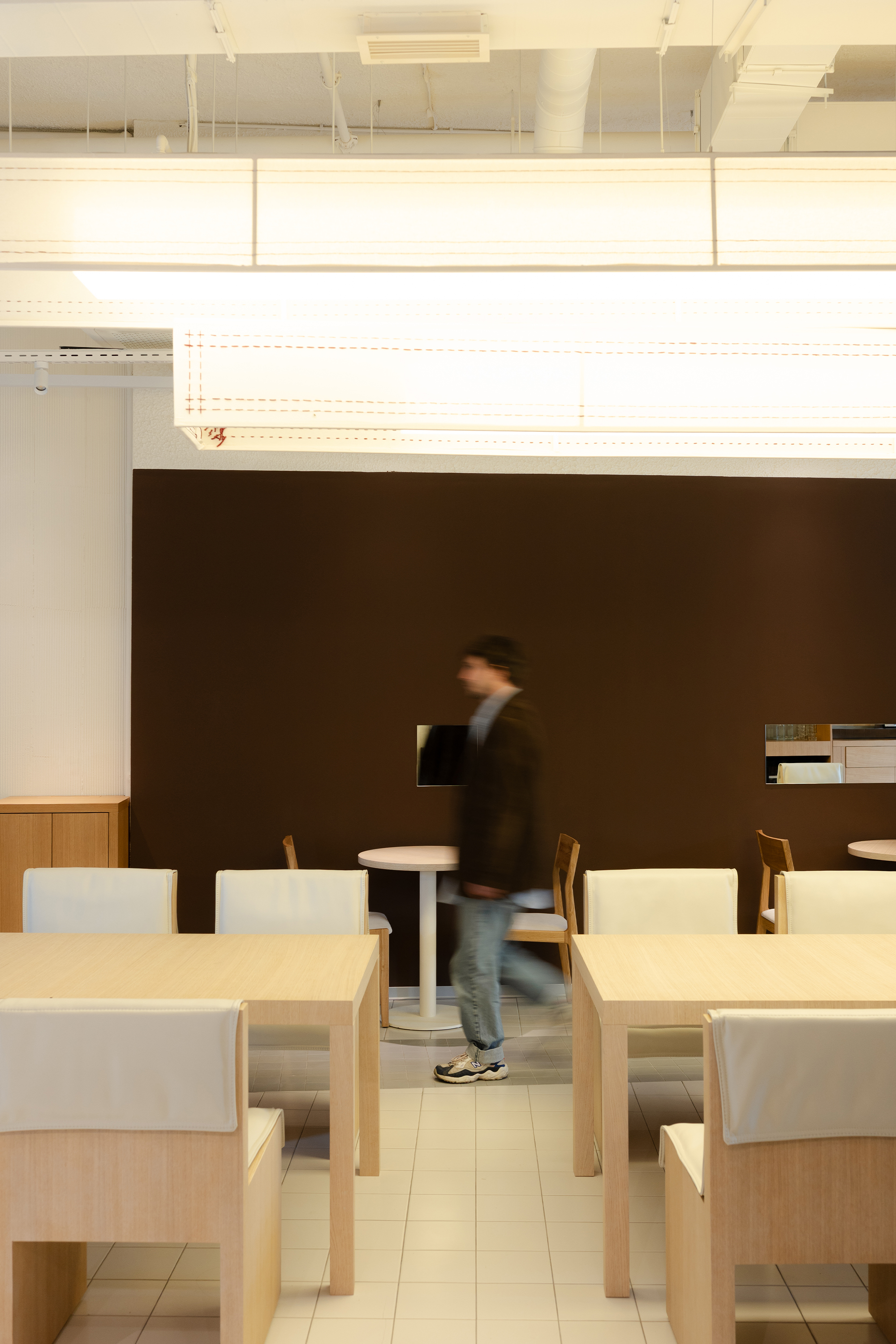
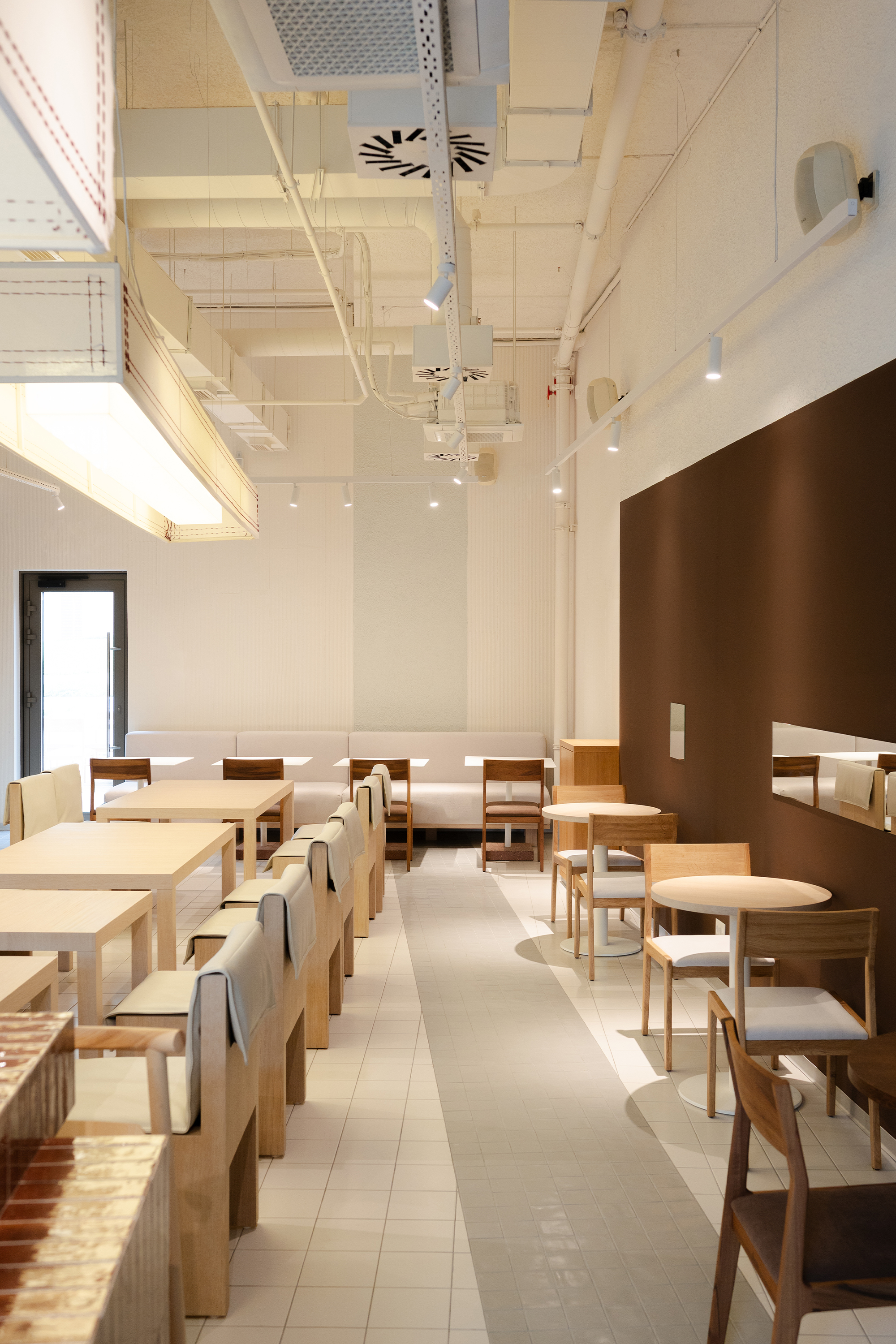
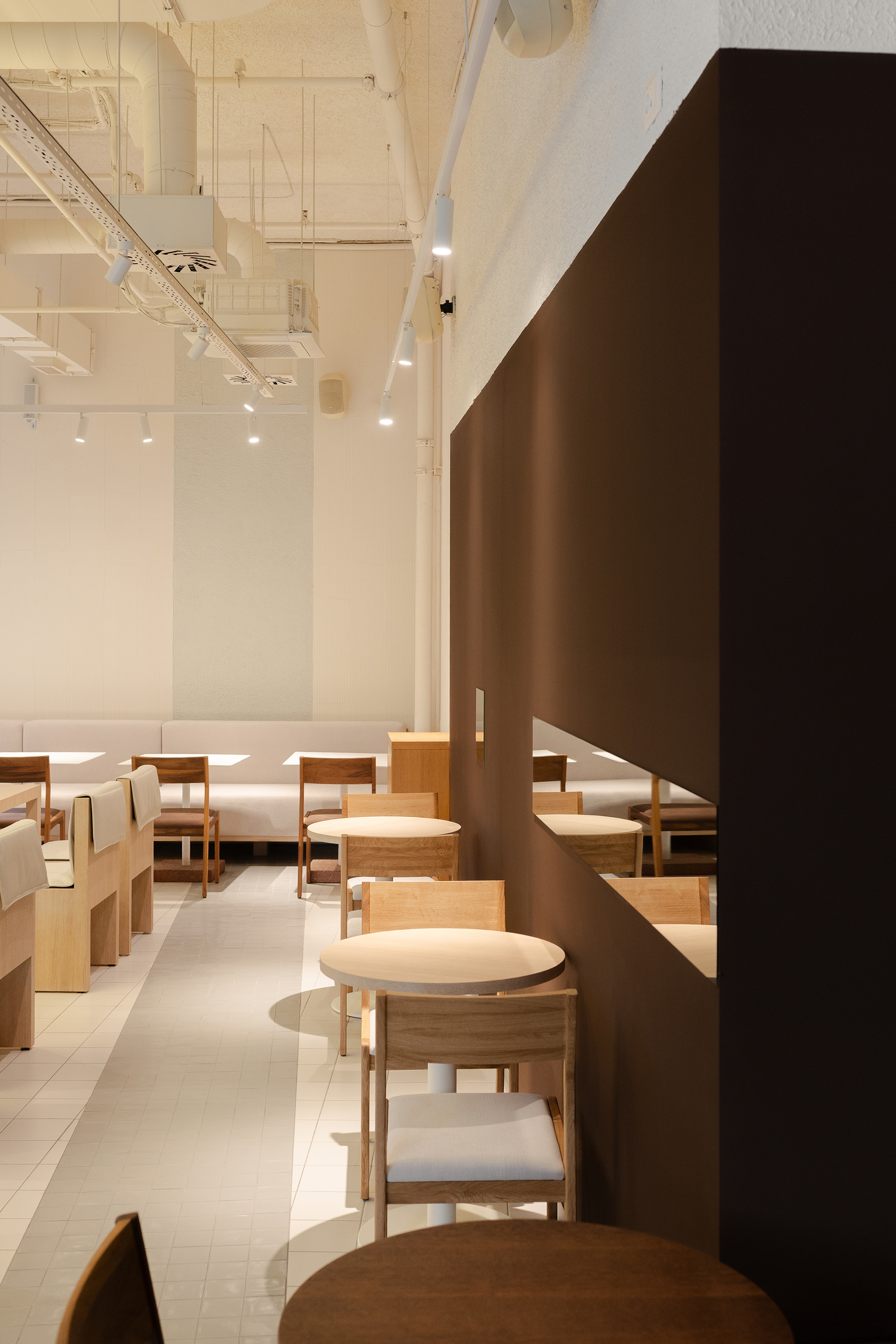
The main idea behind the project was to convey the spirit of Serbia — its warmth, craftsmanship, and that sense of “imperfection” that makes things feel alive and human. The brand SLOJ (“Layer”) plays a central role not only as a name but as a concept — connected to process and experience.
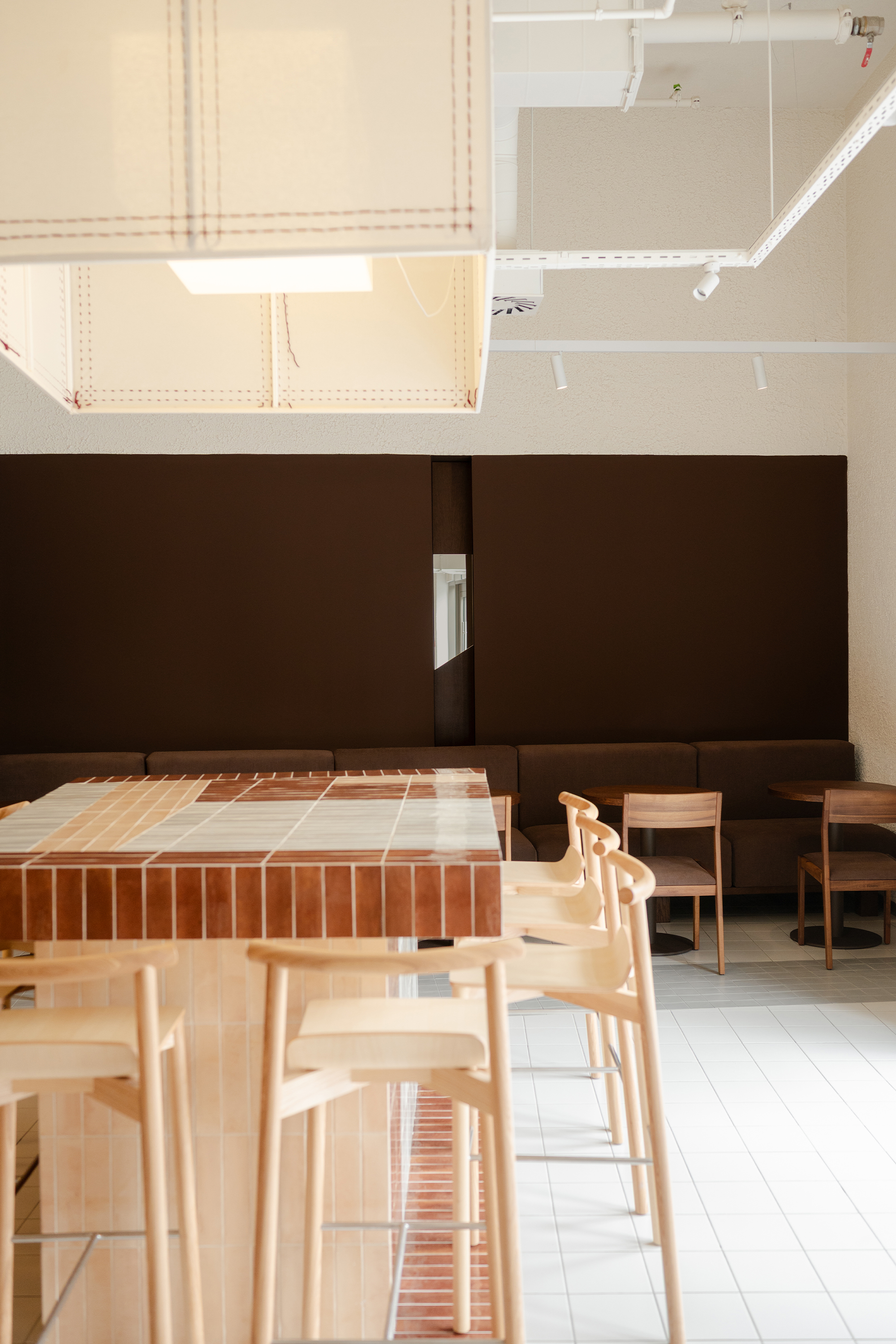
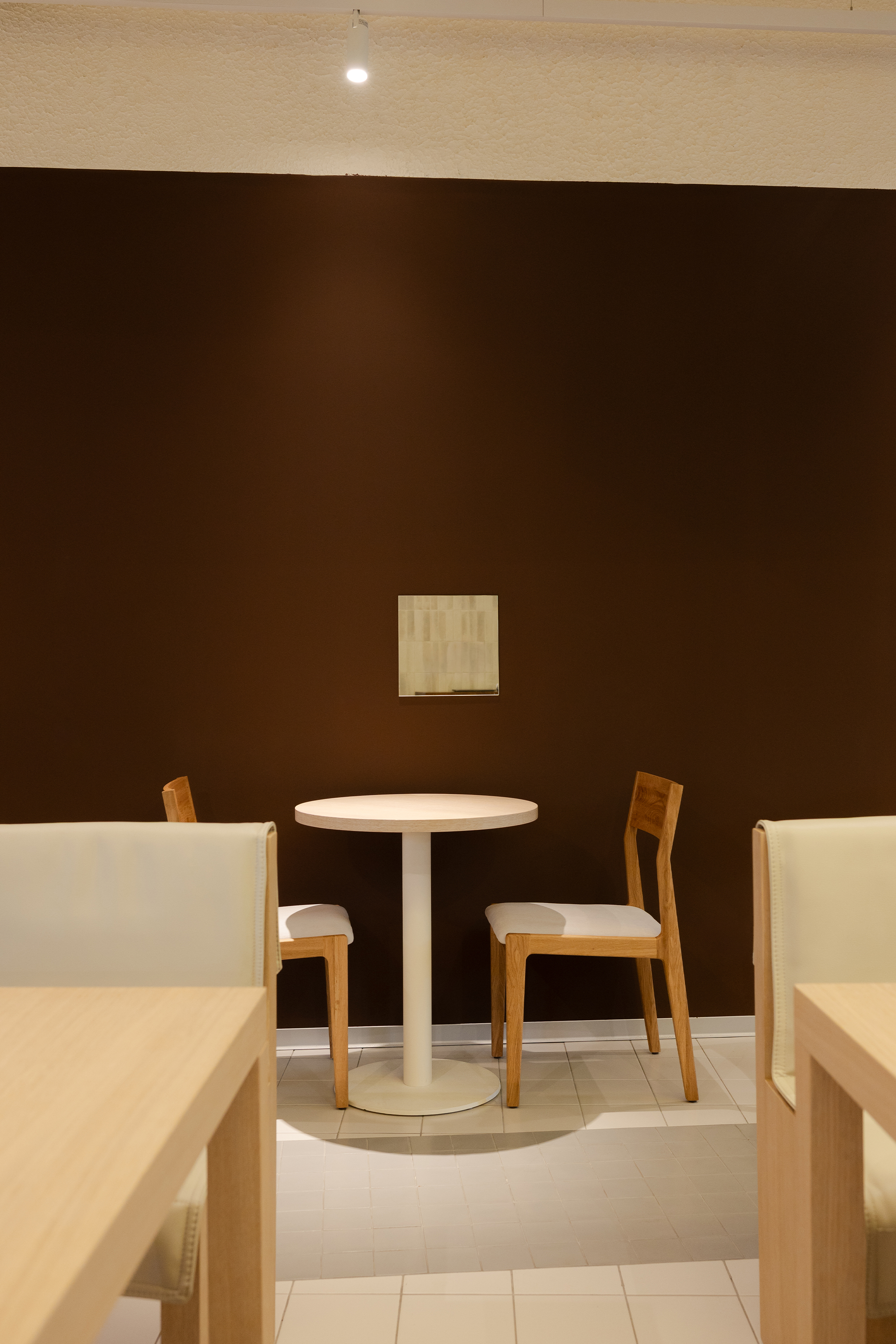
Guests can observe not just the final product but also the stages of its creation: they can peek into the kitchen, notice the shape of the baking mold, or sit on soft “puff-pastry” cushions at a shared table. The color palette is based on the brand’s identity, enriched with nuances that reference the local Serbian context. The space is designed to shift its atmosphere throughout the day — morning, afternoon, and evening — with materials and shades selected to match each scenario.
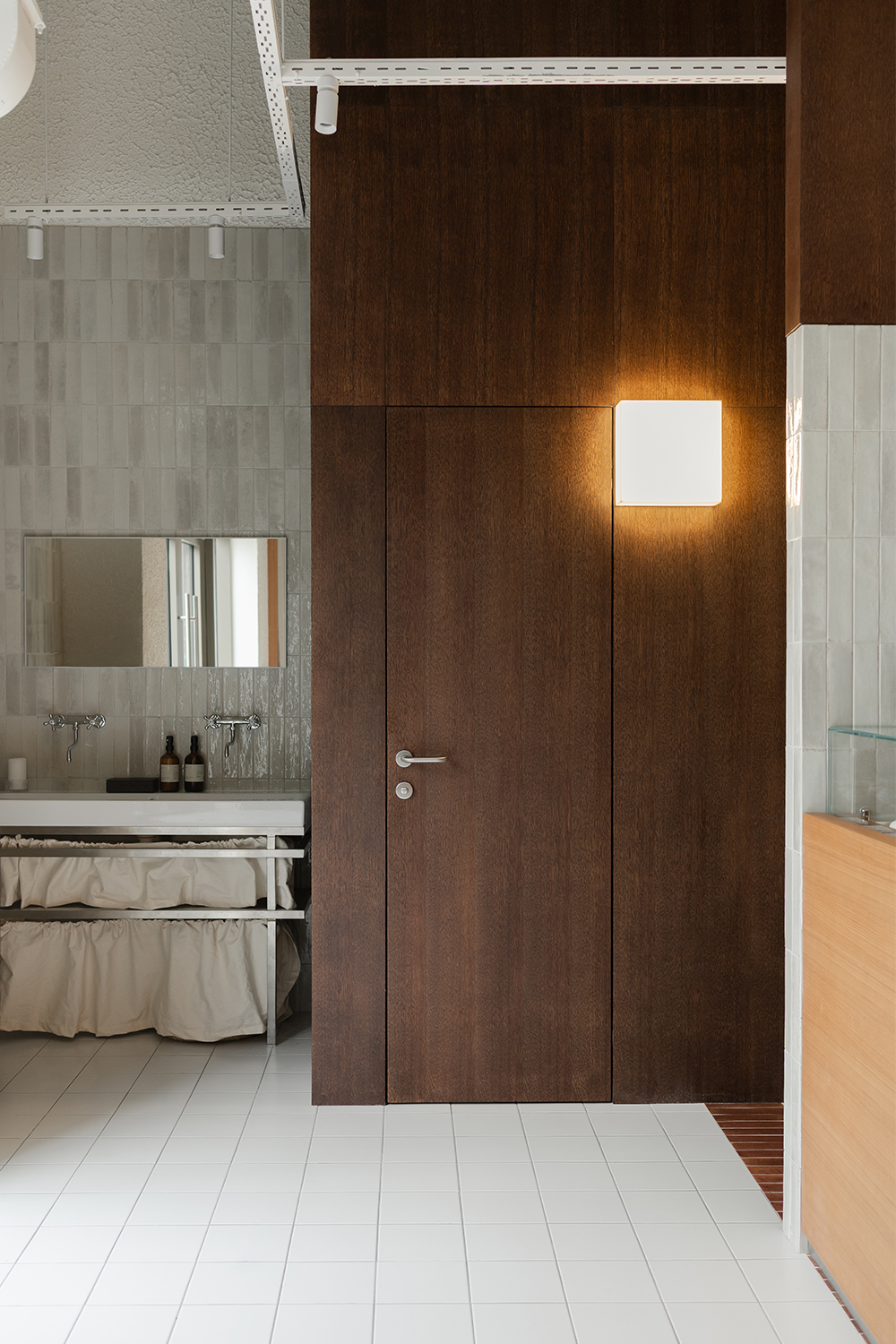
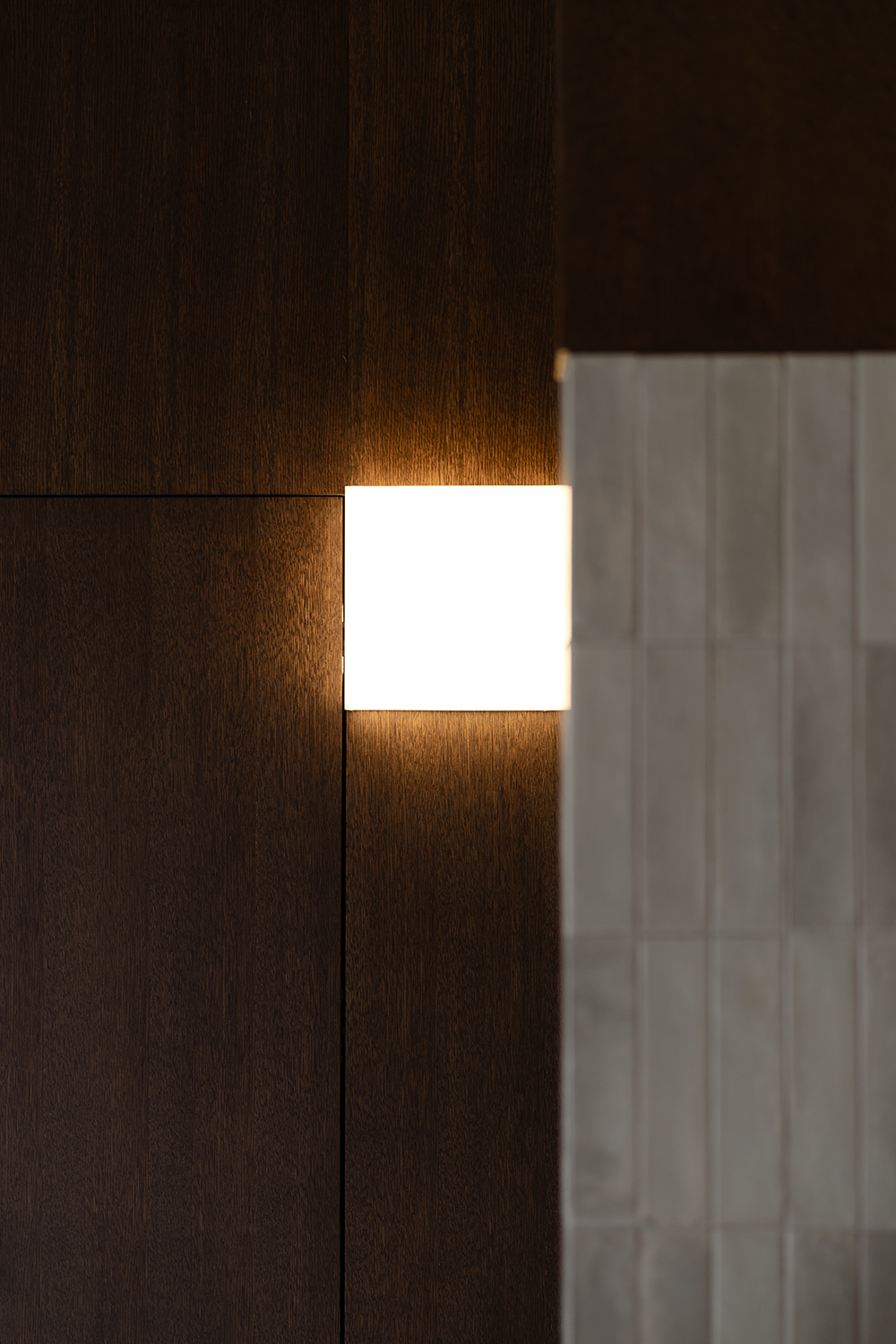
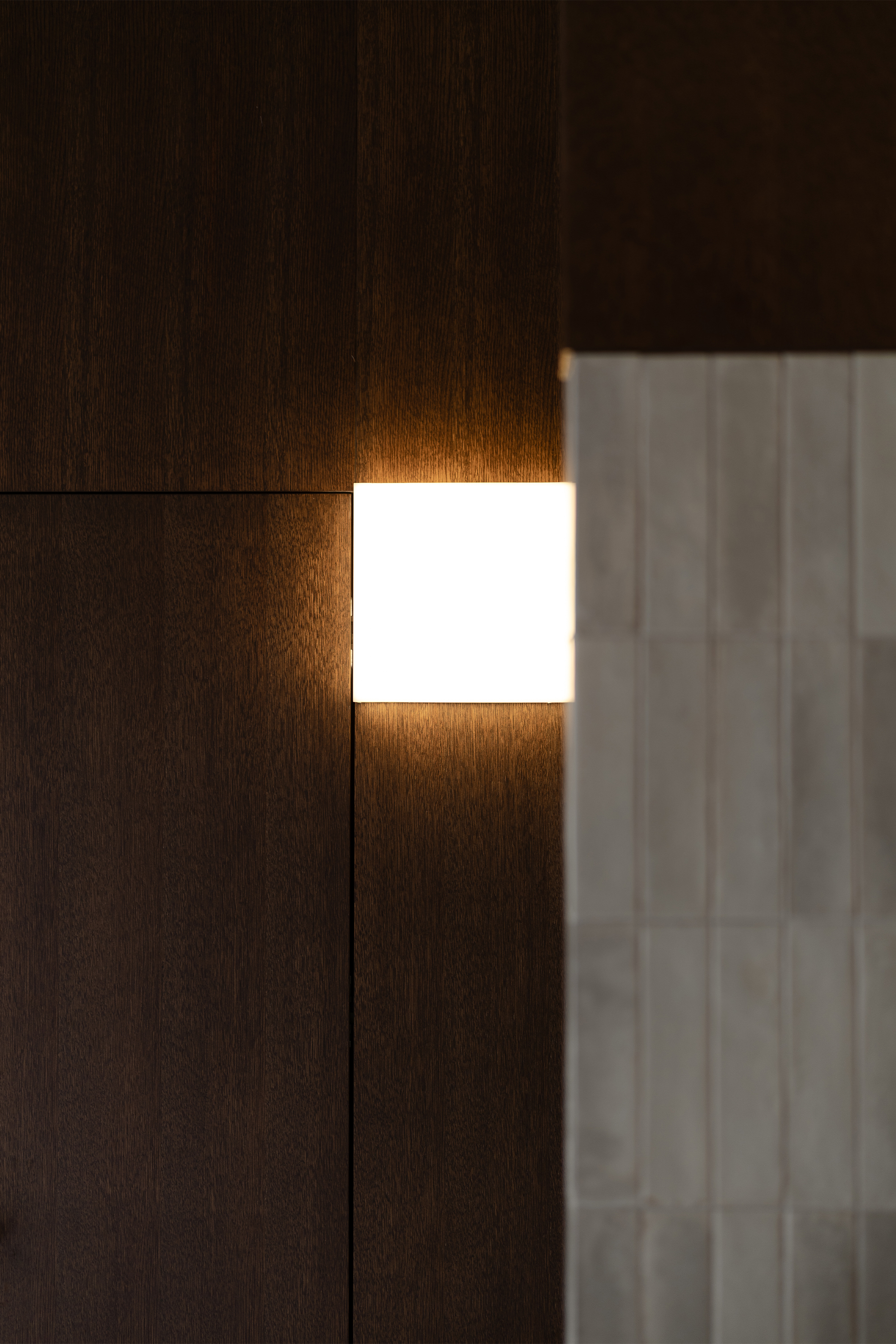
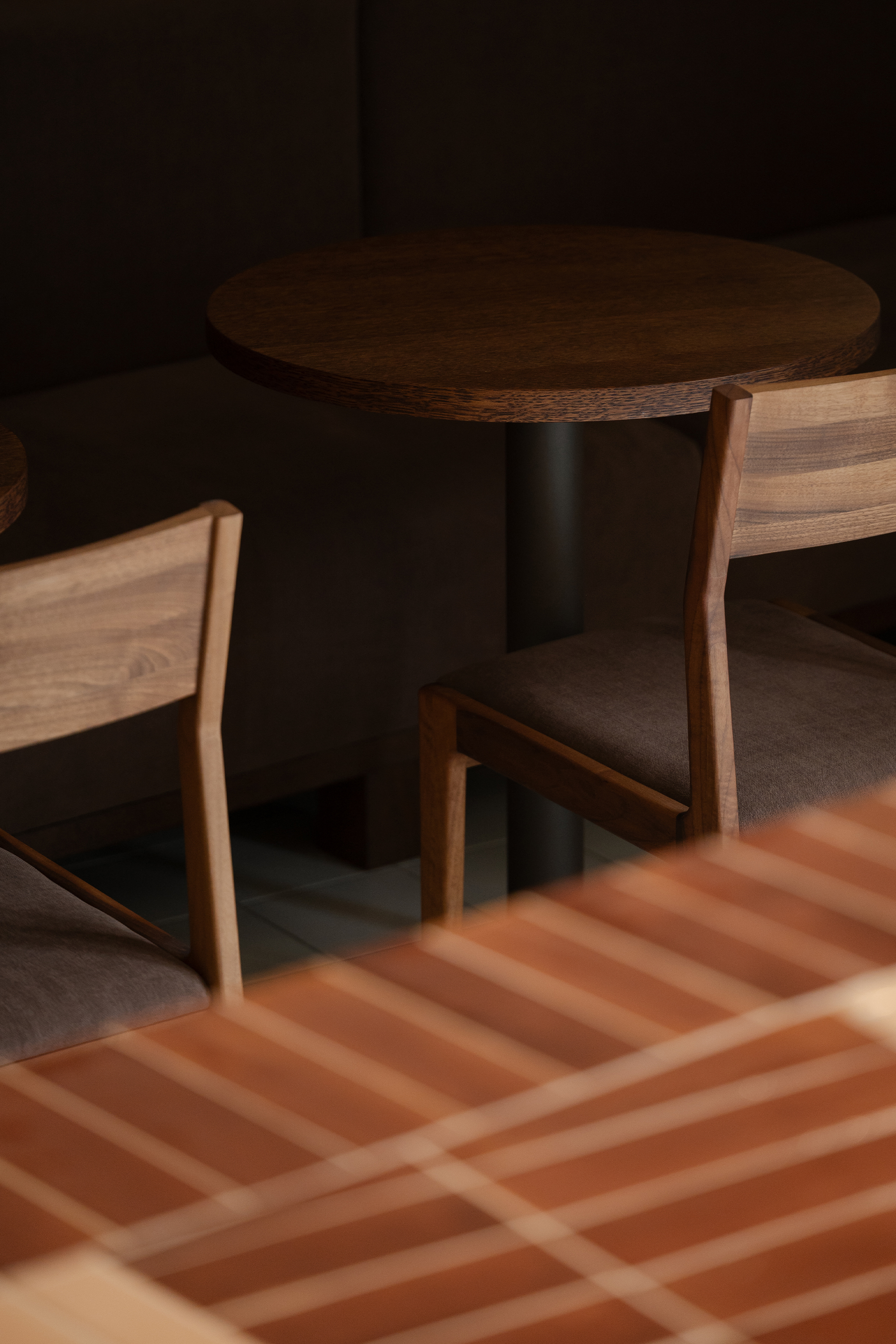
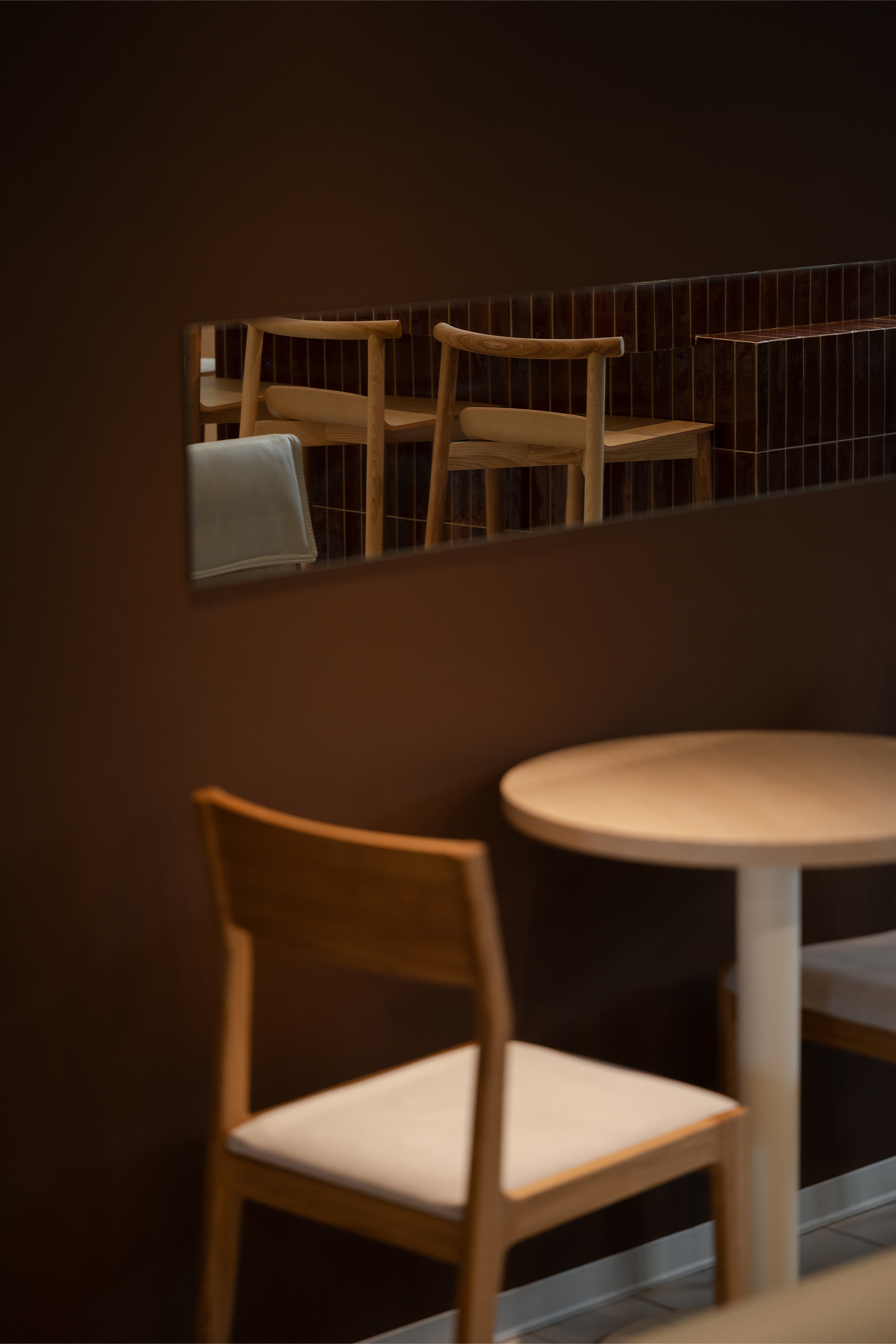
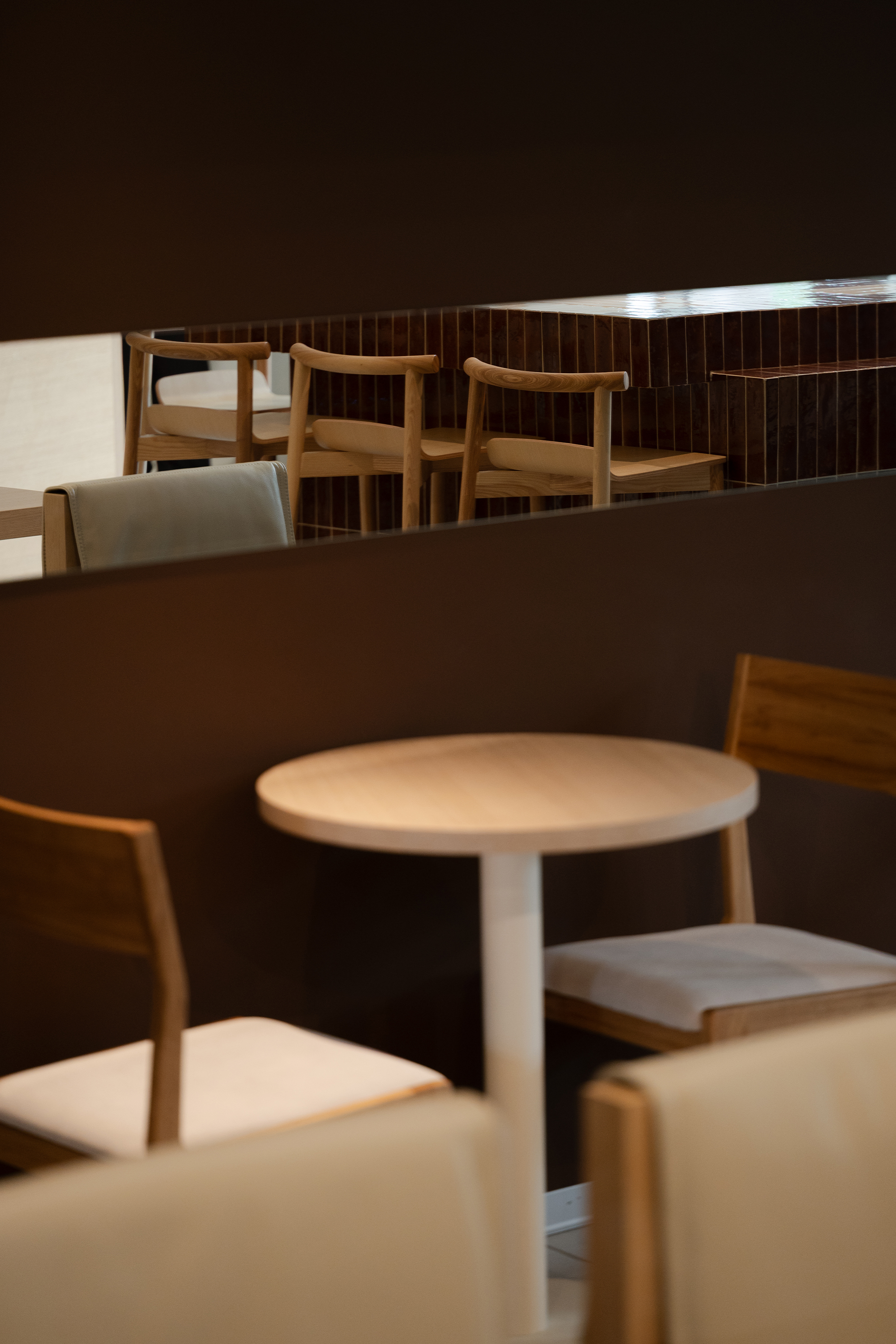
Functionally, the bakery and bistro are united within one space with two entrances, accommodating various formats — from a quick breakfast with coffee and pastry to a relaxed dinner with a glass of wine. Natural materials such as wood veneer, concrete, fabric, and stainless steel define the palette. The tactile contrast of surfaces is complemented by subtle ceramic tones, while embroidered details add a graphic accent. The careful balance of materials and forms creates an interior that feels warm and sensory, yet rational and functional.